I. Introduction
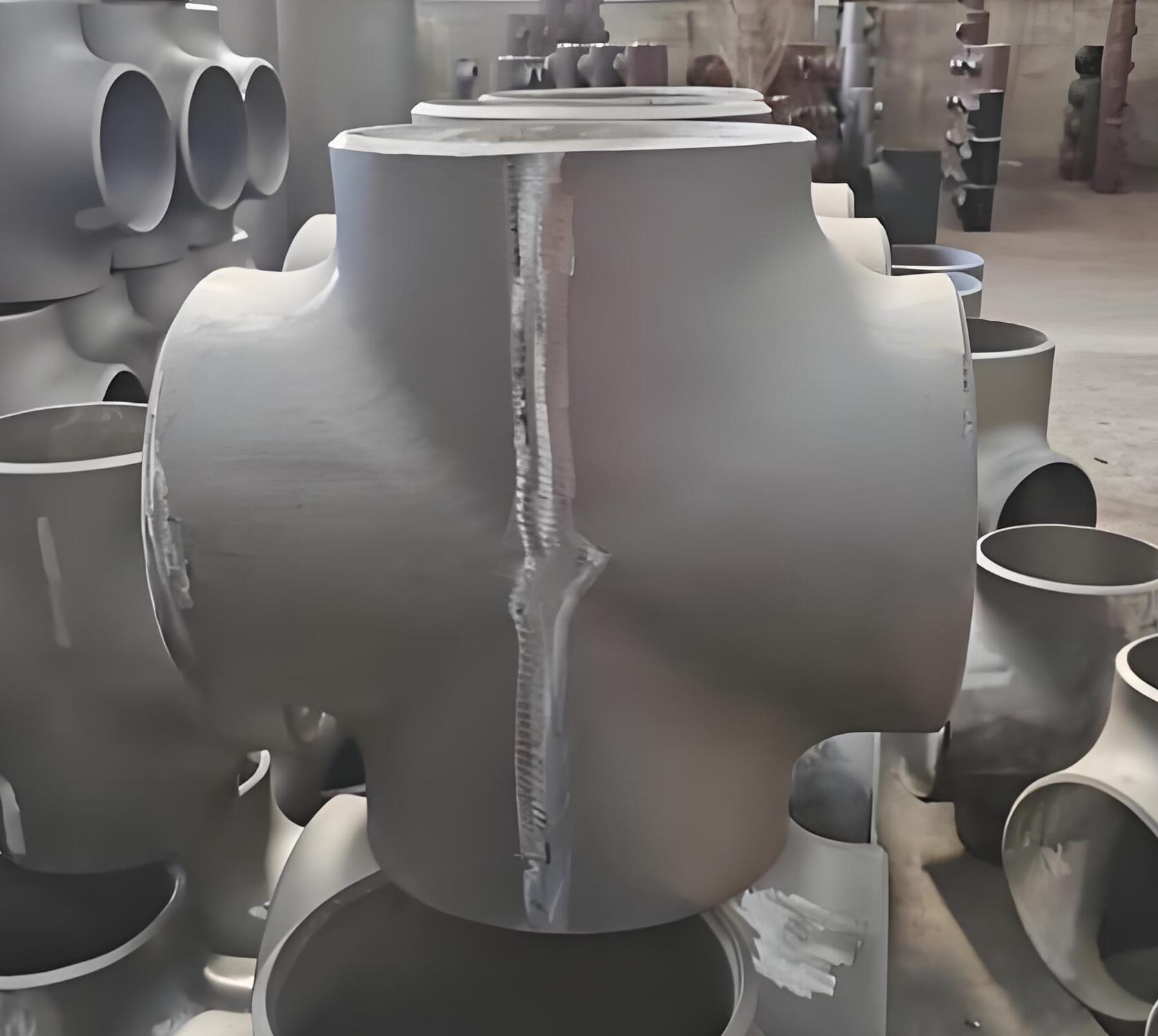
In global overseas EPC engineering project construction, pipeline fittings are divided into two major categories: seamless fittings and welded (steel plate rolled) fittings.Welded fittings use steel plates as raw materials, which are processed through plate rolling, fit-up, welding, forming, heat treatment, and non-destructive testing into fittings such as elbows, tees, and reducers, with applicable standards including GB/T13401, ASME B16.9, EN10253, etc.Within the international engineering bidding system, welded fittings are permitted for use in pressure pipelines that meet working condition requirements, but cannot be applied to high-temperature and high-pressure, strongly corrosive, flammable and explosive high-risk medium pipelines.
In recent years, overseas municipal water supply and drainage, circulating water, low-pressure compressed air, and long-distance low-pressure pipeline projects have continued to release orders, and welded fittings, with their large-diameter manufacturing capability, price advantages, and supply cycle advantages, have become the main category of China-made fittings for foreign trade export.In overseas infrastructure projects in Southeast Asia, the Middle East, Latin America, and other regions, the demand for large-diameter welded fittings is enormous, and the market space is broad.However, in foreign trade practice, numerous problems have emerged, such as owner rejection, third-party supervision rejection, customs clearance documents failing to meet requirements, and claims caused by weld defects.The root cause is that procurement personnel lack sufficient understanding of the technical shortcomings of welded fittings, the special requirements for foreign trade documents, and the boundaries of working conditions, selecting welded fittings in unsuitable scenarios, or missing key documents such as welding procedure qualification, welder qualifications, and weld inspection reports during the order fulfillment stage.
Compared with seamless pipe fittings, the most distinctive feature of welded pipe fittings is the presence of weld seams and heat-affected zones, which is both a source of cost advantage and a core source of quality risk.In foreign trade scenarios, evaluating welded pipe fittings cannot be based solely on product manufacturing cost; it is also necessary to comprehensively consider compliance with international standards, the difficulty of third-party supervision and audit, the complexity of export certification documentation, overseas on-site installation risks, and cross-border after-sales claim costs.Starting from the manufacturing process of welded pipe fittings, this article comprehensively analyzes the advantages and disadvantages of welded pipe fittings in foreign trade business, clarifies applicable scenarios and prohibited operating conditions, sorts out the key control points of the entire process of foreign trade procurement, supervision, documentation management, and export customs declaration, and summarizes typical misunderstandings in foreign trade selection, so as to provide complete support for supply chain selection and foreign trade performance in overseas pipeline projects.
II. Manufacturing Process and Basic Technical Characteristics of Welded Pipe Fittings
The raw material for welded pipe fittings is steel plate. The steel plate is rolled into a cylindrical shell, butt-welded to form a pipe blank, and then processed into various pipe fittings through pressing and hot forming.The core manufacturing processes include steel plate cutting, rolling, fit-up, welding, post-weld heat treatment, shape correction, dimensional inspection, and non-destructive testing of welds.The welding process must be based on a qualified WPS welding procedure specification, supported by a PQR welding procedure qualification report, and welders must hold internationally recognized welder qualification certificates.
The weld area undergoes the welding thermal cycle, and there are differences in metallographic structure, hardness, and corrosion resistance among the base metal, weld metal, and heat-affected zone.Weld seam areas are prone to defects such as porosity, slag inclusion, incomplete penetration, and cracks. Even with 100% non-destructive testing using RT radiographic testing, UT ultrasonic testing, MT magnetic particle testing, and PT penetrant testing, micro-defects still carry a risk of propagation.The ASME B16.9 standard permits fittings to be manufactured by rolling and welding steel plate, but explicitly stipulates that welded joints must meet all material, inspection, and marking requirements, while fully retaining the complete set of welding-related documentation.GB/T13401 specifically addresses welded fittings made from rolled steel plate, specifying dimensional tolerances, welding requirements, non-destructive testing, factory inspection, and marking specifications.
From the perspective of material categories, welded fittings can be made from carbon steel, stainless steel, duplex steel, and other materials.Carbon steel welded fittings are mostly used for low-pressure water and air pipelines;stainless steel welded fittings are mostly used for low-pressure anti-corrosion pipelines;for high-alloy heat-resistant materials, rolled and welded fittings are generally not recommended, as the risk of weld failure under high-temperature creep conditions increases significantly.The core advantage of welded fittings lies in their ability to manufacture extra-large diameters. Seamless fittings are limited by the forming process, making sizes above NPS24 extremely difficult and costly to produce, whereas welded fittings can easily produce NPS30, NPS36, or even larger diameter fittings. This is a core characteristic that seamless fittings are difficult to replace.
III. Core Advantages of Welded Pipe Fittings in Foreign Trade Business
3.1 Significant Procurement Cost Advantage, Suitable for Budget-Constrained Overseas Infrastructure Projects
The raw material for welded pipe fittings is steel plate, and the raw material procurement cost is lower than that of seamless steel pipe billets. The manufacturing process is relatively simplified. Under the same specifications, the procurement price of welded pipe fittings can be reduced by 20% to 40% compared with seamless pipe fittings.Overseas municipal engineering, power plant circulating water, and general public utility projects have tight budgets. When the owner's technical specifications do not mandate seamless pipe fittings, choosing welded pipe fittings can significantly reduce the project's material investment and enhance the competitiveness of the EPC general contractor's bid quotation.In the international low-price bidding market, welded pipe fittings are the preferred solution for controlling project costs, which is also the fundamental reason for the large volume of foreign trade orders for welded pipe fittings.
3.2 Strong Coverage of Extra-Large Diameter Specifications, Filling the Size Gap of Seamless Pipe Fittings
Seamless pipe fittings are limited by the hot pushing and extrusion forming processes, making large-diameter specifications difficult to produce, with low output and long delivery cycles.Relying on the steel plate rolling process, welded pipe fittings can produce DN800, DN1000, and even larger diameter pipe fittings.Overseas long-distance transmission pipelines, large water plants, seawater desalination, power plant circulating water, and other projects extensively use extra-large-diameter pipe fittings. Such projects mostly involve low-pressure conditions, and international industry practice generally adopts rolled and welded pipe fittings.In the large-diameter track, welded pipe fittings face almost no competition from similar products, making it an advantageous track for domestically produced pipe fittings going overseas.
3.3 Short production cycles and flexible order delivery, adapting to the schedule pressure of overseas projects
Seamless pipe fittings require the procurement of seamless pipe blanks, the hot-pushing forming process is complex, heat treatment capacity is limited, and the delivery cycle for large-specification orders is long.For welded pipe fittings, steel plate raw materials are convenient to stock, the rolling and welding forming processes are mature, automated welding production lines are widespread in domestic factories, production scheduling is flexible, and delivery cycles are shorter.Many overseas EPC projects have tight schedules, and owners impose strict requirements on delivery times. Welded pipe fittings can be rapidly organized for production and shipped on schedule, reducing the risk of liquidated damages for delayed delivery.At the same time, customized non-standard lengths, non-standard eccentric reducers, and other special-shaped products can be provided on demand, demonstrating strong flexible customization capabilities.
3.4 Broad raw material procurement channels and stronger supply chain stability
Steel plates are a bulk commodity; domestic steel mills have ample production capacity, spot resources are abundant, and there are many options for raw material procurement.Seamless steel pipe blanks are a special type of pipe material; supply resources for some special-specification seamless pipe blanks are tight, and price fluctuations are greater.For welded pipe fittings, stocking raw material steel plates is less difficult, and the risk of raw material shortages is smaller. During periods of international bulk commodity price volatility, it is easier to lock in raw material costs, stabilize quotations for foreign trade orders, and reduce the risk of raw material supply interruptions.
3.5 High international standard recognition for low-pressure utility engineering scenarios and good bid adaptability
ASME B16.9, EN10253, and GB/T13401 all accept rolled welded pipe fittings. Overseas bidding documents for low-pressure utility engineering such as municipal water supply and drainage, circulating water, and compressed air generally do not mandate seamless pipe fittings.In the bidding stage of such projects, selecting qualified welded pipe fittings can satisfy the technical clauses of the tender documents and smoothly pass the technical review.In civil infrastructure projects in Southeast Asia and the Middle East, engineering consulting companies have long used welded pipe fittings as the standard configuration for low-pressure pipelines, and market acceptance is high.
3.6 Container shipping advantages of large-diameter pipe fittings reduce cross-border logistics costs
Super-large-diameter seamless pipe fittings are bulky, heavy, difficult to manufacture, expensive, and account for an extremely high proportion of ocean shipping costs.Welded large-diameter pipe fittings of the same specification have a lower cost per unit weight and lower logistics costs corresponding to unit project investment.For long-distance ocean export projects, the combined material plus freight cost advantage is further amplified, enhancing the product's overall competitiveness in overseas markets.
IV. Inherent Shortcomings and Risks of Welded Pipe Fittings in Foreign Trade Business
4.1 Welds Are Natural Weak Points, with Insufficient Safety Margin Under Harsh Operating Conditions
Welded pipe fittings have butt welds and weld heat-affected zones, and the mechanical properties and corrosion resistance at the weld locations are weaker than those of the base metal.Under high-temperature and high-pressure, alternating loads, wet hydrogen sulfide acidic media, low-temperature impact, and hydrogen embrittlement conditions, the weld areas are prone to stress corrosion, fatigue cracks, and hydrogen-induced cracking.In the ASME B31.3 process piping code, for Category M highly hazardous fluid pipelines and GC1-class pressure piping, owner specifications often directly prohibit the use of rolled welded pipe fittings.Even if the weld seam has undergone 100% RT non-destructive testing, the risk of long-term propagation failure caused by tiny welding defects still cannot be completely eliminated.Once the pipeline leaks during operation, the cross-border project will suffer huge losses from work stoppages and claims.
4.2 The foreign trade delivery documentation system is complex, and missing documents can easily lead to rejection by third-party inspection.
For the export of welded pipe fittings, in addition to the conventional MTC material certificates and dimensional inspection reports, it is also necessary to provide additional WPS welding procedure specifications, PQR qualification reports, welder qualification certificates, welding consumable quality assurance certificates, weld seam non-destructive testing reports, and post-weld heat treatment records.The complete set of documents is large in quantity and the document chain is long, making document review far more difficult than for seamless pipe fittings.Overseas third-party inspection agencies and the owner's document review personnel will focus on verifying the validity of the WPS, welder qualifications, and radiographic films or reports.In foreign trade contract performance practice, a large number of cases show that even when the physical products are qualified, if PQR reports are missing, welder certificates have expired, or inspection reports do not meet ASME acceptance standards, the owner will directly reject the entire batch of goods, causing losses from port demurrage and return shipment.
4.3 The material traceability chain is longer, and the risk of document breaks is higher.
Seamless pipe fitting traceability chain: steel mill seamless tube blank → finished pipe fitting, with a single, clear heat number.The welded pipe fitting traceability chain includes the steel plate base material, welding consumables, welder ID, welding process, and weld seam inspection records; the traceability chain contains multiple branches.One heat number of steel plate base material can be rolled into multiple pipe fittings, welding consumables are in independent batches, and each weld seam corresponds to an inspection record.If documentation for any step is missing, the traceability chain will be broken.Overseas high-end projects require reverse traceability from the finished product back to the steel plate melting heat number, and welding consumable batches must also be traceable, which greatly increases the workload of document management and significantly raises the probability of documentation errors.
4.4 The export certification process is complex, and the review cycle is longer
For CE certification under the EU PED Directive for exports, welded pipe fittings require, in addition to base material qualifications, review of the entire welding procedure, welder qualifications, non-destructive testing personnel qualifications, and heat treatment process; notified bodies have more audit items, the certification cycle is longer, and certification costs are higher.Compared with seamless pipe fittings, the certification documentation system for welded pipe fittings is more complex, there are more review steps, and when documentation defects occur, the rectification workload is greater.Middle East SABER and PVoC conformity certification also require the submission of a full set of welding process documents, and the certification preparation period is longer.
4.5 The cost of non-destructive testing of welds is high, and the risk of missed detection objectively exists.
According to the technical specifications of international projects, the welds of welded pipe fittings for medium- and high-pressure working conditions require 100% RT radiographic testing or UT ultrasonic testing.Non-destructive testing increases manufacturing costs and production cycles.Even with 100% testing, the possibility of missed detection of tiny defects still exists.Some small and medium-sized factories do not implement testing properly, replacing full inspection with sampling inspection, and the quality of test films is poor, which easily creates hidden quality risks.After the goods are exported and arrive at the overseas construction site, if the owner discovers weld defects during re-inspection, the goods will face return and claims.
4.6 Production quality levels vary greatly, and brand reputation in overseas markets is severely polarized.
The technical capabilities of domestic welded pipe fitting manufacturers vary enormously.Leading enterprises have automated welding, professional physical and chemical laboratories, and certified non-destructive testing personnel;a large number of small factories rely on manual welding, with non-standard WPS qualification, welders lacking international qualifications, and simplified flaw detection procedures.Overseas buyers find it difficult to quickly distinguish factory capabilities, and low-price procurement easily leads to purchasing products with unqualified weld quality; once quality accidents occur, they will affect the overall international reputation of domestically produced welded pipe fittings.
4.7 There is a high risk of misuse in working condition selection, which easily leads to bid rejection
Many procurement personnel simply believe that ASME B16.9 permits welded pipe fittings and that all pressure pipelines can use them.However, the technical specifications of overseas petrochemical, oil and gas, hydrogenation, and LNG low-temperature projects explicitly prohibit the use of rolled and welded pipe fittings in critical process pipelines.Incorrect selection at the bidding stage and submission of a welded pipe fitting solution will directly lead to the rejection of the technical bid;After production was completed, the owner discovered that it did not meet the specifications, resulting in huge economic losses.
V. Applicable Scenarios and Prohibited Operating Conditions for Welded Pipe Fittings in Foreign Trade
5.1 Recommended Applicable Foreign Trade Scenarios
First, low-pressure pipeline systems for overseas municipal water supply and drainage and seawater desalination projects.Normal-temperature low-pressure water medium, no strong corrosion, low pressure, mainly large diameter, is the most important export scenario for welded pipe fittings.
Second, overseas power plant circulating water, fire water, and ordinary compressed air utility pipelines, with normal-temperature media and low pressure ratings, and no flammable, explosive, or highly toxic media.
Third, long-distance low-pressure water transmission pipelines and low-pressure inlet and outlet pipelines of large storage tanks, mainly large diameter, budget-sensitive, and without alternating fatigue loads.
Fourth, low-pressure ventilation and non-pressure-bearing process auxiliary pipelines, which do not fall within the scope of GC1 high-risk pressure pipelines.
5.2 Inapplicable and Prohibited Operating Conditions
First, high-temperature and high-pressure petrochemical process pipelines, hydrogenation units, and wet hydrogen sulfide acidic oil and gas pipelines. Under such operating conditions, welds are prone to hydrogen-induced cracking and stress corrosion cracking, and overseas owner specifications generally mandate the use of seamless fittings.
Second, low-temperature process pipelines such as LNG and liquid ammonia. Under low-temperature impact conditions, weld toughness fluctuates greatly, and the risk of brittle fracture is high.
Third, highly toxic, strongly corrosive media, and flammable and explosive high-risk process pipelines. Once leakage occurs, it will cause major safety accidents.
Fourth, pipelines subjected to alternating pressure loads and fatigue conditions. Fatigue cracks are likely to occur in weld areas.
Fifth, for some US-standard EPC projects' GC1-class pressure pipelines, the bidding documents explicitly prohibit rolled and welded fittings.
Foreign trade procurement and selection must be strictly based on design drawings, owner technical specifications, and project execution standards as the basis for judgment, and welded fittings must not be selected solely on the basis of cost advantages.
VI. Key Control Points for Foreign Trade Procurement, Technical Agreements, and Export Performance of Welded Fittings
6.1 Technical agreement clauses must clearly specify special welding requirements
In addition to conventional specifications, materials, and standards, foreign trade technical agreements must separately include special welding clauses.Clearly specify that the pipe fittings are manufactured by rolled steel plate welding;Require the supplier to provide valid WPS welding procedure specifications and PQR welding procedure qualification reports;Welder qualification requirements (ASME IX or EN ISO9606 welder certificates);Welding consumable material standards and quality assurance documentation;Weld non-destructive testing methods, testing proportions, and acceptance standards (ASME or EN acceptance levels);Post-weld heat treatment requirements;Weld identification and record requirements.At the same time, it is explicitly stated that all welding-related documentation must be provided in English and delivered with the goods.The technical agreement states: it is not permitted to pass off welded pipe blanks as steel plate rolled fittings, and omitting the weld flaw detection process is strictly prohibited.
6.2 Supplier qualification review focuses on verifying welding system capabilities
Procurement supplier audits must not only verify the pressure piping component manufacturing license; the focus should be on auditing the supplier's welding management system: a valid WPS/PQR document library, a roster of certified welders, qualifications of non-destructive testing personnel, heat treatment equipment, and a physical and chemical testing laboratory.For projects exported to the EU, verify whether PED certification covers the welding process;For US standard projects, verify welding management capabilities under the ASME system.Give priority to factories with export performance in similar overseas large-diameter welded fittings; for first-time cooperating suppliers, it is recommended to arrange an on-site factory audit to inspect the welding production line and the flaw detection laboratory.
6.3 Key Control Points for Supervision and Factory Inspection
For high-value foreign trade orders, it is recommended to arrange third-party resident factory supervision. Supervision focus: verification of base material grade of steel plates, acceptance of welding consumables, witnessing of the welding process, review of heat treatment curves, witnessing of weld nondestructive testing process, and review of flaw detection reports and films.Supervision personnel verify that welder certificates are within their validity period, and welding procedures are strictly executed in accordance with WPS.Finished product inspection verifies dimensions, groove, and appearance; the weld surface must not have defects such as cracks, porosity, or undercut.All flaw detection reports, heat treatment records, WPS, PQR, and welder certificates are pre-reviewed before shipment. Goods may only be shipped after all documents are qualified, avoiding document review failure upon arrival at the destination port.
6.4 Heat Number and Full-Chain Traceability Management
Establish a multi-level traceability system: the heat number of steel plate base material is recorded separately, welding consumable batch numbers are recorded, each weld is numbered, and weld flaw detection reports are bound to pipe fitting numbers.In addition to conventional information, the finished product steel stamp is marked with the weld number.All documents correspond one-to-one, enabling reverse traceability from finished pipe fittings to steel plate smelting furnace numbers; welding consumable batches, welder numbers, and non-destructive testing records are all archived, meeting the traceability verification requirements of overseas owners and third-party audits.
6.5 HS Classification and Customs Declaration Document Management
Welded pipe fittings are classified under HS7307, iron or steel tube fittings; customs invoices and packing lists shall truthfully indicate "Welded pipe fittings," with complete descriptions of material, specifications, and applicable standards; document descriptions shall be consistent with MTC certificates and non-destructive testing reports.When declaring large-diameter welded pipe fittings, customs will pay attention to the product manufacturing process; welding process information must not be concealed, to avoid customs inspection determining that the declaration is untrue.
6.6 Packaging, Shipping Marks, and Ocean Freight Protection
Protect the bevels and flange sealing faces of welded pipe fittings, apply anti-rust treatment to weld seams, and mark shipping marks with the order number, fitting number, material, and furnace number.Use moisture-proof packaging for ocean freight to prevent corrosion in weld seam areas and avoid failing inspection upon container opening at the destination port.
VII. Typical Misconceptions in Foreign Trade Selection and Contract Performance of Welded Pipe Fittings
Misconception 1: ASME B16.9 permits welded pipe fittings, so all pressure piping can use them.Ignoring the owner's technical specifications and medium/service condition limits, welded fittings are selected for high-risk services such as sour oil and gas and high-temperature hydrogenation, resulting in project rejection.
Misconception 2: Focusing only on the base material certificates and ignoring WPS, PQR, and welder certificates, assuming that as long as the steel plate material is qualified, the welded product is qualified.Overseas third-party inspection audits first verify welding procedure documents; the absence of a PQR leads directly to a determination that the product is nonconforming.
Misconception 3: Conflating fittings formed from ERW welded pipe blanks with fittings welded from rolled steel plate, with vague contract descriptions, so that the product type delivered by the supplier does not match the owner's requirements, causing disputes.
Misconception 4: Simplifying nondestructive testing by using sampling inspection instead of the 100% RT/UT flaw detection agreed in the contract, leaving weld defects in the actual product, causing leaks after commissioning and resulting in huge claims.
Misconception 5: Lack of traceability management, providing only the steel plate MTC and lacking welding consumable batch records and weld flaw detection records, breaking the document chain and causing the overseas owner's document archiving review to fail.
Misconception 6: Underestimating at the bidding stage the workload of preparing welded fitting documentation, discovering only near shipment that the full set of welding documents is missing, making on-time delivery impossible and resulting in delay default.
VIII. Foreign Trade Market Opportunities and Business Strategies for Welded Pipe Fittings
Global infrastructure, seawater desalination, municipal water supply, and overseas power plant circulating water projects continue to release demand for large-diameter pipe fittings. Welded pipe fittings have irreplaceable advantages in the low-pressure large-diameter segment, and foreign trade market demand remains stable.However, market competition is fierce, with a large number of low-priced products flooding the market, and overseas customers' requirements for welding quality, complete technical documentation, and certification systems continue to rise.
For domestic pipe fitting foreign trade enterprises: First, implement tiered market operations, focus on the low-pressure large-diameter public utility segment, avoid high-temperature, high-pressure, and high-risk process pipelines, and leverage the cost advantages of large diameters;Second, improve the standardized welding documentation system, establish bilingual Chinese-English WPS, PQR, and inspection report templates, standardize document delivery, and adapt to overseas supervision practices;Third, strictly review operating conditions in the early stage of orders; before accepting orders, review the medium, temperature, pressure, and owner specifications to determine whether welded pipe fittings are permitted, and eliminate operating condition mismatches;Fourth, strengthen supplier control, screen qualified factories with complete welding management systems, and eliminate small workshops without formal WPS or certified welders;Fifth, implement proper order risk classification; for large-diameter, high-value foreign trade orders, add on-site supervision and pre-review of documentation to reduce cross-border performance and claim risks.
IX. Conclusion
The greatest advantages of welded pipe fittings in foreign trade are reflected in ultra-large-diameter manufacturing capability, low procurement costs, short supply cycles, and a stable raw material supply chain. They are suitable for overseas low-pressure and ambient-temperature public engineering projects such as municipal water supply, seawater desalination, and power plant circulating water, and have extremely strong market competitiveness in budget-sensitive projects requiring large diameters.However, their inherent shortcomings cannot be ignored: the weld seam is a mechanically weak area, and under high-risk operating conditions such as high temperature, high pressure, corrosion, low temperature, and alternating fatigue, the failure risk is significantly higher than that of seamless pipe fittings;The foreign trade delivery documentation system is complex, with numerous documents such as WPS/PQR, welder qualifications, and weld seam inspection reports. Document review is difficult, the traceability chain is long, the risk of documentation breaks is high, and the export certification process is cumbersome.
In the practice of foreign trade procurement and bidding selection, project drawings and owner technical specifications must be strictly followed, applicable and prohibited operating conditions must be distinguished, and welded pipe fittings must be strictly prohibited from being blindly selected for high-risk process pipelines.In the technical agreement, clauses on welding processes, non-destructive testing, and document delivery should be fixed; supplier welding system audits, production supervision, and pre-delivery document review should be strengthened; and full-chain traceability of base materials, welding consumables, and weld seams should be ensured.Foreign trade enterprises of domestic welded pipe fittings should base themselves on the advantages of the large-diameter low-pressure track, standardize welding quality and technical document management, select models reasonably, strictly control performance risks, continue to expand overseas infrastructure markets, and increase the market share of domestic pipeline pipe fittings in the international low-pressure engineering supply chain.
References
[1] GB/T13401-2017, Steel Plate Butt-Welding Pipe Fittings [S]. National Technical Committee for Standardization of Pipeline Accessories.
[2] ASME B16.9, Factory-Made Wrought Butt-Welding Pipe Fittings [S]. American Society of Mechanical Engineers.
[3] ASME B31.3, Process Piping Code [S]. American Society of Mechanical Engineers.
[4] ASME IX, Qualification Standard for Welding and Brazing [S]. American Society of Mechanical Engineers.
[5] PED 2014/68/EU, European Union Pressure Equipment Directive [S]. European Commission.
[6] GB/T20801, Pressure Piping Code — Industrial Piping [S]. National Technical Committee for Standardization of Pressure Piping.
[7] TSG31-2025, Safety Technical Regulation for Industrial Piping [S]. Special Equipment Bureau of the State Administration for Market Regulation.
[8] ASTM A234/A234M, Wrought Carbon Steel and Alloy Steel Pipe Fittings for Moderate and High Temperature Service [S]. American Society for Testing and Materials.
[9] ASTM A403/A403M, Wrought Austenitic Stainless Steel Pipe Fittings [S]. American Society for Testing and Materials.
[10] EN 10253, Butt-Welding Pipe Fittings [S]. European Committee for Standardization.
[11] EN ISO 15614-1, Welding Procedure Qualification [S]. European Committee for Standardization.
[12] Li Xuedao. Practical Guide to Foreign Trade Procurement and Quality Control of Pressure Piping Components [M]. Beijing: China Machine Press, 2023.
[13] China Customs Brokers Association. Practical Compliance Guide for Import and Export of Iron and Steel Products [M]. Beijing: China Customs Press, 2024.
[14] Lange Steel Research Center. Research Report on International Export Markets and Risks of Rolled and Welded Pipe Fittings [R]. 2025.
[15] Customs Import and Export Tariff of the People's Republic of China (2025 Edition) [S]. China Customs Press.