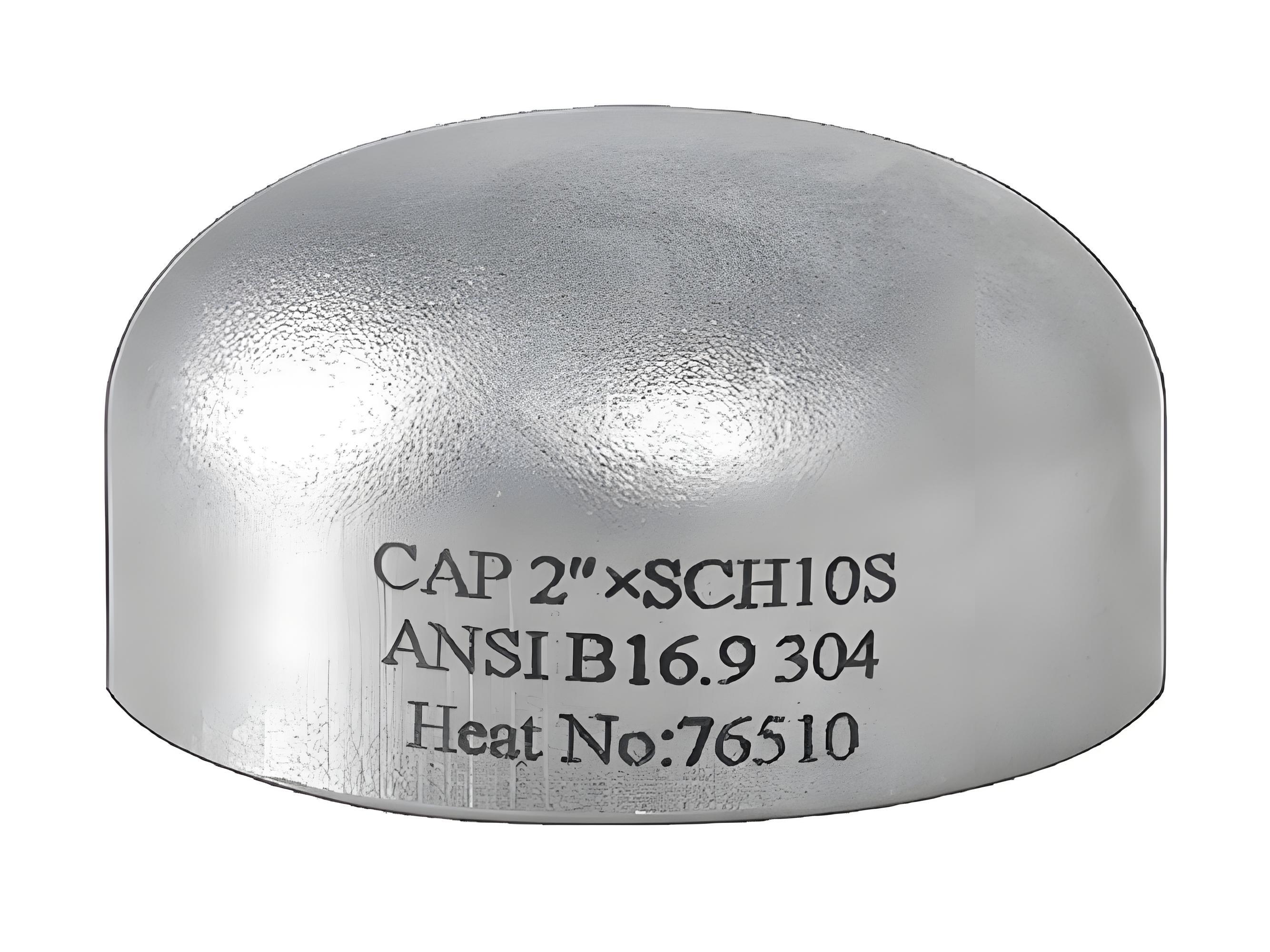
Author: Beijing Guojie Management Co., Ltd.
1. Standard Origins and Core Definitions of the DN and NPS Size Systems
In the fields of oil and gas chemicals, power and energy, municipal engineering, and cross-border foreign trade piping, DN metric nominal diameter and NPS imperial nominal pipe size are two completely independent, non-interchangeable internationally common size designation systems, and they are also a frequent source of errors in piping foreign trade quotations, connection failures, and selection deviations.Most practitioners understand them as a simple conversion between millimeters and inches, but in fact the two are nominal designation codes, not actual measured inner and outer diameters; this is the core underlying logic for using comparison tables.
DN (Nominal Diameter) is the metric nominal diameter, following the GB/T1047-2019, ISO 6708, and European EN standard systems. It is the common piping size designation in China, Russia, the EU, and the vast majority of Asian countries, applicable to carbon steel, stainless steel, and alloy piping as well as all supporting piping components such as elbows, tees, flanges, and reducers, and is mainly used for metric engineering drawings, domestic bidding, and Eurasian foreign trade projects.
NPS (Nominal Pipe Size) is the U.S. standard imperial nominal pipe size, following the ASME B36.10M carbon steel piping and ASME B36.19M stainless steel piping standard systems. It is the mandatory size standard for North American, Middle Eastern, and Southeast Asian foreign-invested EPC projects, U.S. standard equipment matching, and high-end chemical projects, and is widely used in U.S. standard Class-rated pressure piping systems.
The biggest core feature of the two systems: the nominal size does not represent the actual inner diameter. For pipes of the same specification, DN and NPS pipe outer diameters are unified, while the inner diameter changes with SCH wall thickness. This is also the core basis for why pipes can be connected and replaced across systems, requiring only compliance with the standard comparison table.
2. Core Differences and Basic Application Logic of DN and NPS
Many practical errors in foreign trade and engineering stem from confusing the measurement logic and applicable scenarios of the two systems; accurately distinguishing the core differences is the prerequisite for the correct application of the comparison table.
First, the measurement systems are different.DN is a dimensionless metric designation, and its unit logic is adapted to the millimeter system;NPS is a dimensionless imperial designation, adapted to the inch system. There is no mathematical formula for conversion between the two; there is only the statutory correspondence stipulated by national standards, and numerical conversion using 1 inch = 25.4 millimeters must not be used.For example, NPS1 (1 inch) corresponds to DN25, which is not the result of a 25.4 mm conversion but a mandatory matching specification under industry standardization.
Second, the outer diameter control logic is different.The core connection standard for industrial pipelines is the principle of unified outer diameter. For small- and medium-diameter pipes under national standards and American standards, the outer diameters of corresponding specifications are completely identical, ensuring that pipe fittings from different systems can be interchanged and connected;For large-diameter pipes, the differences between dimensional systems increase, so selection must strictly refer to the official comparison table, and empirical judgment is strictly prohibited.
Finally, the applicable scenarios are different.The PN kilogram-class pressure system is used with DN metric sizes, while the Class pound-class pressure system is used with NPS imperial sizes.When taking foreign trade orders, converting drawings, or replacing equipment, the size system must match the pressure system to avoid non-standard errors such as "European-standard pressure with American-standard sizes."
III. Detailed Comparison of Common DN and NPS Standards (General Industrial Version)
Based on the GB/T1047-2019 national standard and official ASME specifications, a general comparison table of full specifications for industrial piping and fittings has been compiled, covering the most commonly used full-size specifications for foreign trade shipments and engineering selection, and suitable for the full range of carbon steel, stainless steel, and alloy piping:
DN6 corresponds to NPS1/8, DN8 corresponds to NPS1/4, DN10 corresponds to NPS3/8
DN15 corresponds to NPS1/2, DN20 corresponds to NPS3/4, DN25 corresponds to NPS1
DN32 corresponds to NPS1-1/4, DN40 corresponds to NPS1-1/2, DN50 corresponds to NPS2
DN65 corresponds to NPS2-1/2, DN80 corresponds to NPS3, DN100 corresponds to NPS4
DN125 corresponds to NPS5, DN150 corresponds to NPS6, DN200 corresponds to NPS8
DN250 corresponds to NPS10, DN300 corresponds to NPS12; extra-large diameters of DN350 and above shall be strictly matched in accordance with standard drawings.
This conversion table represents the globally recognized statutory specifications for foreign trade. The dimensional matching, customs declaration parameters, contract labeling, and drawing conversion of all pipes, fittings, flanges, and valves must strictly follow it, and the corresponding relationships must not be changed arbitrarily.
IV. Core Rules for the Practical Application of the Conversion Table
(I) Rules for Drawing Conversion and Specification Labeling
When converting domestic metric drawings to US-standard projects or revising drawings for export projects, the dimensional designations must be replaced as a whole; partial mixed use is strictly prohibited.The original DN metric specifications on the drawings must be completely replaced with the corresponding NPS inch specifications, and must be matched with ASME standard wall thicknesses SCH40, SCH80, and SCH160 to ensure uniformity of outer diameter, wall thickness, and pressure-bearing parameters.The same applies when converting American-standard drawings to domestic ones: NPS specifications must be strictly cross-referenced against the corresponding DN metric designations to comply with national-standard production and acceptance criteria.
(II) Matching Rules for Pipe Fitting and Flange Connections
The core principle of pipe connection and flange assembly is that equivalent specifications in the reference table mean equivalent outer diameters and normal assemblability.As long as the corresponding relationship between DN and NPS standards is strictly followed, national-standard pipe fittings and American-standard pipe fittings, as well as national-standard flanges and American-standard flanges, can all achieve seamless connection, with bolt hole spacing and sealing face dimensions matching in compliance, meeting engineering installation and acceptance requirements.
(III) Wall Thickness and Inner Diameter Adaptation Rules
DN and NPS are only nominal size designations and do not determine the inner diameter.Under the same DN/NPS specification, the higher the SCH wall thickness grade, the thicker the pipe wall, the smaller the inner diameter, and the stronger the pressure-bearing capacity.When supplying for foreign trade, it is not enough to match only the nominal size; the wall thickness standard must also be confirmed simultaneously to avoid quality problems such as size designations matching but inner diameter flow being insufficient and pressure-bearing capacity failing to meet standards.
V. Common Industry Application Misconceptions and Key Foreign Trade Risk Control Points
Misconception 1: Applying the inch-millimeter formula for conversion
This is the most common elementary mistake.Many practitioners convert dimensions on their own using 1 inch = 25.4 millimeters, leading to selection errors.DN and NPS are standardized paired specifications, not mathematical conversions. For example, NPS1 corresponds to DN25 rather than DN26, and NPS1/2 corresponds to DN15 rather than DN12. The national standard comparison table must be strictly followed.
Misconception 2: Nominal size equals actual inner diameter
DN and NPS are both nominal sizes and have no measured correspondence.For pipes of the same specification, the inner diameter difference between SCH40 and SCH80 is enormous, while only the outer diameter remains uniform.Judging flow rate and bore diameter solely by nominal size will directly lead to engineering design deviations and equipment matching failures.
Misconception 3: Uniformly applying experience across large and small diameters
For small and medium-diameter pipes, the correspondence between DN and NPS is stable and highly universal, but for large-diameter pipes above DN350, the dimensional deviation between European/American standards and national standards increases, so experience from small diameters cannot be applied; the standard comparison table and outer diameter parameters must be strictly consulted to eliminate assembly errors.
Misconception 4: Mismatching size and pressure systems
In foreign trade orders, Class American-standard pressure must be paired with NPS sizes, and PN European-standard pressure must be paired with DN sizes; mixing across systems will result in non-standard products, failure to clear customs, and failed project acceptance, making this a key risk-control point in high-end foreign trade projects.
VI. Standardized Process for Foreign Trade Supply and Engineering Implementation
Drawing on practical B2B experience in pipe foreign trade, Beijing Guojie Management Co., Ltd. has organized a standardized application process covering the entire workflow of quotation, production, quality inspection, and shipment.
At the quotation stage, size codes are quickly matched according to the customer's drawing system: American-standard drawings uniformly use NPS specifications with Class pressure, while national-standard drawings use DN specifications with PN pressure; selection and quotation are strictly based on the standard comparison table to avoid specification mismatches.
In the production stage, the actual outer diameter and SCH wall thickness are used as the production baseline, and the nominal size is only marked as a code, ensuring that the product outer diameter matches international standards and meets the requirements for cross-system interconnection.
In the quality inspection and shipping stage, the size codes on product nameplates, certificates of conformity, inspection reports, and customs declaration documents are marked in a unified and standardized manner and strictly match the corresponding DN/NPS standards, ensuring full compliance in customs clearance, acceptance, and traceability.
VII. Conclusion
The DN and NPS nominal diameter comparison table is a fundamental technical tool for cross-border trade, engineering renovation, drawing conversion, and equipment replacement in the industrial pipeline industry. Its core value lies not in simple size conversion, but in standardized specification pairing, cross-system compatibility, and precise engineering interconnection.The two sizing systems have no mathematical conversion logic, only the legally defined correspondence relationships in national standards, and the nominal size is not equal to the actual inner diameter. Selection must be comprehensively based on outer diameter, wall thickness, and pressure rating.
Pipeline foreign trade enterprises and engineering technical personnel need to abandon empirical conversion thinking, strictly follow GB/T1047-2019 and ASME standard specifications, and accurately use the comparison table to match specifications, unify markings, and standardize production.By controlling the sizing system adaptation logic in a standardized way, risks such as selection errors, assembly failures, and foreign trade rejection can be effectively avoided, enhancing the professionalism, compliance, and stability of cross-border supply of pipeline products and consolidating competitive advantages in the international market.