Author: Beijing Guojie Pipeline Co., Ltd.
Abstract: Power plant power piping belongs to GCD power pressure piping, which is different from chemical GC process piping. It mainly handles high-temperature and high-pressure steam-water media and implements the special DL standard system of the electric power industry.This paper reviews the special requirements of the standard framework, material classification, manufacturing inspection, and supervision inspection traceability for power plant piping and fittings, compares the differences in procurement logic between power piping and industrial process piping, analyzes typical risks in procurement such as mixing chemical fittings, standard mismatch, and lack of heat treatment and nondestructive testing control, and establishes a closed-loop control system for procurement technical agreements, supplier admission, and incoming re-inspection suitable for thermal power, cogeneration, and new energy power stations, providing basic guidance for compliant procurement of power station piping materials.
I. Introduction
The main steam, reheat steam, main feedwater, drain, and extraction piping inside thermal power plants, cogeneration power stations, and gas turbine power stations are classified as GCD power piping in the special equipment classification. They are core pressure-bearing systems of power stations and operate continuously for long periods under high-temperature, high-pressure, and alternating thermal stress conditions. Once a fitting fails, it can easily cause pipe rupture, unit shutdown, or even major safety accidents.Procurement of power plant piping and fittings cannot directly apply the procurement approach for chemical GC piping. It has an independent and complete electric power industry standard system, with special mandatory requirements for material selection, manufacturing process, heat treatment, nondestructive testing, factory supervision inspection, and document archiving.
In engineering practice, many procurement personnel confuse the standard boundaries between power piping and process piping, directly selecting GB/T12459 chemical butt-welded fittings to replace DL/T695 power station fittings, and applying the inspection ratios and acceptance rules of chemical fittings to main steam high-temperature alloy pipelines;some projects only focus on nominal pressure, outer diameter, and wall thickness, ignoring special indicators of power station fittings such as heat strength, stress rupture performance, and temper embrittlement control;There is also insufficient understanding among projects of the supervision inspection requirements for piping components within the boiler scope, and a lack of boiler component-level manufacturing supervision inspection certificates, which hinders installation supervision inspection and delays unit commissioning.
The core logic of special procurement for power plant piping and fittings is to take DL/T5054 Steam-Water Piping Design Code as the general outline, supported by special standards for power station fittings, bent pipes, welding, and heat treatment, and combined with the Special Equipment Safety Law, Boiler Regulations, TSG 31, and GB/T32270 Power Piping Code, to form an independent procurement technical baseline.Procurement work needs to first distinguish the categories of piping systems: piping within the boiler proper scope, the four major pipelines such as main steam and reheat steam, general steam-water auxiliary piping, and circulating water and low-pressure utility piping. The standards, materials, and inspection levels corresponding to different pipelines are distinguished level by level to achieve graded and precise procurement.
II. Framework of the Special Standard System for Power Plant Piping and Fittings
Power plant power piping standards are divided into a four-tier architecture: the safety regulation tier, the general national standard tier for power piping, the electric power industry special standard tier, and the supporting material and welding standard tier.
At the regulatory and general specification level, GB/T 32270 Pressure Piping Code: Power Piping is the general basic national standard for domestic power piping, corresponding to the American standard system ASME B31.1 Power Piping Code. The two are completely different from the chemical industry ASME B31.3 Process Piping in stress calculation, allowable temperature values, and fatigue check logic, and cannot be equivalently adopted.TSG 31-2025 and the Boiler Safety Technical Supervision Regulations constrain the manufacturing, supervision inspection, and use registration requirements for piping components within the boiler scope. Combined assemblies of piping components within the boiler scope need to undergo manufacturing supervision inspection as boiler components, which is different from the supervision inspection of ordinary pressure piping components.
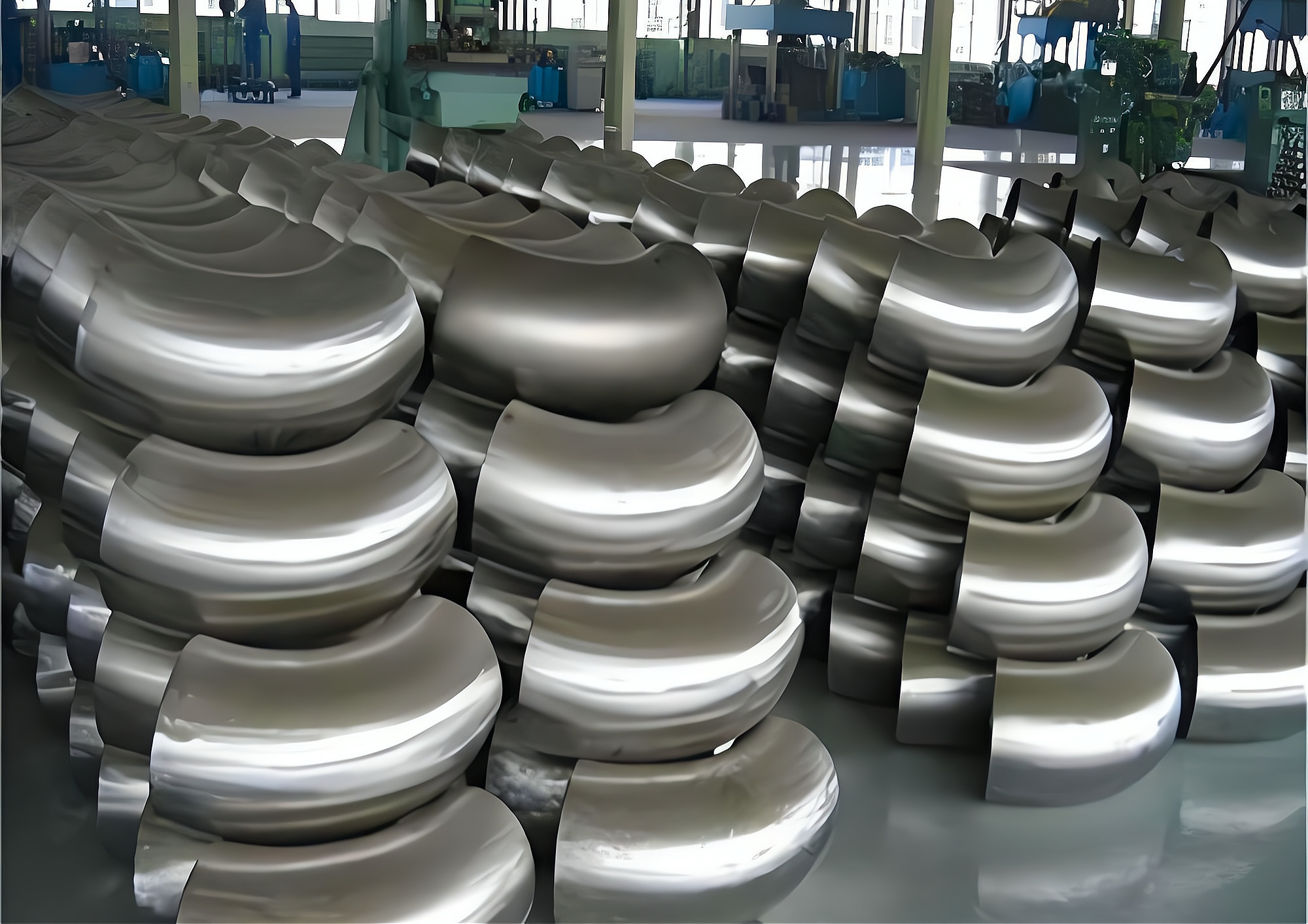
Core product standards of the electric power industry: DL/T 695 Steel Butt-Welding Pipe Fittings for Power Stations is the core product standard for pressure-bearing fittings such as power station elbows, tees, reducers, heads, and branch outlets. It is specifically aimed at high-temperature steam-water media in power stations and specifies fitting forming processes, wall thickness thinning control, heat treatment, impact, and stress rupture performance requirements;DL/T 515 "Bends for Power Stations" specifically regulates the forming, ovality, wall thickness reduction rate, and heat treatment acceptance indicators of medium-frequency hot-push bends and cold bends; the hot-push bends of the four main pipelines must meet this standard;DL/T 5054 "Code for Design of Steam-Water Piping in Fossil Fuel Power Plants" specifies the principles of pipeline material selection, pressure and temperature values, corrosion allowance, and stress verification, and is the source basis for the preparation of procurement technical conditions.
Supporting standards include DL/T 869 Welding Technical Specification for Fossil Fuel Power Plants, DL/T 868 Welding Procedure Qualification Specification, DL/T 5190.5 Piping Specification for Electric Power Construction, DL/T 1113 Acceptance Specification for Piping Supports and Hangers, etc., which together constitute the full-chain technical system for power station piping.Overseas power stations and foreign-funded power plant projects often adopt the ASME B31.1 system. During procurement, it is necessary to confirm the standard adoption plan with the special inspection agency in advance, clarify the equivalence statements for materials, inspection, and supervisory inspection, and it is not allowed to directly copy the requirements of domestic DL standards.
Key distinction needed: GB/T12459 Steel Butt-Welding Pipe Fittings is a general industrial pipe fitting standard, applicable to chemical GC piping. The standard has no special constraints on high-temperature endurance, creep performance, or hot-push forming wall thickness reduction rate, and it is strictly prohibited to directly use it for the four main pipelines of power plants and high-temperature and high-pressure pipelines within the boiler scope. This is the most frequent standard mismatch risk in power plant procurement.
III. Material Selection and Graded Procurement Key Points for Power Plant Piping and Fittings
The media in power plant piping are mainly saturated steam, superheated steam, and feedwater. The core assessment indicators for material selection are not room-temperature strength, but high-temperature endurance strength, creep performance, temper embrittlement, and thermal fatigue resistance.Mainstream materials include 20G, 15CrMoG, 12Cr1MoVG, P91, P92, and other high-alloy heat-resistant steels. Different materials correspond to strict upper temperature limits for use, and the material temperature limit table in DL/T5054 must be strictly followed during procurement.
The main steam and hot reheat steam high-temperature lines of the four major piping systems extensively use P91 and P92 martensitic heat-resistant steel pipe fittings. This type of material is extremely sensitive to heat treatment processes; after forming, normalizing plus tempering heat treatment must be performed. The heat treatment curve, holding time, and cooling rate must be provided together with the documentation. Manufacturers cannot provide only finished-product mechanical reports without the original heat treatment records;12Cr1MoVG pearlitic heat-resistant steel pipe fittings need temper embrittlement control. The impact test temperature and impact energy indicators shall be strictly implemented in accordance with power station standards, which are higher than the requirements for ordinary chemical chromium-molybdenum steel.
For medium- and low-pressure auxiliary steam and water piping, materials such as 20G and Q345R may be selected, but power-station-specific material quality assurance certificates shall likewise be preferred, distinguishing boiler steel from ordinary vessel steel.Piping for low-temperature, low-pressure, non-hazardous media such as circulating water and closed cooling water may be managed under a lower grade, but it still falls within the scope of GCD power piping and must not be treated as equivalent to ordinary water supply and drainage piping.
Material procurement documentation requirements are higher than those for chemical piping: in addition to routine mechanical properties and chemical composition, high-temperature alloy pipe fittings require the provision of high-temperature short-time tensile and stress rupture test reports;P91/P92 pipe fittings require metallographic structure inspection reports and hardness test reports;All alloy steel pipe fittings must undergo 100% spectrometric re-inspection upon arrival. The supervision and inspection agency will conduct full-coverage verification of the spectrometric records; sampling-based simplification is not permitted.
IV. Special Control of Supplier Qualifications, Manufacturing Supervision and Inspection, and Ex-Factory Documentation
The qualifications of suppliers for power plant piping fittings are divided into two categories: for ordinary steam-water auxiliary piping fittings, the manufacturer must hold a pressure piping component manufacturing license;for piping within the boiler scope and alloy fittings for the four major piping systems, in addition to the pressure piping component qualification, component combination devices and factory-prefabricated pipe sections must also undergo manufacturing supervision and inspection as boiler components and obtain a boiler supervision and inspection certificate; components lacking this certificate are not permitted for use in pipelines within the boiler boundary.
During the supplier admission stage, procurement must verify the manufacturer's supply performance for power station fittings, heat treatment production lines, and non-destructive testing qualifications. Suppliers of high-alloy fittings such as P91/P92 must possess mature heat-resistant steel heat treatment process capabilities and must not lose process control by outsourcing heat treatment to ordinary fitting factories.Under the distributor supply model, it must be clearly specified that the quality certificate, heat treatment records, and non-destructive testing reports are issued by the original manufacturer; copies re-issued by traders must bear the original manufacturer's fresh seal, and the document chain must be traceable to the smelting furnace number.
The factory marking requirements for power station fittings are strict. In addition to the conventional steel stamps for furnace number, material, and specification, hot-pushed bends and thick-wall tees for the four major piping systems must be marked with the forming method and heat treatment batch;Quality certification documents must be compiled into a dossier in accordance with DL/T695 requirements, including raw material quality assurance, forming records, heat treatment curves, non-destructive testing reports, dimensional measurement records, and hardness/impact/metallographic reports, with documents corresponding one-to-one to the actual items.
The non-destructive testing ratio differs from that for chemical GC piping: for thick-wall tees, reducers, and hot-pushed bends in the four major piping systems, the design typically requires 100% RT or UT inspection, and the defect acceptance thresholds are implemented in accordance with electric power industry standards; the sampling ratio in GB/T12459 must not be applied;thin-wall low-pressure auxiliary fittings shall be sampled at the ratio specified in the design documents, and the procurement technical agreement must specify the testing standards, acceptance grades, and qualification requirements for testing personnel.
V. Procurement Technical Agreements, Incoming Acceptance, and Substitution/Change Control
The power plant piping procurement technical agreement is the core control document. In addition to specifications, quantity, and delivery date, it must specify the belonging system (four major piping/feedwater/drainage), the edition of the applicable standard, material grade, forming method, heat treatment requirements, non-destructive testing ratio, metallographic/hardness/spectral requirements, supervision inspection type, marking, and packaging protection.Transport packaging for high-temperature alloy pipe fittings requires proper bevel protection to prevent impact damage and corrosion. Bevel processing must be machined; flame cutting of bevels is prohibited. This is a mandatory clause of DL/T5190.5.
Incoming acceptance is divided into three parts: document verification, appearance and dimensions, and physical-chemical re-inspection.Dimensional acceptance focuses on controlling the ovality and wall thickness reduction rate of hot-pushed bends; the wall thickness reduction limit for power station bends is stricter than that for ordinary stamped elbows;Appearance inspection focuses on checking internal surface wrinkles, lamination, and crack defects;100% spectral and hardness re-inspection for alloy steel;For P91/P92, add metallographic sampling inspection when necessary.Acceptance records, spectral reports, and hardness reports shall be archived simultaneously as an integral part of the supervision and inspection documentation.
The control of material substitution for power plant piping is extremely strict; heat-resistant alloy pipe fittings are not allowed to be approximately substituted based on experience. For example, P91 cannot be replaced by 12Cr1MoVG, even if the pressure and temperature appear close, because the creep performance differs enormously.Any substitution must be checked by the design institute for stress and rupture strength in accordance with DL/T5054, and a formal substitution document must be issued. It may only be executed after confirmation by the supervisor, the owner, and the supervision and inspection agency. The purchaser and the supplier have no right to replace it on their own.If a design change occurs in the project and the medium, temperature, or pressure is raised, the material, heat treatment, and non-destructive testing requirements must be upgraded simultaneously, and the procurement standards must be re-locked.
VI. Summary of High-Frequency Risks in Power Plant Piping and Pipe Fitting Procurement
First, mixed use of standards: DL power station pipe fittings and GB/T12459 chemical pipe fittings are arbitrarily interchanged. Chemical pipe fittings lack creep and rupture performance control, and when used in the four major high-temperature pipelines, there is a risk of long-term creep burst;Second, ignoring the special supervision and inspection requirements for piping within the boiler scope, only performing supervision and inspection of pressure piping components, and lacking boiler component supervision and inspection certificates;Third, the procurement contract and technical agreement lack special requirements for heat treatment, metallography, and hardness, and the manufacturer only provides routine mechanical property reports;Fourth, the spectral sampling inspection of alloy steel was simplified, and 100% spectral re-inspection was not performed, resulting in material mixing;Fifth, hot-push bending control was lacking, with wall thickness reduction and ovality exceeding standards;Sixth, the classification of GCD power piping and GC industrial piping was confused, and GC piping inspection rules were applied;Seventh, the heat treatment process for P91/P92 and other high-alloy pipe fittings was out of control, the metallographic structure was unqualified, and long-term operational hazards were planted.
VII. Conclusion
The procurement of power piping fittings for power plants is a front-line gate for safety control of the station's pressure-bearing system. Its core feature is the establishment of a dedicated standard system centered on high-temperature creep and thermal alternating stress, which is fundamentally different from the procurement logic for chemical process piping.Procurement management personnel must establish a procurement approach of "first distinguishing system boundaries, then locking onto DL-specific standards, setting material and inspection conditions by grade, and strictly implementing boiler supervision inspection and 100% alloy spectral re-inspection," and must not rely on general pipe fitting procurement experience.From supplier screening, technical agreement preparation, factory supervision inspection, document review, and incoming re-inspection to material substitution, the entire process must comply with the requirements of power piping specifications such as DL/T695, DL/T5054, and GB/T32270, safeguarding the intrinsic safety bottom line of high-temperature and high-pressure piping in power stations.
Beijing Guojie Pipeline Co., Ltd. has long been engaged in the supporting business of power station GCD power piping fittings, is familiar with the special procurement standards for the four major piping systems and steam-water auxiliary piping of thermal power, cogeneration, and gas power stations, and can assist general contracting units in preparing technical agreements for power station piping procurement, reviewing supplier qualifications, verifying heat treatment and non-destructive testing documents, and providing technical support for incoming acceptance inspection. It supplies DL-standard power station elbows, tees, reducers, bends, branch outlets, and other products, suitable for domestic power station projects as well as overseas power station projects adopting the ASME B31.1 standard, ensuring that power station piping materials meet the requirements for supervision and inspection, hydrostatic testing, and complete-set startup acceptance.
References:
[1] National Energy Administration. DL/T 5054-2016 Code for design of steam-water piping in fossil fuel power plants. Beijing: China Electric Power Press, 2016.
[2] National Energy Administration. DL/T 695-2025 Steel butt-welding pipe fittings for power stations. Beijing: China Electric Power Press, 2025.
[3] National Energy Administration. DL/T 515-2018 Power station bends. Beijing: China Electric Power Press, 2018.
[4] State Administration for Market Regulation, Standardization Administration of China. GB/T 32270-2015 Pressure piping code—Power piping. Beijing: Standards Press of China, 2015.
[5] State Administration for Market Regulation. TSG 31-2025 Safety technical supervision regulation for pressure piping—Industrial piping. Beijing: China Metrology Publishing House, 2025.
[6] ASME. ASME B31.1-2020 Power Piping. New York: ASME Press, 2020.
[7] National Energy Administration. DL/T 869-2021 Welding Technical Code for Fossil Fuel Power Plants. Beijing: China Electric Power Press, 2021.
[8] Song Keke. Manual for Design of Power Station Pressure Piping and Selection of Pipe Fittings. Beijing: Chemical Industry Press, 2022.