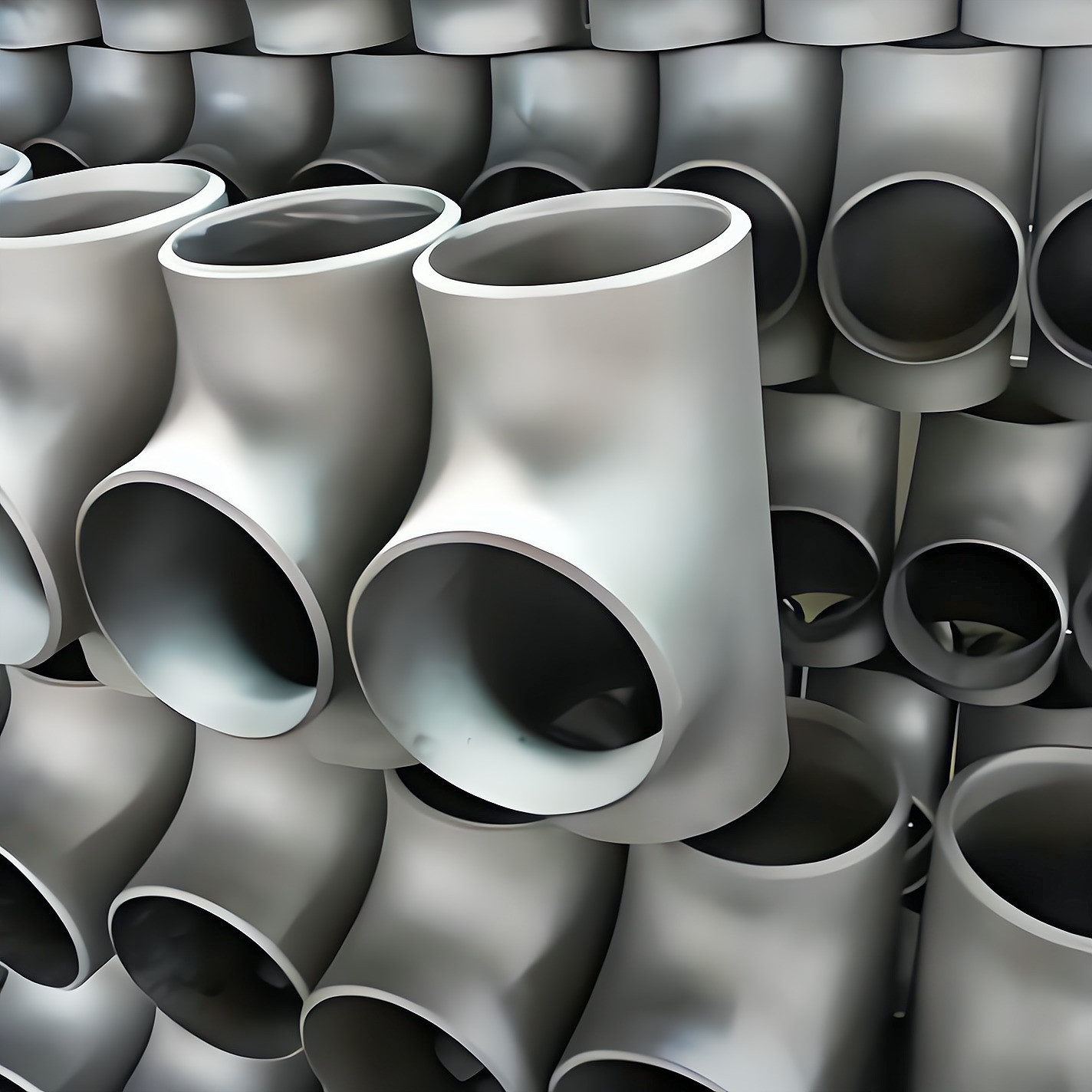
Author: Beijing Guojie Pipeline Co., Ltd.
I. Introduction
In the modern industrial system, cryogenic pipeline systems are the core pressure-bearing infrastructure for LNG liquefaction and storage, air separation, cryogenic refrigeration, hydrogen energy storage, polar oil and gas extraction, and fine cryogenic chemical projects.Cryogenic operating conditions differ from conventional ambient-temperature and high-temperature conditions, and the most core technical characteristic isthe low-temperature cold brittleness transition phenomenon of metal materials. In sub-zero low-temperature environments, the impact toughness of ordinary carbon steel pipe fittings sharply deteriorates, and the material changes from a ductile state to a brittle state. When subjected to medium pressure, fluid impact, and thermal expansion and contraction stress, they will directly crack and leak without obvious deformation, which can easily cause serious problems such as medium leakage, equipment shutdown, and safety accidents.
Most of the current hidden quality risks in pipeline procurement do not originate from product processing defects, but from practitioners' vague understanding of the selection standards for cryogenic pipe fittings, with mistaken beliefs such as "same dimensions means interchangeable" and "ordinary carbon steel can replace low-temperature special steel."In project construction and operation and maintenance, problems such as mixing of different materials, failure to conduct low-temperature impact tests, and mismatched auxiliary parts occur frequently, seriously affecting the safety and compliance of cryogenic pipeline engineering.Therefore, systematically mastering the basic standards for the selection of low-temperature piping and fittings is the core prerequisite work for industrial engineering design, procurement quality control, and construction acceptance.
II. Definition of Low-Temperature Piping Operating Conditions and Core Failure Principles
According to the GB/T 20801 Pressure Piping Code and the ASME B31.3 Process Piping Standard, industrial piping uniformly classifiespressure-bearing piping with a design temperature below -20°Cas low-temperature piping, among which -20°C to -46°C is the conventional low-temperature operating condition, -46°C to -101°C is the medium-to-deep cryogenic operating condition, and below -101°C is the ultra-low-temperature deep cryogenic operating condition, mostly used in special media transportation scenarios such as LNG, liquid nitrogen, and liquid oxygen.
The core failure risk of low-temperature piping and fittings islow-temperature brittle fracture。Metal materials have good ductility and impact resistance at room temperature, and can buffer piping pressure fluctuations and mechanical stress;As the ambient temperature continues to drop, metal grains contract, lattice stability deteriorates, and the impact toughness of the material decreases significantly; at the critical low temperature, a ductile-to-brittle transition occurs.At this point, if the piping system experiences pressure surges, thermal contraction stress, or slight vibration, crack propagation is highly likely to occur at pipe fittings, weld seams, and flange sealing locations, ultimately causing cracking and leakage.This type of failure is characterized by suddenness, absence of warning signs, and high destructiveness, which is also the core reason why the fault tolerance of low-temperature piping engineering is extremely low.
Compared with ordinary ambient-temperature pipe fittings, compliant low-temperature dedicated pipe fittings have three core advantages: first, strict control of harmful impurities such as sulfur and phosphorus, refinement of metal grains, and suppression of low-temperature embrittlement;second, they must pass the Charpy V-notch impact test at the corresponding temperature before leaving the factory to ensure that low-temperature toughness meets the standard;third, they have higher machining precision and are adapted to the low-temperature thermal contraction coefficient, avoiding sealing failure and structural stress problems caused by temperature-difference deformation.
III. Mainstream Materials and Applicable Standards for Low-Temperature Piping Fittings
The core of low-temperature pipe fitting selection isPrecisely match materials according to low-temperature ranges. The mainstream industrial engineering practices domestically and internationally adopt two major categories of standards: the American ASTM system and the national GB system. The low-temperature resistance limits and applicable working condition ranges of different materials are fixed, and arbitrary substitution or mixing is strictly prohibited.
Conventional low-temperature working conditions (-20℃~-46℃), the preferred first choice for general industrial useASTM A420 WPL6 low-temperature carbon steel pipe fittings, which are also the standard material for low-temperature projects in the chemical, gas, and municipal sectors.This material has moderate cost, mature processing technology, and stable low-temperature toughness. It can perfectly adapt to conventional low-temperature oil and gas and refrigerant medium working conditions, and is currently the most widely used low-temperature pipe fitting material.In the national standard system, the corresponding dedicated low-temperature carbon steel material must have a complete low-temperature impact test report. Ordinary carbon steels such as 20# and Q235 are strictly prohibited as substitutes.
Medium-to-deep low-temperature working conditions (-46℃~-101℃), it is necessary to selectASTM A420 WPL3 and WPL4 alloy steel low-temperature pipe fittings. This series of materials has undergone special quenching and tempering treatment, greatly improving low-temperature impact resistance and crack resistance. It can withstand extremely low-temperature working conditions and is suitable for demanding scenarios such as air separation pre-pipeline and special low-temperature chemical pipelines.
For ultra-low-temperature deep-cold working conditions (-101°C to -196°C), covering the core working conditions of LNG, liquid nitrogen, and liquid oxygen, carbon steel and alloy steel materials can no longer meet the toughness requirements, and it is necessary to use304 and 316L austenitic stainless steel pipe fittings. Stainless steel materials have no low-temperature embrittlement characteristics and still maintain stable toughness and structural strength in extreme deep-cold environments, making them the only compliant choice for ultra-low-temperature working conditions.
IV. Core Basic Principles for Selecting Low-Temperature Pipeline Fittings
Combining national standards, American standards, and years of practical engineering experience, the selection of low-temperature pipe fittings needs to follow four core principles to comprehensively avoid selection risks and ensure engineering compliance and safety.
First, the MDMT minimum design temperature fallback principle.Material selection shall not be based on normal operating temperature; it must be selected based on the project's minimum design metal temperature as the baseline, while also accounting for extreme cooling scenarios such as severe winter ambient temperatures, minimum medium temperatures, and self-refrigeration from pressure relief, with sufficient safety margin reserved to ensure that the material's low-temperature resistance limit is lower than all extreme operating condition temperatures in the system.
Second, the principle of precise graded adaptation.Strictly match the corresponding material according to the temperature range, eliminating both under-specification failures and over-specification waste.For conventional low temperatures, use WPL6; for medium-deep cryogenic temperatures, use WPL3; for ultra-low temperatures, uniformly use austenitic stainless steel. Arbitrary substitution across grades or materials is prohibited.
Third, the principle of system-wide homologous adaptation.A low-temperature piping system is an integral pressure-bearing structure; pipes, elbows, tees, reducers, flanges, fasteners, and sealing gaskets must all use a unified low-temperature grade and standard.It is strictly prohibited to pair low-temperature main materials with ordinary ambient-temperature auxiliary components, so as to avoid local toughness weaknesses in the system that could cause stress concentration, seal leakage, and other problems.
Fourth, the principle of mandatory low-temperature impact test verification.The core distinguishing credential between low-temperature pipe fittings and ordinary pipe fittings is the low-temperature impact test report. All low-temperature pressure-bearing fittings must provide Charpy impact test data at the corresponding working condition temperature. Products without a compliant impact test report shall be uniformly judged as non-standard and unqualified products, and are strictly prohibited from entering the site for use.
V. Common Misconceptions in Engineering Procurement and Selection
In the procurement of low-temperature pipeline engineering, most quality hazards originate from basic cognitive misconceptions.The first is the misconception of material confusion. Some procurement personnel judge fittings as interchangeable based solely on appearance and dimensions, substituting ordinary carbon steel or heat-resistant carbon steel for low-temperature special steel, resulting in brittle fracture failure under low-temperature working conditions.The second is the misconception of parameter selection. They focus only on pressure rating and pipe diameter specifications while ignoring the low-temperature resistance limit and impact performance, causing working condition adaptability to fail to meet standards.
At the same time, the problem of emphasizing main materials while neglecting auxiliary components is widespread. The main pipeline materials use compliant low-temperature materials, but flanges, bolts, and gaskets are at room-temperature standards. Under low-temperature environments, the shrinkage rate and toughness of auxiliary components do not match, causing failures such as sealing failure and bolt fracture.In addition, neglecting document verification and failing to check low-temperature impact reports are also main reasons why non-standard products mix into engineering projects.
VI. Conclusion
The core essence of low-temperature pipeline fitting selection is a precise adaptation process centered on low-temperature toughness, gauged by operating temperature, and grounded in authoritative standards—by no means a simple substitution with ordinary fittings.Cold brittleness failure is a high-risk hazard unique to low-temperature operating conditions; only by strictly following selection criteria—graded selection, system-wide material consistency, test verification, and extreme-condition fallback measures—can engineering hazards such as cracking, leakage, and shutdown be avoided from the procurement source.
Beijing Guojie Pipeline Co., Ltd. has long been deeply engaged in standardized selection and engineering supporting services for low-temperature and cryogenic pipeline fittings, is well versed in the differences among the full range of low-temperature fitting standards under Chinese national standards and American standards as well as the logic of operating-condition adaptation, and strictly controls material grades, low-temperature impact performance, and system matching precision, providing compliant, stable, and safe one-stop low-temperature pipeline procurement solutions for various projects such as LNG engineering, air separation and energy storage, polar oil and gas, and low-temperature chemicals