Author: Beijing Guojie Pipeline Co., Ltd.
Abstract: Pressure piping is a key regulated special equipment, and procurement compliance is a prerequisite for installation supervision and inspection, use registration, and safe commissioning.In accordance with the Special Equipment Safety Law, TSG 31-2025, GB/T 20801 and other regulations and standards, pressure piping procurement is not a simple material purchase, but a full-chain compliance management covering supplier admission, classified selection, technical agreements, factory document verification, incoming re-inspection, and change/substitution control.Current engineering projects commonly suffer from expired supplier qualifications, broken document traceability, non-compliant adoption of overseas standards, unauthorized material substitution and other problems, which easily lead to rejection of supervision and inspection, schedule delays, and hidden safety hazards.This article systematically sorts out the key points of compliance control throughout the entire procurement process, providing standardized guidance for pressure piping procurement in chemical, oil and gas, energy storage, and thermal power projects.
I. Introduction
Pressure piping is widely used in industrial fields such as chemicals, long-distance oil and gas transmission, combined heat and power, new energy storage, pharmaceuticals, and metallurgy. The media mostly have dangerous characteristics such as high temperature, high pressure, flammability, explosiveness, toxicity, and strong corrosiveness. Once rupture or medium leakage occurs, it is very easy to cause major safety production accidents such as fire, explosion, and poisoning.According to the regulatory classification of special equipment, pressure piping is divided into four major categories: GA long-distance transmission pipelines, GB public utility pipelines, GC industrial pipelines, and GCD power pipelines. The regulatory constraints, manufacturing licenses, inspection and testing, and document archiving requirements corresponding to different categories of pipelines differ significantly, and the procurement management model for ordinary industrial pipelines cannot be directly applied.
In engineering practice, the procurement stage is the link most prone to loopholes in the compliance chain for special equipment.Some procurement management personnel treat pressure piping components as ordinary building materials, focusing their work on price negotiation and delivery cycles while ignoring the mandatory compliance thresholds for special equipment;For some projects, the physical specifications of the products meet the operating conditions, but complete traceable factory quality documents and manufacturing supervision inspection certificates are lacking;Foreign-related EPC projects directly use pipe fittings that comply with overseas standards such as ASME and EN without completing confirmation of conformity with domestic regulations, and only discover non-compliance at the installation supervision inspection stage, causing large batches of materials to be returned and reworked, driving up project costs and delaying commissioning milestones.The Special Equipment Safety Law of the People's Republic of China clearly stipulates that the user unit of special equipment bears the primary responsibility for equipment selection, procurement, and acceptance, and that the safety responsibilities and administrative responsibilities arising from non-compliance in the procurement stage are borne jointly by the construction and procurement units.It can thus be seen that building a closed-loop compliance system for special equipment procurement is the core task of risk control in pressure piping projects.
Compliance in the procurement of pressure piping special equipment centers on six major dimensions: qualification compliance, material compliance, standard compliance, documentation compliance, acceptance compliance, and change compliance.Procurement work should be based on design documents, piping classification, and medium operating conditions, and should embed regulatory and code requirements upfront into all stages, including bidding evaluation, technical agreement preparation, order issuance, factory supervision inspection, incoming acceptance, warehousing and storage, and change substitution, shifting from post-event rectification to pre-event risk prevention and control.
II. Compliance Review of Supplier Qualification Access in the Pre-Procurement Stage
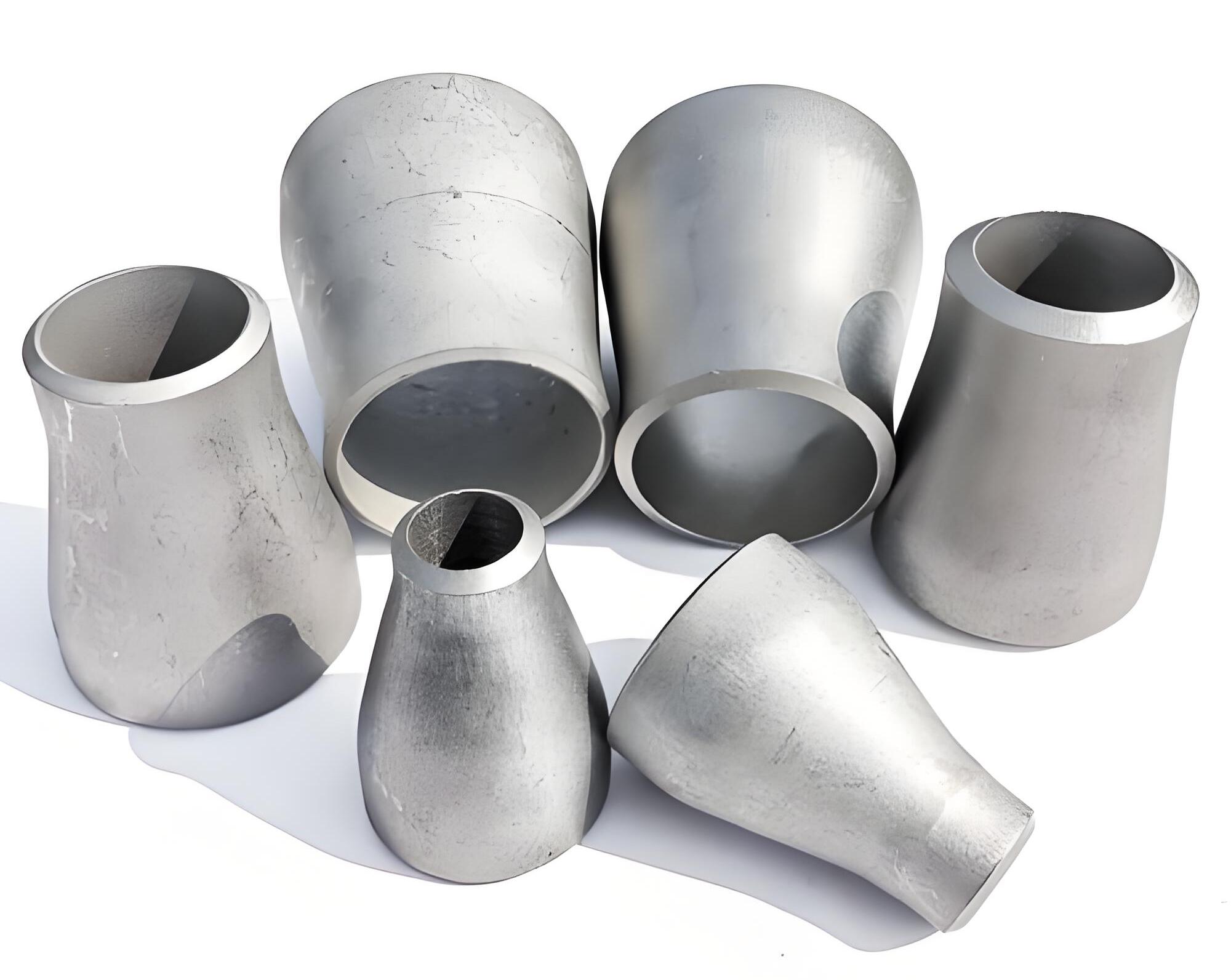
Supplier qualification review is the first gate of procurement compliance.Pressure-bearing piping components such as elbows, tees, reducers, flanges, branch outlets, pipe caps, and seamless steel pipes are products controlled under the special equipment catalog. Manufacturing enterprises must obtain a pressure piping component manufacturing license issued by the market regulatory authority, and the licensed scope, product category, material group, and pressure rating must cover the materials procured this time. Components produced beyond the licensed scope are strictly prohibited from being procured or used.
Qualification review cannot merely retain scanned copies of certificates; it is necessary to verify the certificate validity period and licensed sub-items, and simultaneously check the operational capability of the enterprise's quality assurance system.For GC1 high-risk pipelines, high-pressure alloy pipe fittings, and low-temperature steel components, priority should be given to manufacturing units with mature supervision and inspection track records and standardized documentation systems.According to the TSG D7006 manufacturing supervision and inspection rules, manufacturing process supervision and inspection is implemented for some high-pressure and high-risk piping components. A manufacturing supervision and inspection certificate must be attached at the time of delivery, and products without a supervision and inspection certificate must not be used for pipelines of the corresponding grade.
Compliance control is stricter for imported piping components and those adopting overseas standards.In addition to supporting type test certificates, for overseas components the supplier needs to provide a declaration of conformity corresponding to the TSG 31 regulations and standard comparison documents, and communicate with the project supervision and inspection agency in advance to confirm the acceptance plan. Foreign standard parameters must not be directly copied to circumvent domestic regulatory requirements.During procurement, the boundary of responsibility between the manufacturer and the trading distributor must also be clarified. The distributor does not replace the manufacturing unit in bearing the primary responsibility for product quality. Documents such as quality certificates and non-destructive testing reports must be issued by the manufacturing unit and stamped with its quality inspection seal.
III. Technical Selection and Standards Adoption Compliance Control
Procurement selection must strictly comply with the pipeline classification, medium, temperature, pressure, corrosion allowance, and applicable standards specified in the design documents.The GC1, GC2, and GC3 classifications directly determine mandatory technical requirements such as material admission thresholds, non-destructive testing ratios, heat treatment, and impact testing. For pipe fittings of the same nominal diameter, when used in pipelines of different classes, the procurement technical conditions are completely different, and the procurement standards cannot be simplified or unified.
The selection of material grades must satisfy the constraints of the materials chapter of GB/T 20801. Ordinary carbon steels such as Q235A are prohibited from being used in GC1-class pipelines and pipelines carrying toxic or flammable media;Pipe fittings for low-temperature working conditions must be accompanied by low-temperature impact test reports;Chromium-molybdenum steel and heat-resistant alloy steel must be accompanied by matching heat treatment process records and hardness test reports;For austenitic stainless steel under severe corrosion conditions, intergranular corrosion tests shall be added in accordance with design requirements.For the first use of foreign-brand materials, chemical composition and mechanical property re-inspection as well as welding procedure qualification must be completed; procurement and application may proceed only after passing re-inspection.
The standard system must be locked in the technical agreement, with one unified set of standards and version numbers for the same pipeline.If the national GB system is selected, the GB/T 20801, GB/T 12459, GB/T 9113 and other series standards shall be uniformly implemented;If the ASME B31.3 American standard system is selected, the acceptance plan for special equipment supervision and inspection must be confirmed in advance to avoid the standards not being recognized by regulatory authorities.It is strictly prohibited to arbitrarily mix GB and American standard pipe fittings within the same GC process pipeline; cross-standard mixing not only causes dimensional connection deviations but also leads to conflicts in standard acceptance at the regulatory level.
The procurement technical agreement is the core contractual document for compliance and must not merely fill in product specifications; it should clearly define pipeline classes, medium operating conditions, inspection items, non-destructive testing ratios, document lists, marking requirements, re-inspection clauses, and disposal methods for nonconforming products, serving as the technical basis for factory verification, incoming acceptance, and quality accountability.
IV. Compliance Management of Factory Documents, Product Marking and Traceability
Traceability is the most core feature that distinguishes special equipment pipeline components from ordinary pipe fitting procurement; each batch of pipeline components must establish a complete document chain to achieve full-process traceability from raw material smelting, rolling, forming, heat treatment, and non-destructive testing to finished product delivery.
The quality certificate delivered with the goods by the manufacturer shall be stamped with the manufacturer's fresh quality inspection seal, and shall clearly indicate the heat number, melt number, material grade, specification and size, delivery condition, heat treatment records, mechanical properties, non-destructive testing reports, dimensional inspection records and other information. The heat number must correspond one-to-one with the steel stamp marking on the product body.The steel stamp marking on the product body shall be firm and clear, indicating the manufacturer code, heat number, material, specification and applicable standard. Products without steel stamps, with unclear markings, or with heat numbers inconsistent with the documents shall be judged as nonconforming.
Supporting components such as flanges, gaskets, bolts and nuts shall also be included in traceability management. Material certificates and type test data for gaskets and fasteners shall be collected and archived simultaneously; it is not acceptable to collect only the data for pipes and fittings.All originals or valid copies stamped with the supplier's fresh seal shall be archived by category. The data retention period shall be no shorter than the design service life of the pipeline, and the data shall serve as evidence for special equipment registration, periodic inspection and accident traceability.
V. Compliance Process for Incoming Acceptance and Physical and Chemical Re-inspection
Incoming acceptance of materials is a key step in preventing nonconforming special equipment components from entering the construction site. Acceptance work shall not be limited to counting quantities and checking appearance; each item shall be verified against the technical agreement, design documents and regulatory clauses, and shall be divided into four modules: qualification review, document verification, actual measurement of appearance and dimensions, and physical and chemical re-inspection.
The appearance inspection focuses on identifying defects such as surface cracks, laps, blowholes and undercuts;Actually measure the outer diameter, wall thickness, flange bolt hole center circle, sealing face dimensions and groove angle, and the tolerances shall meet the standard limits.After GC1-grade toxic, flammable, and high-pressure pipeline components arrive on site, spectral re-inspection shall be carried out to verify material grades, so as to prevent material mixing and the substitution of inferior materials for superior ones;Alloy pipe fittings and low-temperature pipe fittings shall undergo additional hardness and impact test re-inspection according to design requirements.
Written acceptance records shall be formed during the acceptance process, and acceptance personnel shall sign and file them.Materials with missing documents, steel stamp markings that do not match, failed spectral re-inspection, out-of-tolerance dimensions, or non-destructive testing reports that do not meet the required proportion shall be isolated, marked, and removed from site; high-risk special equipment components are not allowed to be accepted under concession.Some projects have the habit of "constructing first and supplementing documents later," which constitutes a major compliance risk; once a safety accident occurs, the purchasing, construction, and owner units all need to bear corresponding legal liability.
VI. Compliance control of material substitution and design changes
During the project implementation stage, affected by factors such as supply cycles, raw material shortages, and inventory adjustments, material substitution needs are likely to arise, which is also a high-frequency compliance violation point in procurement.For special equipment pipeline components, the purchaser and the supplying manufacturer have no right to replace the material, specifications, or applicable standards on their own.For any material substitution, the design unit must complete strength verification, corrosion allowance calculation, and temperature-pressure performance checking, issue a formal written substitution approval form, and only implement it after confirmation by the construction unit, supervision unit, and inspection agency.
When a design change occurs in the pipeline, after the medium, pressure, temperature, and pipeline class are adjusted, the procurement technical conditions must be updated synchronously, and the material, inspection, and documentation requirements must be re-reviewed; orders must not be placed using the old procurement list.Change documents, substitution approval documents, and product quality documents shall be consolidated and archived to form a complete change closed loop.
VII. Summary of Common Procurement Compliance Risks
First, qualification review is merely a formality, and pipeline components are procured from manufacturers without manufacturing licenses or produced beyond the permitted scope;Second, GA, GB, GC, and GCD pipeline categories are confused, and incorrect procurement specifications are applied;Third, price and delivery time are emphasized while document management is neglected, supervision and inspection certificates are missing upon arrival, and the traceability chain is broken;Fourth, cross-standard arbitrary mixing occurs, and imported pipe fittings have not completed the domestic regulatory compliance comparison;Fifth, materials are substituted without authorization, lacking a design verification and approval process;Sixth, incoming acceptance is simplified, omitting spectrometric and non-destructive re-inspection;Seventh, document management is chaotic, photocopies bear no valid signatures or seals, and batches do not match the physical items, hindering later supervisory inspection and registration.
VIII. Conclusion
Compliance in the procurement of pressure piping special equipment is essentially front-loaded safety responsibility management.Supplier admission, technical agreement drafting, manufacturing supervision and inspection, factory document delivery, incoming re-inspection, and change and substitution are all constrained by the special equipment regulatory system throughout the entire process. Compliance is not an extra cost burden, but a necessary means to ensure smooth project acceptance and avoid safety and legal risks.The procurement management team needs to step outside the traditional materials procurement mindset, establish a special equipment compliance mindset, become familiar with the differentiated control requirements for pipelines of different grades under TSG 31, GB/T 20801 and other specifications, and hold the six compliance bottom lines of qualifications, materials, standards, documents, acceptance, and changes.
Beijing Guojie Pipeline Co., Ltd. has long been deeply engaged in the complete-set supply of pressure piping special equipment and is familiar with the domestic special equipment regulatory process. It can provide general contractors with supplier qualification screening, preparation of procurement technical conditions, factory document review, and technical support for incoming acceptance, along with complete-set materials including pipes, fittings, flanges, and fasteners under multiple systems such as national standards and American standards, ensuring that materials meet the compliance requirements of the entire process of supervisory inspection, registration, and commissioning, and helping chemical, energy storage, oil and gas, and thermal power projects deliver and operate pressure piping smoothly.
References:
[1] Special Equipment Safety Law of the People's Republic of China. 2014.
[2] State Administration for Market Regulation. TSG 31-2025 Safety Technical Regulation for Industrial Pipelines. Beijing: China Metrology Publishing House, 2025.
[3] State Administration for Market Regulation, Standardization Administration of China. GB/T 20801-2020 Pressure Piping Code—Industrial Piping. Beijing: Standards Press of China, 2020.
[4] State Administration for Market Regulation. TSG D7006-2020 Supervision and Inspection Rules for the Manufacture of Pressure Piping Components. Beijing: China Metrology Publishing House, 2020.
[5] Song Keke. Pressure Piping Design and Engineering Examples. Beijing: Chemical Industry Press, 2021.