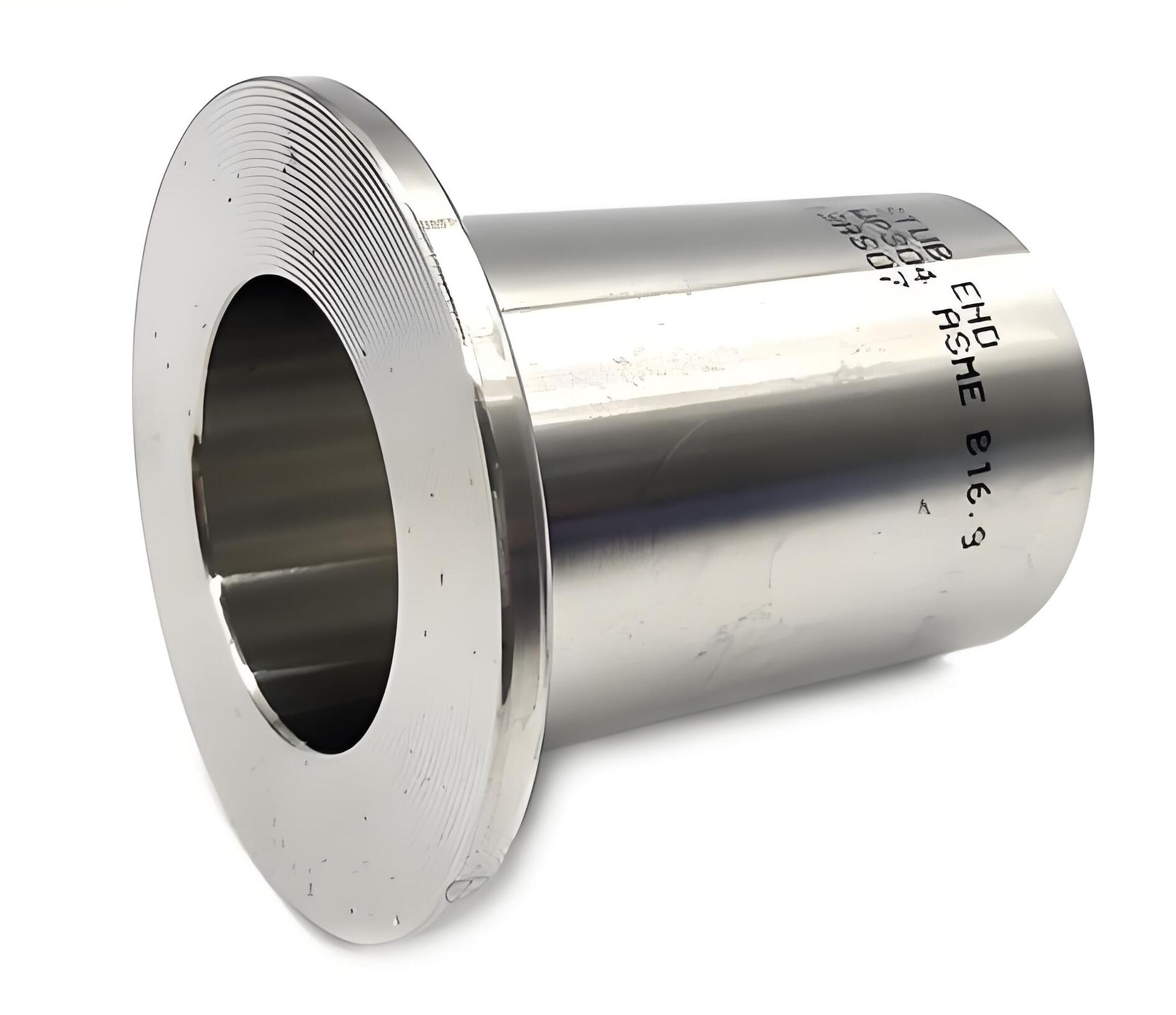
In oil and gas, chemical, power, marine engineering, and overseas EPC general contracting projects, ASME/ANSI American standard pipes and fittings are core components of pressure piping systems.A common problem frequently arises in domestic foreign trade procurement and overseas engineering projects: procurement personnel conflate ASME and ANSI, simply labeling them as "ANSI fittings" without complete standard numbers, and lacking a proper understanding of NPS nominal size, Class pressure rating, SCH wall thickness grade, and ASTM material grade. This ultimately results in fittings that do not match the pipe body, insufficient pressure-bearing capacity, and untraceable documentation, leading to batch rejections during third-party supervision and completion acceptance, causing high costs for rework, returns, and port demurrage losses.Establishing a complete and actionable ASME/ANSI core procurement identification logic is the foundation for risk control in overseas pipeline procurement.
First, it is necessary to clarify the essential difference between ASME and ANSI, which is the starting point for American standard procurement identification.ANSI is the American National Standards Institute, responsible for certifying and coordinating American national standards, and does not itself directly write technical specifications for pipes and fittings;ASME, the American Society of Mechanical Engineers, is the organization that develops the core standards for American standard pipes and fittings.The industry's commonly used terms "ANSI flanges" and "ANSI fittings" are traditional commercial customary names. The technical documents that truly govern product dimensions, pressure-bearing capacity, and manufacturing requirements are all ASME series standards, such as butt-welding fittings ASME B16.9, forged socket-welding and threaded fittings ASME B16.11, flanges ASME B16.5, and pipe dimension series ASME B36.10M and B36.19M.Procurement inquiries, orders, and technical agreements must not only state ANSI; they must specify the complete ASME standard number and version. Otherwise, discrepancies in standard interpretation between supplier and buyer are highly likely, and delivered products may not meet project technical requirements. This is also the most common source error in foreign trade orders.
Second, the identification logic for nominal size NPS and outside diameter systems.American standard pipes use the NPS inch nominal size system, which is completely different from the domestic DN metric nominal diameter logic.Key features of the ASME system: for the same NPS specification, the pipe outside diameter OD remains fixed, and changes in wall thickness only change the pipe inside diameter.For example, for NPS4 inch pipe, the outside diameter is fixed at 114.3 mm; the outside diameter remains unchanged for SCH40 and SCH80, and only the wall thickness and inside diameter change.Carbon steel and alloy steel pipe dimensions follow ASME B36.10M;Stainless steel pipes use SCH with an S suffix, such as SCH10S and SCH40S, and follow the ASME B36.19M standard; the carbon steel pipe wall thickness table cannot be directly applied.Key points for procurement identification: during the inquiry stage, the NPS specification must be confirmed, and the corresponding outside diameter must also be clearly specified. It is prohibited to simply convert DN metric sizes directly to replace NPS;For reducing pipes, reducers, and other reducing fittings, the NPS sizes at both ends must be marked at the same time.Many procurement personnel directly equate DN100 with NPS4, ignoring the underlying rule that American standard outer diameters are fixed. When the goods arrive, the mating bevels do not match, making welding and installation impossible.
Third, the identification logic of pressure rating Class in pounds, which is the stage where procurement is most prone to pitfalls.ASME flanges and pipe fittings use Class pressure ratings, commonly Class150, Class300, Class600, Class900, Class1500, and Class2500.Many procurement personnel make the mistake of directly equating the Class value with room-temperature PSI pressure, believing that Class150 means 150 psi, which is a serious error.Class represents a temperature-pressure rating curve. For the same Class, different materials and different medium temperatures allow completely different pressure-bearing values.Carbon steel Class150 flanges and 316L stainless steel Class150 flanges do not have the same upper pressure limit under high-temperature operating conditions.Procurement selection cannot rely only on room-temperature pressure. It must be based on the ASME B16.5 temperature-pressure rating table and select the Class rating in combination with the project design temperature and medium operating conditions.Butt-welded pipe fittings under ASME B16.9 are not individually marked with Class. The pressure-bearing capacity of the fitting follows the SCH wall thickness of the matching pipeline;Forged socket welding pipe fittings ASME B16.11 inherently come with a Class rating. When purchasing, the Class must be clearly marked. If the wrong pressure class is selected for high-pressure working conditions, it will directly cause a pipe burst safety accident.
Fourth, SCH wall thickness grade identification.Schedule (SCH) represents the nominal wall thickness grade of the pipe. The larger the SCH number, the thicker the wall thickness.Carbon steel commonly uses SCH20, SCH40, SCH80, SCH160, XS, and XXS;Stainless steel uses SCH5S, 10S, 40S, and 80S.ASME B36.10M specifies that the negative tolerance for carbon steel pipe wall thickness is 12.5%, meaning the actual minimum wall thickness must not be less than 87.5% of the nominal wall thickness.Core rule for procurement identification: the SCH grade of the pipe fitting must be consistent with the SCH of the matching pipeline to ensure a smooth transition of the inner diameter and reduce fluid turbulence and stress concentration.If the wall thickness of the pipe fitting is inconsistent with that of the pipe, a step will form at the welding position, which not only increases fluid erosion and wear, but also makes stress defects highly likely to appear during the non-destructive testing stage.Purchase orders must specify the SCH grade, not just the abbreviations STD or XS. At the same time, wall thickness tolerance requirements must be clearly defined, and wall thickness must be inspected by sampling upon arrival to prevent suppliers from passing off thin material as thick-walled pipe fittings.
Fifth, material grade identification logic.American standard pipe fittings use ASTM material specifications. Carbon steel butt-welding pipe fittings are A234 WPB;high-temperature alloy steels are A234 WP11 and WP22;stainless steel butt-welding pipe fittings are A403 WP304 and WP316L;forged flanges and forgings commonly use the A105 and A182 series.During procurement identification, material grades must not be abbreviated. The ASTM standard plus material grade must be fully marked, and low-carbon versions must be distinguished.The difference between 316 and 316L lies in the upper limit of carbon content. Under high-temperature welding conditions, low-carbon 316L must be selected to prevent intergranular corrosion.For acidic oil and gas working conditions containing hydrogen sulfide, the additional NACE MR0175 sulfide stress cracking resistance requirement must also be met.During the procurement stage, PMI spectral re-inspection clauses must be agreed upon in advance. After arrival, the material must be verified by spectral testing to prevent material substitution, such as passing off ordinary 304 as 316L, which is a high-frequency fraud risk in foreign trade procurement.
Sixth, identification of body markings, heat numbers, and MTC material certificates. This is the core of traceability under the ASME system.ASME B16.9 mandates permanent markings on the fitting body, including the manufacturer's trademark, ASTM material grade, NPS size, SCH wall thickness, and heat number.The heat number is the sole credential for traceability of US-standard pressure fittings. The heat number on the MTC mill test certificate must correspond exactly one-to-one with the steel stamp and inkjet marking on the fitting.The MTC certificate must include chemical composition, mechanical properties, and heat treatment records. Alloy fittings also require heat treatment curves.Fittings without a heat number, or with a certificate heat number that does not match the physical marking, are directly rejected in ASME inspection projects.Many foreign trade buyers only request certificates without checking the heat number on the body itself. Suppliers then use certificates from other batches, and once such fittings are put into pressure piping service, enormous safety hazards exist.In addition to the MTC, high-pressure projects also require supporting non-destructive testing reports UT/PT/MT, heat treatment documentation, and the inspection ratio agreed upon according to project requirements.
Seventh, key points for standardized identification of purchase orders and technical agreements.A complete ASME pipe fitting purchase order must include: standard number and edition, NPS size, fitting type, SCH wall thickness, ASTM material grade, Class pressure rating (forgings/flanges), sealing face type, non-destructive testing requirements, heat treatment requirements, MTC certificate edition, marking requirements, and packaging and export requirements.Many inquiry sheets simply state 90-degree elbow ANSI NPS4, lacking SCH, material, and standard edition, so suppliers can only quote based on general conventional products, making supply deviations highly likely.During the technical clarification stage, the standard edition must be unified; there are subtle differences in dimensions and tolerances between old and new ASME editions, and mixing editions can create acceptance obstacles.
Eighth, identification of common procurement risks and upfront acceptance control.High-frequency risks in American standard procurement include: confusing ASME B16.9 with B16.11 standards;arbitrary conversion between NPS and DN;Misreading of Class ratings;SCH wall thickness does not match the pipe;Abbreviations of material grades cause misunderstandings;Heat numbers do not match the MTC certificate;Small-diameter pipe fittings lack permanent markings;Pipe fittings of different standards are mixed in use.In overseas EPC projects, once a standard mismatch is discovered only after the goods arrive at the port, it will incur high demurrage charges and return shipping costs.It is recommended that procurement establish a front-end identification process: inquiry identification → technical clarification identification → order parameter locking → pre-delivery factory audit verification → post-arrival PMI spectral re-inspection, dimensional spot checks, and certificate verification.
In summary, the procurement identification of ASME/ANSI American standard pipe fittings is not simply about understanding product parameters, but a complete and systematic logic.From distinguishing between the concepts of ASME and ANSI, identifying NPS sizes, Class ratings, and SCH wall thicknesses, verifying ASTM materials, and checking body markings, heat numbers, and MTC certificates, it runs through the entire process of inquiry, ordering, production, factory release, and arrival acceptance inspection.For pipeline procurement in overseas EPC projects, procurement personnel must break away from traditional national standard procurement thinking, thoroughly understand the underlying rules of American standards, lock down all technical parameters at the source, avoid risks such as standard confusion, material mismatch, and non-traceable documentation, ensure that American standard pipeline projects smoothly pass supervision and acceptance inspections, and ensure the long-term safe and stable operation of overseas engineering projects.