I. Introduction
In industrial scenarios such as modern chemical production, oil and gas extraction, wastewater treatment, new energy lithium battery manufacturing, and fine chemicals, the safety and stability of corrosive media piping systems are the core lifeline of engineering operations.Compared with ordinary clean water and ambient-temperature ventilation pipelines, corrosive media pipelines are continuously exposed to high-risk operating conditions such as acid-base liquids, saline wastewater, sulfide-containing oil and gas, high-temperature oxidizing media, and organic solvents, and the inner walls of the pipes are subject to continuous chemical corrosion, electrochemical corrosion, pitting corrosion, intergranular corrosion, and stress corrosion, which imposes extremely stringent dedicated requirements on pipe material, wall thickness grade, applicable standards, and fitting configuration.
A large amount of industrial pipeline accident data shows that more than 80% of chemical pipeline leaks, pipe bursts, production shutdowns and rework, and safety accidents do not originate from product quality defects, but from systematic errors caused by confused standard-matching logic in the early selection stage.Many projects have problems such as "generalizing ordinary carbon steel, arbitrarily substituting stainless steel, and mixing low-pressure fittings into high-pressure corrosive working conditions," ignoring the dedicated standard systems corresponding to different corrosive media, which causes pipelines to corrode and age, weld seams to leak, and wall thickness to thin rapidly shortly after being put into operation, thereby not only increasing operation and maintenance costs but also triggering chain problems such as environmental pollution, work safety accidents, and project acceptance failure.Therefore, establishing systematic, working-condition-specific, and standardized matching logic for corrosive media pipelines is the key to compliant construction, long-term operation, and controllable safety of industrial pipeline engineering.
II. Core Principles of Standard Matching for Corrosive Media Pipelines
The standard matching logic for corrosive media pipelines differs from the simple logic of conventional pressure pipelines that select based only on pressure, temperature, and diameter, and its core follows "Medium properties first, material suitability as the foundation, closed-loop standards system, and working-condition margin as the fallback"Four Principles." For ordinary pipeline selection, the pressure-bearing grade and wall thickness specification are the core considerations, whereas for corrosive pipelines, the medium corrosion type, corrosion rate, working temperature, and pressure range must first be determined, and then the corresponding material grade, production standard, wall thickness grade, and anti-corrosion process must be matched.
Classified by corrosion mechanism, common industrial corrosion is mainly divided into two major categories: chemical corrosion and electrochemical corrosion.Acidic media and organic solvents are dominated by chemical corrosion, which directly destroys the metal molecular structure of the pipe material;Brine and humid sulfidation environments are dominated by electrochemical corrosion, which is highly prone to pitting and rust-through;High-temperature working conditions greatly accelerate the rate of all corrosion reactions; for every increase of tens of degrees Celsius, the corrosion intensity of the medium grows exponentially, which is also the core reason why room-temperature pipe materials are strictly prohibited for high-temperature corrosive pipelines.
Various mainstream pipeline standards all set dedicated technical thresholds for corrosive working conditions: the national standard GB strictly distinguishes the material classification and acceptance standards for chemical corrosive pipelines;American standard ASME relies on material temperature-pressure curves and corrosion resistance parameters to adapt to oil and gas sulfide corrosion conditions;European standard EN refines the pipe tolerance and material purity requirements for low-temperature, high-temperature, and salt spray corrosion.The corrosion resistance safety margins, impurity content control, and weld process requirements of different standards are completely different; arbitrary cross-standard substitution and mixing of similar specifications will directly lead to substandard corrosion resistance performance.
III. Matching Rules Between Mainstream Corrosive Media Working Conditions and Pipeline Standards
There are many types of industrial corrosive media, and working conditions vary greatly. The materials and execution standards of pipes, fittings, and flanges must be precisely matched according to the medium type to form a one-to-one standardized matching system.
Acid-base corrosive media are the most common working conditions in fine chemicals and wastewater treatment.For low-concentration, room-temperature acid-base environments, plastic-lined and rubber-lined anti-corrosion carbon steel pipeline systems can be used, following the GB/T12459 and HG/T21635 chemical anti-corrosion pipeline standards, with external carbon steel bearing pressure and an internal anti-corrosion layer isolating the medium to achieve a balance between cost-effectiveness and safety.For harsh working conditions with high-concentration strong acids and alkalis and temperatures exceeding 80°C, ordinary anti-corrosion layers are very prone to aging and peeling off. 304 and 316L stainless steel pipeline systems must be used, implementing the ASME B36.19 and GB12771 special standards for stainless steel, relying on alloy composition to achieve inherent corrosion resistance and prevent medium permeation corrosion.
Salt water, seawater, and saline wastewater corrosion are widely applied in marine engineering, water treatment, and chemical brine systems.The greatest hazard under these conditions is electrochemical pitting corrosion; ordinary carbon steel and low-quality stainless steel are highly prone to localized rust-through.For conventional brine conditions, 304 stainless steel may be selected; for high-salinity and high-temperature seawater conditions, it must be upgraded to 316L stainless steel or duplex steel 2205 material, following the special standards for corrosion-resistant piping, strictly controlling the carbon content and impurity ratio of the pipe material, enhancing resistance to chloride ion corrosion, and eliminating hidden risks of intergranular corrosion.
Oil and gas sulfide corrosive media exist in crude oil extraction, natural gas transportation, and petrochemical refining projects; the media contain corrosive components such as hydrogen sulfide and mercaptans, which can easily cause stress corrosion cracking of pipelines.Ordinary carbon steel is strictly prohibited for such pipelines; sulfide-resistant special carbon steel, low-temperature alloy steel, or duplex steel pipes must be used, strictly following API and ASME standards for oil and gas anti-corrosion pipelines, with pipe fittings and flanges of the same material to ensure uniform corrosion resistance of the entire system and avoid corrosion potential differences caused by material differences.
High-temperature oxidation corrosion conditions are commonly found in high-temperature flue gas, heat transfer oil, and high-temperature process gas pipelines. High-temperature environments accelerate metal oxidation scaling and wall thickness loss, so high-temperature-resistant stainless steel and chrome-molybdenum alloy steel pipes must be used, matching special high-temperature pipeline standards, with thickened pipe walls to reserve corrosion allowance, adapting to long-term high-temperature corrosion loss, and ensuring pipeline service life and pressure-bearing safety.
IV. Wall Thickness Grades of Corrosive Pipelines and Fitting Matching Logic
For pipeline material selection in corrosive media, matching the material alone is not enough; wall thickness grade and fitting matching are core aspects that are easily overlooked and are also high-frequency hidden danger points of corrosion failure.Ordinary pipe wall thickness only meets pressure-bearing requirements, while corroded pipelines must have additional reservedcorrosion allowance, and the thickness selection must be increased according to the medium corrosion rate and design service life.The faster the corrosion rate and the longer the operating cycle, the greater the required corrosion allowance. The Sch wall thickness grade and national standard thickened specifications must be upgraded accordingly. Conventional thin-wall pipes are prohibited for corrosive service conditions.
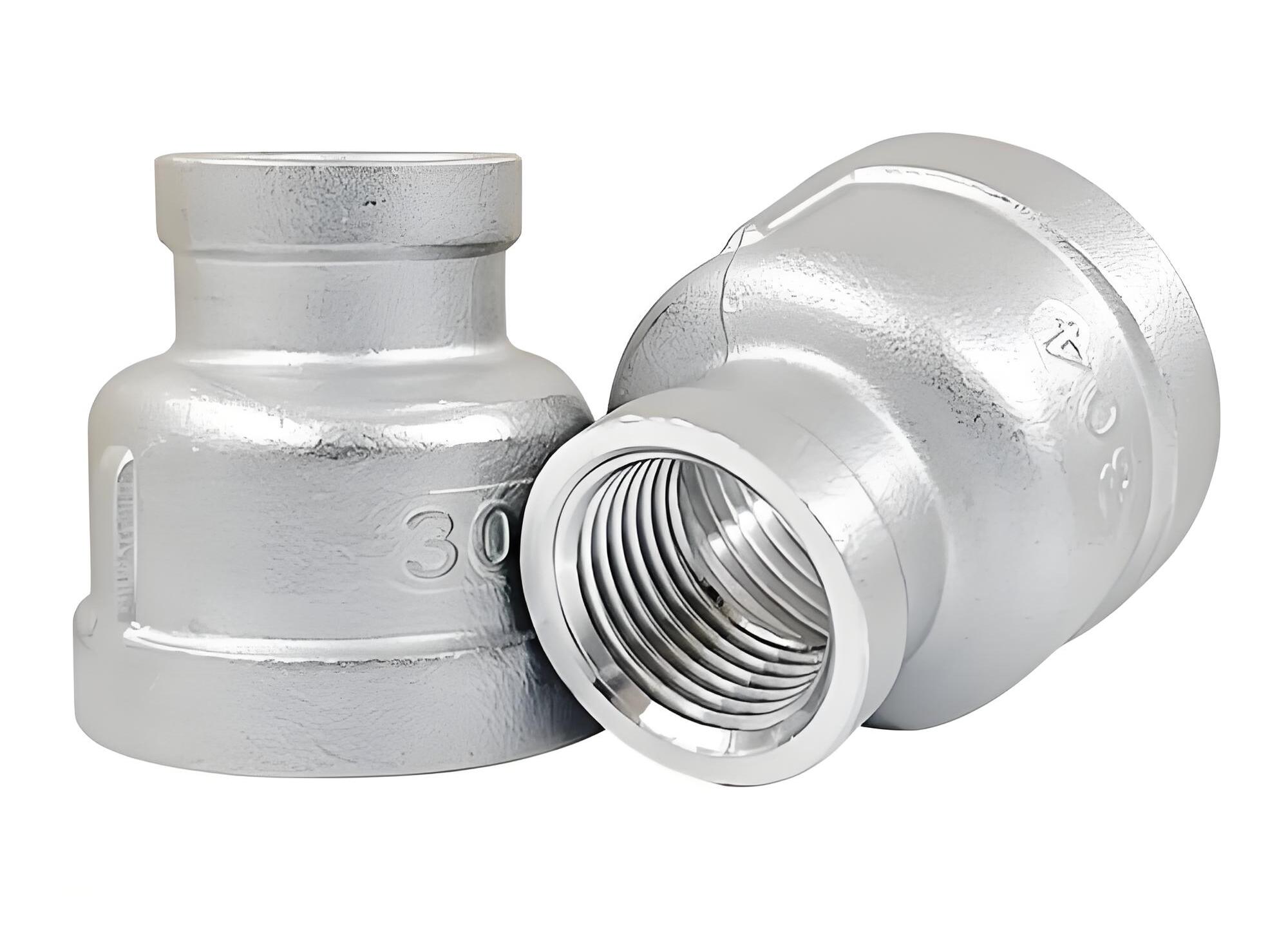
The entire corroded pipeline must adhere to the closed-loop logic of "same material source, unified standards, and matching grades."Pipes, elbows, tees, reducers, flanges, gaskets, and fasteners must all use materials of the same corrosion resistance grade. Mixing stainless steel main materials with carbon steel fittings is prohibited.Contact between different metal materials creates an electrochemical potential difference, accelerating corrosion at the contact surface and in the short term causing corrosion of flange sealing surfaces and corrosion leakage at welds. This is the most typical mixed-standard failure problem in chemical pipelines.
At the same time, corroded pipelines have higher requirements for production processes and acceptance standards. Stainless steel corroded pipelines must undergo solution treatment, pickling and passivation, with strict control of weld quality to eliminate localized preferential corrosion caused by uneven weld grains;All anti-corrosion pipelines must comply with the special acceptance specifications for chemical engineering, complete pressure tests, airtightness tests, and anti-corrosion coating inspections to ensure that the corrosion resistance performance meets the standards.
V. High-frequency Misconceptions and Risk Analysis in Engineering Procurement and Material Selection
In the practical procurement of pipelines for corrosive media, misconceptions about standard matching are highly concentrated, and most engineering hazards stem from errors in material selection logic.The first major misconception is that "carbon steel is universally adaptable." Many procurement personnel follow conventional pipeline thinking and use ordinary carbon steel pipelines for weakly acidic and weakly saline corrosive service conditions, ignoring the long-term cumulative wear caused by slight corrosion, which leads to large-scale rust perforation of the pipeline within 3 to 5 years and full-line rework and replacement.
The second major misconception is downgrading and substituting material grades. To save costs, 304 is used to replace 316L, ordinary stainless steel is used to replace duplex steel, and ordinary carbon steel is used to replace sulfur-resistant steel. Although the short-term pressure test passes, the corrosion resistance is insufficient, and continuous corrosion and leakage occur later in production, causing major losses such as shutdown maintenance and medium leakage pollution.The third major misconception is looking only at the pipe material and ignoring pipe fittings and accessories. The main material uses corrosion-resistant material, while pipe fittings and flanges use ordinary materials, causing failure at the weak points of the system.
The fourth major misconception is ignoring the amplifying effect of temperature on corrosion. Materials suitable for normal temperature are directly applied to high-temperature corrosive service conditions. At high temperatures, the corrosion resistance of the material drops precipitously, and oxidation, corrosion, and cracking problems quickly appear.In addition, no corrosion allowance, selection of too thin wall thickness, cross-standard mixing, and acceptance that only checks pressure but not anti-corrosion are all high-frequency error points in corrosive pipeline engineering.
VI. Standardized Matching and Implementation Plan for Corrosive Media Pipelines
In order to completely avoid the risk of standard mismatch, an immediately implementable matching process for corrosive pipelines has been established by combining authoritative specifications from national standards, American standards, and European standards with practical engineering experience.Step 1: Accurately determine the operating conditions, clarify the acid-base properties of the medium, salt concentration, sulfide content, operating temperature, pressure rating, and service life, and define the corrosion risk level.Step 2: Accurately match materials, select dedicated materials such as anti-corrosion carbon steel, 304, 316L, duplex steel, and alloy steel according to the corrosion type, and eliminate downgraded substitutions.
Step 3: Lock the standard system. Chemical projects shall follow HG/GB chemical standards, oil and gas projects shall follow ASME/API American standards, and overseas projects shall uniformly adopt the European EN system, using a single standard throughout without mixing.Step 4: Upgrade the wall thickness allowance. Select thicker specifications according to the corrosion rate, reserve sufficient corrosion allowance, and ensure operational safety throughout the full life cycle.Step 5: Unify materials across the entire system. Pipes, fittings, flanges, gaskets, and bolts shall use materials from the same source to eliminate galvanic corrosion caused by potential differences.Step 6: Conduct special verification upon arrival. Check material test certificates, corrosion resistance test reports, and process acceptance documents to ensure that the physical parameters fully match the operating condition standards.
VII. Conclusion
The core selection logic for corrosive media pipelines has never been simple pressure and diameter matching, but rathermedia, material, standard, wall thickness, fittings, and operating conditionsa six-in-one systematic standard matching.The essence of corrosion failure, pipeline leakage, and engineering rework is all human-controllable hidden dangers caused by the lack of standard matching logic, mismatched materials and operating conditions, and an unclosed system loop.For industrial pipeline engineering, only by abandoning conventional pipeline selection experience, strictly following the dedicated matching rules for corrosive media, adapting materials and standards by grade, unifying system configuration, and reserving corrosion safety margins, can corrosion leakage risks be eliminated at the source and long-term safe, stable, and compliant operation of pipelines under high-risk conditions in chemical, oil and gas, environmental protection, and other industries be guaranteed.
Beijing Guojie Pipeline Co., Ltd. has long been deeply engaged in multi-standard selection, parameter verification, and engineering supporting services for pipes and fittings for corrosive media. It is proficient in the standard matching logic for various acid-base, brine, sulfidation, and high-temperature corrosion conditions, and can provide one-stop solutions for different industrial scenarios covering precise material selection, standard locking, compliant supply, and technical support, comprehensively avoiding the risk of mismatched selection of corrosive pipelines and helping industrial engineering achieve safe and compliant implementation.