Author: Beijing Guojie Pipeline Co., Ltd.
Abstract: Foreign trade pipeline fittings serve different regional markets around the world, where multiple independent standard systems such as ASME, EN, JIS, and GOST coexist. Their dimensional bases, pressure ratings, tolerance systems, and flange connection parameters are not interchangeable, and cannot be simply converted or substituted for one another.In addition to matching operating condition parameters, export selection must also simultaneously satisfy target market access regulations, certification requirements, owner technical specifications, and customs clearance and on-site supervision and inspection rules.This article reviews the main international standard lineages, regional market selection patterns, material and flange matching logic, and key points of certification document control, identifies high-frequency risks such as selection mismatches, certificate nonconformities, and documents failing to meet overseas acceptance requirements, and establishes a standardized selection process for foreign trade fittings to ensure supply suitability, smooth customs clearance, and on-site assembly acceptance.
SEO keywords: foreign trade pipeline fittings, ASME export fittings, European standard EN pipeline fittings, Russian standard GOST flanges, Japanese standard JIS fittings, PED CE certified fittings, API oil and gas fittings, export elbows and tees, American standard B16.9 fittings, pipeline fitting export documents, NPS inch fittings, PN European standard fittings, foreign trade flange selection, export fitting material certificates, Middle East oil and gas pipeline accessories, Southeast Asia pipeline fittings, Russian-speaking region pipeline supply, pipeline fitting commodity inspection, export fitting tolerances, cross-border pipeline procurement specifications
I. Introduction
The domestic pipeline fitting foreign trade business continues to expand, covering projects such as Middle East oil and gas, European chemicals, Japan-Korea joint ventures, Russia and Central Asia, Southeast Asia EPC, and offshore marine engineering.The biggest difference from domestic project procurement is that export fitting selection is not simply checking pressure, diameter, and material grade, but rather takes the target market's standard system as the underlying framework.Many foreign trade order disputes, on-site assembly misalignment, owner rejection, and customs clearance obstruction do not stem from product manufacturing quality defects, but from confusion between different standard systems during the early selection stage, mistakenly assuming that Class pound ratings and PN kilogram ratings, NPS and DN can be directly interchanged as equivalents; flange bolt holes, sealing faces, and outer diameter tolerances are incompatible, and after arrival they cannot connect to valves, pipes, or equipment flanges, causing major losses such as returns, air freight for replacement parts, and schedule compensation.
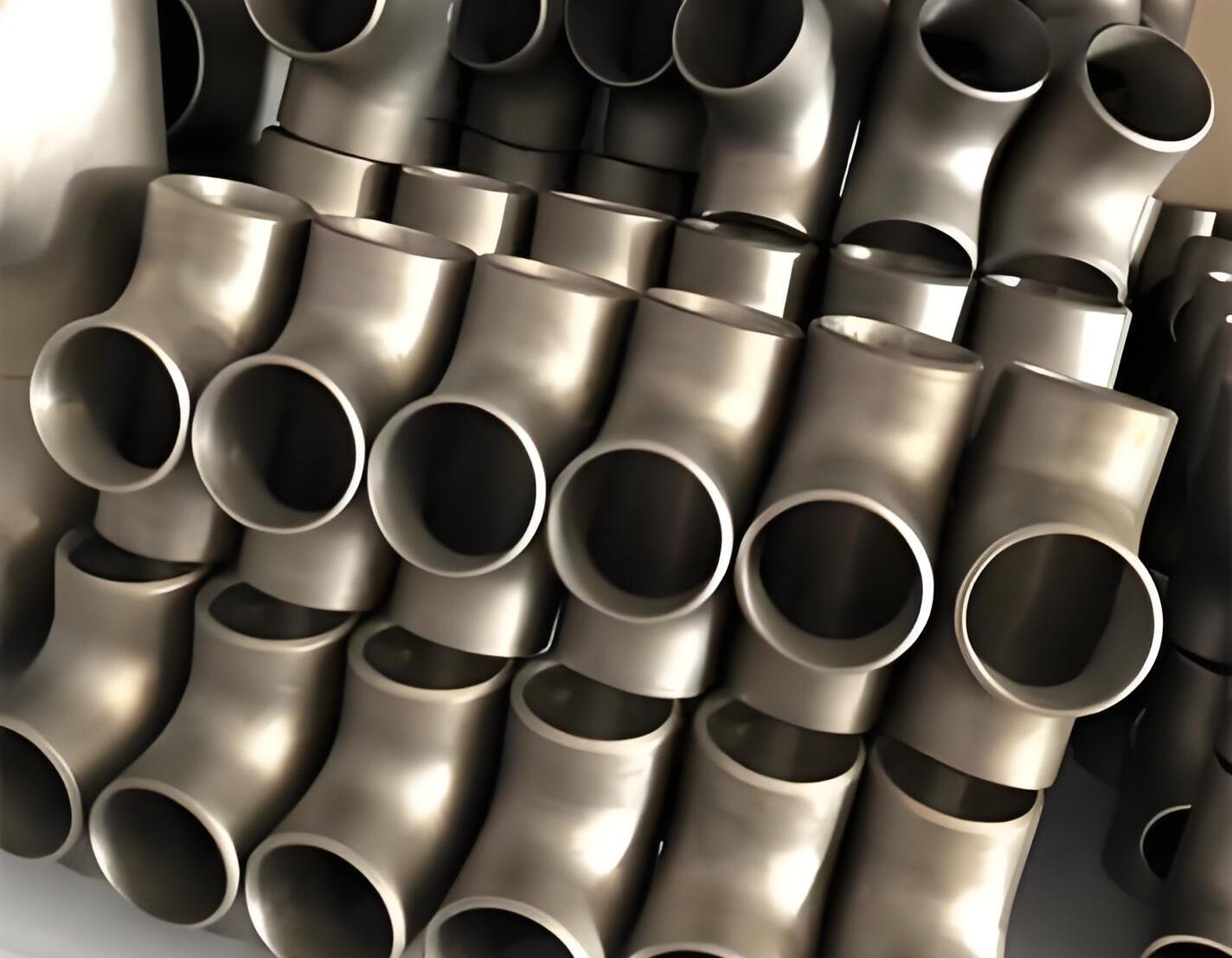
Selection of piping and fittings for foreign trade is a comprehensive technical task encompassing standard identification, regional regulatory access, operating condition verification, connection matching, certificate documentation, and packaging marking.For 90° elbows of the same appearance, manufactured respectively according to ASME B16.9, EN10253, and JIS B2311, there are differences in outer diameter, bevel, wall thickness tolerance, and bending radius; direct cross-standard mixing will inevitably fail.Therefore, mastering the fundamentals of standard selection for foreign trade piping and fittings is the first gate of technical risk control in foreign trade business.
II. Global mainstream piping and fittings standard lineages and their corresponding markets
Piping and fittings standards circulating globally can be divided into five independent lineages, each with its own dedicated dimensional basis, pressure system, flange specifications, and material specifications, with relatively stable applicable regions.
The American ASME/ANSI system dominates most oil and gas refining and petrochemical EPC projects in North America, the Middle East, and Southeast Asia. The core fitting standards are ASME B16.9 for butt-welded fittings, B16.11 for socket-welded forged fittings, and B16.5 for pipe flanges, using NPS inch nominal sizes and Class dynamic pound ratings, with wall thickness divided by Sch series, and materials based on ASTM material specifications such as A234 WPB and A403 316L; pound-rated pressure decays with temperature, and there is no fixed PN conversion value.
The European EN system covers the EU, Australia, and French-speaking African markets. The core fitting standard is EN10253, flanges implement EN1092-1, and it uses the DN metric size and PN nominal pressure system; PN is the rated pressure at reference temperature, and dimensional tolerances, bevels, and flow control are stricter than American standards. Pressure-bearing fittings entering the EU must comply with the PED Pressure Equipment Directive, complete CE conformity assessment, and REACH hazardous substance control takes effect simultaneously.
The Japanese JIS system is mostly used in Japan itself, Korean-funded factories, and Japanese-affiliated supporting projects in Southeast Asia. JIS B2311 pipe fittings and JIS B2220 flanges are also marked with DN, but the outer diameters of the thin-wall series are inconsistent with the national standard and the European standard, and the thread specifications and sealing face styles form their own system. NPT threads and JIS pipe threads are not interchangeable.
The Russian GOST system is oriented toward Russian-speaking countries such as Russia and Kazakhstan and is the local legally mandatory standard. The dimensions and pressure ratings of flanges and pipe fittings are completely independent of the European and American systems. Local owners, supervisors, customs, and special equipment inspection agencies only recognize GOST system documents, and American-standard and European-standard certificates cannot directly replace them.
The national GB system is mainly used in projects in some friendly countries under the "Belt and Road" initiative, and is adopted on the premise that the owner explicitly specifies national standards such as GB/T12459 and GB/T9113. Without the owner's confirmation, national-standard pipe fittings cannot be used by default to replace mainstream overseas standard products.
The first step in selection is to lock in the single applicable standard according to the project location, the owner's origin, and the technical specification, and to unify the standard number and version in orders, drawings, technical agreements, and production instructions. It is forbidden for one order to mix two sets of standards at the same time.
III. Key Points for Selection of Pressure Ratings, Dimensional Bases, and Flange Matching
Pressure rating is the link where mistakes are most easily made in foreign trade selection.The American-standard Class is a dynamic temperature-pressure system. Class150, 300, and 600 are only grade codes, and the allowable pressure decreases as the medium temperature rises; they cannot be directly equated with PN20 and PN50.The European-standard PN is a pressure based on normal temperature, and the meaning of its numerical value is completely different from that of the American standard. The approximate comparison tables circulated in the industry are only for reference in preliminary quotations and cannot serve as the basis for manufacturing and acceptance.Flanges, as the core components for pipe connections, are not interchangeable across ASME B16.5, EN1092-1, JIS B2220, and GOST12820 in terms of bolt circle diameter, number of bolts, sealing face outer diameter, and flange thickness; even when the DN/NPS values are the same, they cannot be mated.
The nominal size system is divided into two main lines: inch NPS and metric DN. NPS is not equal to the outer diameter, and the same NPS can be paired with multiple wall thicknesses such as Sch40, Sch80, and Sch160;Under the DN system, there are also differences in outer diameter for the same DN among European standards, Japanese standards, and national standards, with deviations being particularly noticeable for thin-wall stainless steel pipe fittings.The procurement list must simultaneously specify: standard number + nominal size + wall thickness schedule + pressure rating + sealing face type + material grade, for example ASME B16.9 NPS4 Sch80 A234 WPB 90° elbow; it must not be abbreviated as "4-inch carbon steel elbow".
Material grades must use the grade system corresponding to the target standard: ASTM grades for American standards, EN grades for European standards, and JIS material grades for Japanese standards. Domestic GB grades must not be used as direct substitutes; for example, for domestic 304 stainless steel, the grade A403 WP304 should be marked for export projects under American standards, and X5CrNi18-10 should be marked for projects under European standards, to avoid mismatch between material certificates and standards.Under corrosive media, low-temperature, and high-temperature operating conditions, the material's corrosion resistance, impact, and heat treatment requirements must also be checked accordingly.
IV. Target market access certification, inspection, and documentation selection constraints
Standard selection is not equivalent to product drawing selection. Foreign trade exports must additionally incorporate local access regulations, which is the core aspect that distinguishes them from domestic procurement.For pressure pipe fittings in the EU, the PED directive is a mandatory threshold, classifying by hazard level into Modules I, II, III, and IV; different modules correspond to different notified body audits, type testing, and technical documentation, and CE marking, Declaration of Conformity (DoC), and the technical file package must be fully complete and matched.For oil and gas projects, projects in the Middle East and the Americas often require the API Q1 quality management system and API monogram certification; large owners such as Saudi Aramco and Kuwait Petroleum also have independent supplier registration and bill of materials control.
For marine and offshore supporting pipe fittings, corresponding classification society approval certificates are required, with DNV, LR, BV, and CCS classification certificates accompanying the goods;For GOST projects in Russian-speaking regions, some require EAC Customs Union certification; without the EAC mark, customs clearance is impossible.Many projects in Southeast Asia have no mandatory certification, but owners usually require third-party inspection reports, MTR material certificates, NDT non-destructive testing reports, and hydrostatic test records; documentation is preferably in English, Russian-speaking regions require Russian-language certificates, and Japanese-standard projects can accept Japanese or bilingual documentation.
The requirements for a closed loop of foreign trade documentation are far higher than for domestic orders: heat number traceability, heat treatment curves, flaw detection films/reports, dimensional inspection records, material melting analysis, and product analysis must correspond one-to-one, and the content, location, and font specifications of steel stamp markings must also comply with the corresponding standard requirements; many projects, after the goods arrive at port, result in the entire batch being stranded at the port because the documentation format or the certificate issuing body is not recognized.
V. High-frequency Misconceptions in Foreign Trade Selection and Risk Prevention and Control Strategies
First, using the Class-PN conversion tables circulating online as a manufacturing basis and producing directly according to the converted PN, resulting in failure of flange pressure bearing and seal matching;Second, judging only by approximate appearance, substituting pipe fittings across standards, using national-standard elbows to replace ASME and EN fittings, ignoring differences in outer diameter, bevel, and tolerance;Third, mixing material grades, directly using domestic carbon steel grades to replace ASTM and EN grades, so that MTR certificates cannot correspond to the standards;Fourth, ignoring mandatory local certifications, providing only ISO9001, and lacking PED, EAC, API, and classification society certificates;Fifth, vague technical agreements that only state the fitting name and lack the standard version, sealing face, wall thickness, and inspection witness requirements;Sixth, packaging and marking that do not meet overseas requirements, with corrosion in the salt-spray environment of sea transport and blurred steel stamps, resulting in failed acceptance at the port of arrival.
In terms of prevention and control strategy, establish a foreign trade selection review process: the first step is to read the owner's specification and lock down the standards, versions, and certification list;The second step is to verify that the entire connection system of pipes, valves, and flanges uses unified standards, and confirm the matching of sealing faces, bolts, and gaskets;The third step is to verify the materials against the operating conditions, adding special test requirements for high temperature, corrosion, and low temperature;Step 4: Clarify inspection witness points and determine third-party inspection and manufacturing supervision requirements;Step 5: Confirm the document checklist in advance, specifying language, certification body, and number of copies to be delivered;Step 6: Develop a marine shipping protection plan, with rust prevention, sealing, packaging, and shipping marks executed in accordance with overseas requirements.For new projects and new markets, prioritize small-batch trial orders to verify standards, certificates, and document processes before scheduling mass production.
VI. Conclusion
The core logic for standard selection of foreign trade pipeline fittings is regional regulatory priority, unified standard systems, connection matching first, and synchronized documents and certificates.Domestic procurement habits often focus on operating pressure and size, whereas in foreign trade scenarios, whether the standard system is unified, whether certification meets local regulatory requirements, and whether flange interfaces are compatible are often more critical than pressure-bearing parameters.Export technical personnel must not rely on empirical approximate selection; they must distinguish the three layers of constraints—product manufacturing standards, market access directives, and owner project specifications—and solidify standard numbers, dimensional systems, pressure ratings, material grades, certification documents, and inspection requirements into the order technical documents, so as to avoid foreign trade risks such as standard mismatches, incompatible interfaces, customs clearance obstruction, and owner rejection from the source, and to stably meet the supply needs of EPC, oil and gas, chemical, and offshore pipeline projects in multiple regions around the world.
References
[1] ASME B16.9-2021, Factory-Made Wrought Butt-Welding Fittings [S]. New York: ASME Press, 2021.
[2] EN 10253-4:2016, Butt-Welding Pipe Fittings [S]. Brussels: CEN, 2016.
[3] European Union. Pressure Equipment Directive PED 2014/68/EU [S]. 2014.
[4] JIS B2311:2019, Steel Butt-Welding Pipe Fittings [S]. Tokyo: Japanese Standards Association, 2019.
[5] GOST 17375-2001, Steel Butt-Welding Elbows [S]. Moscow: Russian National Standard, 2001.
[6] API Spec Q1-2021, Specification for Quality Management System Requirements for Organizations Providing Products for the Petroleum and Natural Gas Industry [S]. API, 2021.
[7] Zhang Yong. Practical Guide to Foreign Trade Technology and Inspection of Pipeline Fittings [M]. Beijing: China Machine Press, 2023.