Author: Beijing Guojie Pipeline Co., Ltd.
In domestic chemical plants, long-distance oil and gas pipelines, municipal heating, electric power, pharmaceutical, special equipment and other engineering fields, pipeline fittings serve as the core pressure-bearing components of fluid transportation systems. From design selection, raw material smelting, production and manufacturing, factory inspection, to on-site welding and installation, supervision and acceptance, and completion filing, the entire process needs to follow the national standard GB pipeline fittings system.Many procurement, design, and construction personnel in actual projects easily confuse mandatory GB standards with recommended GB/T standards, cannot distinguish the subordinate relationships among pipe materials, fittings, flanges, materials, and inspection standards, and encounter problems such as cross-standard mixed use, misunderstandings of DN and PN, misuse of old and new versions of standards, and mismatched documents and certificates, resulting in fittings that cannot be connected upon arrival, failed pressure tests, rejected supervision and acceptance, and project rework.A systematic interpretation of the complete framework of national standard GB pipeline fittings and clarification of the hierarchy, applicable boundaries, and internal logic among the standards is a basic required course for pipeline procurement and engineering risk control.
At the top level, the national standard pipeline fittings system is divided into two major categories: mandatory GB standards and recommended GB/T standards. The two have different positioning and cannot be regarded as equivalent.GB refers to mandatory national standards, involving personal safety, special equipment operation safety, and public safety. Under the corresponding engineering scenarios, they must be strictly implemented, and indicators may not be arbitrarily lowered;GB/T refers to recommended national standards, representing general industry technical specifications. If not mandatorily specified by drawings, technical agreements, or regulations, enterprises may choose them through negotiation. However, once a contract stipulates the adoption of a certain GB/T standard, the provisions of that standard have contractual binding force.The core mandatory specifications in the pressure pipeline field include special equipment regulatory regulations such as the Safety Technical Supervision Regulations for Pressure Pipelines, while product dimensions, manufacturing processes, material properties, and inspection methods are mostly implemented through recommended GB/T standards.Many practitioners have a cognitive misconception, believing that GB/T standards are "optional to implement." Under the premise that a project contract stipulates the use of GB/T pipe fitting standards, they arbitrarily reduce wall thickness, non-destructive testing, and material requirements, ultimately leading to project acceptance failure.
Divided by overall framework structure, the complete national standard pipeline and pipe fitting system includes six core sections: general basic specifications for pipelines, pipe product standards, pipe fitting product standards, flange and connection accessory standards, material standards, and inspection, testing, and acceptance standards.The six sections form a closed-loop system from top to bottom. The top-level specifications define the overall design, classification, and safety bottom line of the pipeline system. The lower-level product standards specify the dimensions, tolerances, and manufacturing processes of each type of pipeline component. Material standards define the mechanical and chemical properties of raw materials. Inspection standards clarify factory and on-site testing methods, jointly supporting full lifecycle control of pressure pipelines.
The first section, top-level basic general specifications for pipelines, is centered on GB/T 20801 "Pressure Piping Code—Industrial Piping" and is the general outline of the entire industrial pressure piping system.This series of standards is divided into multiple parts, including general provisions, materials, design, fabrication and installation, inspection and testing, and safety protection. It defines the principles for pressure pipeline classification, clarifies that pipeline components include all pressure-bearing elements such as steel pipes, pipe fittings, flanges, gaskets, fasteners, valves, and expansion joints, and delineates the applicable boundaries of GA long-distance pipelines, GB public pipelines, and GC industrial pipelines.The top-level specifications do not directly specify the specific dimensions of elbows, reducers, or caps, but instead put forward general safety requirements. All pipe and pipe fitting product standards need to satisfy the underlying constraints of GB/T 20801.In the project design stage, the pipeline category, design pressure, and design temperature must first be determined according to this specification, and then pipe, pipe fitting, and flange product standards should be matched accordingly. Many procurement teams skip the top-level specifications and directly select pipe fitting product standards, ignoring the mandatory non-destructive testing and heat treatment requirements brought by pipeline classification, thereby planting hidden safety hazards.
The second section, pipe product standards, specifies the dimensions, wall thickness, tolerances, and delivery condition of various types of steel pipes.The most commonly used standards for industrial pressure piping are GB/T 8163 seamless steel pipes for fluid transportation, GB/T 6479 seamless steel pipes for high-pressure fertilizer equipment, and GB/T 9948 seamless steel pipes for petroleum cracking. Low-temperature steel pipes and heat-resistant alloy steel pipes also have their own dedicated national standards.National standard pipes use the DN nominal diameter system, with PN nominal pressure as the pressure designation, which is completely different from the logic of American standard NPS and Class pound ratings.Pipe standards clearly specify the outside diameter series, wall thickness series, wall thickness negative deviation, and delivery heat treatment condition. Pipes are the foundation of the entire piping system, and the dimensions of fittings and flanges must match the pipe outside diameter.A common mistake in procurement: fittings are selected according to GB/T 12459, but pipes are selected with a non-national-standard outside diameter series, resulting in inconsistent pipe end dimensions and making on-site butt welding impossible.
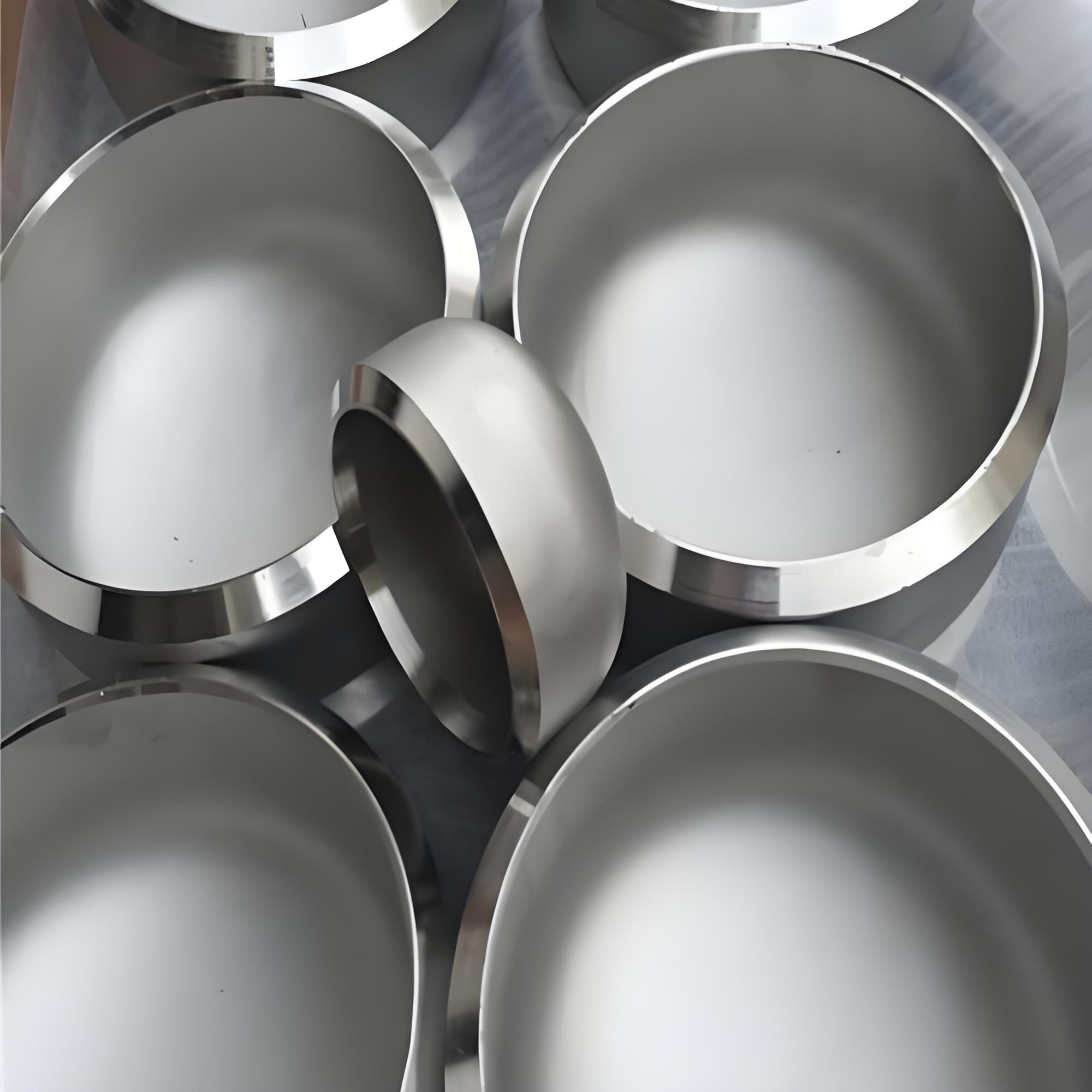
Section 3: product standards for steel pipe fittings, which are also the standards most frequently encountered in piping procurement. The core ones are GB/T 12459 "Steel Butt-Welding Pipe Fittings - Types and Parameters" and GB/T 13401 "Technical Specifications for Steel Butt-Welding Pipe Fittings." The new 2025 editions were implemented in May 2026, replacing the old standards, and specify the types, codes, dimensions, bevels, and tolerances of butt-welding fittings such as elbows, tees, reducers, caps, and lap joint stub ends.GB/T 14383 regulates forged socket-welding and threaded small-diameter pipe fittings;GB/T 43913 specifically addresses steel swaged nipples.The standards cover seamless pipe fittings and welded pipe fittings, clarify product structures such as long-radius elbows, short-radius elbows, concentric reducers, and eccentric reducers, and specify the dimensional tolerances, appearance requirements, and marking content of pipe fittings.In the purchase order, the applicable standard version of the pipe fittings must be fully specified, distinguishing seamless/welded, DN size, wall thickness, and material. Many orders simply state "national standard elbow," lacking the standard number and version, resulting in inconsistent understanding between the supplier and buyer, and delivered products that do not meet the drawing requirements.
Section Four: Supporting standards for flanges, gaskets, and fasteners.The GB/T9113 to GB/T9124 series steel pipe flange standards, including plate flat welding, neck flat welding, butt welding flanges, loose flanges, and blind flanges, specify flange sealing face types, PN nominal pressure ratings, and bolt hole dimensions.Flange-matched gaskets and fasteners also have independent national standards.A piping system is a combined sealing system. In addition to matching pipe fitting and pipe dimensions, flange pressure ratings and sealing face types must be unified.Flanges of different PN ratings must not be mixed on the same pipeline. Matching flange standards with pipe fitting standards for selection is key to pipeline sealing safety.Many projects purchase flanges and pipe fittings separately, ignoring PN pressure rating matching, resulting in flange leakage during the hydrostatic test stage.
Section Five: National standards for material grades, specifying the chemical composition, mechanical properties, and impact test requirements of raw materials such as carbon steel, stainless steel, alloy steel, and low-temperature steel.The material grades of pipes and fittings all have corresponding national standards for materials, such as carbon steel, austenitic stainless steel, and low-temperature steel.Material standards specify the allowable stress of materials under different temperature conditions, and low-temperature pipelines must meet low-temperature impact indicators.In the national standard system, material certificates and heat number traceability are mandatory requirements. Each batch of fittings must be accompanied by a material certificate, and the heat number stamped on the physical product must correspond one-to-one with the certificate.Material standards are the internal guarantee of pressure-bearing safety. If the appearance and dimensions are qualified but the material composition does not meet the standard, the product is still considered non-conforming.
Section Six: Inspection, non-destructive testing, testing, and acceptance standards.Includes national standards related to non-destructive testing UT, RT, MT, and PT, specifications for hydrostatic testing and airtightness testing, and welding acceptance standards.The national standard system distinguishes between factory inspection and on-site supervision and inspection, and specifies different flaw detection ratios for pipelines of different pressure levels and different media.For GC1 high-pressure and highly toxic medium pipelines, the non-destructive testing ratio requirements are higher.Many procurement personnel only focus on the product's external dimensions and neglect inspection clauses such as non-destructive testing and heat treatment. Even if the physical dimensions comply with GB/T12459, if flaw detection defects exceed the standard, the product still cannot pass the special equipment supervision inspection.At the same time, the national standard mandates product body marking, indicating the standard number, material, DN, and heat number, to achieve full-process traceability.
To understand the national standard framework, it is also necessary to clarify the two basic concepts of DN and PN.DN is the nominal diameter in the national standard, a general nominal size for piping systems, and is not equal to the actual outer diameter;PN is the nominal pressure in the national standard, representing the allowable pressure-bearing capacity at a specified temperature, and cannot be simply and directly converted to the American standard Class pound rating.This is the most core difference between the national standard and the American standard systems. In many foreign trade and overseas-related projects, procurement personnel simply equate PN16 with Class150, resulting in incorrect pressure-bearing selection.In the national standard system, outer diameters are divided into Series I (equivalent adoption of internationally common outer diameters, consistent with American standard outer diameters) and Series II domestic traditional outer diameters. When selecting for procurement, the outer diameter series must be clearly specified; otherwise, the outer diameters of pipe fittings and pipes will be inconsistent and cannot be connected.This is a high-frequency pitfall in national standard procurement.
At the same time, attention must be paid to the iteration of national standard versions. For example, the new 2025 editions of GB/T12459 and GB/T13401 have been published and implemented, and the old versions are being gradually abolished.There are subtle adjustments between the old and new versions in dimensional tolerances and some fitting parameters. The project technical agreement must specify the standard version adopted and must not vaguely write GB/T12459; otherwise, the supplier will supply according to the old version, which conflicts with the new version drawings.In overseas EPC projects, some projects will have both national standard and American standard requirements at the same time. The scope of application must be strictly defined, and arbitrary cross-standard mixing is strictly prohibited.
At the practical procurement level, the procurement of national standard piping and fittings should follow a top-down logic: Step one, according to GB/T20801 pressure piping code, confirm the piping class, design temperature and pressure;Step two, select the pipe material standard and outside diameter series;Step three, match the execution standards for fittings such as elbows, tees, reducers, and caps;Step four, determine the flange PN rating and sealing face type;Step five, lock in the material grade and material standard;Step six: agree on the requirements for non-destructive testing, heat treatment, and hydrostatic testing;Step seven: specify the requirements for product identification, material MTC certificates, and heat number traceability.The entire set of procurement technical agreements must rely on the complete chain of the national standard system and must not use product standards in a fragmented, isolated manner.
In the project acceptance stage, the core logic reviewed by the special equipment supervision and inspection agency is also based on this overall national standard framework.Not only must the physical dimensions and appearance of the pipe fittings be verified, but the entire documentation chain must also be checked: the raw material steel mill quality assurance certificate, the pipe fitting manufacturer's material certificate, the heat number, the heat treatment records, the non-destructive testing reports, and the factory pressure test records, with the physical steel stamp markings corresponding one-to-one with the certificates.If the physical item is qualified but the documentation chain is broken, it will still be judged as unqualified under the national standard system, and the pressure piping supervision and inspection filing cannot be completed.
Of course, the national standard system also has boundaries of applicability.The national standard GB piping and pipe fitting system mainly serves domestic engineering projects and domestic special equipment regulatory scenarios;If an overseas project adopts ASME American standards, the American standard system shall be followed preferentially.Some projects have mixed technical requirements of "national standard products, but requiring American standard non-destructive testing." This must be clearly stipulated in the contract technical agreement to avoid standard conflicts.
In summary, the national standard GB pipeline and piping fittings system is not a simple pile of scattered independent standards, but a complete engineering technical system that is top-down, clearly hierarchical, and interlinked.The top-level pressure piping code defines the safety bottom line; pipe, fitting, and flange product standards specify geometric dimensions and manufacturing requirements; material standards control raw material performance; and inspection and acceptance standards control quality verification and traceability.Practitioners engaged in pipeline design, procurement, construction, and supervision and inspection must not merely memorize a single fitting standard; they must establish holistic framework thinking, clarify the subordinate relationships among standards, and identify key risk points such as DN/PN, outside diameter series, version updates, and material traceability.Strictly follow the national standard system throughout the entire process of procurement, selection, and acceptance to avoid problems such as standard mismatches, parameter misinterpretation, and missing documentation, ensure the safe and stable operation of pressure piping engineering, and achieve smooth passage of supervision and inspection acceptance on the first attempt.