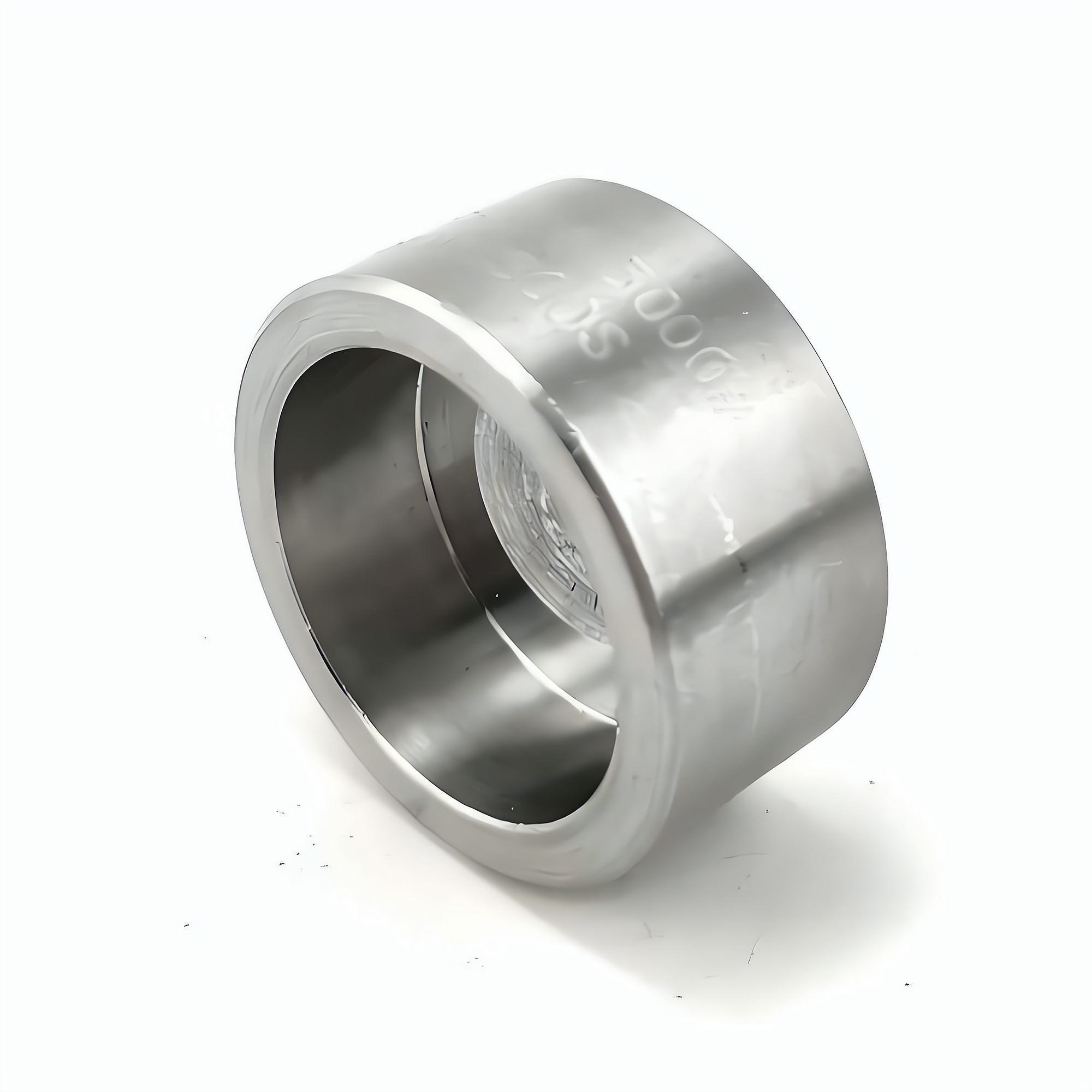
(Author: Beijing Guojie Pipeline Co., Ltd.) In the field of industrial pipeline engineering, the Japanese standard JIS system, with its characteristics of high stability, unified adaptability, and mature processes, has long been applied to Japanese heavy industry, automobile manufacturing, fine chemicals, energy equipment, Sino-Japanese factory renovation, and most foreign trade EPC projects in Southeast Asia.Unlike the metric logic of the national standard GB, the imperial pound-rating logic of the American standard ASME, and the precision tolerance logic of the German standard DIN, Japanese standard JIS pipes and fittings have an independent dimensional series, K-class pressure system, exclusive material grades, and unique flange structures, forming a completely independent selection system that cannot be freely interchanged with other standards.
In frontline procurement practice, the vast majority of rework, interface deviations, pressure test leaks, overseas customs clearance failures, and acceptance failures in Japanese standard projects are not due to product quality defects, but rather systematic adaptation errors caused by procurement personnel following GB, ASME, or DIN selection experience and arbitrarily applying dimensions, converting pressures, or substituting materials.Proficiently mastering the exclusive procurement selection and adaptation rules of the Japanese standard JIS, distinguishing the core differences between JIS and other international standards, and establishing independent JIS selection thinking are the core capabilities for doing a good job in Japanese engineering and Southeast Asian foreign trade pipeline procurement.
I. Overall Framework and Applicable Scenarios of Japanese Standard JIS Piping Standards
Japanese standard piping and fitting standards are formulated by the Japanese Industrial Standards Committee. The commonly used standards in pipeline engineering are concentrated in five core systems: fitting structure, pipe material dimensions, flange connections, material specifications, and inspection and acceptance. The core commonly used standards cover all categories of fittings: steel butt-welding fittings follow JIS B 2313, stainless steel fittings follow JIS B 2309, the flange system follows JIS B 2220, and pipe material standards are JIS G 3452, JIS G 3454, and JIS G 3459, respectively adapting to different working conditions of ordinary piping, pressure piping, and stainless steel piping.
The biggest feature of the JIS system is clear scenario segmentation and strong standard specificity. Carbon steel, stainless steel, low pressure, high pressure, general purpose, and clean piping all have independent standards, and there is no room for cross-standard interchangeability.Its main applicable scenarios include: supporting pipelines in Japanese enterprise factory areas in China, Sino-Japanese joint venture chemical and power projects, fittings supporting the import and export of Japanese equipment, Japanese-assisted construction projects in Southeast Asian countries such as Vietnam, Thailand, and Malaysia, and pipelines for replacement fittings in old equipment renovation.
Worth special attention: a large number of engineering projects in Southeast Asia nominally adopt international standards, but in practice default to the JIS Japanese standard system, which is also the adaptation blind spot most easily overlooked by domestic foreign trade procurement.Many procurement teams supply according to national standards or American standards, ultimately resulting in comprehensive mismatches in dimensions, hole spacing, and pressure, causing the loss of entire batches of goods being returned or shipped back.
II. JIS Nominal Size and Outer Diameter Selection and Adaptation Rules
Although the Japanese standard JIS adopts the DN nominal size naming method, its outer diameter series is independent, incompatible with the dual outer diameters of national standards, and does not match the American standard NPS outer diameter. This is the first hard threshold for selection and adaptation.
The JIS pipe outer diameter forms its own system. Under the same DN specification, the JIS outer diameter values have slight or obvious differences from both national standards and American standards, especially for conventional specifications such as DN25, DN40, DN50, and DN80, where the deviations are most obvious.A high-frequency misunderstanding in the industry: procurement personnel believe that DN is a universal metric size and directly use national standard pipe fittings to replace JIS pipe fittings. It appears that the specifications are consistent, but in reality the pipe end outer diameters and groove dimensions do not match, on-site alignment misalignment exceeds the standard, there are many welding forming defects, and the non-destructive testing pass rate drops significantly.
In JIS selection rules, outer diameter takes priority over nominal diameter. All pipe fittings, pipes, and flanges must strictly match the JIS standard outer diameter. It is strictly prohibited to substitute the DN nominal size for the actual outer diameter.At the same time, for Japanese standard pipe fittings such as elbows, tees, and reducers, the center distance, radius of curvature, and reducing slope parameters are fixed, with no non-standard floating space. Unlike national standards, which allow slight tolerance adjustments, the JIS dimensional deviation tolerance rate is extremely low, and any out-of-tolerance is judged as unqualified.
For renovation projects of old Japanese equipment, some dimensions from the early old JIS standard versions differ slightly from the new versions. During procurement and model selection, it is essential to verify the standard year on the original equipment drawings and match the corresponding version's dimensional parameters to avoid new and old pipe fittings being unable to connect.
III. JIS Core K-Grade Pressure Selection and Adaptation Rules (The Top Priority in Procurement)
Unlike the Chinese standard PN kilogram grade, the American standard Class pound grade, and the German standard PN bar grade, the Japanese standard uniquely created the K-grade pressure rating system, with common grades of 5K, 10K, 16K, 20K, 30K, and 40K. This is the most core and most error-prone key parameter in JIS procurement.
Many procurement personnel habitually equate 10K with PN16 and 20K with PN25, which is a serious selection error.JIS K-grade pressure is not a simple static pressure conversion, but a dedicated pressure rating formulated by combining Japanese equipment operating conditions, temperature curves, medium characteristics, and safety factors.Under the same pressure value, the high-temperature pressure-bearing margin, fatigue resistance performance, and sealing safety factor of JIS K-grade pipe fittings are far higher than those of the Chinese standard PN standard.
JIS flanges, forged pipe fittings, and valves are all classified by K-grade. The flange outer diameter, bolt circle diameter, number of bolts, sealing face thickness, and flange thickness are completely different for different K-grades. The same DN with different K-grades absolutely cannot be interchanged or installed.Among them, 10K is for general low-pressure working conditions and is widely used in water supply and drainage, ventilation, and ordinary process pipelines;16K and 20K are used for medium-pressure chemical and thermal pipelines;30K and 40K are specifically used for high-pressure steam, oil and gas, and flammable and explosive medium pipelines.
Mandatory procurement adaptation rules: JIS projects prohibit cross-K-grade mixing and prohibit empirical conversion between K grades and PN/Class; selection, ordering, and acceptance must be strictly based on the K-grade parameters in the drawings.
IV. JIS Wall Thickness Series and Process Selection Adaptation Rules
The Japanese standard pipe wall thickness system is independent of the Chinese national standard and the American SCH system. It does not apply American SCH40 or SCH80, nor does it apply Chinese national standard ordinary or thickened specifications; it has its own complete wall thickness gradient.
The wall thickness of JIS carbon steel pipes and stainless steel pipes is strictly classified according to JIS pipe material standards. Low-pressure piping wall thickness is relatively thin, while high-pressure piping has a larger wall thickness allowance, and the negative wall thickness deviation is controlled extremely strictly; thin material substitution is not allowed.High-frequency procurement pitfalls: substituting American SCH wall thickness for JIS wall thickness, resulting in reduced inner diameter and increased fluid resistance, or insufficient wall thickness leading to pressure-bearing failure under high-pressure conditions.
In the forming pipe fitting process, the JIS standard gives priority to long-radius elbows. Short-radius elbows are only allowed for special working conditions with limited space. Short-radius elbows are prohibited in conventional process piping, which is completely different from the domestic habit of arbitrarily choosing long or short radius.The process requirements for tees and reducers are integral forging and seamless forming. Pipe fittings for high-pressure working conditions are not allowed to use rolled and welded processes, eliminating hidden weld seam hazards.
At the same time, JIS has extremely high requirements for pipe fitting bevels, end face flatness, chamfer angle, and pipe opening roundness. Its appearance and process standards are stricter than the national standard system. During inspection and acceptance of foreign trade orders, deviations in process details can easily be judged as nonconforming products.
V. Precise Adaptation of JIS Material Grades and Substitution Taboos
The Japanese standard JIS material grade system is completely independent. Carbon steel, stainless steel, and alloy steel all have dedicated designations and cannot be directly equated with commonly used domestic materials. Arbitrary material substitution is a major risk source in Japanese-style pipeline procurement.
For carbon steel, JIS G3452 and G3454 materials are commonly used, suitable for ordinary and pressure pipelines;The mainstream stainless steels are SUS304TP and SUS316LTP, corresponding to the JIS G3459 standard.Many purchasers simply assume that SUS304 is equivalent to domestic 304 and SUS316L is equivalent to domestic 316L, and directly substitute them in procurement, ignoring the special requirements of JIS materials for carbon content, sulfur and phosphorus impurities, low-temperature impact, elongation, and intergranular corrosion resistance.
For pipelines in Japanese fine chemicals, high-purity media, and low-temperature working conditions, the impurity control standards of JIS materials are far higher than those of national standard materials. Directly substituting domestic equivalent materials without re-inspection can easily lead to hidden hazards such as excessive corrosion rates, low-temperature brittle fracture, and weld cracking.
Mandatory rules for procurement adaptation: Formal JIS projects must strictly use JIS-grade materials. If domestic substitution is required, technical clarification and material substitution approval must be carried out in advance, and spectral re-inspection, mechanical property tests, and low-temperature impact tests must be completed. Only after a special inspection report is issued may it be used. Substitution based on personal experience is strictly prohibited.
VI. Adaptation Rules for JIS Flanges and Sealing Systems
The JIS B 2220 flange system is the core of Japanese-style pipeline sealing, and it is also the most complex part in the comparison of foreign trade procurement parameters.JIS flanges are mainly based on RF raised-face sealing. The sealing face height, boss dimensions, bolt arrangement, and hole spacing accuracy form their own system, and they are completely incompatible with GB, DIN, and ANSI flanges.
For the same DN specification, the number of bolts, hole diameter, and bolt circle diameter of 10K and 16K flanges are completely different. Once the parameters are selected incorrectly, the bolts cannot align and the seal cannot fit properly.At the same time, the gaskets, fasteners, and seals matched with JIS flanges are all adapted to K-grade standards. Cross-grade mixing will directly cause pressure test leakage and operational leakage.
In new and old equipment renovation projects, there are slight differences between old JIS flange parameters and the new version. Procurement selection must verify the actual flange hole spacing, and the on-site measured parameters shall prevail, so as to avoid installation failure caused by standard version deviations.
VII. Taboos on Mixed Use of Multiple Standards in JIS Procurement and Key Points for Foreign Trade Risk Control
In overseas Southeast Asian projects and China-Japan joint venture projects, it is common for drawings to simultaneously mark multiple standards such as JIS, GB, and ASME, and procurement is most prone to the chaos of mixed standard usage.
Three core taboos in JIS selection:
First, generalized DN conversion is prohibited, and it is strictly forbidden to substitute national standard outer diameters for JIS outer diameters;
Second, it is prohibited to arbitrarily convert or substitute K grade with PN or Class;
Third, it is prohibited to substitute JIS original materials with domestic materials without approval.
For foreign trade export JIS orders, in addition to compliance with physical parameters, JIS-format material certificates, heat number traceability lists, factory inspection reports, and dimensional inspection records must also be provided.Southeast Asian owners generally strictly follow Japanese-style acceptance standards. If document formats do not match, certificates are nonstandard, or traceability is incomplete, acceptance will be judged as failed even if the physical items are qualified.
VIII. Standardized JIS Procurement Selection Implementation Process
Combining engineering and foreign trade practical experience, standardize the full-process adaptation logic for JIS procurement to achieve zero-error selection:
Step 1: Lock down the JIS standard number, version, and operating condition parameters for project execution;
Step 2: Verify the pipe outer diameter and strictly match it to the JIS-specific outer diameter series;
Step 3: Confirm the K-grade pressure rating of flanges and pipe fittings, and eliminate empirical conversions;
Step 4: Match the JIS-specific material grade according to medium, temperature, and pressure;
Step 5: Verify the full set of parameters including wall thickness, process, bevel, and dimensional tolerances;
Step 6: Specify the acceptance standards for flaw detection, heat treatment, and appearance workmanship;
Step 7: Lock down the JIS-format documentation, certificates, and heat number traceability requirements.
The entire process takes the JIS standard as the sole basis, completely abandoning the procurement experience of national standards and American standards, to achieve precise parameter adaptation, process compliance, complete documentation, and smooth acceptance.
Conclusion
The Japanese standard JIS piping and fittings system is an independent, rigorous professional standard system with an extremely low tolerance for error. Its selection and adaptation logic is completely separate from national standards, American standards, and German standards, and cannot be universally applied based on industry experience.Most JIS procurement incidents are rooted not in product quality, but in deviations in standard understanding, substituting experience for specifications, arbitrary parameter conversion, and unauthorized material substitution.
Piping procurement practitioners must establish a dedicated JIS selection mindset, thoroughly understand the five core adaptation rules of K-grade pressure, exclusive outer diameter, independent wall thickness, customized materials, and flange parameters, strictly abide by the taboos of JIS procurement and selection, and standardize the entire process of parameter verification, technical clarification, factory inspection, and document archiving.Precisely implementing the Japanese standard adaptation rules can not only meet the stringent acceptance requirements of Japanese factories and joint venture projects, but also fully adapt to the foreign trade engineering standards of Southeast Asia, effectively avoiding various risks such as rework and scrapping, export returns, schedule delays, and safety hazards, and achieving compliant, precise, and zero-risk implementation of JIS piping procurement.