I. Introduction
In modern chemical engineering, oil and gas extraction, electric power and heating, new energy storage, and municipal pressure pipeline engineering, the pipeline isometric drawing (ISO drawing) is the core technical drawing that replaces the planar construction drawing, and it is also the sole authoritative basis for engineering procurement material requisition, workshop prefabrication, on-site installation, and acceptance settlement.Unlike the viewing angle limitations of two-dimensional planar drawings, the isometric drawing adopts an axonometric projection method, completely restoring the pipeline routing, fitting positions, spatial angles, dimensional elevations, and process parameters, and can intuitively reflect the entire configuration of the whole process pipeline, making it a key bridge in pipeline engineering from design implementation to material procurement.
In EPC general contracting, industrial pipeline renovation, and complete process pipeline supporting projects, the accuracy of pipeline procurement depends entirely on the ability to read and interpret isometric drawings.Many projects experience problems such as material backlog, excess fittings, missing key accessories, mismatched material and pressure ratings, on-site inability to connect, and batch rework; these are not caused by supply quality issues, but by procurement personnel's non-standard drawing interpretation, incomplete parameter extraction, missed fitting identification, and incorrect standard matching.Isometric drawing interpretation is a refined technical task covering multiple stages including symbol recognition, dimensional calculation, parameter extraction, material determination, standard classification, and quantity statistics; any detail omission in any one of these will cause procurement errors and increase project costs and schedule pressure.
Therefore, mastering the standardized key points of isometric drawing interpretation for procurement and establishing a systematic process of material requisition, verification, classification, and procurement are core professional competencies for pipeline procurement, engineering technology, and material management personnel, and are also the fundamental prerequisites for ensuring accurate cutting, one-time installation compliance, and efficient delivery in pipeline engineering.
II. The Drawing Logic and Interpretation Fundamentals of Pipeline Isometric Drawings
Pipeline single-line diagrams follow common domestic and international drafting standards such as GB, HG, and ASME. They are drawn from a three-dimensional axonometric perspective, are not affected by occlusion from a planar view, and fully display the routing, slope, elevation, fitting combinations, valve equipment, and support and hanger positions of the entire pipeline. They are the most accurate material requisition drawings for pipeline engineering.To understand a single-line diagram, you first need to clarify its core drafting logic: all lines represent straight pipe sections, all node turns, branches, and reducers correspond to dedicated fittings, and all annotated parameters directly determine procurement specifications and standards.
Reading single-line diagrams requires adhering to three basic principles to ensure zero-error procurement.First, take the medium flow direction as the main line, read the entire drawing along the pipeline start and end points, and fully sort out the fitting layout and structural composition of the entire pipeline to avoid missing items caused by fragmented drawing reading.Second, confirm the operating condition parameters first, then count material specifications. Prioritize extracting material, pressure rating, wall thickness standard, and medium properties, then count fitting quantities, sizes, and models to avoid rating mismatches.Third, verify icons, annotations, and notes as a trinity. In addition to graphical symbols, single-line diagrams include dimension numbers, elevation symbols, process notes, and special requirements. All of these must be included in the procurement basis; do not look only at the graphics and ignore the textual notes.
Compared with ordinary construction drawings, the biggest feature of reading single-line diagrams for procurement isno occlusion, full coverage, detailed parameters, and strict requirementsEvery pipe fitting, every straight pipe section, and every connection method is clearly represented, with no hidden components. This also determines that material take-off from single-line diagrams can achieve precise zero-loss results, making it the core basis for refined pipeline procurement.
III. Core Practical Points for Drawing Interpretation and Procurement from Single-Line Diagrams
The core of drawing interpretation for procurement from single-line diagrams is divided into five major modules: symbol recognition, dimension and elevation reading, parameter extraction, pipe fitting statistics, and special process identification. These links are interconnected at every level and directly determine procurement accuracy.
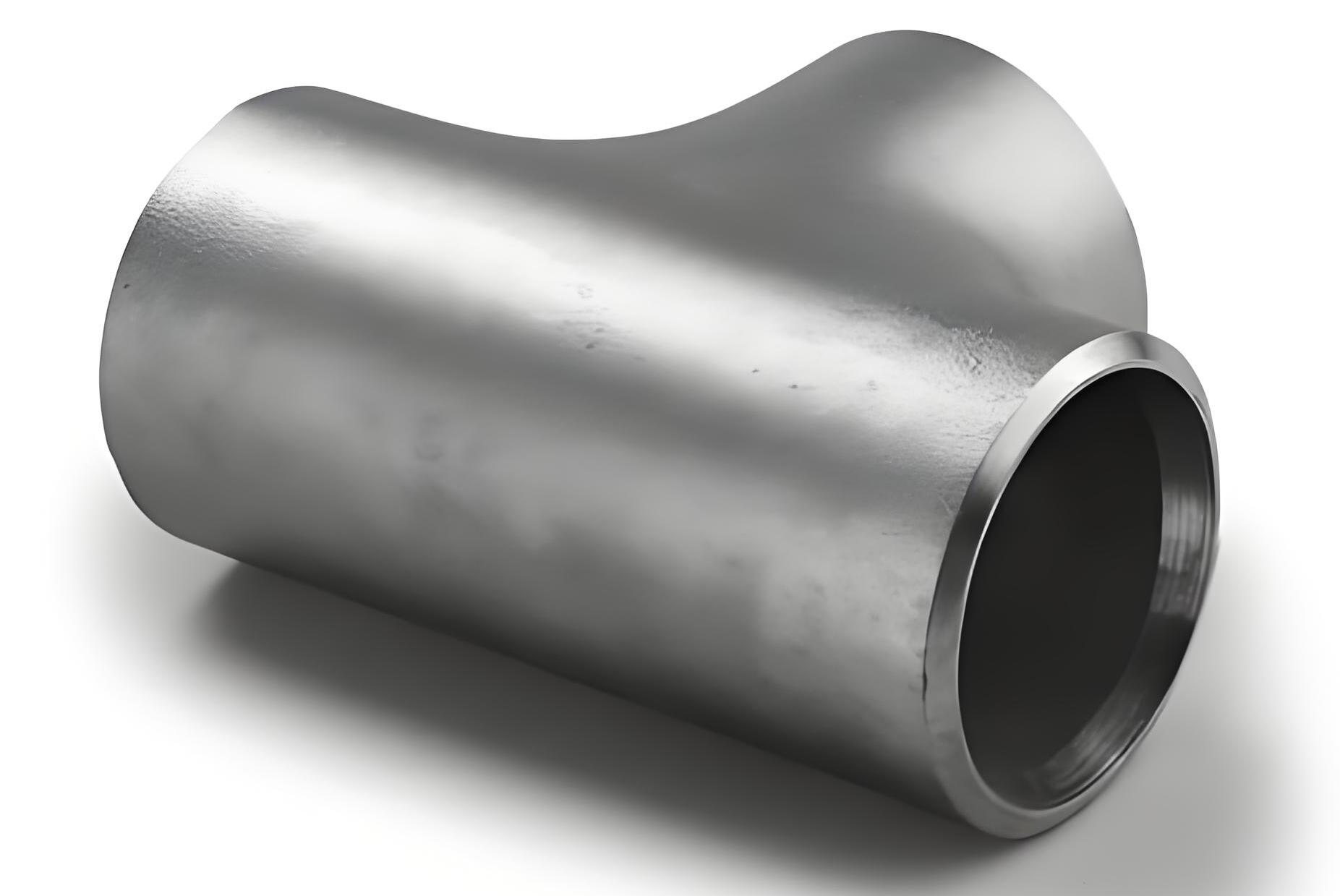
First is the accurate recognition of core pipe fitting symbols.All pipe fittings in single-line diagrams use standardized simplified symbols. Elbows, tees, crosses, reducers, flanges, caps, branch outlets, and valves all have fixed drawing conventions.90° elbows and 45° elbows are clearly distinguished according to the pipeline turning angle and are the most basic pipe fittings in procurement;For equal-diameter tees and reducing tees, focus on checking the port size markings: if there is no size change, it is an equal-diameter tee; if the ports are marked with different diameters, it is a reducing tee;Concentric reducers and eccentric reducers are high-frequency error-prone points. In single-line diagrams, a symmetrical layout indicates a concentric reducer, while a flat-on-one-side layout indicates an eccentric reducer. Procurement mismatches will directly cause gas accumulation and liquid accumulation in the pipeline and obstruct the process flow.Branch fittings and reinforcement joints in high-pressure working conditions have highly recognizable symbols and must not be confused with ordinary tees; they are key controlled components in high-pressure pipeline procurement.
The next points are the key reading and procurement points for dimensions, elevations, and straight pipe sections.The pipe section lengths marked on the single-line diagram are the precise cutting dimensions for on-site work; when procuring straight pipe raw materials, the total meterage must be summarized based on the segmented lengths, while reasonable cutting loss must be reserved to avoid straight pipe shortages.The elevation values determine the pipeline installation height and slope direction, and indirectly verify whether the pipeline routing has been read correctly, preventing incorrect procurement of fitting angles due to misjudging the routing.Slope arrows indicate the medium flow direction and inclination direction, and are directly related to the configuration of drainage and vent fittings; omissions in drawing reading will lead to missing matching fittings.
The third point is the key point of extracting core parameters and matching standards, and it is also the most critical step in procurement.The single-line diagram will clearly mark the pipeline material, nominal diameter DN/NPS, pressure rating PN/Class, wall thickness Sch grade, and applicable standard.During procurement, it is essential to ensure that parameters are not downgraded, standards are not mixed, and materials are not substituted.The parameter systems of single-line diagrams differ among national standards, American standards, and chemical industry standards. For American standard drawings, Class pressure ratings and Sch wall thickness grades must not be applied to national standard PN ratings, so as to avoid insufficient pressure-bearing capacity and substandard wall thickness of pipe fittings.For drawings involving corrosive media and high-temperature and high-pressure operating conditions, anti-corrosion requirements, solution treatment, and flaw detection grades will be noted in the remarks. Such special process requirements must be implemented synchronously in the purchase order and must not be procured as conventional ordinary pipe fittings.
The fourth point is the key points for procuring connection methods and supporting accessories.Single-line diagrams will clearly indicate butt welding, socket welding, threaded, and flanged connection types. The fitting structures, sealing faces, and bolt and gasket specifications corresponding to different connection methods are completely different.During procurement, connection methods must be uniformly matched, and mixing welded pipe fittings with threaded pipe fittings or mismatching flange sealing face models must be strictly prevented.At the same time, corresponding gaskets, bolts, blind plates, plugs, and other auxiliary accessories must be provided according to the pipeline pressure rating and medium operating conditions, so as to avoid the impact on construction progress caused by complete main fittings but missing auxiliary parts.
The fifth point is the interpretation of special components and non-standard requirements.Some process pipelines have special structures such as inclined pipes, irregular corners, non-standard eccentric fittings, and custom branch outlets. Single-line diagrams will separately mark dimensional parameters and customization requirements. Such non-standard components cannot be universally replaced and must be customized and procured strictly according to drawing parameters; conventional standard specifications must not be applied.
IV. High-Frequency Misconceptions and Engineering Risks in Single-Line Diagram Procurement
Based on extensive practical experience in pipeline engineering procurement, misconceptions in reading single-line diagrams for procurement are highly concentrated and are the main causes of project rework and cost losses, falling mainly into four core categories of problems.
First, counting only quantities while ignoring rating parameters.Most procurement personnel only count elbows, tees, and flanges, ignoring differences in pressure rating, wall thickness rating, and material. Since different pipelines in the same project have different parameters, it is very easy to procure low-pressure fittings for high-pressure pipelines or ordinary carbon steel fittings for corrosive pipelines, resulting in insufficient pressure resistance and substandard corrosion resistance of the fittings, and all of them being returned and reworked after arrival on site.
Second, confusing similar fitting symbols during procurement.Concentric and eccentric reducers, ordinary tees and high-pressure branch outlets, and gate valves and globe valves have similar symbols. Failure to distinguish them clearly during drawing interpretation leads to wrong procurement models, on-site installation incompatibility, and serious impact on construction progress.This is especially true for eccentric reducers, which are mostly used at key points for drainage and venting; procurement errors will cause operational failures of the process system.
Third, ignoring drawing notes and implicit process requirements.The single-line diagram graphics only show the component configuration; the drawing corners and pipeline notes will indicate non-destructive testing, acid pickling and passivation, low-temperature impact, anti-corrosion rubber lining, and special tolerance requirements. Many purchasers only look at the graphic parameters and ignore the hidden process requirements, resulting in ordinary pipe fittings being substituted for special-process pipe fittings and failing acceptance.
Fourth, procurement confusion caused by mixed standards across multiple drawings.Large EPC projects simultaneously contain single-line diagrams under national standards, American standards, and chemical industry standards. Different drawings use different standard systems. If procurement is uniformly carried out according to a single standard, batch mismatches such as dimensional deviations, pressure mismatches, and wall thickness mismatches will occur, causing material inventory accumulation and waste of funds.
V. Standardized implementation process for single-line diagram reading and procurement
In order to completely avoid errors in drawing reading and procurement, and based on practical engineering experience, establish a standardized procurement process that can be directly implemented, achieving accurate material requisition and compliant procurement from single-line diagrams.
Step 1: Overall drawing review.Before procurement, read the entire single-line diagram thoroughly, confirm the drawing's applicable standards, medium operating conditions, temperature and pressure, and material system, sort out the starting and ending routing of the pipeline, check for non-standard components and special process annotations, and establish an overall procurement understanding.
Step 2: Parameter locking and classification.Extract pipeline specifications, pressure ratings, wall thickness grades, materials, connection methods, and process requirements one by one, classify and label pipelines with different parameters, and avoid mixing pipelines of different pressure levels and materials in procurement.
Step 3: Identify drawings and extract materials section by section.Following the medium flow direction, count the quantities of straight pipes, elbows, tees, reducers, flanges, valves, and auxiliary parts section by section, focusing on identifying similar pipe fittings and non-standard components, and eliminating omissions and incorrect counts.
Step 4: Cross-check parameters.Compare drawing legends, technical descriptions, and process notes, verify quantities, models, parameters, and process requirements, and achieve consistency among graphics, annotations, and notes.
Step 5: Implement orders accurately.Purchase orders shall fully specify standards, materials, diameters, pressure, wall thickness, connection methods, and special processes, eliminate vague specifications, and be accompanied by corresponding auxiliary parts to ensure that construction can begin as soon as materials arrive on site.
Step 6: On-site acceptance verification and reconciliation.After the goods arrive, verify the specifications, parameters, workmanship, and quantities item by item against the single-line diagram, ensuring a complete match with the drawings and eliminating unqualified materials from entering the site at the source.
VI. Conclusion
Reading single-line diagrams for pipeline procurement is the core link in supporting pipeline engineering materials; the accuracy of diagram reading directly determines project cost, construction efficiency, and acceptance quality.Procurement based on single-line diagrams is not simply a quantity-counting task, but a refined technical task integrating symbol recognition, parameter verification, standard matching, and workmanship control.Extensive-style diagram reading, experience-based procurement, and neglect of detailed parameters are the main root causes of pipe fitting mismatches, missing and omitted parts, project rework, and cost waste.
In the current era of refined and standardized industrial engineering development, pipeline procurement and technical personnel must abandon experience-based operations and establish a systematic, process-based, and standardized single-line diagram reading and procurement system, accurately identifying component symbols, strictly locking operating condition parameters, standardizing matching with applicable standards, and fully implementing special workmanship requirements, so as to achieve precise, compliant, and efficient pipeline material procurement.By consolidating single-line diagram reading and procurement capabilities, procurement risks are avoided at the source, ensuring that pipeline engineering achieves installation compliance on the first attempt and efficient delivery and operation, providing stable and reliable material support for various chemical, oil and gas, and new energy EPC projects.
Beijing Guojie Pipeline Co., Ltd. has long been deeply engaged in multi-standard pipeline single-line diagram reading and material take-off, parameter verification, and precise supporting services. It is proficient in the single-line diagram reading rules and procurement adaptation requirements of national standards, American standards, and chemical industry standards, and can provide one-stop services for various industrial pipeline projects, including diagram reading and material take-off, parameter verification, non-standard customization, and compliant supply, comprehensively avoiding procurement mismatch risks and helping projects land efficiently and pass acceptance in compliance.