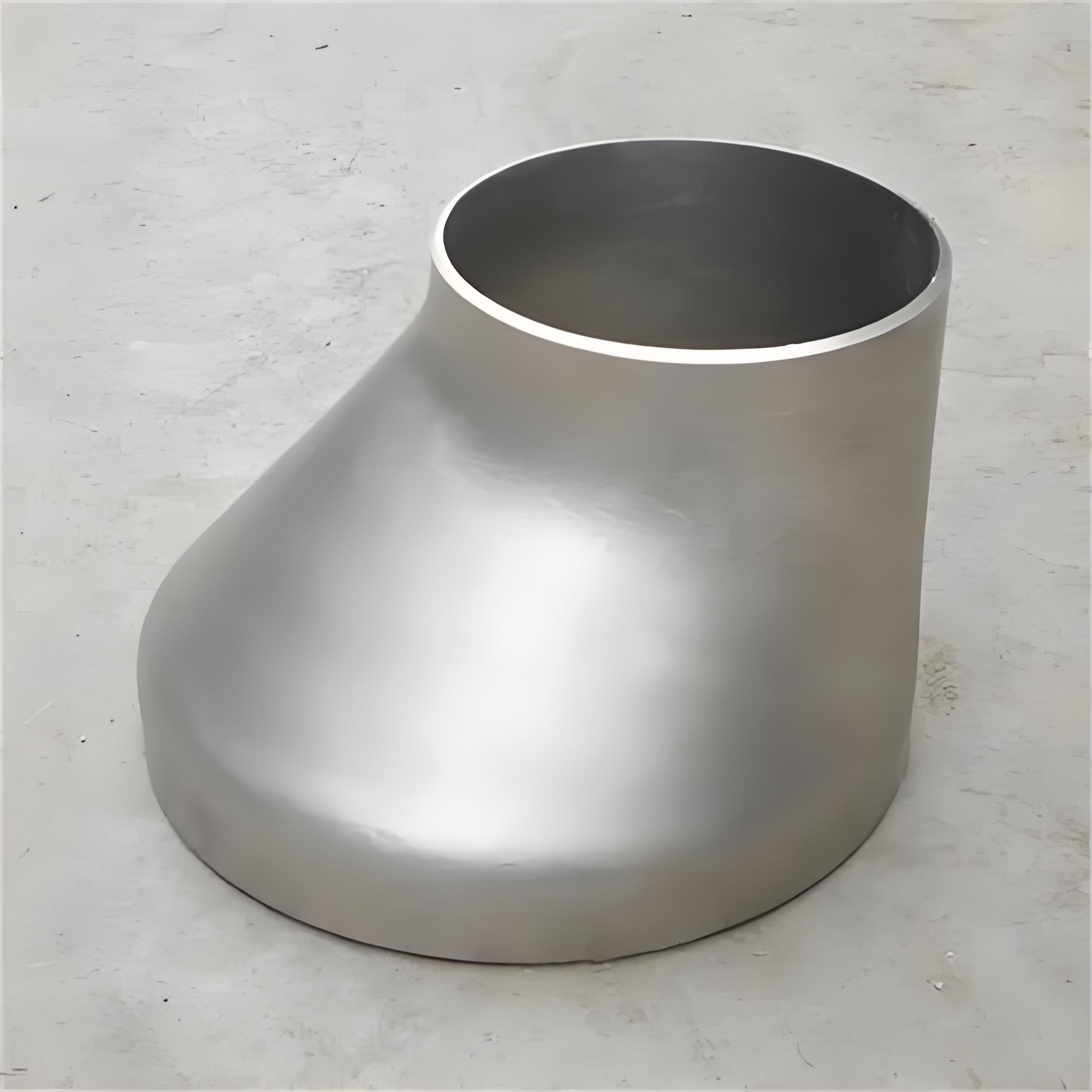
Author: Beijing Guojie Pipeline Co., Ltd.
Abstract: Nuclear power piping fittings are pressure-retaining boundary components subject to nuclear safety requirements and are classified as Nuclear Class 1, 2, and 3. They differ from conventional fittings used in thermal power and chemical industries, and their market access is subject to multiple rigid constraints including nuclear safety regulations, administrative licensing, and nuclear quality assurance systems.Current procurement practices commonly suffer from problems such as substituting conventional pressure piping fittings for nuclear-grade fittings, ignoring the scope of licenses, missing quality assurance documents, and failure to meet material impurity control standards.This paper establishes procurement access standards for nuclear power fittings from seven dimensions: the regulatory system, supplier qualification access, quality assurance programs, material and process control, supervision and acceptance, document traceability, and closed-loop management of non-conformities. It clarifies tiered control requirements to prevent nuclear safety risks caused by non-conforming items.
SEO keywords: nuclear power piping fittings, Nuclear Class 1 piping fittings, Nuclear Class 2 fittings, Nuclear Class 3 fittings, nuclear-grade elbows and tees, HAF003 quality assurance, civil nuclear safety equipment license, nuclear power main pipeline fittings, RCC-M fittings, ASME III nuclear-grade fittings, nuclear-grade stainless steel fittings, nuclear power fitting supervision, nuclear-grade non-destructive testing, nuclear power piping materials, nuclear safety boundary fittings, nuclear-grade reducers, nuclear power fitting traceability system, nuclear-grade forged fittings, nuclear power equipment procurement access, nuclear-grade material cobalt content control
I. Introduction
Nuclear power piping fittings are core components of the pressure-retaining boundary of the primary loop, secondary loop, and auxiliary systems of nuclear power plants. They directly affect the integrity of the reactor coolant pressure boundary, and once failure occurs, they will cause leakage of radioactive media. They are high-safety-grade items.Nuclear power plant piping systems are classified by safety importance into Nuclear Class 1, Nuclear Class 2, and Nuclear Class 3. The licensing, material, inspection, and quality assurance requirements corresponding to different classes decrease progressively by grade, but all are higher than ordinary pressure piping standards.Conventional chemical and thermal power pipeline fittings only meet the TSG regulations for special equipment, do not have nuclear safety licenses, nuclear quality assurance programs, special impurity control, or long-term irradiation aging verification, and are strictly prohibited from being directly used in nuclear safety-related piping systems of the nuclear island and conventional island.
In the actual supply chain operations of nuclear power projects, procurement personnel easily follow the procurement approach for industrial piping, only checking dimensions, pressure, and material grades, while ignoring the administrative licensing system for civil nuclear safety equipment;Some suppliers engage in supplying beyond the scope of their licenses, outsourcing key processes, simplifying quality assurance records, and lacking special irradiation and corrosion verification, and are rejected during nuclear safety regulatory reviews, owner supervision, and third-party assessments, causing schedule delays and compliance risks.Admission for nuclear power fitting procurement is not a single product acceptance, but a set of admission evaluation systems covering upfront supplier admission, in-process supervision, full-chain document traceability, and tiered control, and is the first gate for nuclear safety item control.
II. Regulations and Standards System for Nuclear Power Fitting Procurement
The top-level regulations for domestic nuclear power fitting procurement are based on the Nuclear Safety Law and the Regulations on the Supervision and Administration of Civil Nuclear Safety Equipment, supported by HAF003 Quality Assurance Safety Regulations for Nuclear Power Plants, HAF601 Regulations on the Supervision and Administration of the Design, Manufacture, Installation, and Nondestructive Testing of Civil Nuclear Safety Equipment, and HAF604 Registration Management Requirements for Imported Nuclear Safety Equipment, with licensing supervision implemented by the National Nuclear Safety Administration.For nuclear class 1, 2, and 3 piping and fittings included in the Catalogue of Civil Nuclear Safety Equipment, manufacturing units must obtain manufacturing licenses for the corresponding category and corresponding nuclear class, with the licensed scope covering product forms, material groups, and specification ranges, and the certificates within their validity period; overseas suppliers also need to complete registration with the National Nuclear Safety Administration.
The technical standards system is divided into two main lines: domestic independent nuclear power projects mostly adopt the RCC-M design and construction rules for mechanical equipment of pressurized water reactor nuclear islands;Introduced models and projects shall be executed in accordance with the ASME BPVC Section III nuclear facility component code;the supporting national standards include the GB/T16702 series of pressurized water reactor nuclear island equipment specifications.The biggest difference from conventional piping standards is that nuclear-grade standards add requirements for irradiation embrittlement, thermal cycling fatigue, long-term aging under corrosive media, control of the content of activating elements such as cobalt, and long-term archiving of quality assurance records.Project technical specifications take precedence over general standards; during the procurement admission review stage, the version of the project specification must be checked first to avoid standard version mismatches.
III. Mandatory Conditions for Supplier Qualification Admission
Supplier admission is the foundational threshold of the entire set of standards, and qualification verification applies the principle of "matching certificates with physical items and locking the scope."First, legal entity qualification: the enterprise must have independent legal person status and hold a civil nuclear safety equipment manufacturing license issued by the National Nuclear Safety Administration, with the certificate category being pipe fittings, and the nuclear safety level matching the level of this procurement; temporary licenses or single-project licenses shall not be accepted as substitutes for a formal manufacturing license, and production and supply beyond the licensed scope of the certificate are not permitted.Second, the quality assurance system: in addition to the GB/T19001 quality management system, the supplier must prepare and effectively operate a nuclear quality assurance program compliant with HAF003, establish an independent quality assurance department, ensure the quality assurance manager has nuclear quality assurance professional qualifications, and ensure the QA organization has independent veto power.
Third, personnel access conditions: nuclear-grade welding and non-destructive testing personnel must hold qualifications recognized by the nuclear industry, and NDT certificates such as RT, UT, MT, and PT must cover the corresponding methods;The technical director has many years of experience in nuclear equipment manufacturing, and the staffing of physical and chemical testing, heat treatment, and materials professionals is complete.Fourth, production capacity and facility access: equipped with forging, forming, heat treatment, physical and chemical testing laboratory, non-destructive testing, and hydrostatic testing supporting equipment;Key processes explicitly stipulated by the National Nuclear Safety Administration are not allowed to be subcontracted, such as forging and forming, main weld seam welding, final heat treatment, and key non-destructive testing; subcontracting may only be used for auxiliary processes, and subcontractors are likewise included within the scope of nuclear quality assurance control.Fifth, performance access: suppliers need to provide nuclear power supply performance for pipe fittings of the same nuclear grade and same type in the past five years, accompanied by owner acceptance certificates, with no major non-conformities and no records of nuclear regulatory penalties; new suppliers can only be included in the list of qualified suppliers after completing a source site review and mock-up qualification.
IV. Key Points of Nuclear Quality Assurance System Access Review
After passing the preliminary qualification review, a special review of the nuclear quality assurance system is carried out; this is the most core difference between nuclear power pipe fittings and ordinary pipeline procurement access.The focus of conventional procurement review is product quality, while the focus of nuclear power procurement review is "controllable processes, traceable records, and closed-loop non-conformities."The nuclear quality assurance program must cover nine major elements: document control, procurement control, material identification and traceability, process qualification, inspection and testing, surveillance, nonconformance management, corrective and preventive actions, and records archiving.
As an admission document, the procurement technical agreement must specify the nuclear safety class, applicable code version, activation element control indicators, fatigue and irradiation requirements, identification stamp specifications, witness points for supervised manufacturing, document delivery list, and record retention period.Nuclear Class 1 pipe fittings belong to the critical pressure boundary, and numerous hold points (H points) are set up, requiring the owner or the supervisory party to be present for witnessing;For Nuclear Classes 2 and 3, witness points (W points) and review points (R points) are set up.The supplier must establish a material heat number traceability chain, from raw material steel ingots, forged blanks, forming, heat treatment, flaw detection, and hydrostatic testing all the way to the finished product, achieving piece-by-piece identification traceability for each pipe fitting. The location of the stamp marking must not cause stress concentration, and the marking content includes nuclear class, heat number, melt number, material grade, supplier code, and standard number.
V. Material, Process, and Inspection Admission Control
The admission of materials for nuclear power pipe fittings is subject to special constraints. In addition to conventional mechanical properties and chemical composition, materials in contact with the medium in the nuclear island are strictly controlled for activation elements such as cobalt and boron to reduce the activation dose after irradiation;For austenitic stainless steel, the carbon content is strictly controlled to inhibit intergranular corrosion;Primary circuit pipe fittings need to meet high-temperature water stress corrosion and fatigue cycle assessment requirements.Raw materials must be sourced from smelters with nuclear-grade material qualifications, accompanied by melting analysis and product analysis reports. The material substitution process is extremely strict: any change in grade or smelting heat number must be approved by three parties—the design institute, the owner, and the nuclear safety review—and the supplier has no right to replace materials on its own.
Regarding process qualification, welding procedure qualification records (PQR) and welding procedure specifications (WPS) must match nuclear-grade requirements; nuclear-grade welding qualification is more stringent than ordinary pressure vessel qualification;Heat treatment process curves must be reviewed, heat treatment records must be continuously traceable, and soaking, heating, and cooling procedures must not be simplified.Inspection qualification is set according to grade differentiation: for nuclear class 1 pipe fittings, 100% radiographic or ultrasonic testing of welds, together with surface penetrant/magnetic particle testing;for nuclear class 2, sampling inspection is conducted proportionally;all nuclear-grade pipe fittings undergo hydrostatic or airtightness verification, and the test medium, water quality, and pressure holding duration are implemented in accordance with RCC-M or ASME III.Physical and chemical tests include tensile, impact, hardness, and intergranular corrosion testing, and some items additionally include fatigue specimen and irradiation simulation specimen verification.
VI. Source Surveillance, Incoming Acceptance, and Document Admission
Admission of nuclear power pipe fittings cannot rely solely on incoming acceptance; admission control extends to the entire factory manufacturing process.After a qualified supplier is included in the list, source surveillance is carried out during the contract execution stage. Surveillance personnel verify process execution, inspection records, and identification status, and conduct on-site witness at H hold points. Products that have not been witnessed and released shall not leave the factory.Factory delivery documents are a mandatory condition for admission release. The document package includes copies of licenses, quality assurance program-related procedure documents, material melting certificates, heat number traceability tables, welding qualification records, non-destructive testing reports, heat treatment curves, hydrostatic test reports, nonconformance disposition sheets, and completion reports. All documents must be controlled, fully signed, and of valid versions.
Incoming acceptance follows the principle of documents first, physical verification second. First, the completeness and consistency of the entire quality assurance document set are verified, and the heat number, steel stamp, and report are checked for a three-way match;then appearance, dimensions, and wall thickness are re-measured, and sampling re-inspection is conducted for physical and chemical properties or non-destructive testing.Once documents are missing, records are inconsistent, or identification is confused, admission is directly judged as failed and warehousing is refused.The archiving period for nuclear power item records is far longer than that for conventional products, generally required to cover the entire plant life cycle. Electronic and paper versions of documents are archived simultaneously to facilitate retrieval for subsequent in-service inspections and regulatory spot checks.
VII. Nonconformity Management and Supplier Dynamic Access Mechanism
The nuclear power supply chain adopts a dynamic access model; qualified suppliers are not valid for life, and annual re-evaluation and post-project evaluation are implemented.For nonconformities arising during manufacturing, such as dimensional out-of-tolerance, flaw detection defects, and material composition exceeding standards, an NCR nonconformity report must be opened in accordance with nuclear quality assurance procedures, clearly defining the defect description, cause analysis, disposition plan, and rework/repair/scrap determination; re-inspection shall be conducted after disposition, and major nonconformities require notification to the owner and the supervision party for review.Suppliers are prohibited from privately grinding to eliminate defects, concealing defects, or altering inspection reports.
When a supplier experiences circumstances such as expired licenses, supply beyond scope, multiple major nonconformities, nuclear regulatory notifications, or record falsification, its access qualification shall be immediately suspended, a special audit shall be initiated, and if rectification verification is not passed, it shall be directly removed from the list of qualified suppliers.Access review materials, supervision records, acceptance reports, and nonconformity ledgers shall be uniformly archived as historical basis for supplier evaluation in subsequent new projects, continuously purifying the nuclear power pipe fitting supply chain.
VIII. Conclusion
Access for nuclear power pipeline pipe fitting procurement is a link in the nuclear safety defense-in-depth system; its core logic is that administrative licensing is the bottom line, nuclear quality assurance is the main line, full-chain traceability is the foundation, and tiered control is the method, which is completely different from conventional pressure pipeline procurement.Conventional pipe fitting procurement focuses on matching product parameters, while the nuclear power access system pre-audits supplier qualifications, quality assurance capabilities, personnel and equipment, and process qualification, conducts supervision and witness during the manufacturing process, and uses complete and traceable quality records as the basis for release.Procurement practitioners must abandon the mindset of "replacing system review with product review," strictly implement the differentiated access standards for nuclear levels 1, 2, and 3, safeguard the quality threshold for pressure-boundary items, ensure the long-term safe and stable operation of nuclear power plants, and meet the compliance requirements of nuclear safety regulations, owners, and regulatory authorities.
References
[1] Nuclear Safety Law of the People's Republic of China [Z]. 2018.
[2] State Council. Regulations on the Supervision and Administration of Civil Nuclear Safety Equipment [Z]. Revised 2019.
[3] HAF003, Safety Regulations on Quality Assurance for Nuclear Power Plants [S]. Ministry of Ecology and Environment, 1991.
[4] HAF601, Regulations on the Supervision and Administration of the Design, Manufacture, Installation, and Nondestructive Testing of Civil Nuclear Safety Equipment [S]. Ministry of Ecology and Environment, 2008.
[5] RCC-M, Design and Construction Rules for Mechanical Components of PWR Nuclear Islands [S]. French Association for Design and Construction Rules for Nuclear Island Equipment, 2007.
[6] ASME BPVC Section III, Rules for Construction of Nuclear Facility Components [S]. ASME, 2023.
[7] State Administration of Science, Technology and Industry for National Defense, National Nuclear Safety Administration. GB/T16702, Design Specification for Mechanical Equipment of Pressurized Water Reactor Nuclear Islands [S]. Beijing: China Standards Press.
[8] Li Gang. Quality Assurance and Procurement Supervision Practice for Nuclear-Grade Piping Equipment [M]. Beijing: Atomic Energy Press, 2020.