I. Introduction
In the implementation chain of EPC general contracting, technical transformation, and foreign-related pipeline engineering projects, the procurement intervention point often comes immediately after drawing issuance.Before formally issuing inquiries and signing technical agreements, organizing design, supervision, owner, and supplier parties to conduct centralized technical clarification is a means of front-loaded procurement risk control.Pressure piping codes such as TSG 31-2025 and GB/T20801 impose rigid requirements on the material, standards, inspection, and traceability documentation of piping components. The problems exposed in many projects during pressure testing, supervision inspection, and filing stages can mostly be traced back to inconsistent understanding of drawings in the early stage, verbalized technical requirements, and unclear ambiguous clauses.
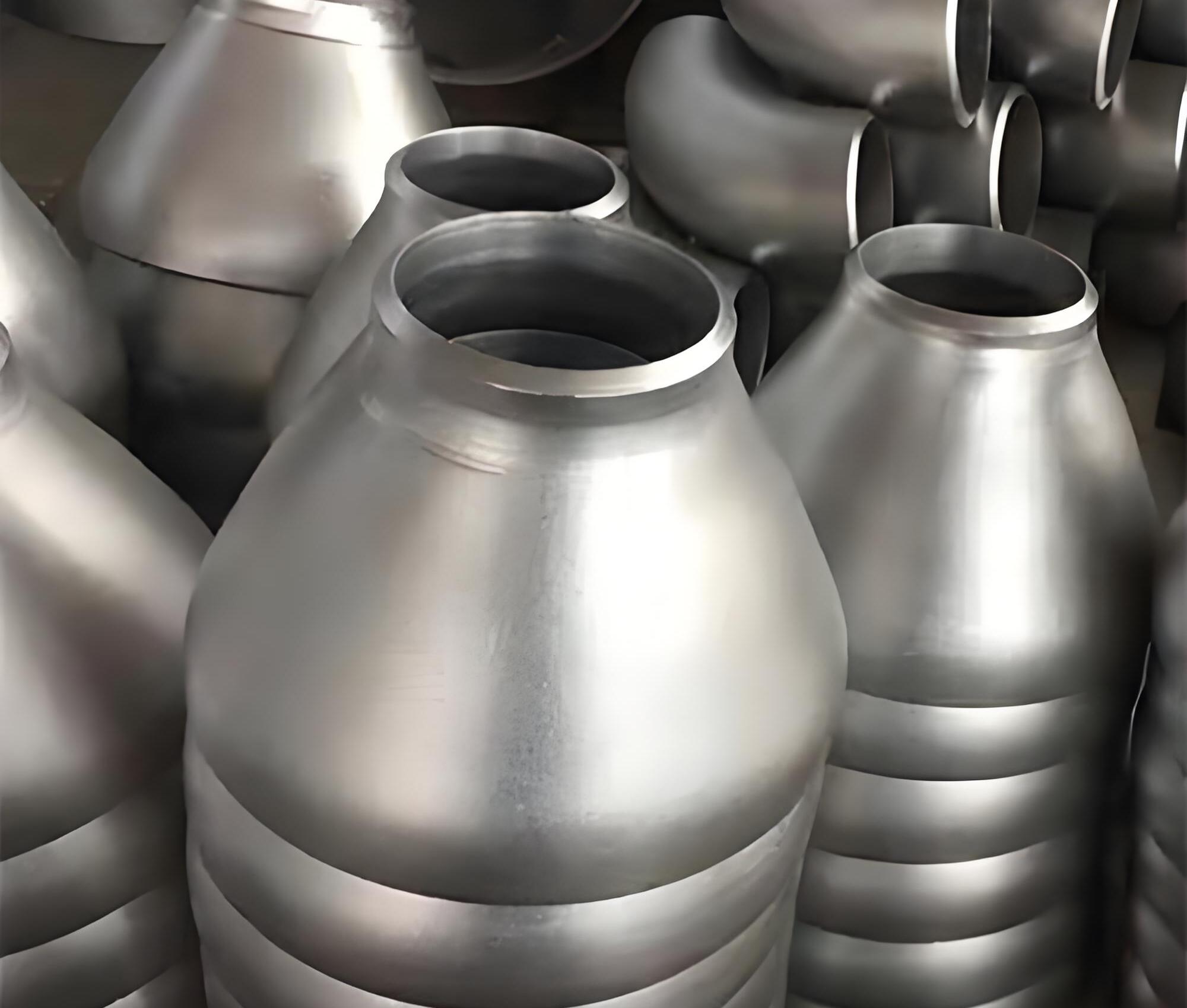
There are generally three types of clarification misconceptions in the industry: first, procurement only focuses on price, quantity, and delivery cycle, leaving technical issues for the supplier to interpret the drawings on its own;second, clarification is scattered and fragmented, conducted verbally online, and no written clarification minutes are formed, so later disagreements in understanding have no basis;third, clarification and changes are confused, and defects in the drawings themselves, standard conflicts, and parameter contradictions are simply left to the supplier to optimize on its own without written confirmation from the design party.Pipeline fittings cover a wide variety of categories, including elbows, tees, reducers, flanges, branch outlets, and caps. At the same time, multiple systems such as national standards, American standards, European standards, and German standards coexist, and standard parts and non-standard parts are used in combination. Once early-stage clarification is missing, major hidden dangers are very likely to occur, such as mismatched flange systems, wall thickness failing to meet corrosion allowance, omitted material test requirements, and non-standard fittings lacking strength calculation reports.Establishing a standardized and systematic pre-technical clarification mechanism and defining the key points of clarification from the procurement perspective are necessary means to improve procurement quality, control project costs, and ensure compliance acceptance of special equipment.
II. Positioning and Organizational Principles of Pre-technical Clarification
Pre-technical clarification for pipeline and pipe fitting projects, different from on-site clarification during the construction phase, belongs to technical clarification before inquiry and during the procurement material requisition stage. Its core objective is to unify the understanding of drawings, technical specifications, and material specifications among all parties, eliminate ambiguities, identify drawing contradictions, and lock down acceptance boundaries, serving as effective attachments to inquiry documents, technical agreements, and quotation evaluations.The organization of clarification should follow four principles: drawing priority, working condition first, written closed-loop, and clear rights and responsibilities.
Drawing priority principle: All clarification questions must be based on P&ID diagrams, pipeline single-line diagrams, pipe fitting fabrication drawings, and material specifications; working conditions must not be assumed out of thin air without reference to the drawings. For content where drawing annotations are ambiguous, versions are chaotic, single-line diagrams conflict with material lists, or P&ID and single-line diagram parameters are inconsistent, design clarification shall be requested first, rather than procurement or the supplier making their own presumptions. Working condition first principle: All parameters of pressure pipelines depend on design working conditions. Design pressure, design temperature, medium composition, GC classification, corrosion type, and low-temperature impact requirements are the underlying basis for selecting materials, wall thickness, and inspection levels, and are also the first section of clarification.
The written closed-loop principle is the core of control.All Q&A questions and reply contents must be compiled into the "Technical Q&A Minutes," signed and confirmed by the four parties—design, supervision, procurement, and owner—to serve as the formal technical document for subsequent procurement, manufacturing, and acceptance; oral replies shall be invalid in all cases.Principle of clear rights and responsibilities: procurement is the organizing and summarizing party for Q&A, but the authority to confirm technical conclusions rests with the design unit;The supplier may raise questions and provide proposal suggestions, but has no right to modify design parameters, replace standards, or change material grades on its own.Drawing errors, parameter contradictions, and standard conflicts identified during the Q&A process are classified as drawing clarification items;Matters that are the supplier's questions about understanding technical clauses are classified as understanding clarification items;Where design parameters or structural forms need to be modified, this does not fall within the scope of Q&A and shall go through the design change process.
III. Core Points of Technical Q&A from the Procurement Perspective
(I) Key Q&A Points on Operating Conditions and Pipeline Classification
Operating conditions are the basis for pipe fitting selection and inspection level determination. In procurement Q&A, the operating condition boundaries must be locked down first to prevent suppliers from quoting based on conventional general operating conditions.Key items to confirm: pipeline GC grade, medium type (highly toxic, flammable, corrosive, low temperature, hydrogen service, etc.), design pressure, design temperature, operating temperature and pressure ranges, corrosion allowance, erosion and wear conditions, and whether it involves severe cyclic loading.Many drawings only indicate operating pressure without specifying corrosion allowance and welded joint coefficient. Suppliers quote based on conventional wall thickness, and later stress verification fails to meet the code requirements, so this must be clarified during the Q&A stage.At the same time, confirm the main standard system for project execution—whether it is the national GB system, ASME B31.3 process piping, or the EN or DIN system—and clarify the supervision and inspection basis and the local special equipment filing requirements. For overseas projects, also confirm the owner's additional specifications and third-party inspection agency requirements.
(II) Key Q&A points for consistency of drawings, lists, and versions
Drawing-related questions are a high-frequency section of Q&A. Procurement needs to coordinate and verify the consistency among drawings, material lists, and procurement lists. Key clarifications: the drawing version number, whether it is the final version, and whether there are temporary modifications that have not been version-updated; whether the pipe fitting specifications, flange ratings, and nozzle sizes are consistent among the P&ID, piping layout drawings, and single-line diagrams; whether there are contradictions in the material table regarding DN, NPS, wall thickness SCH, and material grade designations;Whether the list of non-standard pipe fittings is separately marked, and whether non-standard parts are accompanied by strength calculation sheets, reinforcement drawings, and review records;For modification and replication projects, whether the surveyed and mapped drawings have been rechecked against current operating conditions, or whether they merely replicate the old equipment's external dimensions.At the same time, clarify the tolerances, groove types, and end-face machining requirements marked on the drawings, distinguishing between standard default tolerances and project-specific tolerance requirements.For pipe fittings that interface across standards, it must be confirmed in the clarification that the standard systems to which the flanges at both ends belong, whether mixed flange supply is permitted, and whether separate sealing and stress verification are required.
(III) Key clarification points for material, grade, and material acceptance
Material clarification is directly related to safety and acceptance, and is the top priority in pressure piping clarifications.First confirm the standard version of the material grade, for example, whether foreign grades such as A105, 304L, and 16Mo3 are permitted to be equivalently replaced with national standard grades, and the material substitution process and approval authority;Confirm additional test items for materials: whether stainless steel requires intergranular corrosion testing, whether low-temperature pipe fittings require Charpy impact testing, and whether forgings require UT ultrasonic testing;Requirements for raw material steel mills, heat number traceability requirements, MTR material certificate content, number of copies, and language version (Chinese for domestic projects, bilingual Chinese-English for foreign trade projects);Whether the source of raw materials is restricted, and whether rolled-to-forged conversion and returned scrap material are prohibited.Procurement must lock down in the clarification: certificates must be traceable to the raw material heat number, the content of the steel stamp marking on pipe fittings, and the stamp position; disconnection between certificates and the physical heat number is not allowed.
(IV) Key clarification points for the division between standard parts and non-standard parts and the inspection plan
During the clarification stage, the boundary between standard parts and non-standard parts must be confirmed to prevent suppliers from simplifying inspection of non-standard parts as standard parts.For standard pipe fittings, confirm the implementation of the finished pipe fitting standard numbers, such as GB/T12459, ASME B16.9, etc.;For non-standard pipe fittings, clarify whether special strength calculation, third-party technical review, and type testing are required;Inspection scope, non-destructive testing ratio, acceptance level, testing standards (JB/T4730 or ASME code);Hydrostatic/pneumatic test pressure, pressure holding time, test medium requirements;Whether GC1 high-risk pipelines require 100% RT/UT for each piece, or sampling inspection according to standards;Applicable scope of surface MT/PT, additional testing requirements for forgings such as forged flanges and branch outlets.At the same time, clarify heat treatment requirements, the execution timing and process scope of normalizing, solution treatment, and tempering, and whether stainless steel pipe fittings are prohibited from sensitization heat treatment.
(V) Key points for answering questions on matching of flanges, gaskets, and supporting accessories
The flange system is a high-incidence point of sealing failure, and the answering must unify the matching logic of the entire set.Confirm the flange pressure rating Class/PN, sealing face type (RF, RTJ, MFM), and flange type (butt welding, hubbed slip-on, socket welding);Whether gaskets and fasteners are supplied as a complete set with the flanges, and the material grade and hardness requirements for the fasteners;Whether the same pipeline uses a unified flange system, and it is prohibited for the same pipeline to mix HG/T20592 and American standard HG/T20615 flanges;The material and hardness matching requirements for the ring gaskets of RTJ groove flanges;Anti-corrosion and coating requirements, 3PE, epoxy powder, pickling and passivation, passivation film inspection standards, and the differences in anti-corrosion for different locations such as buried, above-ground, and pipe rack.
(6) Key points for Q&A on document delivery, manufacturing supervision, and packaging delivery
For many projects, the pipe fittings themselves are qualified, but the documents do not meet the requirements for supervision inspection and filing; lock down the document package list in advance during the Q&A stage.Confirm the contents included in the factory documents: drawings, strength calculation sheets (for non-standard parts), material certificates, heat treatment reports, non-destructive testing reports, pressure test records, supervision inspection certificates, and product certificates of conformity;The number of document copies, electronic file formats, and stamping requirements;Supervision nodes: whether hold points for work stoppage are required, first-article witness, third-party supervision, pre-delivery document pre-review;Packaging markings, packing list, transport protection, isolation protection for stainless steel pipe fittings to avoid iron ion contamination;Batch delivery nodes, batch division rules, batch document supporting requirements;Spare parts, spare gaskets, fastener quantities and delivery time.
(7) Key Q&A points on quotation, changes, and objection boundaries
Q&A at the procurement commercial level, distinguishing the scope included in the quotation: whether raw materials, processing, heat treatment, testing, documents, supervision cooperation, anti-corrosion, packaging and transportation are all included, and whether design fees and tooling fees for non-standard parts are listed separately;Clarify the trigger conditions for changes, and the price adjustment mechanism after drawing version upgrades, working condition adjustments, and inspection requirement upgrades;Quality objection handling process, re-inspection agency, responsibility allocation, repair or return/exchange rules;Warranty period, warranty scope, and special warranty provisions under corrosive media.
IV. Closed-Loop Management of Q&A Minutes and Application in Procurement Implementation
Q&A is not a one-time meeting, but a dynamic closed-loop process.Step 1: Procurement collects preliminary questions from suppliers, technical personnel, and supervision parties, compiles a question list, classifies and labels drawing contradictions, working condition questions, material inspection questions, and commercial delivery questions, and submits them in advance for design pre-review;Step 2: Organize a Q&A meeting, where the design team provides clear answers item by item; any vague or risky answers shall not be adopted;Step 3: After the meeting, prepare a formal "Technical Q&A Minutes," listing item by item the questions, original drawing basis, reply opinions, and applicable standards, and clarifying whether such replies constitute part of the inquiry documents;Step 4: After signature and confirmation by all parties, distribute synchronously to all bidding suppliers as a mandatory basis for quotation and preparation of the technical agreement;Step 5: Incorporate the Q&A content into the technical agreement, with repeated labeling of key clauses, to prevent suppliers from omitting additional inspection, documentation, and supervision costs in their quotations.
In the subsequent material requisition and incoming acceptance inspection stages, the procurement and quality inspection departments shall verify item by item against the clarification meeting minutes.For example, if the clarification meeting minutes explicitly require impact testing for low-temperature pipe fittings, and the incoming documentation lacks an impact report, the documentation shall be directly judged as nonconforming and acceptance shall be refused.If drawing revisions or parameter modifications occur after the clarification, a new clarification must be initiated, the minutes version must be updated, and the old version must be voided, to prevent confusion in execution caused by mixing old and new clarifications.
V. High-frequency clarification misconceptions and risk prevention and control strategies
Misconception 1: Treating clarification replies as design optimization, allowing the supplier to independently change wall thickness, reinforcement structure, or material grade.Prevention and control: All modifications to structure, material, and pressure-bearing parameters must go through design changes; clarifications are only for clarification, not for design optimization.
Misconception 2: Clarifications focus only on main pipe components, ignoring supporting elements such as gaskets, bolts, branch outlets, and lap joint stub ends, resulting in mismatches between supporting component standards and flanges.Prevention and control: Clarifications shall use the complete pipe section as the unit, confirming matching relationships as a complete set.
Misconception 3: Verbal answers only, with no written minutes; later the supplier raises prices or reduces scope on the grounds of differing interpretations.Prevention and control: Any reply without signed minutes is invalid; the inquiry documents shall clearly specify the priority of the clarification minutes.
Misconception 4: For high-risk piping such as GC1 and highly toxic media, inspection requirements are simplified at the clarification stage and interpreted according to the acceptance standards for ordinary GC3 piping.Prevention and control: At the clarification stage, first lock the GC class, then match the inspection, review, and supervisory inspection requirements.
Misconception 5: For transition pieces under mixed standards in foreign trade projects, the clarification only checks external dimensions and does not confirm seal verification or equivalent allowable stress.Prevention and control: For non-standard transition pieces across standards, the clarification shall explicitly require the provision of overall stress verification documents.
VI. Conclusion
The pre-project technical clarification for piping and fittings projects is essentially a front-loaded risk control tool on the procurement side, and its core value lies in eliminating drawing ambiguities, locking operating condition boundaries, unifying the standards system, and solidifying acceptance rules.Procurement must not treat clarification as simple Q&A; instead, it should systematically sort out issues around eight major dimensions—operating condition classification, drawing consistency, material acceptance, standard versus non-standard definition, flange matching, inspection and testing, documentation and witness supervision, and commercial delivery—and form a signed clarification memorandum to be incorporated into the inquiry documents and technical agreement.
Standardized upfront clarification can significantly reduce problems such as missing quotation items, supply mismatches, on-site rework, and rejection by supervision and inspection, control change costs, shorten project schedules, and ensure compliant delivery of pressure piping special equipment.In various piping projects in chemicals, oil and gas, new energy, power plants, and overseas EPC, procurement personnel should establish a standardized clarification checklist, adhere to the principles of operating conditions first, drawing traceability, and written closed-loop, and implement technical clarification work before issuing inquiries, so as to achieve coordinated and controllable safety, quality, and cost in pipe fitting procurement.
References
[1] TSG 31-2025, Safety Technical Regulation for Industrial Piping [S]. State Administration for Market Regulation, 2025.
[2] GB/T 20801-2020, Pressure Piping Code—Industrial Piping [S]. Beijing: Standards Press of China, 2020.
[3] GB/T 12459-2017, Steel Butt-Welding Seamless Pipe Fittings [S]. Beijing: Standards Press of China, 2017.
[4] HG/T 20592-2009, Steel Pipe Flanges, Gaskets and Fasteners [S]. Beijing: Chemical Industry Press, 2009.
[5] ASME B31.3-2022, Process Piping Code [S]. New York: ASME Press, 2022.
[6] TSG D7006-2023, Supervision and Inspection Rules for Pressure Piping Components [S]. State Administration for Market Regulation, 2023.
[7] Li Gang. Practical Guide to Design of Pressure Piping Components and Review of Non-standard Parts [M]. Beijing: Atomic Energy Press, 2021.