I. Introduction
In engineering projects such as petrochemicals, heating pipe networks, power infrastructure, municipal water supply and drainage, and industrial plants, piping systems occupy a core position. Pipe fittings such as flanges, elbows, tees, crosses, reducers, pipe caps, branch outlets, and lap joint stub ends come in numerous categories and specifications and involve complex standards systems, including multiple implementation standards such as Chinese national standard GB, American standard ASME/ANSI, European standard EN, German standard DIN, Russian standard GOST, and Japanese standard JIS.As the core technical document for material procurement, production scheduling, arrival inspection, and on-site installation, the piping and pipe fittings procurement list, once it has missing or incorrect items, will directly cause three major problems: first, emergency supplementary procurement; non-standard pipe fittings have long production cycles and long-distance transportation takes a long time, causing on-site prefabrication to stop and forcing the overall schedule to be delayed;second, repeated fragmented procurement drives up unit purchase prices, and temporary rush orders generate extra processing fees and freight costs, greatly increasing project material costs;third, incorrect procurement of specifications and models; the pressure rating, wall thickness, material, and connection method of pipe fittings do not match the pipeline design, making them unusable after arrival, resulting in inventory backlog and a waste of funds.
A large amount of engineering practice shows that missing and incorrect items in procurement lists are not simply due to human carelessness, but to the lack of a systematic control process.Most enterprises rely only on a single procurement person to check drawings, lacking cross-verification among drawings, technical, budgeting, and construction parties, lacking standardized bill of materials templates, and lacking closed-loop management of design changes, ultimately leading to repeated errors in the list.Therefore, building a full-process prevention system covering list preparation, drawing verification, multi-level review, change control, and data informatization is the fundamental means to solve the problem of errors and omissions in pipe fitting procurement.
II. Main Causes of Omissions and Errors in the Pipeline and Pipe Fitting Procurement List
(I) Source Problems in Drawings and Technical Materials
1. Incomplete drawing information. Many projects only rely on single-line diagrams to count pipe fittings, without strictly checking each pipeline one by one against the P&ID process flow diagram; they only count main pipe fittings and ignore auxiliary small items such as gaskets, bolts, blind plates, throttling devices, and pipe fittings matched with supports and hangers, and these auxiliary accessories become high-frequency omission points. At the same time, drawing versions are updated frequently, and new revised drawings are not synchronously used to replace old versions. When compiling the list, old and new versions of drawings are mixed, causing contradictions in pipe fitting specifications before and after, resulting in a large number of errors.
2. Vague description of technical parameters.The list only fills in the pipe fitting name and nominal diameter, lacking wall thickness, pressure rating, material, applicable standard, connection type, and surface anti-corrosion requirements.For example, it only writes "DN100 elbow" without specifying that it is a carbon steel 20#, American standard ASME B16.9, SCH40, butt-welded elbow. Procurement personnel can only place orders based on experience, making it very easy to have wrong procurement problems such as inconsistent material, wall thickness, and standard.
3. Unclear division of interfaces among multiple disciplines.For boundary pipe fittings at the connection points between piping, equipment, and civil engineering disciplines, such as nozzles, nipples, branch outlets, and flange connections, there is no clearly defined statistical responsibility owner. The disciplines pass responsibility back and forth, and ultimately no one accounts for the boundary pipe fittings, resulting in large-scale omissions.
(II) Manual operation loopholes in bill of quantities preparation
1. Manual counting is prone to counting errors.Pipelines have many branches, with dense elbows and tees. Manually counting pipe fittings section by section is prone to double counting and undercounting;Special-shaped pipe fittings such as reducers, eccentric reducers, and non-standard pipe caps are easily overlooked.
2. Materials are not uniformly coded.The same type of pipe fitting appears in multiple forms of writing, with "reducer," "concentric/eccentric reducer," and "reducing joint" used interchangeably. Materials of the same specification are repeatedly entered, causing duplicate procurement or omission of some specifications.
3. Lack of a unified checklist template.Different preparers create their own tables, with inconsistent columns; some lack pressure ratings, some lack applicable standards, and missing information directly creates hidden risks of errors.
(III) The review process is merely a formality
Many projects only set up a single-level review, where the procurement supervisor simply skims the list, without arranging technical personnel to check each item against the drawings;The three-level review system of "self-review by the preparer, technical re-review, and final review by the construction unit" is not implemented; a single person prepares and a single person reviews, lacking cross-verification, so errors and omissions cannot be discovered in time.
(IV) Design change control is out of control
During the project construction phase, pipeline routing adjustments and pipeline grade changes often occur; after the design change notice is issued, the procurement list is not updated synchronously, pipe fittings added by the change are not supplemented, and canceled pipe fittings are not deleted in time, causing the old and new list data to be disconnected and leading to frequent over-procurement and under-procurement problems.
(V) Lack of historical data support
When preparing the list for the new project, the quantities were recalculated entirely from the drawings, without retrieving the pipe fitting consumption data of similar completed projects for comparison and verification. The loss estimates for small-diameter pipe fittings and miscellaneous accessories were insufficient, resulting in continuous sporadic replenishment in the later stages.
III. Establishment of a full-process prevention system for omissions and errors in the pipeline and pipe fitting procurement list
(I) First stage: source control, consolidating the foundation of drawings and technical documents
1. Strictly implement the dual-drawing cross-reference system. When compiling the pipe fitting procurement list, it is necessary to simultaneously refer to the P&ID process flow diagram + pipeline single-line diagram, sort out all pipe fittings of each pipeline one by one, and achieve "one pipeline, item-by-item counting". First sort out the main pipelines, then count the branch pipelines, focusing on checking small-category pipe fittings such as branch outlets, short nipples, lap joints, blind plates, and throttling devices, so as to eliminate the practice of counting only main fittings and missing accessories. All pipeline numbers correspond one-to-one to avoid missed or duplicate counting of pipelines.
2. Standardize the technical parameters of pipe fittings and unify the list fields.The procurement list must contain complete technical information: material name, nominal diameter DN, outer diameter, wall thickness, pressure rating PN/LB, material grade, execution standard (GB/ASME/EN/DIN), connection method (butt welding, socket welding, flange, thread), anti-corrosion requirements, quantity, unit, and pipeline number.It is strictly prohibited to fill in only the name and caliber; eliminate wrong procurement caused by missing parameters.
3. Lock the drawing version and establish a version ledger.Assign dedicated personnel to manage drawings; all drawings used for list preparation must be final-version construction drawings stamped with the version seal;All old-version drawings shall be uniformly collected and sealed for storage; preparation personnel are strictly prohibited from mixing old and new drawings.Design change documents shall be filed separately to ensure changes are traceable.
4. Clarify the responsibility for fitting statistics at professional boundaries.For cross-disciplinary fittings such as equipment interfaces, pipe rack interfaces, and wall penetration sleeves, the statistical responsibility shall be divided in advance; the piping discipline shall uniformly summarize all boundary connecting pipes, flanges, and nipples, eliminate blind spots in professional interfaces, and avoid omissions of boundary fittings.
(II) Second step: Preparation of standardized lists to reduce manual statistical errors
1. Develop a unified standardized BOM list template.For all categories of pipe fittings, including flanges, elbows, tees, cross fittings, reducers, pipe caps, branch outlets, and lap joint stub ends, create a fixed Excel list template. The fixed columns must not be deleted, and all technical parameters must be filled in mandatorily, so as to eliminate missing information at the table level.
2. Implement unified material coding management.Prepare a unique material code according to "material + standard + type + specification + pressure". The same type of pipe fitting has only one unique code, eliminating the situation where one item has multiple names.For example, use a unified code for American standard carbon steel butt-welded elbows to avoid duplicate entry or omission caused by confusing textual descriptions.At the same time, establish a pipe fitting material database and enter all series of pipe fittings under national standards, American standards, and European standards into the database. When preparing lists, directly call material entries to reduce manual entry errors.
3. Optimize inventory counting and statistical methods to reduce counting errors.Adopt a two-way verification model of "forward counting + reverse tracing": forward, count the number of pipe fittings section by section along the pipeline;reverse, classify elbows, tees, and reducers by fitting category, then map them to each pipeline and check whether the totals match.For densely branched pipelines, count and summarize by segment to avoid quantity deviations caused by one-time counting.
4. Reasonably reserve an allowance for loss.Referring to the historical consumption of similar engineering projects, set a reasonable procurement margin for small-diameter pipe fittings and easily lost small items, so as to avoid emergency procurement caused by a small number of omissions while preventing excessive procurement from causing material backlog.
(III) Third step: Establish a three-level cross-review system to build a solid review defense line
After the list is compiled, a three-level review process must be strictly implemented, with written verification records left at each review level and responsibility assigned to specific individuals:
First level: self-review by the compiler.The preparation personnel check quantities, specifications, materials, and standards item by item against the drawings, self-check for entry errors, correct text and numerical errors, and confirm that there are no obvious omissions.
Level 2: Technical personnel review. Pipeline technical engineers check the pipe fitting categories, specifications, pressure ratings, and execution standards one by one against the single-line diagram and P&ID diagram, focusing on verifying special-shaped pipe fittings such as eccentric reducers, non-standard pipe caps, and branch outlets, and checking whether the technical parameters are consistent with the pipeline design conditions, so as to eliminate specification errors.
Level 3: Final review by the construction unit.The on-site installation team checks, based on actual construction conditions, whether the list includes supporting materials such as gaskets, bolts, seals, and prefabricated nipples; at the same time, based on the on-site pipeline prefabrication plan, it confirms whether the quantity of fittings meets the prefabrication and installation needs, fills in scattered small items that are easily overlooked, and closes the loopholes of missing items from the construction side.
Only after all three levels of review are completed and signed for confirmation can the list be officially issued to the procurement department;For any list that has not completed the three-level review, the procurement process must not be started under any circumstances.
(IV) Fourth step: Closed-loop management of design changes, controlling the dynamic updating of the list
Design changes in engineering projects are an important cause of omissions and errors in the bill of quantities, and a closed-loop change process must be established:
1. All design changes must be issued with a formal written change order, clearly specifying the pipeline adjustment content, newly added pipe fittings, canceled pipe fittings, and specification change content, accompanied by the revised partial drawings; verbal changes shall not be accepted under any circumstances.
2. After receiving the change documents, the bill of quantities management personnel shall immediately update the master procurement list, add newly added materials to the list, mark canceled materials for deletion, synchronously update the total material quantities, and form a comparison table of the bill of quantities before and after the change.
3. The change list shall be copied simultaneously to the technical, procurement, and construction parties to ensure that all parties use the same latest version of the list, avoiding disconnection between procurement and construction caused by inconsistent versions among parties.
4. Materials added due to changes shall be separately filed, with records of the reason for addition, quantity, and arrival cycle, to facilitate later review and summary and reduce the recurrence of similar changes.
(V) Fifth step: Information-based database control, using data to reduce human errors
1. Build a BOM database for pipelines and pipe fittings.Enter the specifications, materials, pressure ratings, and standard numbers of all series of pipe fittings such as flanges, elbows, tees, reducers, branch outlets, and caps under the national standard GB, American standard ASME, European standard EN, German standard DIN, Russian standard GOST, and Japanese standard JIS into the database, and directly select entries when preparing the list to reduce manual typing errors.
2. Establish a historical data ledger for similar projects.Collect the pipe fitting procurement lists and actual consumption volumes from past heating, chemical, and power projects to form a reference library of pipe fitting usage.After the new project list is compiled, compare the total weight of pipe fittings and the proportion of each type of pipe fitting with historical project data. If the deviation exceeds 15%, immediately re-review the drawings to check whether there are large-scale omissions or quantity statistics errors.
3. Use spreadsheet functions for automatic verification.Set data validation formulas in the list template. When the same pipeline has specification conflicts, negative quantities, or incomplete parameter entries, the spreadsheet automatically pops up a warning to intercept erroneous entries in advance.
(VI) Sixth stage: Post-event review and long-term mechanism building
1. Conduct a list error and omission review after project completion.Summarize the supplementary procurement list for the entire project, analyze the cause of each omission and error item one by one: whether it is a drawing issue, a statistics error, or a lack of review, form a problem list, and optimize the process accordingly.
2. Compile a list of frequently missed items.Compile frequently missed small components such as gaskets, bolts, blind plates, branch pipe connections, short sections, and eccentric reducers into a "mandatory attachment checklist." Each time a procurement list is prepared, check off items one by one against the attachment checklist to ensure all supporting materials are entered.
3. Regularly organize training on pipe fitting standards for procurement, technical, and cost personnel, so they become proficient in pipe fitting parameters under multiple national standards and avoid model selection errors caused by unfamiliarity with American and European standard pressure ratings and wall thickness standards.
IV. Special prevention and control measures for typical pipe fitting errors and omissions
1. Flanges: Focus on checking flange pressure ratings, sealing face types, and applicable standards; strictly prohibit confusion between slip-on flanges and butt-welded flanges;at the same time, matching mating flanges, gaskets, and bolts must be provided together, to eliminate the practice of purchasing only the main flange and missing the supporting accessories.
2. Elbows: Distinguish between long-radius elbows and short-radius elbows, strictly check wall thickness and material, and enter carbon steel, stainless steel, and alloy steel separately to prevent material procurement errors.
3. Tees and crosses: Distinguish between equal-diameter tees and reducing tees, and between straight tees and lateral tees; strictly check branch diameters against pipeline drawings to avoid errors in filling in diameters.
4. Reducers: Strictly distinguish between concentric reducers and eccentric reducers. Eccentric reducers are mostly used for pipeline leveling and are very easily mistakenly written as concentric reducers, so key verification is required.
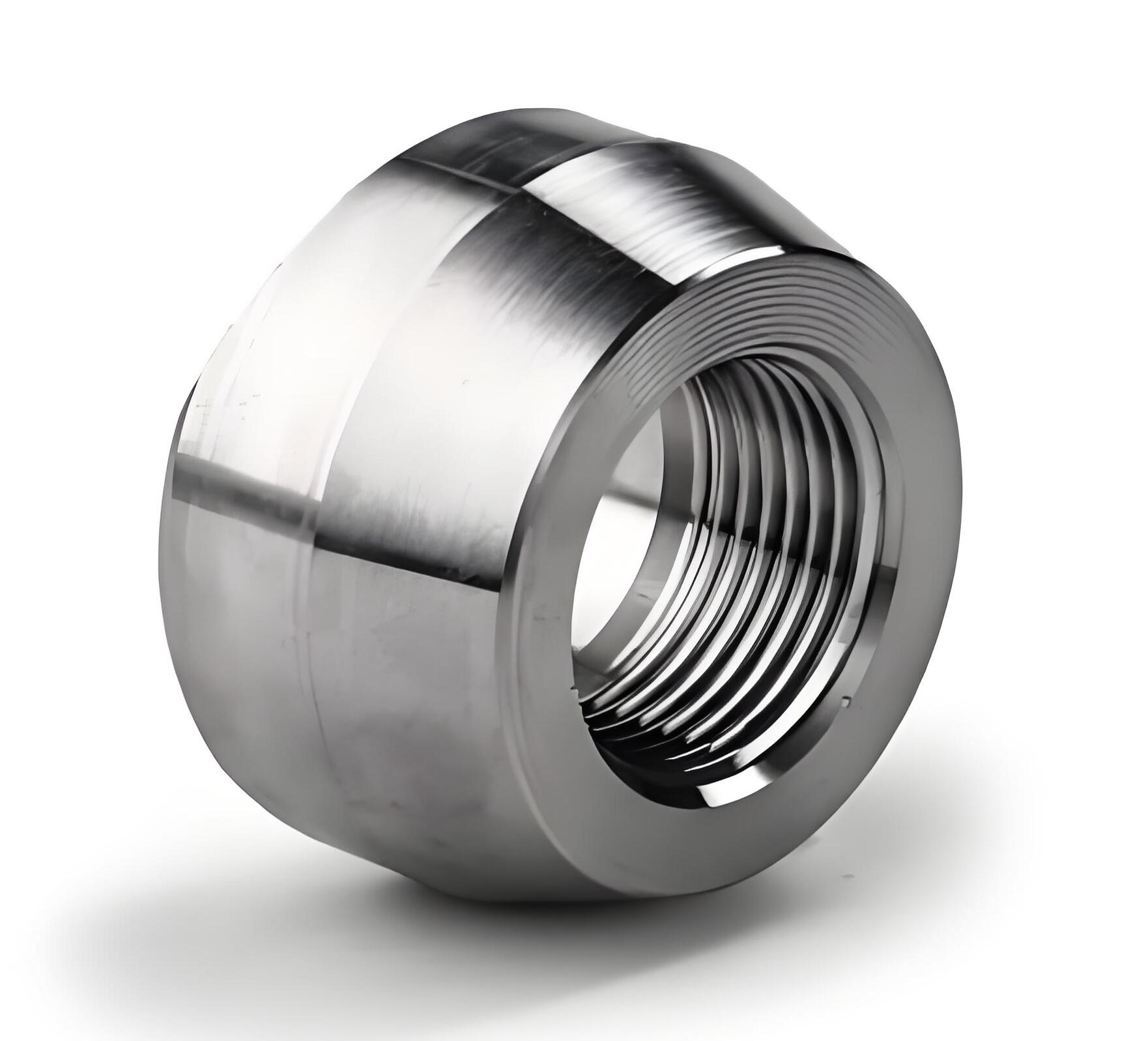
5. Branch outlets and lap joint stub ends: These non-standard pipe fittings are niche accessories and are very easily missed in statistics. They must be checked one by one against the equipment nozzle drawings and listed separately in the bill of materials.
6. Pipe caps and heads: Distinguish between dished pipe caps, spherical crown pipe caps, and conical pipe caps, and strictly match the pipeline pressure rating to prevent low-pressure pipe caps from being used on high-pressure pipelines.
V. Conclusion
The root causes of missing and incorrect items in pipeline pipe fitting procurement lists lie in fragmented processes, absent review, and lax control of technical documents.Only by building a full-chain prevention system covering the drawing source, list preparation, three-level review, change control, IT data support, and post-event review, and by putting standardized templates, unified material codes, the two-way counting method, and multi-party cross-review into practice, while establishing dedicated verification checklists for high-error pipe fittings such as flanges, elbows, tees, reducers, and branch outlets, can human error be eliminated to the greatest extent.
Beijing Guojie Pipeline Co., Ltd. has long been engaged in the supply of pipeline pipe fittings under multiple national standards. In years of project supporting services, it has summarized practical experience in list verification. Relying on a standardized list system and multiple rounds of recheck mechanisms, it effectively assists general contractors in avoiding procurement errors and omissions.Engineering material procurement focuses on upfront prevention and control. As long as institutional processes are solidified and every verification action is assigned to a specific person, the problem of missing and incorrect items in pipe fitting lists can be thoroughly solved, ensuring accurate and efficient material procurement for pipeline projects, controlling project costs, and ensuring smooth progress of construction.