I. Introduction
In the full range of industrial scenarios such as chemical production, oil and gas transportation, new energy manufacturing, wastewater treatment, heating supply, and food and pharmaceutical production, pipes and fittings are the core carriers for fluid transportation, undertaking the key functions of medium transmission, process circulation, energy conveyance, and drainage diversion.A qualified industrial piping system must not only meet the basic requirements of pressure rating, nominal diameter, wall thickness standards, and installation specifications, but also achieveprecise matching between fluid media and fitting materials, which is the core underlying logic for the long-term stable operation of the piping system, avoidance of safety hazards, and extension of equipment life cycle.
In the current field of industrial pipeline procurement and design, there is a widespread extensive selection mindset that emphasizes pressure and diameter while neglecting medium compatibility.Most technical personnel and procurement personnel habitually complete selection based on working pressure, temperature, and pipeline size, treating material compatibility as a universal standard, assuming that carbon steel and stainless steel materials can be broadly applied, and ignoring differences in chemical properties, physical properties, erosion characteristics, and corrosion mechanisms among different fluid media.A large amount of engineering practice data shows that more than 85% of pipeline leakage, inner wall corrosion, weld cracking, medium contamination, pipeline scrapping, and process shutdown accidents originate from an imbalance between medium and material compatibility, rather than from quality problems of the product itself.
Fluid media are divided into neutral media, acid-base corrosive media, saline media, sulfur-containing media, high-temperature oxidizing media, high-speed scouring media, and many other types. Different media have strict, specific requirements for the corrosion rate, damage form, temperature tolerance, and flow velocity threshold of metal materials.Once the material's tolerance capacity cannot match the characteristics of the medium, it will cause a series of failures such as chemical corrosion, electrochemical corrosion, pitting corrosion, intergranular corrosion, scouring wear, and high-temperature oxidation.Therefore, systematically mastering the adaptation principles between fluid media and pipe fitting materials, and establishing a standardized, working-condition-specific, and refined selection system, are essential core capabilities for compliant design, precise procurement, and safe operation and maintenance of modern industrial pipeline engineering.
II. Core Principles for Adapting Fluid Media to Pipe Fitting Materials
The adaptation between fluid media and pipe fitting materials is essentiallya dynamic equilibrium match between the physicochemical properties of the material and the working condition parameters of the medium. The core principles can be summarized as adaptation across four major dimensions: chemical resistance adaptation, temperature threshold adaptation, flow velocity scouring adaptation, and pressure structure adaptation. None of the four dimensions can be omitted; together they determine the working condition adaptability and operational safety of the pipeline system.
First, chemical resistance adaptation is the foundational core of material adaptation.Different metal materials possess their own exclusive alloy compositions, molecular structures, and chemical stabilities, and there are fundamental differences in their corrosion resistance, reaction resistance, and dissolution resistance to various fluid media.Neutral fluid media have stable chemical properties and will not undergo chemical reactions with metal materials, making them compatible with a wide range of materials;whereas acidic, alkaline, saline, and sulfur-containing fluids have strong chemical activity and will continuously react with ordinary metal materials, damaging the inner wall structure of pipes and causing wall thickness reduction, localized perforation, and medium leakage.The core logic of adaptation is to select, based on the chemical properties of the medium, the exclusive fitting material that can maintain chemical stability, resist corrosion, and avoid medium contamination.
Second, temperature threshold adaptation is a key constraint for working condition compatibility.All fitting materials have a fixed temperature tolerance range, and increases or decreases in medium temperature will directly change the corrosion rate and material performance.Materials suitable for normal-temperature working conditions will experience a significant decline in corrosion resistance in high-temperature environments, and metal materials are prone to problems such as oxidation and scaling, grain relaxation, and stress cracking;under low-temperature working conditions, ordinary carbon steel is prone to cold brittle fracture and cannot ensure structural stability.The higher the temperature, the stronger the chemical activity of the medium, and the corrosion rate of the material increases exponentially. Therefore, high-temperature corrosive media must be matched with high-grade alloy materials, while low-temperature media need to be matched with special low-temperature-resistant materials.
Third, flow velocity erosion adaptation is an important guarantee for long-term operation.Industrial fluids are not in a static, stationary state. High-speed flowing media and fluids containing impurity particles will cause continuous erosion and wear on the inner walls of pipes and on throttling fittings such as elbows, tees, and reducers.Ordinary thin-walled, low-hardness materials cannot adapt to high-speed fluid working conditions. Long-term operation will lead to inner wall wear, rapid loss of wall thickness, and perforation failure of fittings.The faster the flow velocity and the more impurities in the medium, the higher the requirements for material hardness, wear resistance, and structural strength. Targeted upgrades to thicker wall thickness and high-hardness alloy materials are required.
Fourth, pressure structure adaptation is the bottom-line requirement for system safety.Different fluid working conditions have different working pressures. High-pressure fluids place higher requirements on the tensile strength, pressure resistance, and structural toughness of fitting materials.Material adaptation must be combined with the medium pressure level, matching the corresponding wall thickness grade and material strength, to avoid material deformation, weld seam cracking, and pipeline bursting under high-pressure conditions, achieving dual adaptation for corrosion resistance and pressure-bearing safety.
III. Classification of Mainstream Industrial Fluid Media and Standard Rules for Material Adaptation
By integrating national standards, American standards, and general chemical industry specifications, and based on the physicochemical properties of the media, mainstream industrial fluids can be divided into six major categories. Each category of media corresponds to a dedicated material adaptation system, forming a standardized basis for selection.
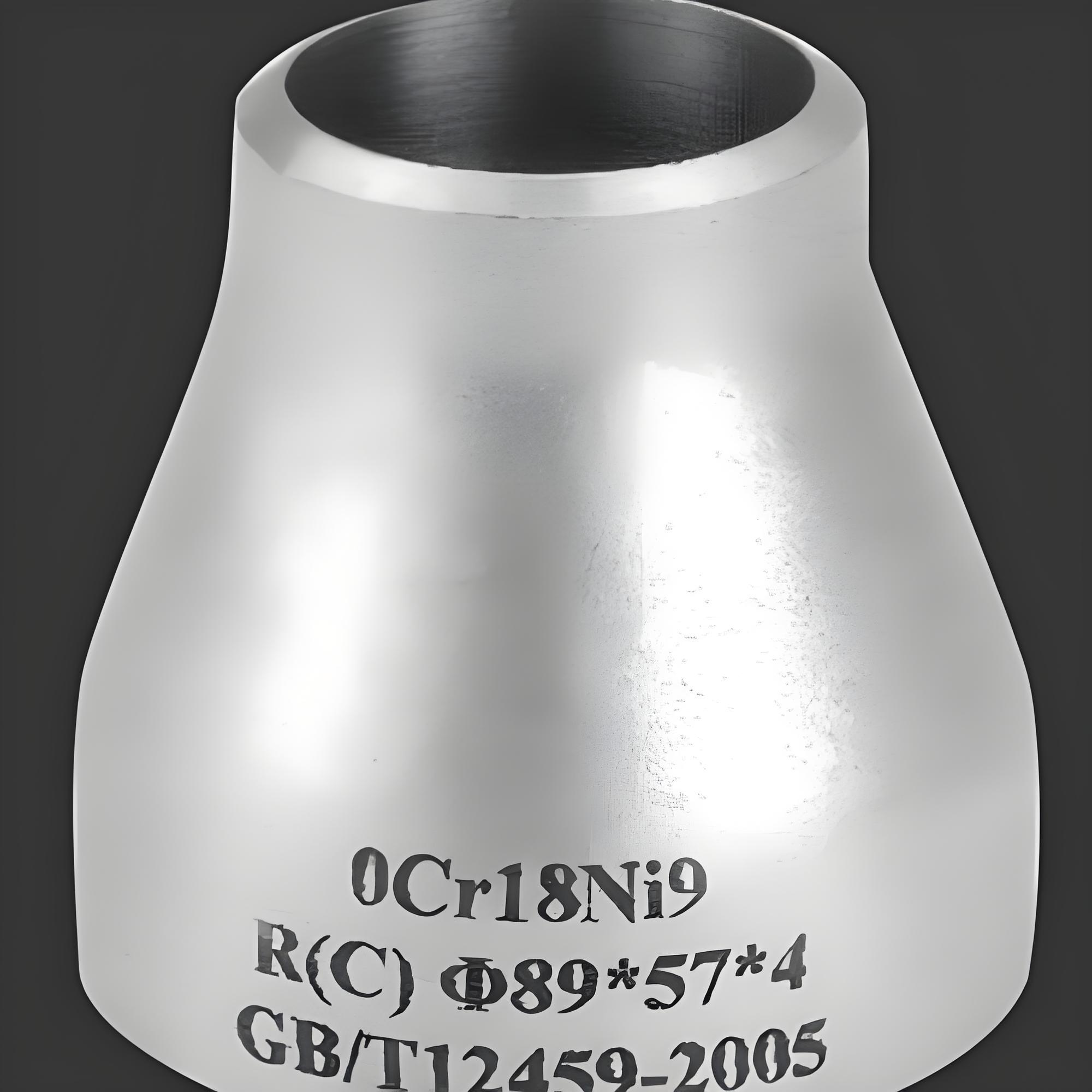
The first category: neutral clean water fluid media.This includes non-corrosive fluids such as industrial clean water, circulating water, tap water, and cooling soft water, with stable chemical properties, no acids or alkalis, no salinity, no sulfides, and an extremely low corrosion rate.This category of media has the widest range of adaptation. For normal-temperature and low-pressure working conditions, ordinary carbon steel pipes and Q235B material pipe fittings can be selected, following the GB/T12459 general standard;for medium- and high-pressure normal-temperature working conditions, 20# steel seamless pipe fittings can be selected;for process systems that require clean water quality free of impurity contamination, the material can be upgraded to 304 stainless steel.The core of material selection for neutral media is based on pressure-bearing, flow velocity, and cleanliness requirements. There is no need to excessively upgrade anti-corrosion materials, thereby balancing safety and economy.
The second category: acidic and alkaline corrosive fluid media.This covers media such as industrial hydrochloric acid, sulfuric acid, sodium hydroxide, acidic and alkaline wastewater, and corrosive chemical liquids from fine chemicals; it is the most corrosive fluid type in industrial scenarios.For low-concentration, room-temperature acidic and alkaline media, carbon steel rubber-lined or plastic-lined anti-corrosion pipe fittings can be used, relying on the external carbon steel for pressure bearing and the internal anti-corrosion layer to isolate the media, achieving low-cost adaptation;For high-concentration strong acid and strong alkali media at temperatures above 80°C, the anti-corrosion layer is prone to aging and peeling off, so pipe fittings made of 316L stainless steel or duplex steel 2205 must be used; ordinary carbon steel and 304 material are strictly prohibited.For ultra-high-corrosion severe working conditions, titanium alloy material can be selected to completely prevent chemical corrosion penetration and ensure long-term stable operation of the pipeline.
The third category: salt-containing and seawater fluid media.This includes media such as seawater, brine, salt-containing chemical wastewater, and chloride ion aqueous solutions; the core damage forms are electrochemical pitting corrosion and intergranular corrosion.Chloride ions have extremely strong penetrating power and will destroy the passivation film of stainless steel, causing localized rust-through failure.For conventional low-salinity water and normal-temperature working conditions, 304 stainless steel can be selected;For high-salinity, high-temperature seawater and marine engineering pipelines, 316L stainless steel or duplex steel materials must be selected, the carbon content of the pipe material must be strictly controlled, the resistance to chloride ion corrosion must be improved, and ordinary carbon steel is prohibited from directly contacting salt-containing media.
The fourth category: oil and gas sulfur-containing fluid media.This covers crude oil, natural gas, oil-gas mixed media, and sulfur-containing process gas; the media contain sulfide components such as hydrogen sulfide and mercaptans, which easily cause stress corrosion cracking of materials.Ordinary carbon steel is highly prone to cracking and leakage, posing major safety hazards.For such media, sulfur-resistant carbon steel, low-temperature alloy steel, and duplex steel pipe fittings must be selected, and the dedicated standards for oil and gas pipelines under API and ASME must be followed; the materials of the entire system must be unified to avoid contact between different materials that creates a potential difference and accelerates localized corrosion.
The fifth category: high-temperature heat transfer fluid media.This includes media such as high-temperature heat transfer oil, high-temperature process gas, and superheated steam; high-temperature environments accelerate metal oxidation and medium corrosion.Ordinary materials suitable for room temperature experience a significant decline in corrosion resistance under high-temperature conditions above 300°C. Chromium-molybdenum alloy steel and 310S high-temperature-resistant stainless steel pipe fittings must be selected, with thickened pipe walls to reserve allowance for high-temperature oxidation loss, adapting to long-term high-temperature operating conditions.
The sixth category: high-speed particle-laden scouring fluids.This includes dust-laden mixed gas streams, slag-water mixtures, and process particle transport media, with the core damage mode being mechanical scouring wear.Such media do not require high-end anti-corrosion materials, but place extremely high demands on material hardness and wall thickness grade. Thickened carbon steel and wear-resistant alloy pipe fittings must be selected, upgraded to Sch80 or higher wall thickness grades, to avoid wall thickness loss and failure caused by long-term scouring.
IV. Analysis of Key Influencing Factors in Media and Material Compatibility
On the basis of standardized compatibility rules, actual engineering selection also requires comprehensive fine-tuning in combination with operating condition variables. A single media type cannot fully define compatibility standards. The four major variables of temperature, pressure, flow velocity, and media concentration are important supplementary bases for compatibility selection.
Media concentration directly determines corrosion intensity. For the same acidic medium, low concentrations can be matched with anti-corrosion carbon steel materials, while high concentrations require upgrading to high-end stainless steel or alloy materials. The higher the concentration, the higher the material tolerance threshold.Operating temperature is the most core amplifying variable. For every 20°C increase in temperature, the corrosion rate of the medium doubles. Many material combinations that are qualified at room temperature will completely fail under high-temperature conditions.Working pressure affects the structural selection of pipe fittings; under high-pressure conditions, material strength and wall thickness grade must be simultaneously increased to prevent pipeline damage caused by the combined effect of corrosion and pressure.Medium flow velocity affects the degree of erosion and wear; for high-speed fluids, priority must be given to ensuring material hardness and wall thickness to reduce the risk of mechanical wear.
At the same time, multi-medium mixed working conditions are a difficult point in selection, as the corrosion mechanism of the mixed fluid changes, and single-material adaptation rules no longer apply. Selection must be based on the most corrosive medium in the working condition, following the adaptation principle of "choose the higher grade rather than the lower one," and never applying weak-corrosion medium standards to strong-corrosion working conditions.
V. Common Adaptation Misconceptions and Risk Hazards in Engineering Selection
Based on extensive experience in industrial pipeline supporting projects, misconceptions about the adaptation of fluid media and materials are highly concentrated and are the main causes of engineering failures and rework, with four typical problems commonly existing.
First, the misconception that general-purpose materials are universally adaptable.Most procurement and design personnel believe that carbon steel and 304 stainless steel are general-purpose materials suitable for the vast majority of working conditions, ignoring the strong corrosive characteristics of acid-base, high-salt, and sulfide media, and substituting ordinary materials for specialized anti-corrosion materials, resulting in pipeline corrosion and leakage shortly after being put into production.Second, the misconception of looking only at pressure and diameter while ignoring medium properties: the entire selection process refers to pressure and size parameters while completely ignoring fluid characteristics, causing a mismatch between material resistance capacity and medium corrosion intensity.
Third, the misconception of inconsistent local materials: the main pipeline material uses corrosion-resistant material, while fittings such as elbows, tees, flanges, and gaskets use ordinary materials, creating a system weakness; the fittings preferentially corrode and fail, causing the entire pipeline to break down.Fourth, the misconception of applying room-temperature standards to high-temperature working conditions: failing to consider the amplifying effect of temperature on corrosion, room-temperature-adapted materials rapidly oxidize and corrode under high-temperature working conditions, causing safety accidents.
The above misconceptions appear to be details of material selection, but are actually systemic risks caused by a lack of understanding of the adaptation principles, which will directly cause major economic losses such as process shutdowns, medium leakage, environmental pollution, engineering rework, and project claims, and in severe cases lead to safety production liability accidents.
VI. Standardized Adaptation Implementation Process for Fluid Media and Pipe Fitting Materials
To achieve precise material selection and zero-risk adaptation, combining authoritative specifications and engineering practice, establish a directly implementable six-step standardized adaptation process covering the entire chain of design, procurement, and verification.
Step one: comprehensively collect working condition parameters, accurately confirm the fluid medium type, acid-base concentration, salt content, sulfide content, working temperature, operating pressure, medium flow rate, and operating years, fully grasp the core working condition parameters, and define the corrosion risk level.Step two: classify and characterize medium properties, categorize the working condition media into neutral, corrosive, high-temperature, erosive, and mixed medium types, and clarify the core damage mechanisms.Step three: precisely match materials, based on the medium type and working condition parameters, match the corresponding dedicated materials under national standards and American standards, and strictly prohibit downgraded substitutions.
Step 4: Coordinated parameter upgrade. Fine-tune the wall thickness grade and process standards according to temperature, pressure, and flow velocity. Reserve corrosion allowance for high-temperature corrosive conditions, upgrade wear-resistant wall thickness for high-speed conditions, and strengthen structural materials for high-pressure conditions.Step 5: Unify materials across the entire system. Pipes, all fittings, flanges, sealing accessories, and fasteners must maintain the same material and the same standard to achieve closed-loop system compatibility.Step 6: Incoming inspection and acceptance. Verify material test certificates, corrosion resistance test reports, and production standard steel stamps to ensure the actual materials fully match the working condition compatibility standards.
VII. Conclusion
The principle of matching fluid media with fitting materials is the underlying core logic of industrial piping engineering selection. Its essence is the precise balance between the physicochemical properties of the medium and the tolerance performance of the material.The safe and stable operation of industrial piping systems never relies solely on the basic parameters of pressure, diameter, and wall thickness. Instead, it takes medium compatibility as the core and systematically coordinates chemical resistance, temperature compatibility, flow velocity wear resistance, and pressure-bearing structure.Ignoring the principle of medium compatibility and continuing to use extensive, generalized selection thinking is the core root cause of pipeline corrosion failure, leakage faults, engineering rework, and safety hazards.
In the current era of refined and compliant industrial engineering development, only by abandoning the experience-based selection model and strictly following the principles of medium classification and compatibility, the standardized selection process, and unified standards across the entire system can material mismatch risks be avoided from the source, the service life and operational stability of piping systems be improved, and compliant implementation and long-term operation of various industrial projects in chemicals, oil and gas, environmental protection, new energy, and other fields be guaranteed.
Beijing Guojie Pipeline Co., Ltd. has extensive expertise in multi-standard industrial pipeline and fitting selection and working-condition adaptation technical services. It is well versed in material adaptation rules for various fluid media, standard differences, and working-condition fine-tuning solutions, and can provide precise material selection, parameter verification, compliant supply, and technical Q&A as a one-stop solution for different industrial scenarios, helping various industrial pipeline projects achieve precise adaptation, safe operation and maintenance, and compliant acceptance.