Introduction
Hydrogen molecules are small in size and highly penetrative, with a wide explosive limit range: an explosion can occur at a volume fraction in air anywhere from 4% to 75%, and the minimum ignition energy is extremely low. Once a leak occurs, an explosive gas mixture can easily form in poorly ventilated areas, and static electricity, friction, or a welding spark can trigger deflagration and explosion.Unlike ordinary pressure piping fittings, explosion-proof fittings for hydrogen pipelines must, in addition to pressure-bearing strength, simultaneously solve three major safety challenges: delayed fracture due to metal hydrogen embrittlement, micro-leakage of hydrogen, and static charge accumulation and sparking.Analysis of a large number of hydrogen-related engineering accidents shows that hydrogen pipeline explosions are not all caused by overpressure rupture; the root cause of most accidents lies in missing control during the procurement stage—ordinary industrial fittings were selected, the hydrogen embrittlement resistance of materials was not evaluated, the sealing structure selection was unreasonable, flanges and gaskets were improperly matched, static bonding provisions were missing, and oil and impurities remained inside the fittings, ultimately leading to micro-leakage and then to an explosion accident.
Explosion-proof fittings for hydrogen pipelines include a full set of pressure-bearing components such as forged elbows, tees, reducers, caps, neck flanges, and branch outlets. All pressure-bearing elements, sealing gaskets, and fasteners throughout the entire piping system must be included in the scope of explosion-proof procurement control; it is not acceptable for only the straight pipe to meet hydrogen service standards while the fittings and gaskets use ordinary industrial parts.At present, many typical problems commonly exist in industry procurement: the procurement technical agreement merely labels the items as "fittings for hydrogen use" without specifying hydrogen embrittlement resistance indicators and material test requirements;plate-rolled fittings and cast fittings are selected, which have many internal defects and a high risk of hydrogen embrittlement cracking;the extremely leak-prone nature of hydrogen is ignored, and ordinary flat flanges and non-metallic gaskets are selected, resulting in micro-leakage under high-pressure conditions;Residual oil contamination from fitting machining increases the risk of ignition and explosion in high-pressure hydrogen environments;Insufficient attention to electrostatic bonding provisions, with flange connection locations lacking conductive bonding structures;Ordinary stainless steel is confused with hydrogen-service-specific stainless steel, and the material has not undergone hydrogen embrittlement susceptibility assessment;The non-destructive testing level is too low, allowing internal micro-cracks to propagate in hydrogen environments and cause delayed fracture;Hydrogen piping fittings of different pressure ratings are stored together, and unclear marking leads to misuse;Export hydrogen refueling projects are unfamiliar with international hydrogen-service piping standards, and no technical review has been conducted on the differences between domestic and foreign specifications.
Procurement of explosion-proof fittings for hydrogen pipelines is a specialized procurement for hydrogen-service piping as special equipment, and the four requirements of pressure-bearing performance, hydrogen embrittlement resistance, sealing and explosion protection, and anti-static performance are all indispensable.Procurement work must not focus only on nominal pressure and dimensional specifications; hydrogen embrittlement resistance assessment, sealing reliability, electrostatic conductivity, clean degreasing, and non-destructive testing must be made mandatory acceptance clauses, and a full-chain control system must be established covering supplier admission review, technical agreement locking, manufacturing process supervision, inspection and testing, sealed packaging, and incoming re-inspection.This article systematically elaborates on the procurement requirements for explosion-proof fittings for hydrogen pipelines from the dimensions of hydrogen explosion and hydrogen embrittlement failure mechanisms, pipeline operating condition classification, domestic and international explosion-proof standard systems for hydrogen-exposed pipelines, fitting material admission, structural selection, sealing systems, static electricity explosion-proof accessories, non-destructive testing, degreasing and cleaning, factory documentation, procurement technical agreements, typical procurement misunderstandings and risk prevention and control, and full-lifecycle safety and economic evaluation, providing a complete technical basis for material procurement, supplier auditing, factory supervision, and incoming acceptance for water electrolysis hydrogen production, hydrogen refueling stations, chemical hydrogen-exposed facilities, and metallurgical hydrogen engineering.
I. Hydrogen pipeline explosion, hydrogen embrittlement failure mechanisms, and pre-procurement operating condition classification and identification
1.1 Core risk mechanisms of explosion-proof hydrogen pipelines
Hydrogen medium has two major fatal risks: explosion risk and hydrogen embrittlement fracture risk.Hydrogen molecules are extremely small and can easily penetrate sealing gaps to form micro-leaks; leaked hydrogen has low density and easily accumulates in the upper part of equipment to form explosive gas mixtures;The minimum ignition energy is only 0.019 mJ; static electricity friction, metal impact, and tiny electric sparks are all sufficient to ignite hydrogen.Hydrogen embrittlement is a delayed failure; hydrogen atoms penetrate into the metal lattice, reducing material toughness, causing cracks to initiate and slowly propagate under stress below the material yield strength, resulting in unanticipated brittle fracture, and the risk of hydrogen embrittlement failure under high-pressure hydrogen-exposed conditions increases significantly.
Ignition sources in pipeline systems are mainly divided into: high-speed airflow friction static electricity, metal particle impact sparks, fracture sparks generated by material hydrogen embrittlement cracking, and residual processing oil contamination oxidizing and spontaneously igniting under high-pressure hydrogen.Internal burrs, weld beads, and inner wall defects in ordinary industrial pipe fittings will intensify airflow turbulence and solid particle impact, increasing the probability of ignition.At the same time, rough machining of the sealing surfaces of pipe fittings and incorrect gasket selection will produce continuous trace leakage, continuously releasing hydrogen into the space and forming an explosive hazardous environment.
1.2 Collection of Operating Condition Parameters and Classification of Hydrogen-Exposed Pipelines
Before procurement is initiated, process operating condition parameters must be fully collected as the prerequisite for determining explosion-proof grade, material selection, and inspection indicators. Procurement must not be initiated if the operating condition parameters are incomplete.Parameters to be collected: medium (gaseous hydrogen/high-purity hydrogen), design pressure, operating pressure, design temperature;hydrogen purity, medium humidity;pipeline GC pressure pipeline category;usage scenario (hydrogen production by water electrolysis, hydrogen refueling station, chemical hydrogen exposure, metallurgical hydrogen);Whether intermittent start-stop is used, and the number of pressure cycles;Classification level of explosive hazardous areas;Project execution standards (national standards, ASME hydrogen service standards).
According to GB50177 "Design Code for Hydrogen Stations", hydrogen pipelines are classified by pressure into low pressure ≤1.6MPa, medium pressure 1.6–10MPa, and high pressure ≥10MPa.The higher the pressure, the progressively greater the risks of hydrogen embrittlement, leakage, and explosion.High-pressure hydrogen service pipelines impose strict mandatory constraints on materials, forging grades, non-destructive testing, and sealing structures; low-pressure pipelines have relatively controllable risks, but they still carry explosive hazardous media and simplified explosion-proof procurement standards are not permitted.
At the operating condition determination stage, a unified baseline standard for the entire set of hydrogen piping components is clearly established.Domestic hydrogen production and hydrogen refueling projects are based on GB50177, GB4962, GB/T20801, and TSG31 Industrial Piping Safety Technical Regulations;For export projects involving hydrogen addition, when customers require international standards, the ASME B31.12 hydrogen piping code is implemented. Different standards have differences in hydrogen embrittlement resistance assessment and sealing selection requirements, and cannot be directly replaced with equivalents.
II. Review of Domestic and International Explosion-Proof Standard Systems for Hydrogen Pipeline Fittings
2.1 Current Core Domestic Standards
GB50177-2005 "Design Code for Hydrogen Stations," the basic national standard for hydrogen engineering, stipulates that pipes and fittings for hydrogen pipelines must use seamless components, and cast iron fittings are strictly prohibited;High-pressure pipeline flanges shall use tongue-and-groove or trapezoidal groove sealing structures, and the standard specifies basic explosion-proof requirements such as gasket selection, electrostatic grounding, and vent flame arresters.
GB4962-2008 "Safety Technical Regulations for the Use of Hydrogen" clearly specifies that hydrogen pipelines should preferably use welded connections and limits threaded connections;Explosion-proof grade for explosive hazardous areas: ⅡC T1;Seals shall use PTFE and metal gaskets; ordinary insulating sealing materials are prohibited.
GB/T 20801 "Pressure Piping Code — Industrial Piping": the new edition specifically adds a chapter on hydrogen service piping, standardizing requirements for hydrogen service materials, hydrogen embrittlement assessment, manufacturing, welding, and non-destructive testing, and serves as the foundational code for hydrogen service pressure piping components.
TSG 31-2025 "Safety Technical Regulation for Industrial Piping": a mandatory regulation for special equipment that sets mandatory requirements for GC1-class high-risk hydrogen service piping, including non-destructive testing of forged fittings, manufacturing qualifications, and material re-inspection.
GB 50058 "Code for Design of Electrical Installations in Explosive Hazardous Atmospheres": classification of hydrogen explosive hazardous zones, and design criteria for static electricity and explosion-proof grounding.
GB 50235 "Code for Construction of Industrial Metallic Piping Engineering": supporting requirements for piping pressure testing, purging, and installation.
GB/T 34542 "Hydrogen Storage and Transportation Systems": general technical specifications for materials and safety accessories of fittings used in hydrogen refueling stations and hydrogen energy transportation.
2.2 Mainstream Foreign Hydrogen Service and Explosion-Proof Standards
ASME B31.12, Hydrogen Piping and Pipelines: widely adopted in international hydrogen energy projects, it specifies hydrogen compatibility assessment of hydrogen service materials, fitting manufacturing, pressure testing, and leak detection.
CGA G-5.4, Hydrogen System Safety Standard of the Compressed Gas Association: standardizes requirements for sealing, cleanliness, anti-static measures, and leak detection of hydrogen equipment.
ISO 11114, test method for evaluating hydrogen embrittlement of metallic materials for gas cylinders and pipelines, used to verify the hydrogen embrittlement resistance of materials.
2.3 Basic Principles of Standard Adaptation
The entire hydrogen pipeline system must adopt a unified baseline standard; straight pipes, elbows, tees, reducers, flanges, gaskets, and fasteners must all simultaneously implement the same set of hydrogen service explosion-proof standards. It is prohibited for pipe fittings to use hydrogen service standards while gaskets and bolts apply ordinary industrial standards.For example, for GC1 high-pressure hydrogen pipelines, all pipe fittings, flanges, and sealing elements must simultaneously satisfy TSG31+GB50177+GB/T20801; it is not permissible to control only the pipe fitting body while ignoring the matching sealing elements.For cross-standard equivalent substitution, a technical difference comparison document must be issued and may only be implemented after approval by the design party, the owner, and the safety management department.
Red lines for explosion-proof procurement of hydrogen pipelines: all medium-contact surfaces must have hydrogen embrittlement resistance, the entire system must ensure continuous electrostatic conduction, and the sealing structure must adapt to the anti-leakage requirements of small hydrogen molecules.
III. Material Admission and Procurement Specifications for Hydrogen Explosion-Proof Pipe Fittings
The core objective of material selection for hydrogen pipeline fittings is to suppress hydrogen embrittlement and ensure material hydrogen compatibility. The higher the material strength, the stronger the hydrogen embrittlement sensitivity; under high-pressure hydrogen service conditions, it is strictly prohibited to use high-strength quenched and hardened steel.Material review is the first checkpoint in explosion-proof procurement.
3.1 Material selection rules
Low-pressure hydrogen pipelines (≤1.6MPa): Low-carbon, low-sulfur, low-phosphorus high-quality carbon steel forged pipe fittings may be selected; the material must have controlled sulfur and phosphorus impurity content to reduce the risk of hydrogen-induced cracking;304 austenitic stainless steel forgings may also be selected.Carbon steel materials must undergo a hydrogen embrittlement resistance assessment.
Medium-pressure hydrogen pipelines (1.6~10MPa): 304 and 316L austenitic stainless steel forged pipe fittings are preferred;Austenitic stainless steel has a face-centered cubic lattice, and its hydrogen embrittlement sensitivity is far lower than that of carbon steel, making it suitable for the vast majority of hydrogen production and hydrogen refueling station pipelines.
High-pressure hydrogen pipelines (≥10MPa): 316L austenitic stainless steel is preferred, and nickel-based alloy forgings are selected for some operating conditions;For high-pressure hydrogen service piping, cast fittings and fittings rolled from plate are prohibited; seamless forgings must be used, with a forging grade not lower than Grade II. Branch connections shall use integrally forged tees; directly welded branch connections with openings are not permitted, in order to avoid stress concentration at sharp corners that could induce hydrogen-induced cracking.
Key points for reviewing purchased materials:
1. Raw materials shall be processed from seamless forgings or seamless pipe; rolled or cast fittings are not permitted;
2. The supplier shall provide MTC material certificates, heat numbers, chemical composition, and mechanical property reports;High-pressure fittings shall additionally be provided with ultrasonic UT, magnetic particle MT, and penetrant PT non-destructive testing reports;
3. For critical hydrogen service fittings, the technical agreement may stipulate the provision of hydrogen embrittlement susceptibility test reports to verify material hydrogen compatibility;
4. Minimize cold work hardening during processing as much as possible; cold-formed fittings require stress relief heat treatment to eliminate residual stress, as residual stress is an important cause of hydrogen embrittlement crack propagation;
5. Agree on incoming spectral sampling re-inspection to verify material grades and prevent ordinary stainless steel from being substituted for hydrogen service-specific materials.
3.2 Explosion-proof material selection for gaskets and fasteners
Gaskets and bolts are weak links that are easily overlooked in explosion-proof procurement.Hydrogen molecules can easily penetrate sealing gaps, and ordinary non-metallic gaskets are prone to permeation and aging under long-term high pressure.For low-pressure working conditions, PTFE gaskets and flexible metal spiral wound gaskets can be selected;For medium- and high-pressure hydrogen pipelines, annealed copper gaskets and metal trapezoidal ring gaskets are preferred, and for high-pressure working conditions, metal sealing gaskets matched with tongue-and-groove flanges are used.The use of ordinary rubber and oil-containing non-metallic gaskets is strictly prohibited.Fasteners shall be made of low-carbon alloy steel or 316L stainless steel, with threads machined free of oil contamination, to ensure electrical continuity and reliable electrostatic bonding conduction.All gaskets and fasteners must be included in hydrogen-service explosion-proof control, and ordinary industrial fasteners must not be purchased separately.
IV. Structural Selection and Procurement Specifications for Hydrogen Explosion-Proof Pipe Fittings
In the structural design of hydrogen pipeline fittings, in addition to pressure-bearing strength, the focus is on controlling stress concentration, sealing surface forms, and internal wall burrs, to reduce the risk of hydrogen embrittlement cracking, while also reducing ignition sources generated by impacts from solid particles.
1. Elbows: Long-radius R=1.5D seamless butt-welded forged elbows are preferred;Short-radius elbows and mitered elbows are prohibited in high-pressure hydrogen pipelines.The inner wall of elbows shall be smooth without wrinkles or burrs, the pipe end faces shall be flat, and the butt joint misalignment shall be strictly controlled to avoid steps that accumulate solid impurities and generate impact sparks.
2. Tees: For medium- and high-pressure hydrogen pipelines, integrally forged seamless tees are preferred; flat-plate drilled and welded tees are not recommended;The internal corners of tees shall have smooth transitions to eliminate sharp corners that cause stress concentration and reduce the risk of hydrogen embrittlement cracking.
3. Reducers: Concentric or eccentric forged reducers with gradual, smooth transitions, no abrupt steps, and smooth inner walls without burrs.
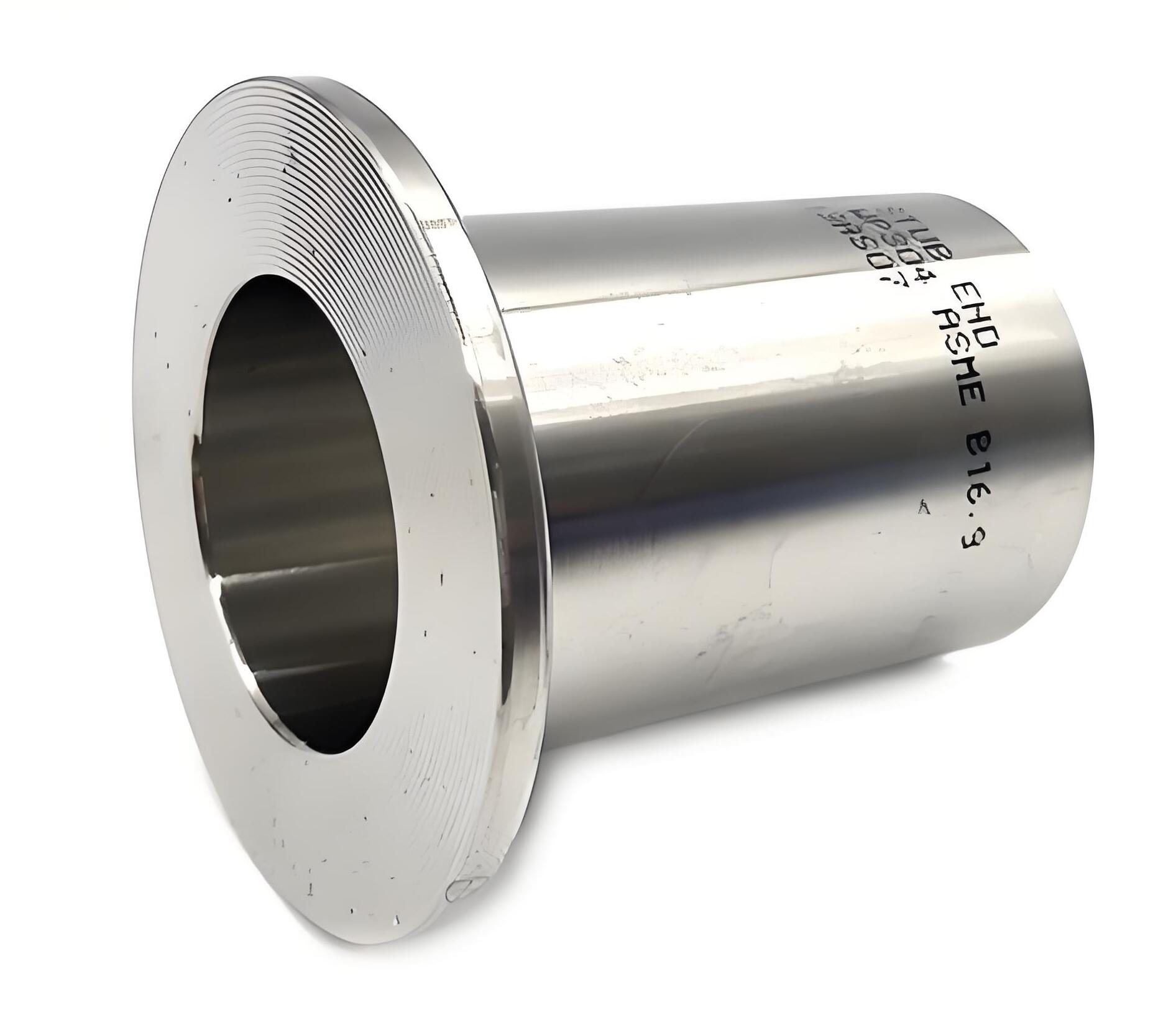
4. Flange: For low-pressure pipelines, welded-neck flat flanges may be used;when the pressure is greater than 2.5MPa, in accordance with GB50177, use raised-and-recessed face, tongue-and-groove face, or trapezoidal groove flanges to improve the sealing capability against small-molecule hydrogen and reduce the risk of micro-leakage. Plate-type slip-on flanges are not recommended due to insufficient sealing reliability.
5. Pipe cap: Elliptical forged head pipe caps, avoiding flat-bottom heads, to prevent liquid and sediment accumulation.
The nominal inner diameter of the entire set of fittings shall be kept consistent; inconsistent inner diameters will form steps, generating vortices and solid particle impact.It is recommended to purchase the entire set of hydrogen pipeline fittings as a bundled package to ensure uniform processing techniques and material systems;supply from multiple separate suppliers is prone to inner diameter deviations and butt-joint misalignment, increasing the risk of leakage and explosion.
V. Procurement Requirements for Static Electricity Explosion Protection and Sealing System Accessories
Static electricity accumulation is the most common ignition source for hydrogen pipelines. During the high-speed flow of hydrogen, friction between the medium and the pipe wall generates static electricity. If the gasket at the flange connection is insulating, it will cause static electricity isolation and charge accumulation. When the static voltage reaches the breakdown threshold, an electric spark is generated and ignites the leaked hydrogen.
The procurement technical agreement must specify: flange positions shall be equipped with electrostatic bonding jumpers, with jumper material selected from stainless steel or copper, ensuring continuous metal conductivity on both sides of the flange, and the conductive resistance of the electrostatic grounding of the entire pipeline system shall meet the specified limit values;Gasket selection must ensure conductive continuity; metal sealing gaskets under high-pressure conditions are inherently conductive;Non-metallic PTFE gaskets must be equipped with metal jumpers and must not rely on the gasket itself for conductivity.
Welded connections shall be preferred to reduce leakage points;Flanged connections are only permitted at equipment and valve interfaces;Threaded connections shall be strictly limited; where threaded connections are truly necessary, PTFE film packing shall be used for sealing, and insulating sealing materials such as ordinary PTFE tape are prohibited to prevent electrostatic isolation and hydrogen leakage.
VI. Procurement Technical Requirements for Degreasing and Cleaning, Non-Destructive Testing, and Pressure Testing
Grease and organic impurities on the inner walls of hydrogen pipeline fittings pose a risk of oxidative spontaneous combustion under high-pressure hydrogen environments; hydrogen-exposed fittings require degreasing treatment to remove organic substances such as cutting oil, rust-preventive oil, and polishing paste.Degreasing process: remove solid debris → oil-free spray immersion degreasing → oil-free pure water rinsing → clean drying → oil residue inspection.After degreasing, the oil residue indicators shall be accepted according to project requirements, and the supplier shall provide a degreasing test report.
Non-destructive testing is a key means of preventing and controlling hydrogen-induced microcracks, and the testing grade for hydrogen service pipe fittings is higher than that for ordinary industrial pipe fittings.Forged high-pressure pipe fittings require combined UT ultrasonic, MT magnetic particle, and PT penetrant testing to detect internal laminations and tiny surface cracks;Welds undergo 100% RT radiographic or UT testing; under hydrogen service conditions, tiny cracks will continue to propagate in a hydrogen environment, resulting in delayed fracture.The hydrostatic test uses clean, oil-free fresh water; after the pressure test is completed, thoroughly blow dry to prevent internal wall corrosion from generating solid particles.
List of factory delivery documents: material quality assurance certificate, heat number traceability table;UT/MT/PT non-destructive testing reports for forgings; Hydraulic pressure test records; Degreasing process documents and grease residue test reports;Pipe fitting drawings and dimensional inspection records; Product certificate of conformity; Special equipment manufacturing qualification;Material and sealing performance data for gaskets and fasteners;Material hydrogen compatibility test reports are provided as needed for high-pressure hydrogen service projects.
Incoming acceptance process: prioritize the review of the complete set of technical documents;Check packaging integrity;Visually inspect the inner wall for defects;Perform sampling and spectral re-inspection of the material;Re-test grease residue on a sampling basis when necessary;Conduct random inspection of the interior of pipe fittings with a borescope.If documents are missing, packaging is damaged, or non-destructive testing fails, the entire batch shall be rejected and must not be used in hydrogen service projects.For GC1 high-pressure hydrogen projects, factory supervision during manufacturing shall be arranged, with the supervision focusing on forging flaw detection, the entire degreasing process, sealing surface machining, and static electricity bonding accessories.
VII. Pipe fitting marking, sealed packaging, warehousing and transportation control
After the pipe fittings are inspected and degreased and pass the inspection, both ends shall be sealed with oil-free sealing end caps, the flange sealing surfaces shall be wrapped with oil-free protective film, and the fittings shall be placed into sealed bags.The outer packaging shall be prominently marked with the [Special Pipe Fittings for Hydrogen and Hydrogen Service Explosion Protection] label, indicating the heat number and pressure rating, and the warning markings shall be clear;It is strictly prohibited to pack them in the same box with ordinary oil-containing pipe fittings or lubricating oil materials.
The supplier and the receiving party shall set up dedicated storage areas for hydrogen service pipe fittings, isolated by partition, and it is strictly prohibited to stack them together with ordinary pipe fittings or grease materials;Handling gloves and tooling shall all be oil-free.Transport vehicle compartments shall be kept clean and free of oil contamination.Once the packaging is damaged, the pipe fittings need to be degreased and re-inspected, and cannot be used directly.The procurement technical agreement stipulates that damaged packaging shall be deemed nonconforming, and the receiving party has the right to reject the goods.
VIII. Core Special Explosion-Proof Clauses of the Procurement Technical Agreement
The technical agreement of the hydrogen pipeline fittings procurement contract shall establish a separate special chapter on hydrogen-exposure explosion protection, which must not be merged into general technical clauses.Core clauses: medium type, design pressure, pipeline GC classification;Applicable standards GB50177, GB4962, TSG31;Fitting material, forging grade, hydrogen embrittlement assessment requirements;Stress relief heat treatment during processing;Degreasing process, grease residue limits;Non-destructive testing items and acceptance levels;The medium for hydrostatic testing shall be oil-free;Flange sealing face type, gasket and fastener materials;Supporting requirements for electrostatic bonding;Sealed packaging and marking;List of complete documentation provided at delivery;Factory pre-shipment supervision;Approval of material substitution;Quality responsibility for leakage and hydrogen embrittlement failure; Safety breach clause.
Contractual provisions: The supplier shall not change materials without authorization or lower the non-destructive testing level;In the event of a hydrogen explosion accident caused by material hydrogen embrittlement failure or seal leakage, the supplier shall bear all rework, production shutdown, and accident losses.Bid evaluation must not be based solely on price comparison; the focus should be on reviewing the supplier's manufacturing track record for hydrogen-service pipe fittings, forging flaw detection capabilities, degreasing cleanrooms, and special equipment manufacturing qualifications.Low-priced products often omit hydrogen embrittlement assessment, reduce the proportion of non-destructive testing, and simplify the degreasing process, posing major explosion safety hazards after commissioning.The entire set of explosion-proof pipe fittings shall be packaged and purchased uniformly, with pipe fittings, flanges, gaskets, and electrostatic bonding components supplied as a complete set to ensure the completeness of the explosion-proof system.
IX. Typical Misconceptions and Risk Prevention in Hydrogen Pipeline Fitting Procurement
Misconception 1: Choosing ordinary 304 stainless steel and assuming it can be directly used in hydrogen-service conditions without evaluating the material's hydrogen embrittlement sensitivity, resulting in delayed brittle fracture under high-pressure conditions.
Misconception 2: Ordinary flat gaskets are selected for flanges, ignoring the permeation characteristics of small hydrogen molecules, resulting in trace leakage during long-term operation that accumulates in the plant building to form an explosive gas.
Misconception 3: Electrostatic conduction is ignored; non-metallic gaskets are not provided with metal bonding jumpers, allowing static electricity to accumulate at flange locations and generate ignition sparks.
Misconception 4: Cast or rolled pipe fittings are selected, which have many internal defects and stress concentration, leading to crack propagation in hydrogen-containing environments.
Misconception 5: Oil-based cutting fluid is used in fitting machining, degreasing is incomplete, grease remains on the inner wall, and spontaneous combustion occurs under high-pressure hydrogen.
Misconception 6: The sampling ratio for non-destructive testing is low, tiny hydrogen-induced cracks are missed, and they slowly propagate after commissioning, resulting in fracture.
Misconception 7: The technical agreement only simply states "hydrogen piping fittings" and lacks quantitative indicators for hydrogen embrittlement, sealing, static electricity, and degreasing, leaving no basis for judgment in the event of quality disputes.
Misconception 8: Only the fittings are degreased, while matching gaskets and bolts are not subject to cleanliness control, leaving combustible materials at sealing locations.
Risk prevention and control measures: Complete hydrogen pressure classification in the early stage of the project, and select the baseline standard for hydrogen service explosion protection;The technical agreement specifies the locked materials, hydrogen embrittlement assessment, sealing structure, electrostatic bonding, degreasing, and non-destructive testing;High-pressure pipe fittings use integrally forged components, with residual stress eliminated after welding;Degreasing is carried out in an independent clean workshop, and after the grease test passes, the products are sealed and packaged;Dedicated storage areas are partitioned and isolated; Pre-delivery supervision; Incoming material document review + physical re-inspection;After pipeline installation is completed, an airtightness leak test is performed before commissioning to detect the risk of micro-leaks.
X. Full Life Cycle Safety and Economic Assessment for Procurement of Hydrogen Explosion-Proof Pipe Fittings
When selecting and procuring hydrogen-exposed explosion-proof pipe fittings, one must not merely compare initial purchase unit prices; assessment must be based on safety across the full life cycle.High-pressure hydrogen-exposed forged 316L pipe fittings have higher procurement costs, but have fewer forging defects, stable hydrogen embrittlement resistance, and reliable sealing structures, greatly reducing the risk of leakage explosions and safety penalties for production shutdowns;Low-pressure carbon steel pipe fittings have low procurement prices, but require extensive work for impurity control, heat treatment, and regular inspection and maintenance, and are only suitable for low-pressure non-critical pipelines.
For low-pressure utility hydrogen branch lines, where the risk is relatively low, qualified low-carbon forged carbon steel pipe fittings may be selected;For hydrogen production units and high-pressure main lines at hydrogen refueling stations, GC1 high-risk hydrogen-exposed pipelines, 316L integrally forged pipe fittings should be prioritized, along with metal-sealed flanges and electrostatic bonding.The core logic of selection is not to minimize procurement costs, but to match the explosion-proof safety boundary corresponding to the pressure rating; once hydrogen leaks and explodes, the accident loss far exceeds the price difference in pipe fitting procurement.Procurement cost evaluation includes pipe fitting procurement, material hydrogen embrittlement testing, non-destructive testing, degreasing inspection, packaging protection, supervision, later-stage safety operation and maintenance, and explosion accident risk costs.
XI. Conclusion
The procurement of explosion-proof pipe fittings for hydrogen pipelines differs from ordinary pressure pipeline procurement. The four requirements of pressure-bearing strength, hydrogen embrittlement resistance, sealing and leakage prevention, and anti-static explosion protection must be met simultaneously. The core objective is to suppress delayed hydrogen embrittlement fracture, eliminate hydrogen micro-leakage, eliminate electrostatic ignition sources, and prevent hydrogen explosion accidents.Domestic hydrogen production, hydrogen refueling, and chemical hydrogen-related engineering are based on GB50177, GB4962, GB/T20801, and TSG31;Foreign-related hydrogen energy export projects may implement the ASME B31.12 hydrogen piping code.
Forged pipe fittings are selected according to pressure rating; cast and rolled pipe fittings are prohibited for high-pressure hydrogen-related pipelines;Control material impurities and residual stress, and carry out hydrogen embrittlement compatibility assessment when necessary;Prefer welded connections; for high-pressure pipelines, use tongue-and-groove/trapezoidal groove metal-sealed flanges;Provide supporting electrostatic bonding to ensure conductive continuity of the pipeline;Degrease the inner wall of pipe fittings to remove organic combustibles, and perform strict non-destructive testing on forgings and welds to detect potential cracks;After passing inspection, use sealed oil-free packaging to prevent contamination during transportation.The procurement technical agreement separately sets up special clauses for hydrogen-exposed explosion protection, locking down materials, sealing structures, electrostatic requirements, degreasing, and non-destructive testing, and implementing supplier admission, factory supervision, and on-site re-inspection.
For electrolytic water hydrogen production, hydrogen refueling stations, and chemical hydrogen-exposed engineering projects, strictly implement the procurement requirements for explosion-proof pipe fittings of hydrogen pipelines, control the three major risks of hydrogen embrittlement failure, medium leakage, and electrostatic ignition from the procurement source, avoid major safety accidents of hydrogen explosions, and ensure the long-term stable and safe operation of hydrogen pressure pipelines.
References
[1] GB 50177-2005, Design Code for Hydrogen Stations [S].
[2] GB 4962-2008, Technical Safety Regulations for Hydrogen Use [S].
[3] GB/T 20801, Pressure Piping Code—Industrial Piping [S].
[4] TSG 31-2025, Safety Technical Regulations for Industrial Piping [S].
[5] GB 50058, Design Code for Electrical Installations in Explosive Hazardous Environments [S].
[6] GB 50235, Code for construction of industrial metallic piping engineering [S].
[7] GB/T 34542, Hydrogen storage and transportation systems [S].
[8] GB/T 29729, Essential requirements for the safety of hydrogen systems [S].
[9] ASME B31.12, Hydrogen Piping and Transportation [S].
[10] CGA G-5.4, Hydrogen Systems Safety [S].
[11] ISO 11114, Test methods for evaluating hydrogen embrittlement of metallic materials for gas cylinders and pipelines [S].
[12] GB 50236, Code for construction of field equipment and industrial piping welding engineering [S].