Introduction
Process pipelines in the food, dairy, beverage, brewing, condiment and other industries belong to hygienic piping systems that come into direct contact with food. Unlike ordinary industrial pressure piping, sanitary fittings must not only meet pressure-bearing requirements, but their core objectives are to ensure food-contact safety, facilitate clean-in-place (CIP) and steam-in-place (SIP) sterilization, eliminate sanitary dead corners, inhibit microbial adhesion and proliferation, and prevent harmful substances such as heavy metals and plasticizers from migrating into food media.Ordinary industrial fittings often have defects such as scratches on the inner wall, gap dead corners, uneven weld seams, and impure materials. Material residues adhere to rough surfaces, and incomplete cleaning can lead to microbial growth and cross-contamination of products, causing food safety incidents.A large number of food project acceptance cases show that most microbial exceedances and cleaning residue problems in sanitary piping systems are not installation or construction issues, but rather failures during the procurement stage to strictly implement food-grade hygiene specifications, simply applying the procurement standards for ordinary stainless steel fittings, with materials, polishing grades, structural forms, and sealing accessories failing to meet food hygiene requirements.
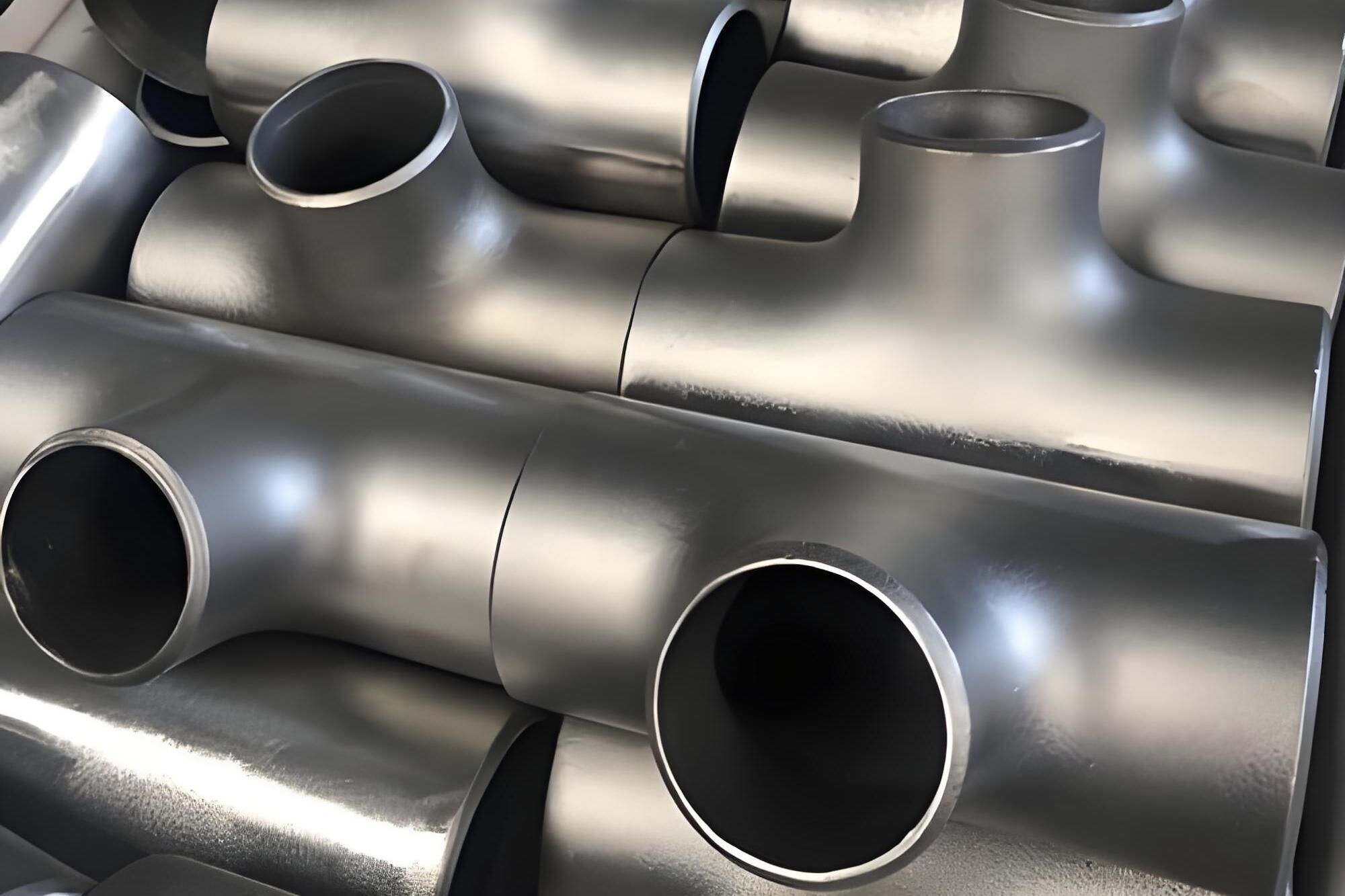
Food-grade sanitary piping fittings include a full set of components such as straight pipes, sanitary elbows, tees, reducers, pipe caps, clamp connections, and unions. The entire piping system must have unified hygiene standards, material grades, and inner surface polishing processes; straight pipes and fittings must not belong to different hygiene systems.At present, many typical problems are common in industry procurement: only simply marking "304 stainless steel" without specifying food-contact material certification;requiring only polishing without specifying the inner wall Ra roughness index;selecting threaded connections or ordinary flange structures that have dead corners;The gasket does not have food-contact certification;No passivation, degreasing, or cleaning was performed before leaving the factory, and oil residue and polishing dust remain inside the fittings;Complete material heat-number traceability documentation is lacking;Standards for industrial stainless steel fittings and food hygiene fittings are confused, and low-priced products use recycled material and non-standard polishing processes;The gasket's temperature resistance and chemical resistance were not evaluated for CIP/SIP operating conditions.
Procurement of food-grade clean fittings is a source control step in food safety. Procurement work must not focus only on nominal diameter and pressure rating; hygiene and safety indicators must be treated as core acceptance items, and a full-chain procurement control system must be built covering supplier admission, technical agreements, manufacturing supervision, cleaning and passivation, factory inspection, document review, and incoming re-inspection.This article systematically explains the procurement specifications for food-grade clean pipeline fittings, covering the hygienic design principles of food-grade clean pipeline fittings, domestic and international hygiene standard systems, material admission requirements, structural selection, connection forms, seal selection, polishing and passivation processes, inspection items, document traceability, procurement technical agreements, typical procurement pitfalls, and risk prevention and control, so as to provide a complete technical basis for the procurement of clean pipeline materials, supplier evaluation, and factory supervision for food, dairy, and beverage EPC projects and food factory technical renovation projects.
I. Hygienic risk mechanisms of food clean pipelines and identification of pre-procurement operating conditions
1.1 Main hygiene risks of food clean pipelines
Food media mostly contain sugars, proteins, and fats, and such organic matter easily adheres to the inner wall surface of pipelines.When the inner wall of pipe fittings is rough and has dead corners, gaps, or pits, the cleaning liquid cannot fully flush it, forming biofilm, and bacteria and mold continuously multiply in the residual material, causing food contamination.The main risk types are divided into four categories.
The first category is surface adhesion and biofilm growth.The higher the inner wall roughness and the more tiny pits there are, the higher the probability of material residue.According to the 3-A and EHEDG hygiene standards, the inner surface roughness of pipelines in direct contact with food is generally required to be Ra≤0.8μm;high-cleanliness aseptic working conditions require EP electropolishing with Ra≤0.4μm.Rough surfaces, even with CIP cleaning, will still retain organic matter in microscopic pits, forming biofilms over time that conventional cleaning and disinfection cannot completely remove.
The second category is the migration of harmful substances from materials.Non-food-grade stainless steel, recycled materials, and inferior rubber gaskets, under acidic and alkaline cleaning solutions and high-temperature steam environments, release heavy metals such as chromium, nickel, and lead or polymer additives that migrate into food materials, violating food safety regulations.
The third category is dead corners and retention areas.Unreasonable structural design of pipe fittings, such as T-shaped tees, concave welds, threaded connections, and stepped misalignment, creates liquid retention dead corners where media stagnate and do not flow, leading to microbial accumulation.Basic principles of hygienic design: no dead corners, no retention, smooth fluid transitions, and reduced liquid accumulation areas.
The fourth category is seal failure and gasket aging.Ordinary industrial rubber gaskets are not resistant to CIP acid and alkaline cleaning solutions; under high-temperature SIP steam conditions, they swell, crack, and detach, with debris mixing into food, while bacteria breed in the gaps of the gaskets.
Most food production conditions involve a combination of multiple risks. For example, dairy product pipelines simultaneously face protein adhesion, high-temperature CIP alkaline cleaning, and steam sterilization, which impose multiple requirements on material corrosion resistance, inner wall polishing, and gasket aging resistance.Procurement and selection must identify the dominant risk and must not be based solely on pressure-bearing parameters.
1.2 Collection of Pre-Procurement Process Condition Parameters
Before starting procurement work, process condition parameters must be fully collected as input for sanitary selection and standard determination. Fittings specifications and sanitary grades must not be directly determined without complete process condition parameters.Parameters to be collected: type of conveyed medium (milk, juice, beer, sauce, etc.), medium pH, and temperature;CIP cleaning agent type, concentration, and cleaning temperature;Whether SIP steam sterilization is required, sterilization temperature and cycle;Design pressure and operating pressure;Whether the pipeline operates in intermittent production and the duration of idle standing time;Solid content of the medium; Cleanliness level requirements; Food contact attributes (direct product contact/auxiliary utility medium);Migration control requirements for pipeline materials;Project execution standards (national standards, 3-A, EHEDG).
According to the degree of hygiene severity, it can be divided into three levels: general food working conditions, high-cleanliness food working conditions, and aseptic food working conditions.General food working conditions: room-temperature beverages, clean water pipelines, CIP room-temperature cleaning;High-cleanliness working conditions: dairy products, fruit juice, high-temperature CIP cleaning;Aseptic working conditions: aseptic filling, ultra-high temperature UHT pipelines, equipped with SIP steam sterilization, with the highest requirements for fittings, polishing, and seals.
In the working condition determination stage, it is necessary to clarify the hygiene baseline standards for the entire pipeline system.Domestic food projects can implement GB/T21472 "Stainless Steel Elbows and Tees for the Food Industry";For export food projects, customers require 3-A or EHEDG certification, and the entire set of fittings and seals must meet the corresponding hygiene standards.
II. Review of Domestic and International Hygiene Standard Systems for Food-Grade Clean Pipeline Fittings
2.1 Current Domestic Standard System
GB/T21472-2008 "Stainless Steel Elbows and Tees for the Food Industry", the core national standard for domestic food fittings, specifies the dimensions, tolerances, internal surface roughness, and hygiene technical requirements of food fittings, and is supported by the ISO2037 standard for stainless steel tubes for the food industry; it is applicable to stainless steel sanitary fittings for the food industry.
YB/T6081-2022 "Sanitary Stainless Steel Clean Pipes" is the industry standard for sanitary stainless steel pipes, specifying clean steel pipe materials, polishing, inspection, and packaging, and is applicable to the procurement of straight pipes for clean pipelines in food and pharmaceutical applications.
GB 14806 "Metal Materials and Articles for Food Contact" is a mandatory national food safety standard that specifies limits for heavy metal migration from stainless steel articles. All stainless steel pipe fittings for food contact must meet this standard, which is the baseline for procurement admission.
The GB 4806 series of food contact material standards covers rubber and plastic sealing gaskets; gasket materials must comply with the food safety requirements of GB 4806.
GB50591 "Code for Construction and Acceptance of Cleanrooms" sets out requirements related to the installation, cleaning, and acceptance of clean pipelines.
GB/T20801 "Pressure Piping Code" covers pressure-bearing design, pressure testing, and welding requirements for clean pipelines.
2.2 Mainstream Foreign Sanitary Standards
3-A Sanitary Standards: general sanitary specifications for the North American food and dairy industries, covering materials, structure, surface roughness, and dead-corner-free design of food contact pipe fittings, with internal surface Ra ≤ 0.8 μm and no retention dead corners in fittings. These are the most commonly used standards for food export projects.
EHEDG (European Hygienic Engineering & Design Group) standards: hygienic design specifications for the European food industry, focusing on cleanability and CIP cleaning effectiveness, and used for EU food projects.
ASME BPE: Bioprocessing equipment sanitary piping standard, mostly used in high-purity working conditions such as biological fermentation and aseptic food, with higher requirements for EP electropolishing, surface grade SF Series, passivation, and material control.
DIN11850, EN10357: European food hygiene stainless steel tube standards, DIN11851 sanitary fittings, DIN11864 aseptic fittings, widely used in European dairy and beverage projects.
ASTM A270: Sanitary stainless steel tube material standard, commonly used material specification for 304L and 316L sanitary tubes.
2.3 Basic Principles of Standard Adaptation
The entire food clean pipeline must select a unified baseline sanitary standard; straight pipes, elbows, tees, reducers, clamp connectors, and sealing gaskets must all implement the same hygiene system, and it is prohibited to mix and purchase different fittings under different sanitary standards.For example, if the project requires the 3-A sanitary standard, then all fittings and gaskets must fully meet 3-A;Domestic food projects are based on GB/T21472 and GB14806; it is not acceptable for fittings alone to use food-grade materials while gaskets use ordinary industrial rubber.Cross-standard equivalent substitution must be accompanied by a technical difference review document, which may be implemented only after approval by the owner and the QA quality department.
Food-contact properties are a red line. Any pipe fitting or gasket, as long as it is in direct contact with food materials, must meet the mandatory national standards for food-contact materials. Pressure-bearing standards and hygiene standards apply in parallel, and neither can be omitted.Many procurement errors focus only on pressure piping standards and ignore the mandatory food-contact safety regulations, causing products to fail food and drug administration acceptance inspections.
III. Material Admission Procurement Specifications for Food-Grade Clean Pipe Fittings
The mainstream materials for food-grade clean pipe fittings are austenitic stainless steels 304L and 316L. A small number of special working conditions use food-grade PP and PVDF plastic sanitary pipe fittings. Material admission must simultaneously meet three requirements: pressure-bearing performance, corrosion resistance, and food-contact safety.
3.1 Stainless Steel Material Selection and Qualification Requirements
304L (022Cr19Ni10): for general food, beverage, and clean water pipelines, with low chloride ion content and mild CIP cleaning conditions; cost-effective.
316L (022Cr17Ni12Mo2): for dairy, salted beverages, acidic juices, and pipelines with frequent high-temperature CIP cleaning. The molybdenum element improves resistance to pitting corrosion and crevice corrosion. 316L is preferred for high-cleanliness and aseptic food pipelines and is the most commonly used material for food-grade clean piping.
Core requirements for procurement material review:
1. Materials comply with GB14806 for food-contact metal materials; the supplier provides material test certificates (MTC), heat numbers, spectral analysis reports, and heavy metal migration test reports;For export projects, an FDA material compliance declaration can be provided.
2. Low-carbon grades 304L and 316L, with carbon content ≤0.03%, reduce the risk of intergranular corrosion in the weld heat-affected zone and avoid weld corrosion under CIP acid-alkali cleaning conditions.
3. Full traceability by heat number; each batch of fittings corresponds one-to-one with the material test certificate; mixing of materials and the use of recycled smelted stainless steel are not permitted; procurement may stipulate incoming spectral sampling re-inspection.
3.2 Non-metallic food-grade fittings (PP, PVDF)
For room-temperature weakly acidic and weakly alkaline food media, some projects use food-grade PPH and PVDF sanitary fittings; the materials must comply with the GB4806 food-contact plastics standard, with no plasticizer or heavy metal leaching;The applicable temperature and pressure are relatively low, and they are not suitable for high-temperature steam SIP sterilization conditions.The inner walls of non-metallic fittings are smooth with no pores or impurities; welding uses hot-melt butt fusion, and the weld seams are flat with no protrusions to avoid material retention.
3.3 Material admission for food-grade gaskets
Gaskets are a weak link that is easily overlooked in procurement; gaskets come into direct contact with food, and unqualified materials will cause food safety risks.Commonly used food-grade gaskets: EPDM ethylene propylene diene monomer rubber, PTFE polytetrafluoroethylene, and silicone.
EPDM: resistant to CIP acid and alkali cleaning, resistant to hot water, for conventional working conditions in food and beverage and dairy products, compliant with GB4806.11;
PTFE: resistant to strong acids and alkalis and high temperatures, suitable for working conditions with strong cleaning agents;
Food-grade silicone: for high-temperature steam SIP aseptic pipelines.
Ordinary industrial rubber and asbestos-containing gaskets are prohibited.Gasket suppliers must provide food contact material test reports, as well as aging resistance and CIP chemical compatibility test reports.The gasket service life and aging cycle shall be written into the procurement technical agreement, with regular replacement.
IV. Structural Selection and Procurement Specification for Food-Grade Clean Pipe Fittings (Hygienic Dead-Corner-Free Design)
Core principles of structural design for food-grade clean pipe fittings: eliminate retention dead corners, ensure smooth fluid transition, facilitate CIP cleaning, and ensure the inner surface of pipe fittings has no steps, pits, or sharp corners.The structure of ordinary industrial pipe fittings often has T-shaped right-angle intersections, thick-wall steps, and concave welds, and is not suitable for food-grade clean systems.
4.1 Hygienic Elbows
Prefer long-radius hygienic elbows with R=1.5D, which provide smooth fluid diversion and reduce material deposition;Short-radius elbows are not recommended; the inner side of short elbows has severe eddy currents, and viscous materials are prone to accumulation.The inner wall of the elbow is formed smoothly, without wrinkles or pits; the pipe ends at both ends of the elbow are straight, and after butt welding the inner walls are flush, with misalignment strictly controlled to prevent steps from forming retention zones.
4.2 Sanitary tees
For food-grade clean pipelines, Y-type inclined tees and sanitary equal-diameter rounded tees are preferred, with large arc transitions at the intersection;avoid right-angle T-type tees as much as possible.At the intersection of a right-angle tee, the fluid impacts vertically, and solid materials such as protein and fruit pulp are prone to deposit at the bottom, making it difficult for CIP cleaning to flush them away completely.The internal corners of the tee are rounded with no sharp edges, and the inner surface is polished continuously without interruption.
4.3 Reducers and pipe caps
Use eccentric or concentric sanitary reducers, with a gentle gradual transition in the conical section and no abrupt steps.Pipe caps shall use elliptical sanitary heads; flat plate heads are not allowed, as liquid accumulates at the bottom of a flat plate head and microorganisms are prone to multiply.For branch connections, sanitary branch outlets shall be preferred, with arc transitions, to eliminate sharp dead corners formed by direct open-hole welding.
4.4 Flow channel consistency of the complete set of pipe fittings
The nominal inner diameters of straight pipes, elbows, tees, and reducers shall be kept consistent; inconsistent inner diameters create steps and eddies, leading to material deposition.It is recommended to purchase the complete set of pipe fittings as a package in a unified manner to ensure consistent flow channel dimensions and polishing processes;Separate supply from multiple suppliers is prone to inner diameter deviations and misalignment at butt joints.
V. Procurement and selection of connection methods for clean pipe fittings
Connections for food clean pipelines are divided into sanitary clamp quick-install (Tri-clamp), automatic orbital welding, and sanitary live joints; ordinary threaded connections are prohibited, as thread gaps easily accumulate materials and cannot be thoroughly cleaned, and must not be used in process pipelines that come into direct contact with food.
1. Sanitary clamp quick-install connection: the most commonly used in food and beverage projects, easy to install and disassemble, and convenient for dismantling and cleaning.The chuck end face is flat, the seal groove design is reasonable, the gasket is centered and positioned, with no dead corners;Chuck dimensions are uniform, and fittings of the same specification are interchangeable.When purchasing, purchase chucks and gaskets as a complete set to ensure matching.Disadvantage: If the chuck sealing surface is not installed properly, tiny retention gaps will form, and aseptic SIP conditions require strict control of assembly.
2. Automatic orbital tungsten inert gas welding (orbital welding): the first choice for high-cleanliness, aseptic food, and UHT ultra-high-temperature pipelines; weld formation quality is stable, the inner wall of the weld seam is smooth, and post-weld polishing and passivation leave almost no dead corners.Manual hand welding has large quality fluctuations, with uneven, oxidized, and sunken weld seams; the use of manual welding should be restricted in high-cleanliness conditions.The procurement technical agreement may stipulate that critical pipelines adopt automatic orbital welding, provide welding procedure specifications WPS/PQR, and perform post-weld borescope inspection.
3. Sanitary union: used at positions requiring frequent disassembly and maintenance; choose non-retention sanitary unions with internal arc transitions to avoid the cavity dead corners of ordinary unions.
Plain plate-type slip-on flanges should be used as little as possible, as material is prone to accumulate in the flange sealing gaps;If flange connections are truly necessary, use hygienic neck flanges with flat sealing surfaces to reduce liquid accumulation space.
VI. Technical procurement requirements for inner surface polishing, passivation, and degreasing cleaning
Inner wall surface roughness, polishing process, passivation, and degreasing are the most core indicators that distinguish food-grade clean fittings from ordinary industrial fittings. Procurement cannot simply specify "mirror polishing"; the polishing type, Ra value, and testing method must be clearly defined.
1. Mechanical polishing MP: for conventional food and beverage applications, inner surface Ra ≤ 0.8 μm, meeting 3-A standards, suitable for CIP cleaning systems.
2. EP electrolytic polishing: for high-cleanliness, aseptic food, and UHT pipelines, after electrolytic polishing the inner wall Ra ≤ 0.4 μm, the microscopic surface is smoother, protein adsorption is reduced, corrosion resistance is stronger, and the cost is higher.EP electrolytic polishing is an electrochemical treatment that eliminates tiny polishing burrs while improving corrosion resistance.
3. BA bright annealed tube: cold-rolled bright annealing, can be used for general food utility pipelines.
Polishing acceptance requirements: the inner wall of the pipe fitting shall be free of scratches, pitting, pores, and residual sand holes from polishing;The polishing of the weld seam area shall be continuous with the base material, and the roughness at the weld seam shall not be higher than that of the base material.As agreed in the procurement technical agreement, the supplier shall provide an inner wall roughness inspection report with the goods, and conduct visual inspection of the interior of the pipe fitting with a borescope when necessary.
Passivation and degreasing cleaning: after the food-grade clean pipe fittings are manufactured, degreasing cleaning must be carried out to remove oil stains and polishing dust;then passivation treatment is performed to form a dense chromium oxide passivation film on the stainless steel surface, improving corrosion resistance and reducing metal precipitation.After passivation, rinse thoroughly with no residual passivation solution.After cleaning is completed, dust-proof plastic end caps shall be installed on both ends of the pipe fitting, and sealed packaging shall be used to prevent dust and oil stains from contaminating the inner surface during transportation.The packaging environment shall be kept clean, and bare pipes shall not be shipped.
VII. Inspection and Testing, Factory Documentation, and On-Site Acceptance Specifications
Inspection of food-grade clean fittings is divided into material inspection, dimensional inspection, inner surface inspection, roughness testing, hydrostatic testing, passivation and cleaning verification, and document review; the inspection items exceed those for ordinary industrial fittings.
1. Material inspection: material test certificate MTC, heat number, spectral analysis, food-contact migration test report;Gaskets are supplied with a full set of GB4806 test reports.
2. Dimensions and appearance: outer diameter, wall thickness, and chuck dimensional tolerances of fittings;Visual inspection of the inner wall for scratches and pits;Endoscopic spot inspection of the internal dead corners and weld formation of elbows and tees.
3. Surface roughness testing: in accordance with ISO4287, inner wall Ra testing, with test records issued.
4. Hydrostatic test: Conduct hydrostatic strength test in accordance with GB/T20801.
5. Passivation and degreasing verification: Cleaning and passivation records, oil residue inspection.
6. Welding inspection: Orbital weld seams, penetrant testing (PT) where necessary, to check for surface cracks and porosity.
List of factory delivery documents: Material quality certificates, heat/batch number traceability sheets; Roughness inspection report; Passivation cleaning records; Hydrostatic pressure test report; Welding qualification WPS/PQR; Food contact material test report; Product drawings and dimensional records; Product certificate of conformity; 3-A/FDA compliance declaration (as required for export projects).
Incoming inspection: document completeness is reviewed first;Visual inspection, end caps intact;Sampling and spectral re-inspection of material;Sampling and roughness re-measurement;Inspect the interior of the pipe fittings with an endoscope.Fittings with missing documentation, substandard polishing, or unqualified materials must not be put into use.For important projects, factory supervision during manufacturing shall be arranged, with the supervision focusing on polishing process, passivation and cleaning, endoscope inspection, and packaging protection.
VIII. Core Clauses of the Procurement Technical Agreement
The procurement contract and technical agreement for food-grade clean pipe fittings must clearly specify the food-contact attributes and hygiene standards, and lock down the material grade, polishing level, Ra roughness limit, structural form, connection method, gasket material, cleaning and passivation, packaging protection, document list, manufacturing supervision, approval of material substitution, and quality responsibility.
Core clauses of the technical agreement: conveying medium and CIP/SIP working conditions; Hygiene standards to be implemented; Pipe fitting material grades (304L/316L);Inner wall polishing type, Ra roughness limit;Fitting structure restrictions (right-angle T tees and threaded joints prohibited);Connection type (clamp/orbital welding);Food-grade gasket grade and standard;Degreasing, passivation, and cleaning requirements;Dust-proof sealed packaging at the ends; Factory documentation list; Endoscope sampling inspection requirements; Material substitution approval; Supplier's similar performance in food pipe fittings; Warranty responsibility; Food safety breach clauses.
Contract stipulation: The supplier shall not replace materials or lower the polishing grade without authorization;If the materials of pipe fittings and gaskets do not meet food contact standards and cause product contamination, the supplier shall bear all rework and production shutdown losses.Bid evaluation shall not be based solely on price comparison; emphasis shall be placed on assessing the supplier's manufacturing capability for clean pipe fittings, the clean environment of the polishing workshop, supply performance in food projects, and testing capability.Low-priced products often simplify polishing, omit passivation cleaning, and use non-standard gaskets, resulting in excessive microorganisms after commissioning and causing production shutdown losses for food factories.It is recommended to purchase the entire pipeline system as a package to ensure that fittings, ferrules, and gaskets are uniformly matched.
IX. Typical Misconceptions and Risk Prevention in the Procurement of Food-Grade Clean Fittings
Misconception 1: Simply specifying 304 stainless steel without requiring food-contact material qualifications.Ordinary industrial 304 stainless steel does not meet the food-contact migration requirements of GB14806, posing a risk of heavy metal leaching.
Misconception 2: Only specifying mirror polishing without agreeing on the inner wall Ra roughness, making polishing quality unquantifiable; the supplier delivers with low-standard polishing, resulting in a rough inner wall and material residue.
Misconception 3: Using threaded connections in food process pipelines; the thread gaps harbor dirt and grime that cannot be removed by CIP cleaning, continuously breeding microorganisms.
Misconception 4: Focusing only on stainless steel fittings while using ordinary industrial rubber for gaskets; since gaskets come into direct contact with food, harmful substance migration and aging-induced detachment occur.
Misconception 5: Ignoring CIP/SIP operating conditions; gaskets that are not resistant to high temperatures or cleaning chemicals will swell and crack after a period of operation.
Misconception 6: Fittings are not degreased and passivated before leaving the factory, leaving polishing paste and oil residue inside, which contaminates food materials once production begins.
Misconception 7: Straight pipes and fittings are purchased separately from multiple suppliers, resulting in inconsistent inner diameters and creating dead corners at the butt joints.
Misconception 8: Ordinary sanitary fittings are used directly in aseptic UHT lines without selecting EP electropolished fittings, so biofilm control fails to meet standards.
Risk prevention and control measures: Complete a sanitary working condition assessment in the early stage of the project and select the baseline sanitary standard;Fully incorporate food contact, polishing, passivation, and gasket requirements into the technical agreement;Give priority to automatic orbital welding to reduce dead corners;Conduct factory supervision, with endoscopic and roughness sampling inspections;On-site documentation plus physical re-inspection;Sealed end caps protect the entire transport process;Before commissioning, the entire pipeline system undergoes CIP cleaning verification and bioburden testing.
X. Full Life Cycle Procurement Economic Assessment of Food-Grade Clean Fittings
The selection of food-grade clean fittings cannot rely solely on comparing initial purchase unit prices; a full life cycle cost assessment is required.316L EP electropolished fittings have a high procurement cost, but their smooth inner walls and resistance to CIP cleaning result in low biofilm risk, low cleaning costs, and fewer shutdowns for maintenance;Ordinary mechanically polished 304L fittings are lower in price and suitable for general ambient-temperature beverage pipelines;However, under high-salt and high-temperature cleaning conditions, pitting corrosion occurs in the short term, microbial control becomes more difficult, and the long-term overall cost is higher.
For short-term small auxiliary water systems with general hygiene levels, 304L mechanically polished fittings can be selected;For main food processes, dairy, and aseptic UHT production lines, 316L is preferred for product-contact pipelines, and EP electropolishing is added for high-cleanliness requirements.Selection should comprehensively evaluate procurement cost, cleaning energy consumption, downtime risk, and food safety compliance penalty risk, rather than simply lowering the purchase price.
XI. Conclusion
Procurement of food-grade clean pipeline fittings differs from ordinary industrial pressure pipeline procurement: both pressure-bearing performance and food hygiene and safety requirements must be met simultaneously, with the core objectives of eliminating hygiene dead corners, reducing material adhesion on inner walls, controlling microbial proliferation, and preventing the migration of harmful substances.Domestically, GB/T21472 and GB14806 serve as the basis; for export projects, the 3-A, EHEDG, and ASME BPE hygiene systems may be adopted.For materials, 304L and 316L austenitic stainless steel are preferred, and seals must be matched with GB4806 food-grade gaskets;For structure, use rounded elbows and Y-type tees, avoiding right-angle T-tees and threaded connections;Select mechanical polishing or EP electropolishing according to the cleanliness level, and strictly control the inner wall roughness Ra index;Pipe fittings are degreased, passivated, and sealed for protection before leaving the factory.
The procurement technical agreement shall clearly specify food-contact qualifications, polishing, cleaning and passivation, endoscopic inspection, and a full set of traceability documents, and shall implement factory supervision and on-site re-inspection.During procurement, avoid typical pitfalls such as material mismatch, polishing downgrade, non-standard gaskets, and structural dead corners.For food and beverage, dairy, and brewing projects, strictly implement the procurement specifications for food-grade clean piping and fittings, control pipeline hygiene risks from the source, ensure food production safety, and meet food safety regulations and CIP (clean-in-place) process requirements.
References
[1] GB/T 21472-2008, Stainless steel elbows and tees for the food industry [S].
[2] GB 14806-2016, National Food Safety Standard: Metal materials and articles for food contact [S].
[3] GB 4806.11-2016, National Food Safety Standard: Rubber materials and articles for food contact [S].
[4] YB/T 6081-2022, Sanitary-grade stainless steel clean pipes [S].
[5] GB/T 20801.3-2020, Pressure piping code—Industrial piping—Part 3: Design and calculation [S].
[6] GB 50591-2010, Code for construction and acceptance of cleanrooms [S].
[7] 3-A Sanitary Standards, 3-A sanitary standards (sanitary piping for food and dairy) [S].
[8] EHEDG sanitary engineering design guidelines [S].
[9] ASME B31.3-2022, Process Piping code [S].
[10] ASME BPE, Standard for bioprocessing sanitary piping [S].
[11] ASTM A270, Standard specification for sanitary-grade stainless steel tubing [S].
[12] EN 10357, European standard for stainless steel tubes for the food industry [S].