Introduction
Liquefied petroleum gas is composed of hydrocarbon components such as propane and butane, and possesses both the characteristics of being easily gasified under high pressure and being flammable and explosive. Liquid liquefied gas vaporizes and expands instantly upon pressure release; once a leak occurs, it can form an explosion and combustion accident upon encountering an ignition source.For high-pressure pipeline fittings for liquefied gas, the core difficulty lies not in simply withstanding pressure, but in the sealing structure resisting the erosion of hydrocarbon media over the long term while simultaneously coping with multiple operating conditions such as temperature fluctuations, pressure cycles, and low-temperature brittle fracture.Reviewing a large number of safety accidents at liquefied gas stations shows that most leakage and explosion accidents are not caused by strength rupture of the pipe material, but by improper matching of sealed pipe fittings during the procurement and selection stage: ordinary flat flanges paired with hydrocarbon-intolerant rubber gaskets are used, resulting in long-term swelling and aging;pipe fittings use rolled or cast components, which have internal defects;the low-temperature characteristics of liquid liquefied gas are ignored, and the material lacks low-temperature impact toughness;the roughness of the flange sealing surface is unqualified and the strength of fasteners does not match, causing the sealing preload to decay under pressure fluctuations and gradually leading to micro-leakage.
High-pressure sealing pipe fittings for liquefied gas include a full set of pipeline components such as forged elbows, tees, reducers, pipe caps, flanges, matching gaskets, and bolt assemblies. The entire set of pipeline pressure-bearing elements, sealing pairs, and fasteners must be uniformly included in selection control; it is not enough to focus only on straight pipes while using ordinary industrial parts for flanges and sealing gaskets.There are several typical problems commonly found in current industry procurement and selection: technical agreements only simply label "piping fittings for liquefied gas" without specifying hydrocarbon-resistant sealing requirements and low-temperature toughness indicators;confusing the selection differences between gaseous LPG and liquid LPG; liquid media carry low-temperature risks, and materials have not undergone low-temperature impact verification;randomly selecting flat face FF for flange sealing surfaces, resulting in insufficient sealing reliability under high-pressure flammable media conditions;gasket selection does not match hydrocarbon media; ordinary rubber gaskets swell and fail when in contact with liquefied gas;piping fittings are selected as rolled plate parts, which have internal lamination defects and crack under pressure cycling;sealing surfaces are roughly machined, and scratches and pits cause sealing leakage;fasteners are not hardness-matched, bolt preload is uneven, and they loosen during long-term operation;piping fittings for liquefied gas pipelines of different pressure ratings are stored together with unclear markings and are mistakenly used on high-pressure pipelines;For overseas LPG export projects, there is unfamiliarity with ASME B31.8 and ISO 16010 sealing material standards, and no technical review has been conducted on the differences between domestic and international codes.
The selection of high-pressure sealing pipe fittings for liquefied gas belongs to the specialized work of GC-class flammable medium pressure piping, and the four requirements of pressure-bearing strength, hydrocarbon-resistant sealing, low-temperature toughness, and leak prevention are all indispensable.Selection cannot focus only on nominal pressure and size specifications; it is necessary to make low-temperature impact of materials, flange sealing face type, hydrocarbon-resistant gasket matching, fastener strength, non-destructive testing, and airtightness testing mandatory acceptance clauses, and to establish a full-chain control system covering operating condition determination, supplier admission, technical agreement locking, manufacturing supervision, finished product leak testing, and incoming re-inspection.This article systematically elaborates the selection standards for high-pressure sealing pipe fittings in liquefied gas pipelines, centering on the dimensions of leakage and explosion mechanisms of liquefied gas media, pipeline operating condition classification, domestic and international liquefied gas pipeline sealing standard systems, pipe fitting material admission, structural selection, flange sealing pair matching, gasket and fastener selection, non-destructive testing, pressure and airtightness testing, factory documentation, selection pitfalls and risk prevention and control, and full-lifecycle safety and economic evaluation, providing a complete technical basis for material procurement, supplier audit, factory supervision, and incoming acceptance of liquefied petroleum gas storage and distribution stations, filling stations, and chemical liquefied gas transmission pipeline engineering projects.
I. Leakage Mechanisms of Liquefied Gas Media and Pre-Selection Operating Condition Classification Identification
1.1 Risk Mechanisms of Sealing Failure in Liquefied Gas Pipelines
Liquefied petroleum gas media are divided into liquid and gaseous states; liquid LPG rapidly vaporizes and absorbs heat upon pressure release, causing a sudden drop in pipe wall temperature and bringing the risk of low-temperature brittle fracture;Hydrocarbon components in the medium can attack ordinary non-metallic sealing materials, causing swelling, softening, and strength degradation, leading to gap leakage at the gasket sealing face.The main causes of sealing failure in high-pressure liquefied gas pipelines fall into three categories: First, the sealing pair structure is mismatched; the flange sealing surface form and roughness cannot meet the requirements of high-pressure flammable media, and pressure fluctuations and temperature alternations cause preload attenuation, resulting in micro-leakage;Second, the sealing gasket is not resistant to hydrocarbons; ordinary rubber materials swell, age, and permanently deform upon contact with propane and butane, losing sealing capability;Third, the pipe fitting body fails; internal defects in cast or rolled pipe fittings, insufficient material toughness under low-temperature conditions, and crack formation cause media to leak from the pipe fitting body.
After liquefied gas leaks, the gaseous medium, being denser than air, tends to accumulate in low-lying areas on the ground, forming an explosive gas mixture that can be ignited by static electricity, friction sparks, or electrical sparks.Pressure cycling and start-stop impacts in high-pressure pipelines continuously alter the preload on flange bolts, and ordinary flat sealing structures are difficult to maintain sealing compression force over the long term; high-pressure LPG pipelines must use highly reliable sealing structures to reduce the leakage risk caused by pressure fluctuations.
1.2 Collection of Operating Condition Parameters and Classification of Liquefied Gas Pipelines
Before starting model selection, process operating condition parameters must be fully collected as the prerequisite for determining the sealing structure, materials, and inspection indicators; pipe fitting selection must not proceed if operating condition parameters are incomplete.The collected parameters include: medium (liquid LPG/gaseous LPG), design pressure, operating pressure, design minimum/maximum temperature;Medium composition, hydrogen sulfide, and impurity content;Pipeline GC pressure piping category;Usage scenarios (storage and distribution stations, filling lines, chemical liquefied gas process pipelines);Whether the pipeline frequently starts and stops, and pressure cycling;Explosion hazard zone classification level;Project execution standards (national standards, ASME).
According to GB51142 "Code for Design of Liquefied Petroleum Gas Supply Engineering", liquefied gas pipelines are classified by pressure into low pressure, medium pressure, and high pressure.Liquid liquefied gas pipelines have a higher risk level, and low-temperature toughness must be considered.For high-pressure liquefied gas pipelines, once the medium leaks and vaporizes, the explosion risk rises significantly, imposing strict mandatory constraints on forging grade, sealing structure, and gasket material;The risk of medium- and low-pressure gaseous LPG is relatively controllable, but it still belongs to flammable medium pipelines, and the sealing selection standards cannot be simplified.
In the working condition determination stage, it is clarified that the entire set of liquefied gas pipelines uniformly implements the baseline standard.Domestic liquefied gas storage and distribution projects are based on GB51142, GB/T20801, and TSG31 Industrial Pipeline Safety Technical Regulations;For overseas liquefied gas export projects, when customers require international standards, ASME B31.8 and ISO16010 gas sealing material specifications are implemented; flange grades and gasket hydrocarbon resistance indicators differ among different standards and cannot be directly equivalently substituted.
II. Review of Domestic and International Sealing Standard Systems for LPG High-Pressure Pipeline Fittings
2.1 Current Core Domestic Standards
GB51142-2015 "Code for Design of Liquefied Petroleum Gas Supply Engineering," the core national standard for liquefied gas engineering, stipulates that liquid LPG pipelines must use seamless steel pipes, and pipe fittings must use forged components; resistance-welded and spiral-welded rolled pipe fittings are prohibited;Material selection for liquid liquefied gas requires verification of low-temperature brittleness;For high-pressure flanges, raised-face and tongue-and-groove sealing structures are recommended, with clear hydrocarbon resistance requirements for gaskets; welded connections are preferred for piping to reduce the number of flanged sealing joints.
GB/T20801 "Pressure Piping Code — Industrial Piping", the basic code for pressure piping conveying flammable media, specifies the principles for complete-set selection of pipe fittings, flanges, gaskets, and fasteners, and imposes mandatory requirements for non-destructive testing of forgings and assembly of sealing joints for GC1-class flammable media piping.
TSG31-2025 "Industrial Piping Safety Technical Regulation", a mandatory regulation for special equipment, covers GC1-class high-pressure liquefied gas piping, non-destructive testing of forged pipe fittings, manufacturing qualification, low-emission sealing requirements, and control requirements for bolt pre-tightening procedures under severe cyclic operating conditions.
NB/T47008 "Carbon Steel and Alloy Steel Forgings for Pressure Equipment" and NB/T47009 "Low-Alloy Steel Forgings for Low-Temperature Pressure Equipment" are material specifications for forgings used in liquefied gas piping; forgings for liquid low-temperature operating conditions must meet low-temperature impact toughness indicators.
GB50235 "Code for Construction of Industrial Metallic Piping Engineering" sets supporting requirements for piping pressure testing, tightness testing, and flange assembly acceptance.
GB50028 "Code for Design of City Gas Engineering" sets basic requirements for the selection and sealing of gaseous liquefied petroleum gas transmission and distribution piping.
2.2 Mainstream Foreign LPG Piping Sealing Standards
ASME B31.8, the gas transmission pipeline code, is widely used for overseas liquefied gas transmission pipelines, specifying flange pound rating matching, sealing pairs, fastener selection, and sealing verification under pressure cycling conditions.
ISO 16010, the standard for sealing element materials for gas and hydrocarbon fluid pipelines, specifies hydrocarbon swelling resistance test indicators for rubber and PTFE sealing materials in LPG media, used to verify the media compatibility of non-metallic gaskets.
EN 13175, the standard for LPG pressure vessel valves and fittings, is the specification for sealing selection of equipment at European liquefied gas stations.
2.3 Basic Principles of Standard Adaptation
The entire liquefied gas high-pressure piping system must adopt a unified baseline standard; straight pipes, elbows, tees, reducers, flanges, gaskets, and fasteners must all simultaneously comply with the same set of flammable media sealing standards. It is prohibited for pipe fittings to adopt high-pressure flammable media standards while gaskets and bolts apply ordinary industrial standards.For example, for GC1 high-pressure liquid liquefied gas pipelines, all pipe fittings, flanges, and sealing elements must simultaneously satisfy TSG31+GB51142+GB/T20801; it is not permissible to control only the fitting body while ignoring the matching sealing elements.For cross-standard equivalent substitution, a technical difference comparison document must be issued and may only be implemented after approval by design, the owner, and the safety management department.
Red lines for selecting liquefied gas high-pressure sealing pipe fittings: media-contact surface materials must be hydrocarbon-compatible; high-reliability sealing face structures must be used under high-pressure conditions; liquid LPG pipe fittings must have low-temperature impact toughness; and the entire sealing pair must match the pound rating/PN pressure class.
III. Material Admission and Selection Specifications for High-Pressure Sealing Pipe Fittings for Liquefied Gas
The material selection for liquefied gas pipeline fittings must simultaneously satisfy three major conditions: pressure-bearing strength, low-temperature toughness, and compatibility with hydrocarbon media.When liquid LPG is depressurized and cooled, the material carries a risk of low-temperature brittle fracture;Hydrocarbon media will attack non-metallic seals, and the impurity content of metallic materials must be controlled to reduce the risk of stress corrosion cracking.
3.1 Material Selection Rules for the Base Body of Metal Pipe Fittings
Gaseous medium- and low-pressure liquefied gas pipelines: high-quality 20# forged pipe fittings may be selected, conforming to NB/T47008, for normal-temperature working conditions, with the material guaranteeing impact toughness.
Gaseous high-pressure liquefied gas pipelines: 20# forgings or 304 austenitic stainless steel forged pipe fittings are preferred;Stainless steel materials are corrosion-resistant and suitable for liquefied gas media containing trace impurities.
Liquid high-pressure liquefied gas pipelines: forged pipe fittings with low-temperature impact toughness must be selected; low-temperature carbon steel forgings and 304L/316L austenitic stainless steel forgings may be used;Cast pipe fittings and pipe fittings rolled from plate are strictly prohibited; seamless forgings must be used, and the forging grade shall be no lower than Grade II;For branch connections, integrally forged tees are preferred; directly drilling holes and welding branch pipes is not permitted; sharp corners where stress concentrates shall be eliminated to prevent low-temperature crack propagation.
Key points for reviewing purchased materials:
1. Raw materials shall be seamless forgings or processed from seamless pipes; rolled and cast pressure-bearing pipe fittings are rejected;
2. The supplier shall provide MTC material certificates, heat numbers, chemical composition, and mechanical property reports;Liquid LPG pipe fittings shall be accompanied by low-temperature impact test reports;High-pressure pipe fittings shall be accompanied by UT ultrasonic, MT magnetic particle, and PT penetrant non-destructive testing reports;
3. The material has good welding performance, with reasonable carbon content control, avoiding cold welding cracks;For butt joints of different materials, the feasibility of dissimilar steel welding needs to be evaluated;
4. It is agreed that upon arrival, spectral sampling and re-inspection shall be conducted to verify the material grade, so as to prevent ordinary pipe fittings from being substituted for forged fittings dedicated to liquefied gas.
3.2 Selection specifications for sealing gaskets and fasteners
The gasket is the weakest link in the high-pressure sealing system for liquefied gas, and must be resistant to propane and butane hydrocarbon media without swelling, softening, or permanent deformation.For low-pressure gaseous LPG, PTFE gaskets and hydrocarbon-resistant spiral-wound metal gaskets may be selected;For high-pressure liquid liquefied gas pipelines, metal ring gaskets and annealed copper gaskets are preferred, and flanges shall adopt matching tongue-and-groove face and male-and-female face structures;Ordinary rubber gaskets and oil-resistant non-metallic gaskets are strictly prohibited for use in high-pressure LPG pipelines.The chloride ion content of non-metallic gaskets needs to be controlled to prevent pitting corrosion of stainless steel flanges.
Fasteners shall be carbon steel or stainless steel bolts and nuts matching the flange material, with hardness difference controlled to prevent bolt seizure;For flanges in high-pressure flammable media service, bolts require a unified pre-tightening process with symmetrical stepwise tightening to ensure uniform compression force on the sealing surface and stable pre-tightening force under pressure cycling conditions.Gaskets and fasteners must be included in the overall sealing selection; ordinary industrial bolts and gaskets must not be purchased separately.
IV. Structural Selection of High-Pressure Sealing Pipe Fittings for Liquefied Gas and Matching of Flange Sealing Faces
For the structural selection of high-pressure pipe fittings for liquefied gas, in addition to pressure-bearing strength, the focus is on reducing stress concentration, matching the flange sealing face form, and reducing the risk of sealing leakage.
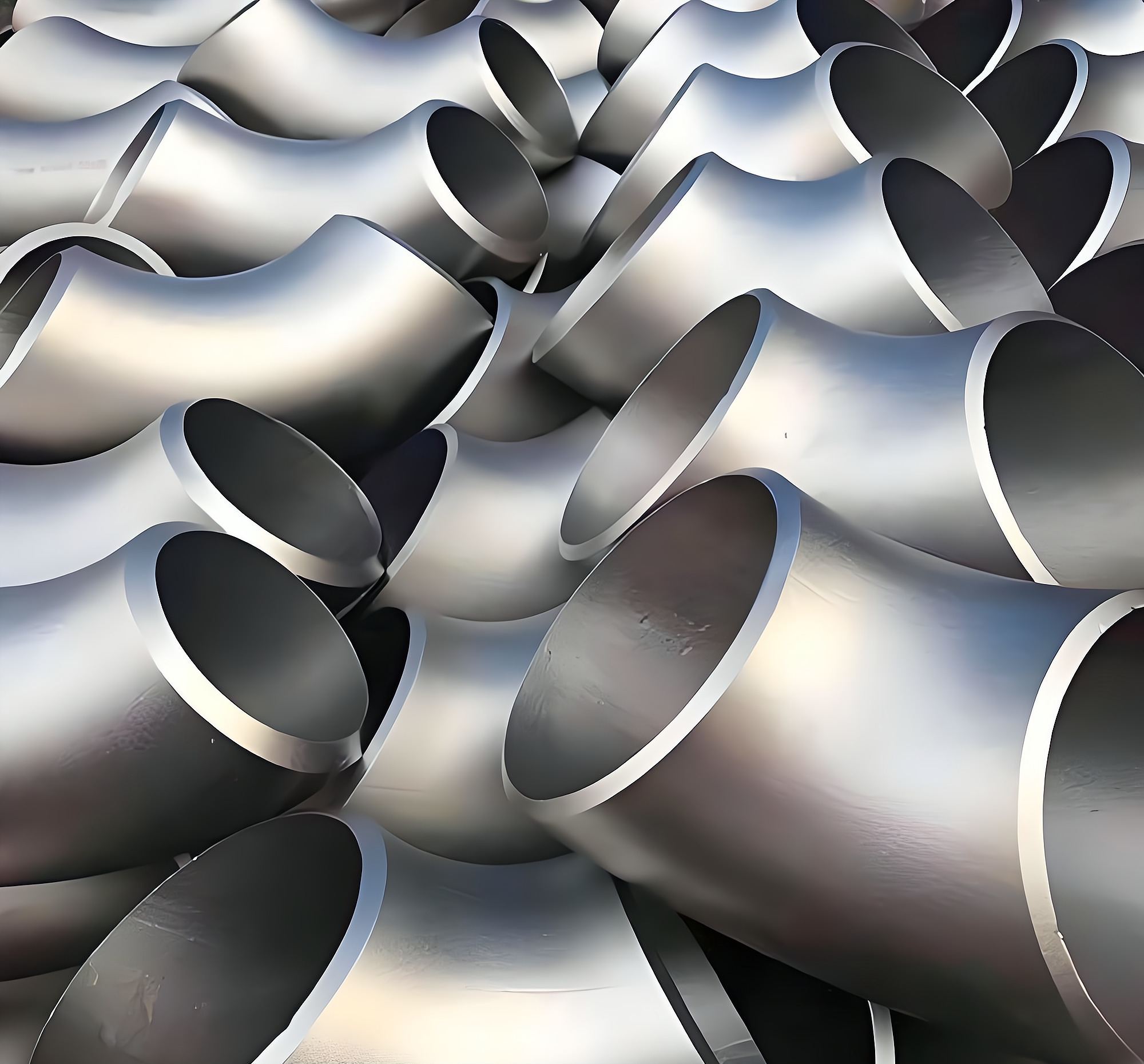
1. Elbows: long-radius R=1.5D seamless butt-welded forged elbows are preferred;Short-radius elbows and miter elbows are prohibited in high-pressure liquefied gas pipelines.The inner wall of the elbow is smooth without wrinkles or burrs, the pipe end face is flat, and the butt joint misalignment is strictly controlled to reduce eddy currents and solid impurity erosion.
2. Tee: For high-pressure liquid liquefied gas pipelines, integrally forged seamless tees are preferred; flat plate perforated welded tees are not recommended;The internal corners of the tee transition smoothly to eliminate stress concentration and avoid crack initiation under low-temperature conditions.
3. Reducer: Concentric or eccentric forged reducer, with a gentle transition, no abrupt steps, and a smooth inner wall without burrs.
4. Flange selection (the sealing face is the core of selection):
- Low-pressure gaseous LPG, PN≤1.6MPa: Welding neck FF flat face flanges may be used;
- Medium- and high-pressure LPG, PN≥2.5MPa: MFM male-and-female face flanges are recommended;High-pressure liquid LPG: TG tongue-and-groove face flanges are preferred to prevent the gasket from being blown out by the medium, providing the highest sealing reliability;Plate-type flat welding flanges are strictly prohibited for high-pressure liquefied gas main lines; their rigidity is insufficient, and the seal is prone to failure under pressure cycling.
5. Pipe cap: elliptical forged head pipe cap, to avoid liquid and residue accumulation in flat-bottom heads.
The nominal inner diameter of the entire set of pipe fittings shall be kept consistent; inconsistent inner diameters create steps, and medium scouring and eddy currents will accelerate fatigue of sealed joints.For the entire set of liquefied gas high-pressure sealing pipe fittings, it is recommended to select and purchase them as a packaged complete set, to ensure uniformity of pressure rating and material system for pipe fittings, flanges, gaskets, and fasteners;When supplied separately by multiple suppliers, flange sealing surfaces and gasket specifications are prone to mismatch, resulting in leakage after assembly.
V. Technical requirements for selection and matching of non-destructive testing, pressure testing, and airtightness testing
Liquefied gas is a combustible medium; minor defects inside pipe fittings expand under pressure cycling and low-temperature conditions, causing medium leakage. Non-destructive testing is a key link in selection verification.Forged high-pressure liquefied gas pipe fittings shall undergo combined non-destructive testing of UT ultrasonic testing, MT magnetic particle testing, and PT penetrant testing to detect internal laminations and surface cracks;For butt welds, the RT radiographic or UT ultrasonic testing ratio shall be increased in accordance with the code, and the testing ratio for GC1-grade pipeline welds shall be increased.
Clean water shall be used for the hydrostatic strength test, and the test pressure shall be selected in accordance with the code; after the pressure test is completed, the pipeline shall be thoroughly blown dry to prevent corrosion of the inner wall;After the hydrostatic test passes, the complete set of sealing joints for high-pressure liquefied gas pipeline fittings must undergo an air tightness test; this is a mandatory test for liquefied gas media that distinguishes them from ordinary pressure pipelines, to check for minor leaks in the sealing pair. Dry, clean air or nitrogen may be used as the test medium, and the leakage rate shall be observed while holding the pressure; any nonconforming product shall not leave the factory.
List of delivery documents at ex-factory: material quality assurance certificate, heat/batch number traceability table;UT/MT/PT nondestructive testing reports for forgings; Hydrostatic test records; Air tightness test reports;Fitting drawings, dimensional and sealing surface roughness inspection records; Product certificate of conformity; Special equipment manufacturing qualification;Gasket hydrocarbon resistance compatibility test report;Fastener material report.
Incoming inspection process: first review the complete set of technical documents;check packaging integrity;visual appearance inspection, focusing on scratches and pits on flange sealing surfaces;sampling and spectral re-inspection of materials;Use an endoscope to inspect the interior of the pipe fittings by sampling;If necessary, take samples for re-inspection of airtightness.If documents are missing, sealing surfaces are damaged, or airtightness fails, the entire batch shall be rejected and must not be used in liquefied gas projects.For GC1 high-pressure liquid liquefied gas projects, factory supervision during manufacturing shall be arranged, with the supervision focusing on verification of forging flaw detection, flange sealing surface machining precision, gasket hydrocarbon resistance testing, and the entire airtightness test process.
VI. Control of pipe fitting marking, sealed packaging, storage and transportation
After the pipe fittings pass inspection and airtightness testing, both ends of the pipe fittings shall be plugged with oil-free sealing end caps, and the flange sealing surfaces shall be fully wrapped with special protective film to protect the sealing surfaces from impact and scratches; once scratches occur on the sealing surface, the sealing performance will directly fail.The outer packaging shall prominently bear the mark [Special Pipe Fittings for High-Pressure Sealing of Liquefied Gas], with the heat number, pressure rating, and medium type marked, and the warning markings shall be clear;It is strictly prohibited to mix and transport with ordinary pipe fittings, sand and gravel, or hard materials to prevent impact damage to the sealing surfaces.
The supplier and the receiving party shall set up dedicated storage areas for liquefied gas pipe fittings, with partitioned isolation;Protect the flange sealing surfaces during handling and hoisting; hard objects are prohibited from directly contacting the sealing surfaces;Transport compartments must be clean to avoid collision with sand and gravel.Once the packaging is damaged or the sealing surface is scratched, the flange pipe fitting must have its sealing surface re-machined and its airtightness re-inspected; it must not be used directly.The procurement technical agreement stipulates that collision damage to the sealing surface is regarded as nonconforming, and the receiving party may reject the goods.
VII. Core Clauses of the Technical Agreement for Selection of High-Pressure Sealing Pipe Fittings for Liquefied Gas
In the technical agreement of the procurement contract for high-pressure sealing pipe fittings for liquefied gas, a dedicated chapter on sealing selection shall be established separately and must not be merged into general technical clauses.Core clauses: medium type (liquid/gaseous LPG), design pressure, pipeline GC classification, minimum design temperature;Executive standards GB51142, GB/T20801, TSG31;Pipe fitting material, forging grade, low-temperature impact toughness requirements;Flange type, sealing face form, sealing face roughness;Gasket material, hydrocarbon swelling resistance test indicators;Fastener material, hardness matching, pre-tightening specifications;Non-destructive testing items and acceptance levels;Hydrostatic test and airtightness test indicators;Sealing face protection, packaging marking;List of complete factory documentation;Factory supervision during manufacturing; Material substitution approval; Quality responsibility for seal leakage; Safety breach clauses.
Contractual agreement: The supplier shall not arbitrarily change the flange sealing structure or reduce the hydrocarbon resistance grade of the gasket;In the event of a liquefied gas leakage fire or explosion accident caused by improper seal selection or sealing surface defects, the supplier shall bear all rework, production shutdown, and accident losses.Bid evaluation must not be based solely on price comparison; emphasis should be placed on evaluating the supplier's track record in liquefied gas forged pipe fittings, precision flange machining capability, gasket hydrocarbon resistance testing, airtightness test capability, and special equipment manufacturing qualifications.Low-priced products often simplify sealing surface machining, use gaskets that are not resistant to hydrocarbons, and reduce the proportion of non-destructive testing, leaving major hidden risks of leakage and explosion after commissioning.The complete set of high-pressure sealing pipe fittings is packaged and purchased uniformly, with pipe fittings, flanges, gaskets, and fasteners supplied as a complete set to ensure complete matching of the sealing pair.
VIII. Typical Misconceptions and Risk Prevention in the Selection of High-Pressure Sealing Pipe Fittings for Liquefied Gas
Misconception 1: Gaseous liquefied gas and liquid liquefied gas share the same set of selection standards, ignoring the low-temperature effect of liquid LPG, with materials lacking low-temperature impact toughness, resulting in brittle fracture and leakage at low temperatures.
Misconception 2: The main high-pressure liquefied gas pipeline uses ordinary flat-face FF flanges with ordinary non-metallic gaskets; under pressure cycling conditions, the gaskets swell and the preload decays, producing continuous micro-leakage.
Misconception 3: Only the pressure-bearing capacity of the pipe fitting body is considered, while ordinary rubber is selected for gaskets without verification of hydrocarbon compatibility, causing swelling failure after immersion in propane and butane.
Misconception 4: Cast or rolled pipe fittings are selected, which have many internal defects; under pressure cycling, cracks propagate and the medium leaks from the pipe fitting body.
Misconception 5: The flange sealing surface is roughly machined and has scratches and pits, making effective sealing impossible after assembly.
Misconception 6: Performing only the hydrostatic test and omitting the airtightness test. A passing hydrostatic test cannot detect tiny sealing gaps, leading to leakage after commissioning.
Misconception 7: The selection technical agreement is described simply and lacks quantitative indicators for sealing surfaces, hydrocarbon-resistant gaskets, and low-temperature toughness, so there is no basis for judgment in leakage quality disputes.
Misconception 8: Flanges, pipe fittings, and gaskets are purchased separately, dimensional tolerances of products from different manufacturers do not match, and sealing fails after assembly.
Risk prevention and control measures: In the early stage of the project, distinguish between liquid and gaseous LPG operating conditions and determine the pressure rating and low-temperature requirements;The technical agreement locks down forging material, low-temperature impact indicators, flange sealing surface type, hydrocarbon-resistant gasket, and airtightness test;For high-pressure liquid LPG, give priority to tongue-and-groove face flanges + metal sealing gaskets;Strictly control the machining quality of flange sealing surfaces and protect the sealing surfaces throughout transportation;After completing the hydrostatic test, add an airtightness leak test; Factory manufacturing supervision; Incoming material documentation review + physical re-inspection;After pipeline installation is completed, an overall airtightness test shall be conducted before commissioning to identify system leakage points.
IX. Full Life Cycle Safety and Economic Assessment for Selection of High-Pressure Sealing Pipe Fittings for Liquefied Petroleum Gas
The selection of high-pressure sealing pipe fittings for liquefied petroleum gas cannot be based solely on comparing initial purchase unit prices; it needs to be evaluated from a full life cycle safety perspective.High-pressure liquid LPG forged low-temperature pipe fittings and tongue-and-groove flange-matched metal ring gaskets have higher procurement costs, but forgings have fewer defects, stable sealing, strong resistance to hydrocarbons and pressure cycling, greatly reducing the risks of leakage fires, production shutdowns, and safety penalties;For medium- and low-pressure gaseous pipelines, ordinary forgings + hydrocarbon-resistant spiral wound gaskets have lower procurement costs, but regular inspections are required for gasket aging; they are suitable for non-critical branch lines.
For low-pressure gaseous liquefied petroleum gas branch lines with lower risk, qualified forged carbon steel pipe fittings, raised-face flanges + hydrocarbon-resistant spiral wound gaskets may be selected;For LPG storage and distribution stations and main filling lines, GC1 high-pressure liquid pipelines, priority shall be given to low-temperature forgings, tongue-and-groove face flanges, and metal sealing gaskets.The core logic of selection is not to compress procurement costs, but to match the sealing safety boundary corresponding to the medium, pressure, and temperature. Once liquefied gas leaks and explodes, the accident loss is far greater than the price difference in pipe fitting procurement.The selection cost assessment includes pipe fitting procurement, precision machining of sealing surfaces, non-destructive testing, airtightness testing, packaging protection, supervision, later inspection and maintenance, and the risk cost of leakage accidents.
X. Conclusion
The selection of high-pressure sealing pipe fittings for liquefied gas pipelines is different from the selection of ordinary pressure pipeline fittings. Five major elements must be considered in a coordinated manner: the pressure-bearing strength of the fitting body, the low-temperature toughness of the material, the flange sealing pair structure, hydrocarbon-resistant sealing gaskets, and fastener matching. The core objective is to suppress trace leakage of the medium and prevent liquefied gas fire and explosion accidents.Domestic liquefied gas storage and distribution and chemical LPG projects are based on GB51142, GB/T20801, and TSG31 specifications;Foreign-related liquefied gas export projects may implement ASME B31.8 and ISO16010 sealing material standards.
Distinguish between liquid and gaseous liquefied gas working conditions. High-pressure liquid pipelines must use low-temperature forged pipe fittings, and cast or rolled pressure-bearing components are prohibited;For high-pressure flammable medium main pipelines, male-and-female face and tongue-and-groove face flanges are preferred, equipped with hydrocarbon-compatible gaskets;Forgings and welds undergo strict non-destructive testing, and an air-tightness leak test is added after the hydrostatic test;Flange sealing faces shall be properly protected to avoid impact and scratches.A dedicated sealing clause shall be set up separately in the selection technical agreement, locking in the material, low-temperature indicators, sealing face type, gasket hydrocarbon resistance requirements, and air-tightness test, and implementing supplier admission, factory supervision during manufacturing, and re-inspection upon arrival.
For LPG storage and distribution stations, filling projects, and chemical liquefied gas transmission pipelines, the selection standards for high-pressure sealing pipe fittings of liquefied gas pipelines shall be strictly implemented, so as to avoid risks such as low-temperature brittle fracture, gasket swelling, and sealing face leakage from the source of selection, prevent explosion accidents caused by liquefied gas leakage, and ensure the long-term stable and safe operation of high-pressure liquefied gas pipelines.
References
[1] GB 51142-2015, Code for design of liquefied petroleum gas supply engineering [S].
[2] GB/T 20801, Pressure piping code—Industrial piping [S].
[3] TSG 31-2025, Safety technical regulation for industrial piping [S].
[4] NB/T 47008, Carbon steel and alloy steel forgings for pressure equipment [S].
[5] NB/T 47009, Low-alloy steel forgings for low-temperature pressure equipment [S].
[6] GB 50235, Code for construction of industrial metallic piping engineering [S].
[7] GB 50028, Code for design of city gas engineering (2020 edition) [S].
[8] GB 50236, Code for construction of field equipment and industrial piping welding engineering [S].
[9] ASME B31.8, Gas Transmission and Distribution Piping Systems [S].
[10] ISO 16010, Elastomeric seals for pipes and fittings carrying gaseous fuels and hydrocarbon fluids [S].
[11] EN13175, LPG Pressure Vessel Valves and Fittings [S].
[12] NB/T47013, Non-destructive testing of pressure equipment [S].