Introduction
As a strongly oxidizing medium, oxygen is widely transported in engineering applications such as industrial oxygen production, metallurgy, chemical engineering, air separation units, and hospital oxygen supply.Oxygen pipeline fittings differ from ordinary pressure pipeline fittings in that their most important safety characteristic is that any grease, hydrocarbons, or organic lubricants are strictly prohibited from contacting the medium-contact surfaces.Under high-pressure, high-velocity oxygen environments, grease undergoes violent oxidation and spontaneous combustion. Rust and solid particles inside fittings strike the pipe wall with the high-speed airflow, forming ignition sources. Once oil contamination exists on the inner wall, it can very easily cause pipeline deflagration, resulting in major casualties and equipment damage accidents.Traceability analyses of numerous oxygen pipeline safety accidents show that the root cause of most deflagration accidents is not insufficient design pressure, but rather that the procurement process did not strictly implement special standards for oil prohibition and degreasing. Problems such as ordinary industrial fittings being supplied directly without degreasing, unqualified degreasing processes, secondary contamination after degreasing, residual lubricating grease, and ineffective packaging protection have planted fatal hidden hazards after the project is put into operation.
Oxygen pipeline fittings include elbows, tees, reducers, pipe caps, branch outlets, flanges, and other pipeline components. All inner surfaces of the entire piping system that contact the oxygen medium must be subject to oil prohibition and degreasing control. It is not acceptable to degrease only straight pipes while ignoring fittings, flanges, and gaskets.At present, multiple typical problems commonly exist in industry procurement: procurement technical agreements merely state "oxygen service fittings, degreased" without specifying grease residue limits, degreasing processes, or testing methods;the use of cast fittings and mitered elbows does not comply with material specifications for high-pressure oxygen pipelines;The supplier uses oil-containing cutting fluid for processing, and degreasing is not thorough;After degreasing is completed, there is no sealed protection, and oil contamination occurs again during transportation and storage;Gaskets and fasteners are not simultaneously oil-free, and the matching sealing components contain combustible organic substances;Ordinary industrial degreasing and oxygen-specific degreasing standards are confused, and no oil and grease test report is provided;Oxygen pipe fittings of different pressure ratings are stored together without dedicated identification, resulting in misuse;For export-related foreign projects, there is no understanding of the ASTM G93 and CGA G-4.1 oxygen cleanliness standards, and no technical review has been conducted on the differences between domestic degreasing standards and overseas standards.
Oil-free procurement of oxygen pipeline fittings is a special procurement for pressure piping of special equipment, and must simultaneously meet the requirements of the two major systems of pressure piping strength specifications and oil-free cleanliness; it is the front-line gate for safety control.Procurement work must not focus only on nominal pressure, material, and dimensional tolerances; oil-free degreasing, pollutant control, and solid particle control must be treated as core mandatory acceptance clauses, and a full-chain control system must be established covering supplier admission review, technical agreement locking, manufacturing process supervision, degreasing inspection, sealed packaging, and incoming re-inspection.This article systematically elaborates on the special oil-free procurement standards for oxygen pipeline fittings from dimensions including the oxygen medium combustion and explosion mechanism, pipeline pressure classification, domestic and international oil-free standard systems for oxygen pipelines, fitting material admission, oil-free degreasing process specifications, residue detection methods, fitting structure selection, sealing ancillary control, factory documentation, packaging protection, procurement technical agreements, typical procurement misconceptions and risk prevention and control, and full-cycle safety and economic evaluation, providing a complete technical basis for material procurement, supplier auditing, factory supervision, and incoming acceptance for air separation, metallurgy, and chemical oxygen engineering projects.
1. Combustion and Explosion Mechanism of Oxygen Pipelines and Pre-Procurement Operating Condition Classification Identification
1.1 Combustion and Explosion Risk Mechanism of Oxygen Pipelines
Ignition and combustion in oxygen pipeline systems generally require the coexistence of three elements: an ignition source, a combustible material, and a strongly oxidizing medium.The oxygen medium itself does not burn, but it sharply increases the oxidation reaction rate of combustible materials.Combustible materials inside fittings mainly include: machining residual cutting oil, rust-preventive grease, lubricating oil, organic esters, release agents, and polishing paste;degreasing residual solvents, rubber debris, and organic impurities;packaging debris and cotton yarn fibers.Common types of ignition sources: mechanical sparks generated by impact and friction of rust, welding slag, and metal particles in high-speed airflow;temperature rise from adiabatic compression of high-pressure oxygen;metal friction and electrostatic discharge.
The higher the medium pressure and the greater the flow velocity, the risk of combustion and explosion rises sharply.The risk of low-pressure oxygen pipelines is relatively controllable, while medium-pressure and ultra-high-pressure oxygen pipelines have stringent requirements for oil-free cleanliness levels, as trace amounts of grease can trigger combustion.At the same time, burrs, weld beads, and rough defects on the inner walls of pipe fittings will aggravate the risk of particle impact; therefore, in addition to being oil-free, oxygen pipeline fittings also have mandatory requirements for inner wall smoothness, being free of burrs, free of oxide scale, and free of solid impurities.
1.2 Collection of Operating Condition Parameters and Pressure Classification
Before procurement is initiated, process operating condition parameters must be fully collected as input conditions for determining the oil-free grade, material selection, and degreasing indicators; procurement must not be initiated if the operating condition parameters are incomplete.Parameters to be collected: medium (gaseous oxygen/liquid oxygen), design pressure, operating pressure, design temperature, maximum instantaneous pressure; oxygen purity; medium flow rate; whether the pipeline is GC1/GC2 pressure piping category;usage scenario (air separation unit, metallurgical steelmaking, chemical process, medical oxygen);project execution standards (national standards, ASME, CGA); cleanliness level; whether intermittent start-stop;
According to the GB50030 design code for oxygen stations, oxygen pipelines are classified into three pressure levels: low pressure, medium pressure, and high pressure. Different pressure levels correspond to different material selection, degreasing cleanliness indicators, and inspection requirements.Low-pressure oxygen p≤0.6MPa;Medium pressure 0.6MPa<p≤10MPa;High pressure p>10MPa.Material selection for high-pressure oxygen pipeline fittings is strictly restricted: cast fittings and miter elbows are strictly prohibited, and integral forged structures are preferred for branch connections to reduce the risk of weld defects and solid impurities.
During the operating condition determination stage, it is necessary to clarify the unified baseline standard to be applied to the entire set of oxygen pipeline fittings.Domestic industrial oxygen projects are based on GB50030, HG20202, GB50316, and the TSG31 Safety Technical Regulation for Industrial Pipelines;For overseas export oxygen projects, when customers require international standards, ASTM G93 and the CGA G-4.1 oxygen cleaning specification are applied. There are differences in grease residue limits among different standards, and they cannot be directly substituted as equivalent.
II. Review of Domestic and International Oil-Free Standard Systems for Oxygen Pipeline Fittings
2.1 Current Core Domestic Standards
GB50030-2013 "Code for Design of Oxygen Stations", the fundamental national standard for oxygen engineering, explicitly requires that all surfaces of oxygen pipeline components in contact with the medium must be degreased; after passing degreasing, pipe openings shall be sealed to prevent secondary contamination, and it specifies material selection restrictions for pipes and fittings, flow velocity control, and safety protection requirements.
HG20202 "Code for Construction and Acceptance of Degreasing Engineering", the core domestic industry standard specifically for degreasing, specifies the selection of degreasing agents, degreasing processes, grease residue inspection methods, and acceptance criteria; degreasing of oxygen pipelines shall comply with this code.
GB50316 "Code for Design of Industrial Metallic Piping", general requirements for material selection, structural design, impurity control, and degreasing of piping for strongly oxidizing media.
TSG31-2025 "Safety Technical Regulations for Industrial Piping", a mandatory regulation for pressure piping as special equipment; GC1-class oxygen pipelines are classified as high-risk piping, and it imposes mandatory requirements on forged fittings, non-destructive testing, manufacturing qualifications, and type testing; cast fittings and mitered elbows shall not be used for high-pressure oxygen pipelines, and the forging grade shall be no lower than Grade II.
GB/T20801 "Pressure Piping Code — Industrial Piping", the fundamental code for the design, materials, welding, non-destructive testing, and pressure testing of pressure piping components.
GB50235 "Code for Construction of Industrial Metallic Piping Engineering", supporting requirements for pipeline installation, pressure testing, and purging.
JB/T5902 Technical conditions for oxygen pipelines used in air separation equipment, special technical conditions for oxygen pipeline fittings in the air separation industry, specifying grease residue limits.
2.2 Mainstream foreign oxygen cleanliness standards
ASTM G93: Standard specification for cleaning materials and equipment in oxygen-enriched environments, defining four cleanliness levels; high-pressure oxygen generally requires Level 1 cleanliness, with strict limits on non-volatile residue (NVR), widely adopted in foreign trade oxygen projects.
CGA G-4.1: Compressed Gas Association standard for cleaning oxygen equipment, regulating degreasing, inspection, sealed packaging, and cleanliness management of oxygen equipment, commonly used in overseas air separation projects.
EN ISO10083, European cleanliness standard for oxygen systems, applicable to European oxygen engineering projects.
2.3 Basic principles of standard adaptation
The entire oxygen pipeline system must adopt a unified baseline standard; straight pipes, elbows, tees, reducers, flanges, gaskets, and fasteners must all simultaneously implement the same set of oil-free and material standards. It is not permitted for fittings to use one standard while gaskets and fasteners use ordinary industrial standards.For example, for high-pressure GC1 oxygen pipelines, all fittings, flanges, and seals must simultaneously meet TSG31+GB50030+HG20202; it is not permitted to degrease only the fittings while leaving gaskets and bolts without oil-free treatment.For cross-standard equivalent replacement, a technical difference comparison document must be issued and may only be executed after approval by the design, owner, and safety management departments.
Red line for oxygen pipeline procurement: all medium-contact surfaces must be oil-free, including the inner walls of pipe fittings, flange sealing surfaces, both sides of gaskets, and the areas of bolt threads that contact the medium. It is not acceptable to treat only the fitting body while ignoring the matching sealing elements.
III. Material Admission and Procurement Specifications for Oxygen Pipe Fittings
For material selection of oxygen pipeline fittings, the core considerations are impact resistance, friction spark resistance, and oxidation resistance. The higher the pressure rating, the stricter the material restrictions. Incorrect material selection directly increases the risk of combustion and explosion.
3.1 Material Selection Rules
Low-pressure oxygen pipelines: 20# seamless carbon steel and 304 stainless steel forged pipe fittings may be selected;The inner walls of carbon steel pipe fittings must be derusted, freed of oxide scale, and strictly degreased.
Medium-pressure oxygen pipelines: austenitic stainless steel 304 and 316L forged pipe fittings are preferred;For some working conditions, copper alloy is selected; copper alloy is not prone to generating friction sparks and is suitable for oxygen media.
High-pressure oxygen pipelines (greater than 10MPa): copper alloy, nickel-based alloy, and high-quality austenitic stainless steel forgings are preferred;Under high-pressure working conditions, cast pipe fittings and miter elbows are prohibited; the forging grade of forged pipe fittings and forgings shall not be lower than Grade II; branch connections shall use integrally forged tees or butt-welded branch connections that can be 100% radiographically inspected; direct hole-opening welding to form branches is not allowed, to prevent sharp corners, burrs, and welding slag from falling off and creating ignition sources.
Key points for reviewing materials during procurement:
1. The raw materials for pipe fittings must be processed from seamless forgings or seamless pipes; rolled pipe fittings made from plates are not allowed;
2. The supplier shall provide MTC material certificates, heat numbers, and reports on the material's chemical composition and mechanical properties;High-pressure pipe fittings require additional ultrasonic, magnetic particle, and penetrant non-destructive testing reports;
3. During material processing, oily cutting fluids and oily rust preventives are strictly prohibited; only water-based oil-free cutting media may be used for processing lubrication. This is a mandatory constraint in the procurement technical agreement. Many ordinary pipe fitting factories use machine oil for cutting, and subsequent degreasing makes it very difficult to thoroughly remove deep-seated grease;
4. For incoming materials, spectral sampling re-inspection may be agreed upon to verify material grades and eliminate the substitution of inferior goods for superior ones.
3.2 Oil-free material selection for sealing gaskets and fasteners
Gaskets and bolts are weak points in oil-free control that are very easily overlooked during procurement.Ordinary oil-containing rubber gaskets and grease-bearing graphite gaskets are strictly prohibited for use in oxygen pipelines.For oxygen pipeline gaskets, use PTFE polytetrafluoroethylene, oil-free flexible graphite, or copper gaskets. Gaskets must be degreased at the factory before delivery, and a gasket grease test report must be provided.For fasteners, use stainless steel or copper alloy bolts; the entire thread machining process must be oil-free, and they must be packaged after degreasing.All seals and fasteners must be included in the scope of oil-free control; ordinary industrial fasteners must not be purchased separately.
Non-metallic materials pose a combustion risk in high-pressure oxygen-enriched environments. In high-pressure oxygen pipelines, apart from sealing gaskets, non-metallic materials are generally not permitted for the pipe fittings themselves.
IV. Structural Selection and Procurement Specifications for Oxygen Pipe Fittings
In the structural design of oxygen pipeline fittings, in addition to pressure-bearing strength, the key focus is on controlling internal wall sharp corners, burrs, weld beads, steps, and retention dead zones to reduce the risk of ignition caused by solid particle impact.
1. Elbows: Long-radius R=1.5D seamless butt-welded elbows are preferred;Short-radius elbows and miter elbows are strictly prohibited for high-pressure oxygen pipelines.The inner wall of the elbow shall be formed smoothly, free of wrinkles and burrs; the pipe end face shall be flat, and the butt-joint misalignment shall be strictly controlled to avoid forming steps that accumulate solid impurities.
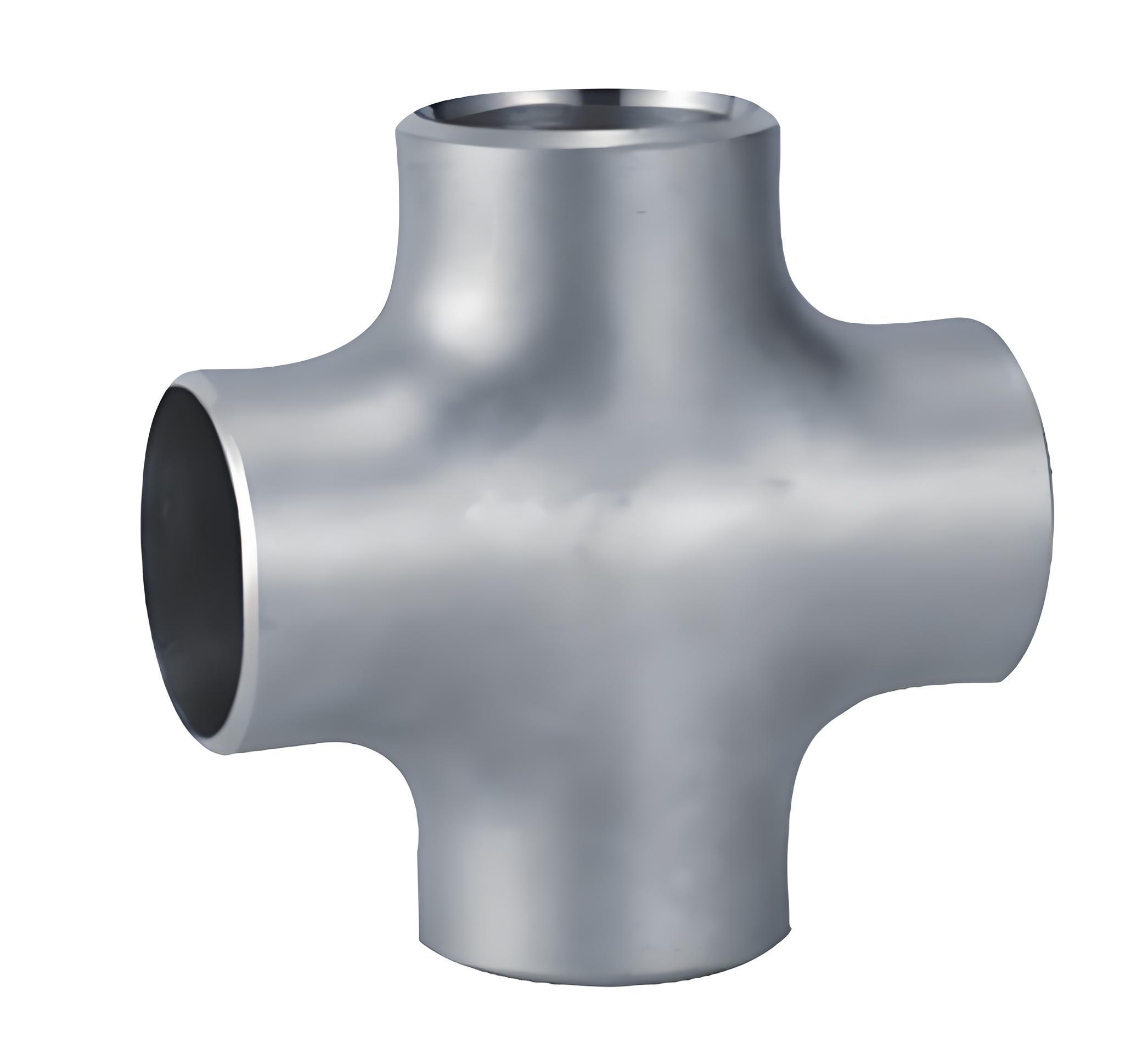
2. Tees: For medium- and high-pressure oxygen pipelines, integrally forged seamless tees are preferred; plate-type welded tees with openings are not recommended;The internal corners of the tee shall transition smoothly without sharp edges, reducing airflow disturbance and particle impact.
3. Reducers: Concentric or eccentric forged reducers with gradual and smooth transitions, no abrupt steps, and smooth inner walls free of burrs.
4. Flange: Use a welding neck flange; slip-on flat welding flanges are not recommended, as they reduce gaps where impurities can accumulate;The flange sealing surface is machined smooth, free of tool marks and pits, and the entire machining process is oil-free.
5. Pipe cap: Use an elliptical head forged pipe cap to avoid liquid and residue accumulation in flat-bottom heads.
The nominal inner diameter of the entire set of pipe fittings shall remain consistent; inconsistent inner diameters create steps where solid particles are retained.It is recommended to purchase the entire set of oxygen pipeline fittings as a package in a unified manner to ensure consistent processing techniques and a unified oil-free degreasing system;When supplied separately by multiple manufacturers, inner diameter deviations and butt-joint misalignment are likely to occur, increasing safety risks.
V. Procurement Technical Requirements for Oil-Free Degreasing Process and Residue Testing
Oil-free degreasing is the most core special process in the procurement of oxygen pipeline fittings. The procurement agreement must specify the degreasing process, degreasing agents, testing methods, and grease residue limits; it cannot simply state "degreasing treatment".
5.1 Degreasing Process Control
Degreasing must be carried out after the pipe fittings have completed hydrostatic testing and non-destructive testing, and the water used for hydrostatic testing must be oil-free.The use of chlorine-containing toxic degreasing solvents (such as carbon tetrachloride, whose use has been explicitly restricted in China) is prohibited; water-based alkaline degreasers, isopropanol, and other residue-free compliant degreasing media approved under HG20202 shall be selected.
Degreasing process: remove rust, oxide scale, and solid debris from the inner and outer surfaces of pipe fittings → oil-free cleaning immersion/spray degreasing → multiple rinses with clean oil-free water → drying (blow-drying with clean oil-free hot air or nitrogen) → oil and grease inspection → immediately sealed and packaged upon passing inspection.
Key control points: The degreasing process must be completed in an independent clean workshop, and the storage of lubricating oil, machine oil, and grease-type materials is prohibited in the workshop;Fixtures, gloves, and wiping tools must all be oil-free dedicated items; ordinary cotton yarn (which carries risks of cotton fiber and grease residue) is prohibited, and dust-free oil-free wiping cloths shall be used.
Key risk point: After passing degreasing, all subsequent transfer and inspection processes must maintain an oil-free environment throughout; once the packaging is opened, it is highly susceptible to secondary grease contamination, causing degreasing to fail.
5.2 Acceptance Criteria for Oil and Grease Residue Testing
According to HG20202, two test methods are commonly used for degreasing inspection of oxygen pipeline fittings: ultraviolet fluorescence method and clean solvent extraction gravimetric method (determination of NVR non-volatile residue).The conventional limit for grease residue on oxygen fittings in China is generally not greater than 125mg/m²;For high-pressure oxygen and export projects, Class I cleanliness according to ASTM G93 applies, with a limit of 0.1mg/0.1m², which is much stricter.
Inspection method: sampling inspection, with fittings from the same batch sampled proportionally;For high-pressure GC1 pipelines, piece-by-piece inspection may be agreed upon.Inspection items: grease residue, solid particles, fiber impurities.The supplier must provide a degreasing inspection report with the goods, recording the degreasing batch, test method, test results, and inspector.During procurement supervision, the degreasing inspection test may be witnessed on site.
Batches that fail degreasing need to be re-degreased and re-inspected; they must not be delivered directly.Visual inspection by the naked eye is not allowed to replace quantitative oil and grease testing; the absence of visible oil contamination does not mean that trace hydrocarbon residues meet the standard.
VI. Non-destructive testing, pressure testing, factory inspection, and documentation delivery
Oxygen pipeline fittings are pressure piping components of special equipment. Inspection is divided into material inspection, dimensional and appearance inspection, non-destructive testing, hydrostatic strength testing, and degreasing cleanliness inspection, with inspection requirements higher than those for ordinary industrial fittings.
1. Material inspection: MTC material certificates, heat numbers, spectroscopy, and mechanical properties;Forged high-pressure fittings require additional UT ultrasonic testing, MT magnetic particle testing, and PT penetrant testing to detect internal cracks and surface defects.TSG31 requires that GC1-grade high-pressure oxygen pipeline fittings undergo UT testing in addition to MT/PT after forging.
2. Appearance and dimensions: no cracks, porosity, burrs, weld beads, or pits on the inner and outer walls of the fittings;Pipe ends are flat and smooth; dimensional tolerances are verified.Borescope sampling inspection of the interior of pipe fittings to check inner wall cleanliness and solid particles.
3. Hydrostatic strength test: pressure test with oil-free clean water; after the test, thoroughly blow dry with no residual moisture, as moisture will carry impurities and corrode the inner wall.
4. Degreasing cleanliness inspection: quantitative detection of oil residue, inspection of solid impurities and fibers, and issuance of a degreasing certificate.
List of factory delivery documents: material quality assurance certificate, heat/batch number traceability table;Forging non-destructive testing reports (UT/MT/PT); Hydrostatic test records; Degreasing process documents, oil residue detection reports;Pipe fitting drawings, dimensional inspection records; Product certificate of conformity; Special equipment component manufacturing qualification, type test certificate;Degreasing test reports for gaskets and fasteners;ASTM G93 cleanliness certification provided as needed for overseas projects.
Incoming acceptance process: document completeness review takes priority;Check the integrity of sealed packaging; seals must not be damaged; visual inspection; sampling spectral re-testing;If necessary, conduct on-site sampling and re-testing for oil residue;Perform random inspections of the interior of pipe fittings using an endoscope.If documents are missing, packaging is damaged, or oil testing fails, the entire batch shall be rejected and must not be used in the project.For major high-pressure oxygen projects, arrange factory supervision during manufacturing, with the supervision focusing on verification of oil-free processing control, the entire degreasing process, residue testing, and sealed packaging.
VII. Control of sealed packaging, labeling, warehousing, and transportation after degreasing
Passing degreasing is only a temporary state. If packaging protection fails, secondary oil contamination will occur during transportation and warehousing, rendering all prior degreasing ineffective. This is a stage often overlooked in procurement.
1. Once degreasing inspection passes, immediately plug both ends of the pipe fittings with oil-free plastic sealing end caps, and fully wrap the flange sealing surfaces with oil-free protective film;Pack the entire set into dedicated oil-free sealed bags, and protect with vacuum or dry oil-free nitrogen filling (high-pressure oxygen is recommended to be sealed with nitrogen).Packaging materials must be oil-free and free of fiber shedding; ordinary oiled paper and oil-containing packaging films are prohibited.
2. Product identification: Mark the prominent position of the outer packaging with the [Oxygen-Dedicated · Oil-Prohibited Degreased Parts] label, separately label the furnace batch number and cleanliness level, set up warning signs, and strictly prohibit mixed packing in the same box with ordinary oil-containing pipe fittings and lubricating oil materials.
3. Storage and transportation: The supplier and the receiving party must set up dedicated storage areas for oxygen degreased pipe fittings, isolated by partition, and strictly prohibit stacking together with ordinary pipe fittings, machine oil, lubricating materials, and grease-type materials;Handling tools and gloves must be oil-free;The cargo compartment of transport vehicles must be clean and free of oil stains.Once the packaging is damaged, the pipe fittings must be re-degreased and re-inspected, and cannot be used directly.
The procurement technical agreement explicitly stipulates that damaged packaging shall be deemed unqualified, and the receiving party has the right to reject it;Responsibility for transport protection lies with the supplier.
VIII. Core Clauses of the Procurement Technical Agreement (Oil-Free Special Section)
The procurement contract and technical agreement for oxygen pipeline fittings must include a separate special section on oil prohibition and degreasing, and must not be merged into general technical clauses.Core clauses: medium type, design pressure, pipeline GC classification;Applicable standards GB50030, HG20202, TSG31;Fitting material, forging grade;Oil-based cutting fluids are prohibited throughout the entire machining process;Degreasing process, degreasing agent type;Grease residue limits and testing methods;Non-destructive testing items and acceptance levels;Oil-free requirements for hydrostatic test media;Drying and purging after degreasing;Sealed packaging form and whether nitrogen protection is used; Internal and external marking requirements; Synchronous degreasing of matching gaskets and fasteners;List of complete documentation provided at delivery; factory supervision; material substitution approval; secondary contamination responsibility; nonconforming product handling; safety and quality breach clauses.
Contractual agreement: The supplier must not arbitrarily alter the degreasing process or lower the cleanliness indicators;If an oxygen pipeline combustion and explosion safety accident occurs due to excessive oil residue or secondary contamination, the supplier shall bear all losses from rework, production shutdown, and the safety accident.Bid evaluation must not only compare prices; the focus should be on evaluating the supplier's manufacturing track record for oxygen pipe fittings, independent degreasing and cleanroom facilities, grease detection capability, and special equipment manufacturing qualifications.Low-priced products often omit precision degreasing and residue testing, and packaging is simplified, bringing devastating safety risks after commissioning.It is recommended to purchase the entire oxygen pipeline fitting set as a unified package, with fittings, flanges, gaskets, and fasteners supplied as a complete set, ensuring all components are simultaneously oil-free.
IX. Typical Misconceptions and Risk Prevention in Oxygen Pipeline Fitting Procurement
Misconception 1: Believing that "no visible oil means qualified" and not performing quantitative grease testing. Trace hydrocarbons are invisible to the naked eye but still pose a combustion and explosion risk under high-pressure oxygen.
Misconception 2: Degreasing after hydrostatic testing of fittings, but incomplete drying after the pressure test leads to internal water accumulation and corrosion, introducing solid particles.
Misconception 3: Degreasing only the fitting body while not degreasing gaskets, bolts, and flange sealing surfaces, leaving residual grease at sealing locations and creating an ignition hazard.
Misconception 4: Using oil-based cutting fluid during machining and treating simple rinsing as degreasing. Grease inside metal micropores cannot be removed and is slowly released later.
Misconception 5: Shipping bare pipes after degreasing with simple packaging, allowing machine oil and dust contamination during transportation and storage, causing secondary pollution.
Misconception 6: Selecting cast pipe fittings and miter elbows for high-pressure oxygen pipelines does not comply with the mandatory clauses of TSG31, and the risk of friction and impact is greatly increased.
Misconception 7: Oxygen pipe fittings of different pressure ratings are stored together and poorly identified, and low-pressure fittings are mistakenly used on high-pressure oxygen pipelines.
Misconception 8: The procurement technical agreement lacks special oil-prohibition clauses, and only simply states degreasing in the remarks; the indicators and test methods are not locked down, so there is no basis for judgment in the event of a quality dispute.
Risk prevention and control measures: Complete the pressure classification of the oxygen medium in the early stage of the project and select the baseline standard;Fully lock down the oil-prohibition, degreasing, and residue indicators in the technical agreement;Prohibit the use of oil-based cutting media during the machining stage;Perform degreasing in an independent clean workshop, with witnessed grease testing;Seal immediately and fill with nitrogen for protection after degreasing;Dedicated warehouse zoning and isolation; Factory supervision during manufacturing; Incoming material document review + physical re-inspection;After pipeline installation, oil-free purging is performed before commissioning to reconfirm cleanliness.
X. Full Life Cycle Safety and Economic Assessment of Oxygen Pipeline Fittings Procurement
The selection and procurement of oxygen fittings cannot be based solely on comparing initial purchase unit prices; it must be assessed from a safety full life cycle perspective.High-pressure oxygen forged stainless steel/copper alloy fittings have higher procurement costs, but forged parts have fewer defects, lower friction spark risk, and stable degreasing and cleanliness control, greatly reducing the risk of explosion accidents, production shutdowns, and safety penalties;Ordinary carbon steel low-pressure fittings are low in price, but require extensive derusting, degreasing, and anti-rust maintenance work, and are suitable for low-pressure non-critical oxygen pipelines.
For small low-pressure utility oxygen pipelines with lower risk, qualified forged carbon steel fittings may be selected;Air separation unit, high-pressure process oxygen main line, GC1 grade high-risk piping, priority use of stainless steel forged pipe fittings, strict Class 1 clean degreasing standard.The core logic of selection is not saving money, but matching the safety boundary corresponding to the pressure rating; once an oxygen pipeline ignites or explodes, the accident loss is far greater than the price difference in pipe fitting procurement.Procurement cost evaluation needs to include pipe fitting procurement, degreasing inspection, packaging protection, supervision, later-stage safety operation and maintenance, and accident risk cost.
XI. Conclusion
Oil-free procurement of oxygen pipeline fittings differs from ordinary pressure piping procurement; the two mandatory requirements of strength pressure-bearing and oil-free cleanliness are both indispensable, and the core goal is to eliminate grease and hydrocarbon combustibles, control solid particle impurities, and prevent ignition and explosion risks in oxygen-enriched environments.Domestic projects are based on GB50030 "Code for Design of Oxygen Stations", HG20202 degreasing specification, and TSG31 Industrial Piping Safety Technical Regulation;Foreign export projects may implement ASTM G93 and CGA G-4.1 oxygen cleanliness standards.
Select forged pipe fittings according to pressure classification; cast pipe fittings and miter elbows are prohibited in high-pressure oxygen pipelines;Oil-based cutting fluids are prohibited throughout the entire pipe fitting machining process;All medium-contact surfaces, including pipe fittings, flanges, gaskets, and fasteners, are all degreased simultaneously;After degreasing, quantitative testing of oil residue is carried out; after passing, oil-free sealed packaging is used, with nitrogen filling protection where necessary, to prevent secondary contamination.The procurement technical agreement separately sets special oil-prohibition clauses, locking in the degreasing process, residue limits, testing methods, and packaging protection, and implementing supplier admission, factory supervision, and incoming re-inspection.
For metallurgy, air separation, and chemical oxygen engineering projects, the special oil-prohibition procurement standards for oxygen pipeline fittings are strictly implemented, controlling oil contaminants and solid particles from the procurement source, avoiding major safety accidents such as combustion and explosion of oxygen pipelines, and ensuring the long-term stable and safe operation of oxygen pressure pipelines.
References
[1] GB 50030-2013, Code for design of oxygen stations [S].
[2] HG 20202, Code for construction and acceptance of degreasing engineering [S].
[3] GB 50316, Code for Design of Industrial Metallic Piping (2008 Edition) [S].
[4] TSG 31-2025, Safety Technical Regulation for Industrial Piping [S].
[5] GB/T 20801, Pressure Piping Code—Industrial Piping [S].
[6] GB 50235, Code for Construction of Industrial Metallic Piping Engineering [S].
[7] JB/T 5902-2015, Technical Specifications for Oxygen Piping Used in Air Separation Equipment [S].
[8] GB16912, Safety Technical Regulation for Production of Oxygen and Related Gases by Deep Freezing Method [S].
[9] ASTM G93, Standard Practice for Cleaning Methods and Cleanliness Levels for Material and Equipment Used in Oxygen-Enriched Environments [S].
[10] CGA G-4.1, Cleaning of Equipment for Oxygen Service [S].
[11] GB 50236, Code for construction of field equipment and industrial piping welding engineering [S].