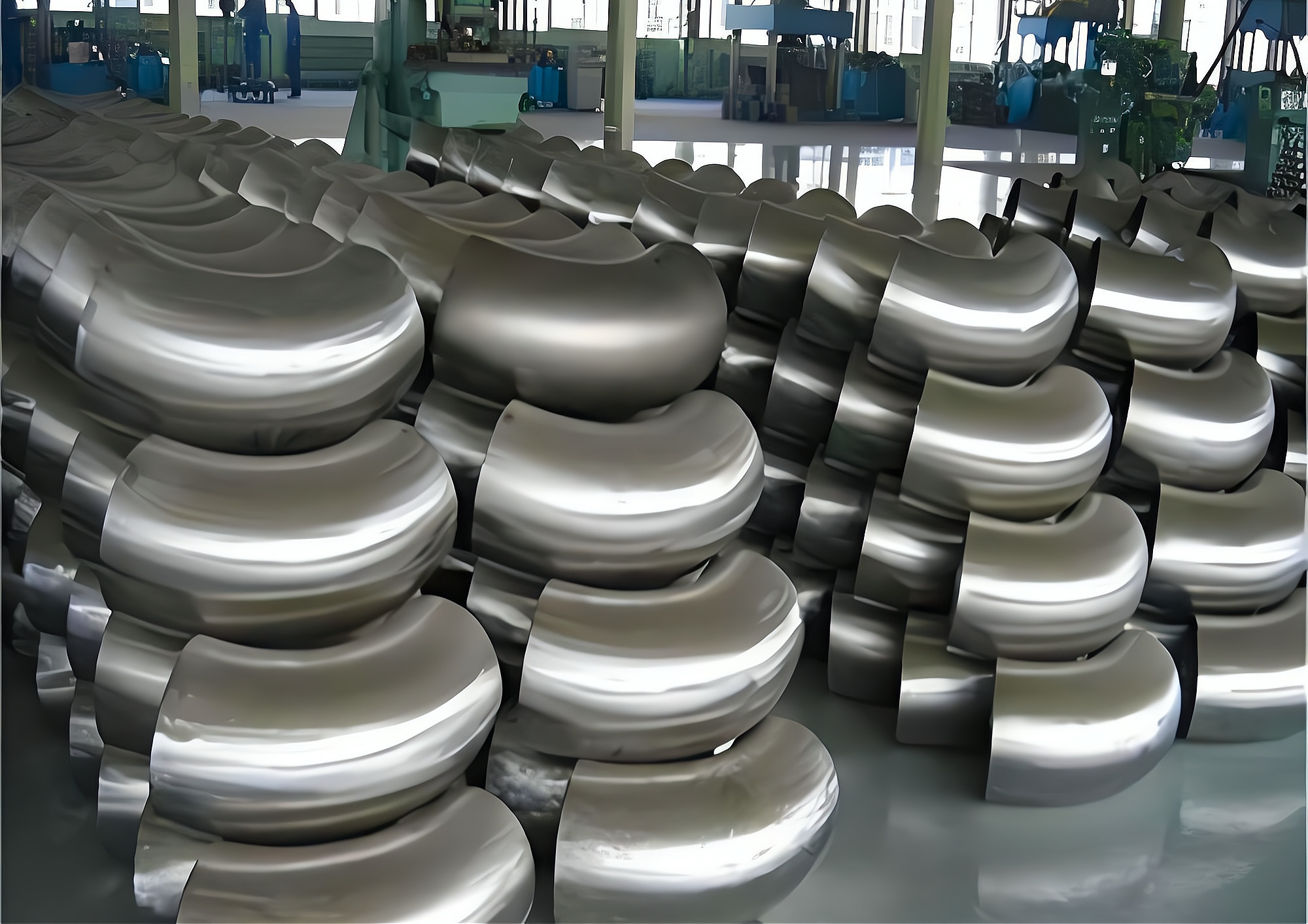
Introduction
In engineering projects such as chemical production, wastewater treatment, pharmaceutical purification, hydrometallurgy, and pickling processes, there are numerous pipelines for conveying acidic and alkaline media such as hydrochloric acid, sulfuric acid, nitric acid, hydrofluoric acid, sodium hydroxide, and potassium hydroxide.Ordinary carbon steel pipelines rapidly undergo chemical corrosion and electrochemical corrosion in acidic and alkaline media environments, and the pipe wall continuously thins;In fluid disturbance areas such as elbows, tees, branch pipes, and flange gaps, changes in medium flow velocity and vortex enrichment accelerate localized pitting corrosion and crevice corrosion.A large number of accident cases in engineering prove that most acid-alkali pipeline leakage accidents are not simply due to insufficient corrosion resistance of the material itself, but rather due to mismatched standards during the selection stage, where the entire system of materials, pipe fitting structures, flange gaskets, welding processes, and inspection specifications was not simultaneously adapted to the corrosive service conditions, resulting in premature localized failure.
The acid-alkali corrosion-resistant pipeline and pipe fitting system includes three major categories: metal corrosion-resistant pipe fittings, steel-lined composite pipe fittings, and all-non-metallic pipe fittings. Different categories of pipe fittings correspond to independent national standards, chemical industry standards, ASME, and ISO international specifications.There have long been many common problems in industry procurement work: selecting material grades simply based on the medium name, ignoring the coupled effects of temperature, concentration, chloride ions, and stress corrosion;Straight pipes and pipe fittings use different anti-corrosion systems, and the standards for the entire pipeline are not unified;Corrosion-resistant metal alloys are welded without matching corrosion-resistant welding consumables, resulting in intergranular corrosion at the weld seams;Plastic-lined and PTFE-lined pipe fittings neglect the quality of the liner flanging, causing the liner to tear at the flange sealing position;The technical agreement lacks mandatory indicators such as corrosion allowance, spark leak testing, and intergranular corrosion testing;Standards from different countries are arbitrarily treated as equivalent substitutes without comparing standard differences;Non-metallic pipe fittings directly apply the design specifications for metallic pressure piping, exceeding pressure and temperature limits.
The core of standard adaptation for acid- and alkali-resistant pipe fittings is full-chain matching across operating conditions, materials, pipe fitting structure, connection sealing, and inspection standards; pipes or individual fittings cannot be viewed in isolation.The entire pipeline must maintain a unified material system, design basis, and inspection rules.This article systematically constructs a standard adaptation framework for acid- and alkali-corrosion-resistant piping and pipe fittings from multiple dimensions, including corrosion mechanism classification, operating condition parameter collection, review of domestic and international standards systems, adaptation of corrosion-resistant metal pipe fittings, adaptation of steel-lined composite pipe fittings, adaptation of non-metallic corrosion-resistant pipe fittings, pipe fitting structure selection, flange and sealing matching, welding specifications, inspection and testing, procurement technical agreements, common standard adaptation errors, and full life cycle assessment, providing a complete technical basis for material procurement, technical review, and factory supervision of acid- and alkali-resistant piping in EPC projects and chemical environmental protection projects.
I. Corrosion Mechanisms of Acid-Base Medium Pipelines and Working Condition Parameter Collection Standards
1.1 Main Corrosion Types of Acid-Base Media
1. Uniform corrosion: Acid-base media undergo overall chemical reactions on the inner surface of pipe fittings, causing uniform thinning of the pipe wall; this is the most common corrosion form in dilute acid-base media.Uniform corrosion can be prevented and controlled by increasing the corrosion allowance; during the design stage, a margin for pipe wall thinning is reserved based on the corrosion rate.
2. Pitting corrosion (hole corrosion): When the medium contains chloride ions and oxidants, localized small-hole corrosion occurs at tiny defect locations on the surface of pipe fittings.Pitting corrosion develops rapidly, with no obvious thinning on the exterior, and is prone to sudden perforation; 304 stainless steel is highly susceptible to pitting corrosion in chloride-containing acid-base environments.
3. Crevice corrosion: In flange sealing crevices, under gaskets, at lap joints of pipe fittings, and at lining flanged edges, the medium stagnates and concentrates, causing local acid-base concentration to increase, resulting in preferential corrosion inside the crevices; this is the main cause of frequent leakage at flange locations.
4. Stress corrosion cracking (SCC): Under the combined action of a corrosive medium and tensile stress, the material develops brittle cracks.Caustic embrittlement is a typical form of stress corrosion. Under high-temperature concentrated alkali conditions, ordinary carbon steel and austenitic stainless steel will undergo stress corrosion cracking, and post-weld heat treatment must be performed to eliminate residual stress.
5. Intergranular corrosion: In the weld heat-affected zone of stainless steel, chromium carbide precipitates at the grain boundaries, causing chromium depletion along the grain boundaries. Under acid-base media, corrosion proceeds along the grain boundaries, the weld area loses ductility, and brittle fracture occurs.
Most engineering conditions involve the coupling of multiple corrosion types. For example, pickling wastewater contains both sulfuric acid and chloride ions, and both uniform corrosion and pitting corrosion are present simultaneously;High-temperature caustic soda pipelines involve uniform corrosion plus caustic embrittlement stress corrosion.Material selection and standard adaptation must identify the dominant corrosion type; selection must not rely solely on single-corrosion data.
1.2 Collection of Pre-condition Parameters for Operating Conditions
Before carrying out standard adaptation, the medium and operating condition parameters must be fully collected as input conditions for material selection and standard selection. If complete operating condition parameters are lacking, the pipe fitting standard must not be determined directly.Parameters to be collected: medium name, acid/alkali concentration, medium pH value, medium temperature (minimum, normal, and maximum temperature), chloride ion, fluoride ion, and oxidant content;Solid content and particle content of the medium;Design pressure and operating pressure; Pipeline flow velocity; Whether the medium undergoes intermittent start-stop and alternating dry-wet conditions;Whether the pipeline has thermal stress and residual welding stress; Service life of the pipeline; Installation environment and whether external atmospheric corrosion exists;Whether negative pressure conditions exist.
According to the severity of corrosion, it can be divided into four levels: mild corrosion, moderate corrosion, severe corrosion, and extreme severe corrosion.Mild corrosion: dilute alkali at room temperature, low-concentration weak acid, no chloride ions;Moderate corrosion: conventional dilute sulfuric acid, dilute hydrochloric acid, at room temperature;Severe corrosion: high-concentration acid and alkali, media containing chloride ions;Extreme severe corrosion: hydrofluoric acid, high-temperature concentrated alkali, strongly oxidizing nitric acid.Different corrosion levels correspond to different material systems and implementation standards.
During the working condition determination stage, material corrosion coupon tests shall be carried out when necessary to obtain the actual corrosion rate for use in corrosion allowance calculation.Corrosion allowance is a core parameter in the design of acid and alkali resistant pipelines. According to the requirements of GB/T20801, the corrosion allowance is determined by multiplying the annual corrosion rate of the medium by the design life, plus a safety factor.The corrosion allowance is only counted in the pressure-bearing base wall thickness; the anti-corrosion lining must not be counted toward pressure-bearing strength. This is a point that is extremely easy to confuse during the procurement stage.
II. Review of Domestic and International Standards Systems for Acid- and Alkali-Resistant Piping and Fittings
2.1 Current Domestic Standards System
1. GB/T20801 "Pressure Piping Code — Industrial Piping" is the basic general code for domestic pressure piping. It specifies general requirements for the design, material selection, corrosion allowance, welding, and inspection of metal pressure piping fittings, and applies to metal corrosion-resistant alloy fittings.
2. HG/T2437 "General Technical Specifications for Plastic-Lined Composite Steel Pipes and Fittings" is the core industry standard for steel-lined plastic and PTFE-lined composite fittings. It specifies requirements for the structure, lining thickness, bonding performance, spark leak detection, and hydrostatic testing of PO-, PP-, PTFE-, and PFA-lined fittings, and is widely used in chemical acid and alkali pipelines.GB/T26500 is the supporting dimensional standard, specifying the dimensional series for plastic-lined composite steel pipe fittings.
3. GB/T12459 "Steel Butt-Welding Seamless Pipe Fittings" and GB/T14383 "Forged Steel Socket-Welding Pipe Fittings" apply to the dimensions, appearance, and tolerances of stainless steel, duplex steel, and nickel-based alloy metal fittings.
4. HG/T21633 "FRP Pressure Piping Fittings" is the chemical industry standard for fiber-reinforced plastic FRP fittings, specifying resin selection, molding process, and hydrostatic testing for FRP fittings.
5. TSG31 "Industrial Pipeline Safety Technical Regulations", special equipment safety specifications, mandatory requirements for pressure pipeline component manufacturing, type testing, supervision and inspection, and factory documentation; both metal and non-metal lined pressure pipe fittings must comply with these regulations.
6. HG/T20592 and HG/T20615 steel pipe flange systems, chemical flange standards; the selection of acid- and alkali-resistant pipeline flanges, sealing surfaces, and gaskets shall follow this series of standards.
2.2 Foreign Standards Systems
1. ASME B31.3 Process Piping, the most commonly used in overseas chemical projects, specifies material selection for corrosive conditions, corrosion allowance, welding, and inspection;ASME B16.5 flanges, B16.9 butt-welded pipe fittings.
2. ASTM material standards: material specifications for forged pipe fittings such as A182 F316L, F51 duplex steel, and N10276 Hastelloy, etc.
3. ISO/TR10358, chemical corrosion resistance data handbook for thermoplastic pipes and fittings, reference basis for the acid- and alkali-resistant chemical stability of PP, PVC-C, PVDF, and PTFE materials.
4. EN European standard system, EN1092 flanges, EN10253 pipe fittings, supporting non-metallic chemical pipeline standards.
2.3 Basic Principles of Standard Adaptation
The entire pipeline must adopt a unified baseline standard; it is not permitted to apply different system standards to different pipe fittings and supply them as a mixture.For example, if the main pipeline adopts the HG plastic-lined standard, then elbows, tees, reducers, and flange nipples must all comply with HG/T2437;For metal alloy pipelines, GB/T20801 is selected, and all forged pipe fittings, flanges, and welding materials are simultaneously matched with national standard materials.For overseas projects, the ASME system is selected, and all pipe fittings, flanges, and gaskets are implemented in accordance with ASTM and ASME; national standard pipe fittings cannot be directly connected to American standard flanges, as mismatches in dimensions, sealing surfaces, and pressure ratings will occur.
Different standards cannot be arbitrarily substituted as equivalents.For example, between HG plastic-lined pipe fittings and ASME PTFE-lined pipe fittings, there are differences in lining thickness, spark test voltage, and flanging structure requirements, and cross-standard substitution is prone to lining failure.For equivalent standard substitution, a technical difference comparison table must be issued and may only be implemented after approval by the design party and the owner.
III. Standard Adaptation of Metal Acid and Alkali Resistant Pipe Fittings
Metal corrosion-resistant pipe fittings are suitable for high-temperature, high-pressure, and negative-pressure working conditions, including austenitic stainless steel, duplex stainless steel, super duplex steel, nickel-based Hastelloy, and titanium alloy, each with clear applicable boundaries for media and temperature.For the pressure-bearing body and anti-corrosion function of metal pipe fittings, the same material is used, so there is no risk of liner detachment, but strict requirements are imposed on welding processes, heat treatment, and intergranular corrosion inspection.
3.1 Austenitic Stainless Steel (304, 316L)
Applicable working conditions: room-temperature weak acid and alkali, low chloride ion media.Applicable standards: GB/T12459, ASTM A182.304 is resistant to general weak acids and weak alkalis, and has a high pitting corrosion risk in chloride environments;316L adds molybdenum, which improves pitting corrosion resistance and is suitable for dilute acids and alkalis containing a small amount of chloride ions.
Key points for standard adaptation: 316L pipe fittings must use low-carbon grades to reduce intergranular corrosion sensitivity;for welding, use matching low-carbon stainless steel welding consumables;after welding, the risk of intergranular corrosion needs to be assessed, and solution treatment should be performed when necessary.In high-temperature concentrated alkali environments, 316L will undergo caustic embrittlement stress corrosion and is not recommended for use.In the procurement technical agreement, the material supplier must be required to provide the PREN pitting resistance equivalent value, and intergranular corrosion tests should be added when necessary.
3.2 Duplex stainless steel 2205, 2507 (F51, F53)
Duplex steel has a dual-phase microstructure of austenite + ferrite, and its pitting corrosion resistance and stress corrosion resistance are significantly better than those of ordinary austenitic stainless steel. It is suitable for chloride-containing acid-base, seawater, and brine media, with an upper temperature limit of about 250°C and high pressure ratings.Comply with GB/T20801 and ASTM A182.
Key adaptation points: duplex steel has a narrow welding process window, welding heat input must be strictly controlled, and solution heat treatment must not be performed after welding;Welded joints must undergo metallographic, impact, and pitting corrosion inspection;Not suitable for strongly reducing acids (concentrated hydrochloric acid).When purchasing, pipe fittings and welding consumables must match duplex steel-specific welding consumables; ordinary stainless steel welding consumables will cause weld corrosion failure.
3.3 Nickel-based alloys, Hastelloy alloys, titanium materials (C276, N08825, TA2)
Hastelloy C276 is suitable for strongly oxidizing and strongly reducing mixed acid-base media, hydrochloric acid, wet chlorine gas, and other extremely corrosive media;Titanium material is resistant to nitric acid and organic acids, but not to hydrofluoric acid.Nickel-based alloy and titanium alloy pipe fittings are high in cost and are used for extremely severe corrosive service conditions.
Standard compliance: nickel-based alloy forgings shall conform to ASTM B564;Welding must use filler metals of the same alloy family, with strict control of S and P impurities;Welding residual stresses are high; under stress corrosion service conditions, the feasibility of stress relief heat treatment needs to be evaluated.Titanium materials must strictly not come into contact with dry chlorine gas due to the risk of combustion; the procurement technical agreement must clearly specify the medium restrictions.
3.4 Structural selection and adaptation of metal pipe fittings
For elbows, long-radius R=1.5D butt-welded elbows shall be preferred to reduce eddies;For tees, integrally forged tees shall be preferred to avoid welding branch pipes onto openings, since gaps at the branch root tend to accumulate corrosive media and induce crevice corrosion;Reducers shall adopt a smooth gradual reduction structure to reduce medium eddies.Flanges shall be neck butt-welded flanges; plate-type flat welding flanges are not recommended, as flat welding flanges have a large gap at the root, which easily retains acid and alkali media and causes crevice corrosion.For the sealing face, raised face RF or ring joint face is recommended; under severe corrosion conditions, avoid male-and-female faces, because corrosive media easily deposit in the groove.
The corrosion allowance of metal pipe fittings shall be calculated in accordance with GB/T20801; the corrosion allowance applies only to the metal base material, and during procurement, thickened flanges or the nominal pressure rating of pipe fittings must not be used as a substitute for the corrosion allowance.
IV. Standard adaptation of steel-lined composite acid- and alkali-resistant pipe fittings (plastic-lined, rubber-lined, PTFE/PFA-lined)
Steel-lined composite pipe fittings consist of a pressure-bearing carbon steel base body plus an inner anti-corrosion lining layer; the carbon steel base body bears the pressure, and the lining layer isolates acid and alkali media. This is the most widely used solution for chemical acid and alkali pipelines and shall comply with HG/T2437 "General Technical Conditions for Plastic-Lined Composite Steel Pipes and Fittings".The carbon steel base body meets pressure strength requirements, and the lining of materials such as PO, PP, PTFE, PFA, and rubber achieves acid and alkali resistance, balancing pressure bearing and corrosion protection.The lining layer does not participate in the pressure-bearing strength calculation; this is a mandatory clause of the standard and must be a key item checked in procurement review.
4.1 Working condition adaptation of lining materials
PO/PP lining: dilute acid and dilute alkali at room temperature, high cost-effectiveness, maximum temperature resistance 80~100℃;
Rubber lining: dilute acid and alkali at room temperature, wear-resistant, not resistant to strong oxidants, maximum temperature not higher than 80℃;
PTFE (tetrafluoro)/PFA lining: resistant to almost all acids and alkalis, including concentrated hydrochloric acid, concentrated sulfuric acid, and hydrofluoric acid, maximum temperature resistance 160℃, suitable for severe highly corrosive working conditions;
PVDF: resistant to acids, alkalis, and oxidants, maximum temperature 120℃.
4.2 Structure of composite pipe fittings and standard adaptation of flange flanging
The most failure-prone location of steel-lined pipe fittings is the flange inner lining flanging.HG/T2437 requires that the lining layer must be completely and continuously flanged to the flange sealing surface, and the lining must not break or tear at the flange root.The flanging thickness and fillet transition must comply with the standard. After the flanging is damaged, the medium directly contacts the carbon steel substrate, causing rapid corrosion and perforation.The inner lining at the corners of elbows, tees, and reducers is a weak point; during forming, the lining must not have bubbles, voids, or cracks.
4.3 Adaptation of Inspection Item Standards
In addition to the base body hydrostatic test, steel-lined pipe fittings must undergo spark leak detection, which is a core inspection item for lining integrity; HG/T2437 specifies the spark test voltage to detect pinhole defects in the lining;Negative pressure test (vacuum test) to detect the bond strength between the lining and the base body, and to identify lining voids and delamination;Visual inspection to ensure the lining surface has no cracks, holes, or peeling; Lining thickness inspection.
Key points for procurement supervision: the base body hydrostatic test must be completed before lining construction; after lining is completed, only lining leak detection is performed, and high-strength hydrostatic testing must not be repeated, as it can easily cause lining debonding.Many projects follow the wrong sequence: hydrostatic testing after lining completion causes the lining to separate from the base body, and after commissioning, large areas of the lining fall off.
Material substitution is strictly controlled. The lining material grade and powder raw materials must comply with HG standards. It is prohibited to use recycled plastic powder to produce linings, as recycled materials have insufficient chemical resistance stability and will experience swelling and cracking in a short period.
V. Standard adaptation for fully non-metallic acid and alkali resistant pipe fittings (PPH, PVC-C, PVDF, FRP)
Fully non-metallic pipe fittings are made entirely of polymer or FRP materials, with no metal on the inner wall, so there is no electrochemical corrosion, and they are suitable for medium- and low-pressure acid and alkali media at room temperature.Non-metallic pipe fittings have low pressure-bearing capacity and low upper temperature limits, so all clauses of GB/T20801 for metal pressure piping cannot be applied to them; dedicated standards for non-metallic piping must be followed.
1. PPH polypropylene pipe fittings: dilute acid and alkali at room temperature, temperature resistance ≤100℃, chemical dosing pipelines, HG/T standards.Advantages: light weight and low cost;Disadvantages: pressure-bearing capacity decreases at high temperatures, and they are not resistant to strong oxidants.
2. PVC-C chlorinated polyvinyl chloride: resistant to acids and alkalis and to sodium hypochlorite oxidant, with an upper temperature limit of 90℃, suitable for wastewater and sodium hypochlorite transport.
3. PVDF polyvinylidene fluoride: resistant to strong acids, alkalis, and strong oxidants, temperature resistance up to 120℃, for pharmaceutical and high-purity acid-base processes.
4. FRP glass fiber reinforced plastic: vinyl ester resin FRP, resistant to acids and alkalis, HG/T21633, suitable for large-diameter low-pressure acid-base pipelines;Resin selection determines corrosion resistance; ordinary epoxy resin is not resistant to concentrated acids, so vinyl ester and phenolic resins must be selected.
Key points for standard adaptation of non-metallic pipe fittings: the strength of non-metallic materials decreases significantly with increasing temperature, and the design pressure is derated with temperature;Not suitable for high-temperature and high-pressure, or severe negative pressure fluctuation working conditions;Flanges are integral non-metallic flanges, and gaskets are matched with non-metallic gaskets of the same system;Welding uses hot melt welding and bonding; weld seams are weak points and require penetrant testing.FRP pipe fittings require resin Barcol hardness testing to verify the degree of curing; insufficient curing will lead to rapid penetration and aging by acids and alkalis.
Non-metallic pressure piping components, in accordance with the requirements of TSG31, must obtain a special equipment type test certificate when used for pressure piping; the type test report shall be verified upon procurement and entry, and those without a type test certificate shall not be used for pressure piping.
VI. Standard adaptation of supporting flanges, gaskets, and fasteners for pipe fittings
The entire set of acid- and alkali-resistant piping and pipe fittings must be adapted as a whole; one must not focus only on the pipe body itself. If flanges, gaskets, bolts, and nuts do not match the corrosive service conditions, crevice corrosion, gasket failure and leakage will occur, and the anti-corrosion system of the entire pipeline will break down.
1. Flanges: For metal corrosion-resistant pipelines, the flange material shall be consistent with the base material of the pipe fittings; 316L pipe fittings shall be matched with 316L flanges;Steel-lined pipe fittings use carbon steel base flanges, with the lining flanged over to cover the sealing face;Non-metallic pipelines use non-metallic flanges.Carbon steel flanges are strictly prohibited from direct contact with strong acid and alkali media.
2. Gaskets: Ordinary rubber gaskets and flexible graphite gaskets must not be directly used for strongly corrosive media.For corrosion-resistant metal pipelines, use PTFE spiral wound gaskets and perfluoro gaskets;For plastic-lined pipelines, PTFE gaskets are recommended to prevent the medium from attacking the gasket;For high-temperature strongly oxidizing acids and alkalis, use expanded PTFE gaskets.The chemical resistance of the gasket material must match the medium; gasket swelling and corrosion will cause sealing failure.
3. Bolts and fasteners: Ordinary carbon steel bolts will rapidly rust and suffer crevice corrosion in acid-alkali vapor and corrosive environments.Corrosion-resistant metal pipelines should be equipped with 316L and duplex steel fasteners;High-temperature working conditions should be equipped with corrosion-resistant alloy bolts.Bolts should have surface anti-corrosion treatment to avoid external atmospheric corrosion.
Flange sealing face selection: for highly corrosive media, RF raised face is preferred;for high-pressure extreme corrosion, use ring joint RTJ.During flange assembly, prevent the gasket from being scoured by the medium; keep the pipe inner wall flush with the flange sealing face to reduce eddy currents.
VII. Adaptation of welding process and heat treatment standards
Welded joints are high-incidence locations for corrosion failure of metal corrosion-resistant pipe fittings; intergranular corrosion in weld seams and heat-affected zones, as well as residual stress, are the main risks.Welding of metal corrosion-resistant pipe fittings must comply with the GB/T20801 welding specification, with WPS/PQR welding qualification.
- Austenitic stainless steel: use low-carbon welding consumables and control interpass temperature;when there is a risk of intergranular corrosion, perform post-weld solution treatment;Post-weld stress relief heat treatment for caustic embrittlement conditions.
- Duplex steel: strictly control heat input, prohibit excessively high or low heat input, and do not perform solution heat treatment after welding;
- Nickel-based alloys: strictly control S and P impurities, use low-hydrogen welding consumables, and prevent hot cracking.
Steel-lined composite pipe fittings: after the carbon steel base body welding is completed and the hydrostatic test passes, the lining processing is then carried out. On-site welding is not allowed after the lining construction, as the high welding temperature will burn and destroy the lining, causing large-area damage to the lining.Therefore, plastic-lined piping should be prefabricated in the factory as much as possible to reduce on-site welds.Non-metallic PPH and PVDF pipe fittings use hot-melt welding, and welding procedure qualification verifies weld strength and corrosion resistance.
Welding inspection: for metal pipe fittings under corrosive conditions, butt welds undergo 100% RT/UT nondestructive testing, and surfaces undergo MT/PT to detect surface cracks;Stainless steel welds require additional sampling inspection for intergranular corrosion.
VIII. Adaptation of Inspection and Testing, Factory Documentation, and Site Acceptance Standards
For different types of corrosion-resistant pipe fittings, inspection items shall follow the corresponding standards and shall not directly apply the acceptance items for ordinary carbon steel pipe fittings.
1. Metal corrosion-resistant alloy pipe fittings: material spectral re-verification, chemical composition, mechanical properties, impact test, hardness;weld seam RT/UT/MT/PT; hydrostatic strength test; intergranular corrosion and pitting corrosion tests when necessary;dimension and wall thickness measurement, corrosion allowance verification.
2. Steel-lined composite pipe fittings: base material certificate, base material hydrostatic test; Lining appearance, lining thickness; Electrical spark pinhole leak detection; negative pressure vacuum test; flanging inspection; dimensional inspection.
3. Non-metallic FRP/PPH/PVDF pipe fittings: raw material certificate of conformity, resin testing, Barcol hardness; hydrostatic burst test; appearance inspection; weld penetrant testing; type test certificate.
Factory delivery document list: material quality assurance certificate, heat/batch number traceability; Welding qualification WPS/PQR; heat treatment records; non-destructive testing reports; corrosion test reports; Lining spark test/negative pressure test report; Product drawings, dimension records; Special equipment type test certificate; Material substitution approval documents.
Incoming inspection: verify completeness of documentation, visual inspection;Metal pipe fittings may be subject to sampling spectral re-inspection;Lined pipe fittings are subject to sampling spark testing;Non-metallic FRP is subject to sampling Barcol hardness testing.If documentation is missing or sampling inspection fails, the items must not be put into use.For supervised manufacturing projects, the purchaser's pre-shipment supervision focuses on verifying lining formation, flanging quality, spark testing, and welding process execution.
IX. Core Clauses of the Procurement Technical Agreement and Key Points for Standard Adaptation Control
The procurement technical agreement for acid- and alkali-resistant pipe fittings must clearly specify the medium, temperature, pressure, and corrosion type, state the governing benchmark standard for the entire pipeline, and lock down the material grade and lining type. Core clauses of the technical agreement: medium parameters and corrosion mechanism; pipe fitting structural forms (long-radius elbows, forged tees); material grade standards; corrosion allowance; lining thickness and flanging requirements; Welding and heat treatment requirements;Inspection items, test standards, and acceptance criteria; Spark leak detection voltage; factory delivery document list; type test requirements; material substitution approval; warranty responsibility; supervision requirements.
The contract must stipulate: the supplier is not allowed to change the lining material or the base metal grade without authorization;Pinholes, delamination, and flanging defects in the lining are major manufacturing defects;If corrosion leakage occurs due to mismatched materials or standards, the supplier shall bear the costs of replacement and production shutdown losses.Procurement bid evaluation must not be based on price comparison alone; it is necessary to review the supplier's track record in similar acid-alkali anti-corrosion pipe fittings, lining manufacturing processes, and testing capabilities.Low-priced products often reduce lining thickness and omit spark testing; after short-term operation, the lining fails, and the full life cycle cost rises significantly.
It is recommended to package the entire pipeline system for unified procurement to ensure consistency of the lining systems for elbows, tees, reducers, and flanges.Procuring from different manufacturers easily leads to inconsistent lining processes and flanging structures, and lining fractures at interface locations.
X. Common Misconceptions in Standard Adaptation and Risk Prevention and Control
Misconception 1: Looking only at the material corrosion resistance data table, ignoring temperature, concentration, and chloride ion coupled corrosion.Room-temperature acid and alkali resistant materials experience a sharp decline in corrosion resistance after temperature increases, leading to stress corrosion cracking.
Misconception 2: Counting the lining layer of steel-lined pipe fittings into the pressure-bearing wall thickness. HG/T2437 clearly states that the lining is only for anti-corrosion and does not bear pressure; this error will cause a major safety hazard of pressure pipe burst.
Misconception 3: Mixing standards—straight pipes use HG plastic lining, while pipe fittings use ASME PTFE lining; the flange sealing surface dimensions and lining flanging structure do not match, causing the lining to tear during on-site assembly.
Misconception 4: Performing the hydraulic pressure test after lining the steel-lined pipe fittings first; the hydraulic pressure causes the lining to debond from the substrate, and the lining falls off over a large area after operation.
Misconception 5: Using ordinary carbon steel welding consumables for metal corrosion-resistant pipe fittings, causing rapid intergranular corrosion cracking of the weld seam.
Misconception 6: Using non-metallic pipe fittings for high-pressure and high-temperature working conditions, ignoring the strength degradation of non-metallic materials with temperature, resulting in insufficient pressure bearing capacity.
Misconception 7: Performing only visual inspection and omitting the spark leak test; tiny pinholes in the lining cannot be identified by the naked eye, and the medium penetrates through the pinholes to corrode the carbon steel substrate.
Misconception 8: Ignoring flange gaskets and bolt matching; the main material is corrosion-resistant, but gaskets and fasteners fail due to corrosion, causing leaks.
Risk prevention and control measures: Carry out a corrosion assessment in the early stage of the project, determine the dominant corrosion type, and select a unified baseline standard;Fully incorporate corrosion service conditions and standard clauses into the technical agreement;Use corrosion-resistant welding consumables matched with metal pipe fittings, and factory-prefabricate plastic-lined pipe fittings to reduce on-site welding;Conduct factory supervision and implement spark testing and negative pressure testing; Perform sampling and re-inspection upon arrival at the site; After commissioning, carry out regular wall thickness testing and lining inspection, and establish a corrosion monitoring plan.
XI. Full Life Cycle Standard Economic Evaluation of Acid and Alkali Resistant Pipe Fittings
Standard adaptation and selection cannot be based solely on comparing initial procurement prices; a full life-cycle cost assessment must be carried out.Nickel-based alloys and titanium materials have high initial procurement prices, but they are suitable for extreme corrosive working conditions, have long service lives, and require low maintenance and replacement frequencies;Steel-lined PTFE has moderate cost-effectiveness and is the first choice for most chemical acid and alkali pipelines;PPH and PVC-C are low in price but are limited to normal-temperature, low-pressure, weakly corrosive conditions.
For short-term temporary low-pressure, normal-temperature dilute acid and alkali, PPH non-metallic pipe fittings can be selected;For continuous production chemical main process pipelines where shutdown losses are huge, steel-lined PTFE or corrosion-resistant alloy pipe fittings are preferred for strongly corrosive media.At the selection stage, comprehensively consider procurement costs, installation, maintenance, and shutdown losses, and choose the most suitable standard system according to the working conditions, rather than simply pursuing low prices.
XII. Conclusion
The failure of acid- and alkali-corrosion-resistant piping and fittings is the result of multi-factor coupling among chemical corrosion, electrochemical corrosion, crevice corrosion, and stress corrosion. The core of standard adaptation is the unified matching of the entire system comprising operating conditions, materials, fitting structure, flange sealing, welding, and inspection; it is not possible to select the pipe material or a single fitting independently.Domestic standards such as HG/T2437, GB/T20801, TSG31, and ASME B31.3 correspond respectively to the three major categories of metal corrosion-resistant alloys, steel-lined composite fittings, and non-metallic anti-corrosion fittings. Each type of fitting has clear applicable boundaries for temperature, pressure, and medium, and cross-standard equivalent substitution must not be made arbitrarily.
For metal corrosion-resistant fittings, key control points are welding consumable matching, intergranular corrosion, and post-weld heat treatment;For steel-lined composite fittings, the core control points are liner flanging, spark leak testing, and the requirement that the liner must not participate in pressure bearing;For fully non-metallic fittings, the upper limits of temperature and pressure are strictly limited, and special equipment type test certificates must be verified.Flanges, gaskets, and fasteners must be adapted simultaneously to the corrosive medium to avoid crevice corrosion leakage.The procurement technical agreement should lock in the implementation standards for the entire pipeline, clarify corrosion allowance and special inspection items, and implement factory supervision and incoming re-inspection.
For acid-base medium transportation projects in chemical, environmental protection, pharmaceutical, and metallurgical industries, the standard adaptation system for acid- and alkali-resistant piping and fittings shall be strictly implemented, and materials such as 316L, duplex steel, PTFE-lined, PPH, and FRP shall be reasonably selected, maintaining unified standards across the entire pipeline to avoid risks such as material mismatch, liner failure, and weld corrosion, reduce corrosion perforation and leakage accidents, and ensure the long-term safe and stable operation of acid-base pressure pipelines.
References
[1] GB/T 20801.3-2020, Pressure Piping Code — Industrial Piping — Part 3: Design and Calculation [S].
[2] HG/T 2437-2024, General Technical Specifications for Plastic-Lined Composite Steel Pipes and Fittings [S].
[3] GB/T 26500-2025, Structural Types, Main Dimensions and Basic Parameters of Plastic-Lined Composite Steel Pipes and Fittings [S].
[4] HG/T 21633-2012, Fiberglass-Reinforced Plastic Pressure Piping Fittings [S].
[5] GB/T 12459-2025, Steel Butt-Welding Seamless Pipe Fittings [S].
[6] TSG 31-2025, Safety Technical Regulations for Industrial Piping [S].
[7] ASME B31.3-2022, Process Piping Code [S].
[8] HG/T20592-2009, Steel pipe flanges, gaskets, and fasteners [S].
[9] ISO/TR 10358:2021, Plastics pipes and fittings for industrial applications [S].
[10] GB/T 229-2020, Metallic materials—Charpy pendulum impact test method [S].