I. Introduction
In the construction of industrial pipeline projects in chemical and petrochemical, oil and gas storage and transportation, new energy manufacturing, thermal power, environmental protection water treatment and other industries, technical disclosure and procurement coordination are the core hub work that runs through the entire process of design, procurement, production, supply, construction and acceptance.Unlike technical operations in a single link, the core value of technical disclosure and procurement coordination for pipeline and pipe fittings is to accurately, completely and without deviation transmit drawing design parameters, working condition technical requirements, construction and installation standards, and quality acceptance specifications at all levels, thoroughly breaking down the information barriers among the design side, procurement side, production side and construction side.
A large amount of engineering practice data shows that more than 80% of installation failures, supply mismatches, dimensional deviations, non-compliant processes and acceptance rework problems in pipeline projects are not caused by product quality defects or construction process problems, but by technical disclosure becoming a mere formality, key parameters not being disclosed, special working conditions not being disclosed, vague procurement coordination standards, and asymmetric information transmission.In some projects, there are problems such as inconsistency between drawing parameters and procurement lists, special process requirements not being transmitted synchronously, missing disclosure of non-standard pipe fitting parameters, and omitted disclosure for mixed connection of high-pressure and low-pressure pipe fittings, ultimately causing material waste, schedule delays and hidden dangers to system operation.
As industrial pipeline projects upgrade toward refinement, standardization and compliance, the extensive oral disclosure and experience-based coordination models can no longer adapt to the construction requirements of high-risk working conditions such as high pressure, corrosion, high temperature, and flammable and explosive environments.Establishing systematic, written, standardized and traceable specifications for technical disclosure and procurement coordination of pipeline and pipe fitting engineering, and clarifying disclosure content, coordination processes, parameter standards, boundaries of rights and responsibilities, and verification mechanisms, are the core foundation for ensuring zero-deviation supply, high-precision installation and one-time acceptance qualification of pipeline projects.
II. Core Principles of Technical Disclosure and Procurement Coordination for Pipeline and Pipe Fittings
The engineering technical disclosure and procurement coordination work for pipeline fittings must follow five core principles, running through the entire project process to ensure accurate and closed-loop information transmission. The first is theprinciple of being documented and traceable, meaning all technical parameters, process requirements, operating condition standards, and special customization requirements must be based on written disclosure documents, eliminating verbal disclosures and temporary changes without records; all disclosure materials shall be archived and retained as the legal basis for production, supply, construction, and acceptance.
The second is theprinciple of complete parameters with no omissions, meaning disclosure and coordination must cover nine core parameters: material, diameter, wall thickness grade, pressure standard, applicable standard, connection method, sealing form, process requirements, and operating condition attributes, while simultaneously conveying special requirements such as medium characteristics, temperature and pressure, anti-corrosion requirements, inspection level, and heat treatment, eliminating fragmented parameter transmission. The third is thePrinciple of unified standards, locking onto a single execution standard throughout the entire process, without mixing national standards, American standards, European standards, or chemical industry standards, to avoid parameter mismatches across standards.
Fourth is theprinciple of prioritizing working condition adaptability, determining technical standards and procurement requirements based primarily on the corrosive properties of the medium, high-temperature and high-pressure working conditions, and low-temperature brittle-resistance working conditions, rather than substituting conventional general parameters for specialized working condition parameters. Fifth is theprinciple of two-way verification and closed-loop confirmation, conducting two-way cross-checks across design disclosure, procurement coordination, production confirmation, and incoming inspection, with every parameter and every process requirement completing a confirmation loop to eliminate information discrepancies.
III. Core Specification Content of Pipeline and Pipe Fitting Engineering Technical Disclosure
A complete technical disclosure for pipeline and pipe fittings is divided into five major modules: basic parameter disclosure, operating condition disclosure, production process disclosure, installation adaptation disclosure, and quality acceptance disclosure, comprehensively covering all technical information required for project implementation.
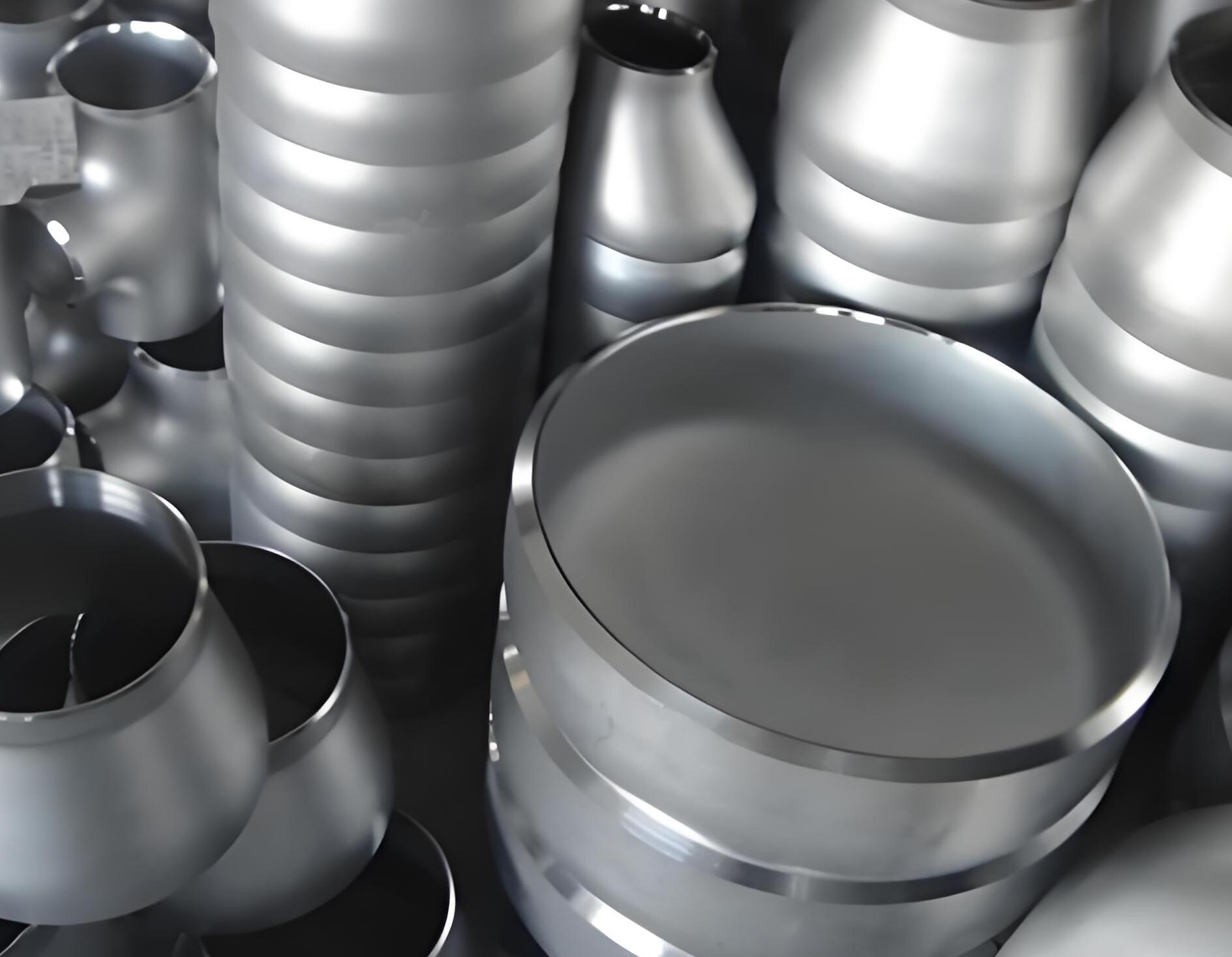
Basic parameter disclosure is the core foundation for alignment and requires precise marking of the nominal diameter, material grade, wall thickness Sch grade, pressure PN/Class rating, applicable standard, connection method, and sealing face form of all pipeline and pipe fittings.For different pipe fittings such as elbows, tees, crosses, reducers, flanges, branch outlets, and pipe caps, structural parameters shall be separately specified, distinguishing easily confused parameters such as concentric and eccentric reducers, equal and reducing tees, and butt-welded and socket-welded connections, so as to avoid structural mismatches from the source.At the same time, dimensional standards such as straight pipe section length, pipe fitting angle, and flange bolt hole spacing shall be clearly specified, with tolerance allowable ranges locked down to prevent products with extreme negative tolerances from entering the site.
Operating condition disclosure is an essential part of high-risk projects and requires complete disclosure of medium properties, acid-base concentration, salt content, sulfide content, working temperature, operating pressure, and fluctuation range of start-stop conditions.For special operating conditions such as highly corrosive media, high temperature and high pressure, low-temperature explosion protection, and high-speed erosion, dedicated technical requirements shall be separately marked, and material tolerance standards, anti-corrosion processes, safety margins, and corrosion allowance wall thickness shall be clearly specified. Conventional pipe fittings are prohibited from replacing pipe fittings dedicated to specific operating conditions.
Production process disclosure directly determines product adaptability and requires clear specification of special process requirements such as flaw detection grade, pickling and passivation, solution treatment, low-temperature impact test, rubber-lined and plastic-lined anti-corrosion, and heat treatment.Stainless steel pipelines must be subject to technical disclosure of the pickling and passivation treatment standards; high-pressure alloy pipelines must specify the non-destructive testing ratio and acceptance grade; low-temperature pipelines must be marked with process requirements for resistance to low-temperature brittle fracture; anti-corrosion pipelines must specify the anti-corrosion layer thickness, material, and bonding standards, ensuring that the production process fully matches the drawing design requirements.
Installation adaptation disclosure focuses on on-site construction implementation, specifying pipeline routing, installation elevation, slope requirements, fitting installation orientation, valve flow direction, support and hanger adaptation standards, and system interface boundaries.The disclosure focuses on components with installation orientation requirements, such as eccentric reducers, check valves, and globe valves, to avoid problems of poor medium flow and system failure caused by reverse installation.At the same time, the interface standards for complete sets of accessories are specified, unifying the material grades of flanges, gaskets, and bolts to ensure that the parameters of the entire system are consistent and from the same source.
Quality acceptance disclosure specifies the standards for incoming inspection, construction acceptance, and pressure test acceptance, marks the measured wall thickness range, material spectral verification requirements, dimensional tolerance thresholds, airtightness and hydrostatic test standards, and clarifies the criteria for determining nonconforming products and the return and exchange mechanism, providing a clear basis for later acceptance.
IV. Standardized Procurement Interface Process and Practical Key Points
After the technical disclosure is completed, the procurement interface must strictly follow the five-step standardized process of "parameter locking, list conversion, contract consolidation, production confirmation, and incoming inspection review" to achieve precise implementation of the disclosure content.Step 1: Sort out and lock parameters. Procurement personnel check the nine core parameters one by one against the disclosure documents and construction drawings, and classify and summarize the fitting lists for different materials, different pressure grades, and different working conditions, eliminating parameter confusion and omission in statistics.
Step two: standardization and conversion of the list. Convert the drawing graphic parameters and technical disclosure requirements into a standardized procurement list, clearly defining the specifications, standards, processes, quantities, and special requirements of each type of product, and eliminating vague markings and generic substitute markings.For non-standard customized pipe fittings and special-process components, list them separately and mark them specifically to avoid production and supply according to conventional products.
Step three: solidify the contract terms. Write all technical disclosure requirements, tolerance constraints, process standards, and acceptance specifications into the procurement contract, explicitly prohibit extreme negative tolerances, prohibit parameter downgrade substitutions, and prohibit cross-standard mixing, lock the technical standards in contractual form, and eliminate arbitrary standard reductions on the production side.
Step four: production process coordination and confirmation. For high-risk pipe fittings such as high-pressure, corrosive, and alloy fittings, coordinate the technical requirements simultaneously during the production stage, conduct sampling inspections of production processes, wall thickness dimensions, and material parameters, supervise the implementation of special processes, and ensure that the finished products fully conform to the disclosure standards.Step five: incoming inspection and verification coordination. After the goods arrive, verify them item by item against the disclosure documents, procurement list, and drawing parameters, complete actual dimension measurement, material verification, and process inspection, and only allow them to be put into use after passing inspection.
V. High-frequency misunderstandings and risk avoidance in disclosure and procurement coordination
Based on many years of practical engineering experience, the high-frequency misunderstandings in technical disclosure and procurement coordination are concentrated and prominently common, and are the main causes of engineering hidden dangers.First, emphasis on conventional parameters and neglect of special disclosure. Most projects only disclose basic parameters such as dimensions and materials, ignoring hidden requirements such as corrosive working conditions, low-temperature explosion protection, special flaw detection, and anti-corrosion processes, resulting in products that do not match the working conditions.Second, verbal disclosure replaces written disclosure, resulting in information transmission deviations and omissions, no traceability basis in the later stage, and unclear rights and responsibilities when problems arise.
Third, the parameters in the procurement list are simplified, omitting wall thickness grades, applicable standards, and pressure systems, which leads manufacturers to produce according to the lowest general standards, causing parameter downgrading and mismatching.Fourth, high-pressure and low-pressure pipe fittings and fittings of different materials are mixed and connected without classified parameter labeling, causing problems such as inconsistent fitting grades in the system, electrochemical corrosion, and insufficient pressure bearing capacity.Fifth, the connection of complete sets of accessories is ignored; the main material parameters meet the standards, but gaskets, bolts, and sealing surfaces do not match, resulting in sealing leakage and system failure.
In response to the above misunderstandings, it is necessary to establish a two-way verification, dedicated personnel management, and full-process archiving mechanism, so that all disclosure contents are kept in writing, all connection records are traceable, and all parameters are confirmed bidirectionally, thereby avoiding information deviations and adaptation risks from the source.
VI. Conclusion
Technical disclosure and procurement connection in pipeline and fitting engineering are the core hub of refined construction of industrial pipeline engineering. They appear to be basic connection work, but actually determine the bottom line of project quality, safety, and compliance.If technical disclosure is not standardized and procurement connection is not precise, then no matter how high-quality the products are and no matter how mature the construction technology is, the quality of project implementation cannot be guaranteed.A standardized disclosure and coordination system that can thoroughly break down the information barriers among design, procurement, production, and construction, achieving zero parameter deviation, zero process omission, and zero coordination error.
In the current era of compliance-oriented and refined development of industrial engineering, abandoning extensive coordination models and implementing written, standardized, and closed-loop disclosure and procurement coordination specifications are key measures to reduce engineering rework, save project costs, improve construction efficiency, and ensure safe system operation.Beijing Guojie Pipeline Co., Ltd. is deeply engaged in multi-standard pipeline and pipe fitting technical disclosure, parameter coordination, precise supply, and acceptance verification services. It can adapt to various chemical, oil and gas, new energy, and municipal pipeline projects, providing one-stop technical coordination and compliant supply solutions to help various pipeline projects achieve high-standard, zero-hazard, and high-efficiency delivery.