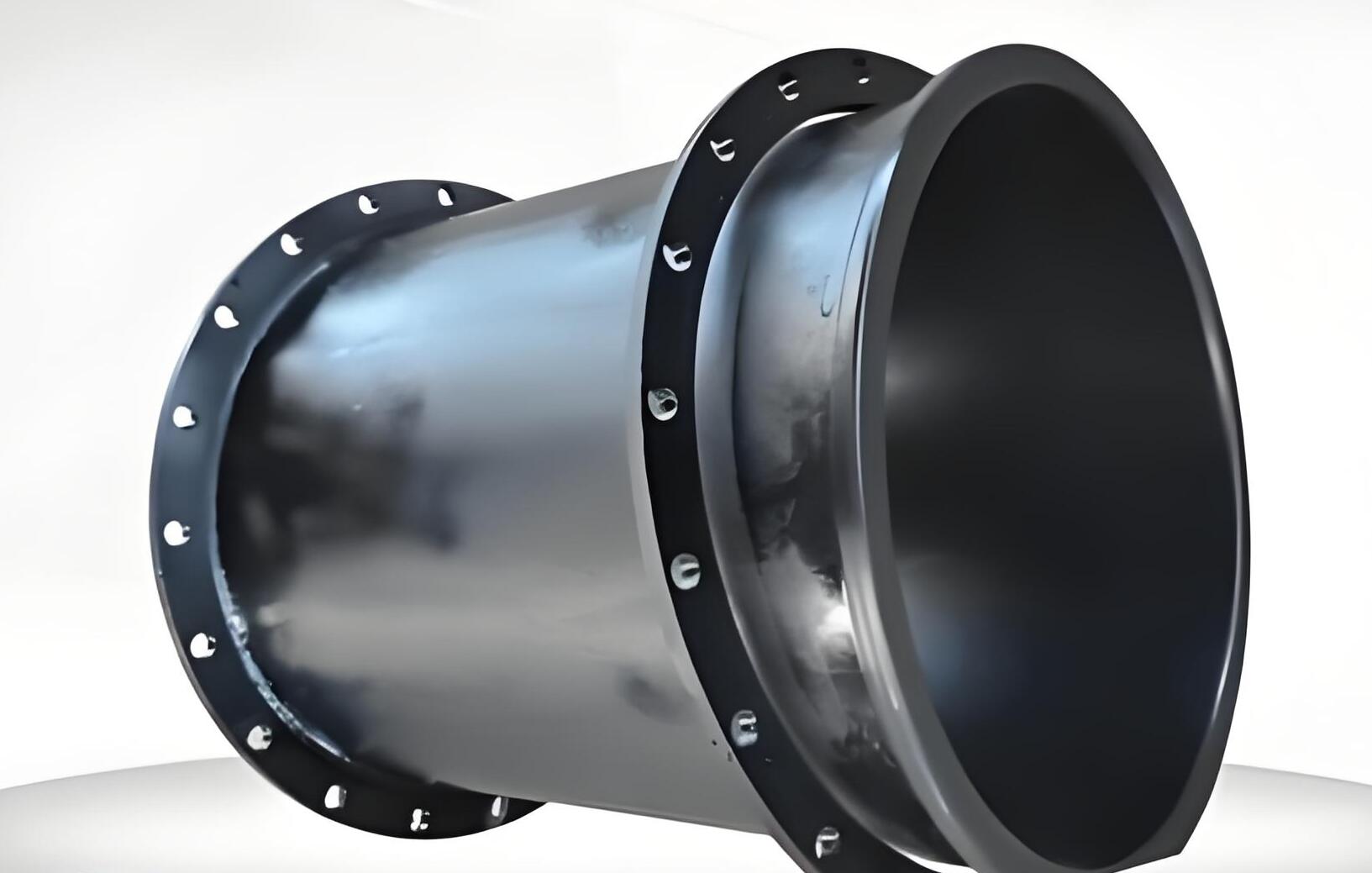
| Product Name | Rubber-Lined Anti-Corrosion Reducer |
| Product Categories | Reducer |
| The parameters of this series of rubber-lined anti-corrosion reducers strictly follow the national anti-corrosion pipeline specifications HG21501 and DL/T1851, and are suitable for industrial anti-corrosion engineering design and acceptance standards nationwide. Nominal diameter range DN25–DN1000, support for non-standard diameter reduction customization of any size reducer; structures are divided into concentric type and eccentric type; pressure ratings PN6, PN10, PN16 | Ordinary rubber: -20℃ to 85℃; special temperature-resistant rubber can reach 120℃, suitable for normal-temperature and medium-to-low-temperature corrosive working conditions. The shell material is Q235B and 20# carbon steel welded and formed, with a dense structure and stable pressure-bearing performance. The process adopts high-temperature integral vulcanization, the adhesive layer adhesion is ≥3MPa, and the spark leak detection at 3000V–5000V shows no breakdown. Suitable media: acid-base solutions, desulfurization slurry, ore slurry, brine, and sewage containing particulate corrosive media. Before leaving the factory, it undergoes spark testing, appearance inspection, and pressure leak testing, and the anti-corrosion performance and structural strength all meet the standards. |
| Customization | This factory possesses full-dimensional non-standard customization and working-condition upgrade capabilities for rubber-lined anti-corrosion reducing pipes, and can undertake customized orders for various special sizes, special rubber types, special thicknesses, and special medium working conditions, adapting to the transformation needs of complex industrial anti-corrosion pipelines. It supports customization of arbitrary non-standard reducing ratios, non-standard total lengths, special flange connection dimensions, and eccentric height differences, adapting to non-standard interfaces of old pipeline networks and special docking ports of equipment. Different functional rubber lining materials can be customized on demand, including strong-acid-resistant butyl rubber, high-and-low-temperature-resistant EPDM, high-wear-resistant special rubber, and oil-resistant neoprene, to specifically match different working conditions of acid and alkali, high temperature, wear, and salt corrosion. It supports 3–10mm thickened rubber lining reinforcement, secondary vulcanization reinforcement, inner wall polishing pretreatment, and outer wall heavy-duty anti-corrosion spray coating upgrade processes, enhancing overall anti-corrosion |
| MOQ | Our factory's rubber-lined anti-corrosion reducer adopts a flexible low-threshold minimum order model, suitable for various procurement needs such as industrial sporadic technical upgrades, project spare parts, engineering small samples, and batch matching. The MOQ for conventional standard specifications is as low as 1 piece, and a single piece can be produced and shipped, with no minimum order quantity restriction, no specification threshold, and no rubber type restriction. Conventional DN50–DN600 concentric and eccentric standard sizes, conventional 3m |
| Lead Time | The factory has established a dedicated vulcanization production line for anti-corrosion rubber lining and a constant-temperature warehouse for finished products, and regularly stocks hot-selling conventional rubber-lined reducers on the market, quickly responding to the construction milestone needs of environmental protection, chemical, and power engineering projects. DN50–DN600 conventional concentric and eccentric, standard 3–5 mm rubber lining, ordinary natural rubber, and EPDM conventional models are in ample stock, and orders can be shipped within 3–5 working days after confirmation. |
| Packaging | The rubber-lined anti-corrosion reducer adopts dedicated protective packaging for industrial anti-corrosion pipe fittings, focusing on protecting the internal rubber lining from impact, scratches, aging, and detachment, and preventing transportation damage from affecting anti-corrosion performance. Before the finished product leaves the factory, the internal rubber layer is first subjected to dust-free cleaning and anti-aging sealing treatment, and hard plastic sealing caps are installed at both ends of the pipe opening to completely seal the pipe opening, preventing sand, stones, and debris from entering and preventing the rubber layer from being scratched or impacted. The outer surface of the pipe fitting is treated with anti-rust spraying, and the whole is wrapped with thickened waterproof winding film and a shock-absorbing bubble layer to avoid paint loss from friction and deformation from impact during transportation. Small and medium-sized specifications are individually packaged and labeled by category; large-diameter reducers use solid wood pallets for fixation, flexible straps for reinforcement, and full-coverage protection with anti-collision corner guards at the edges and corners to prevent the rubber layer from delaminating due to vibration during long-distance transportation. All products are classified by specification and rubber |
| Reference Price | Inquiry |