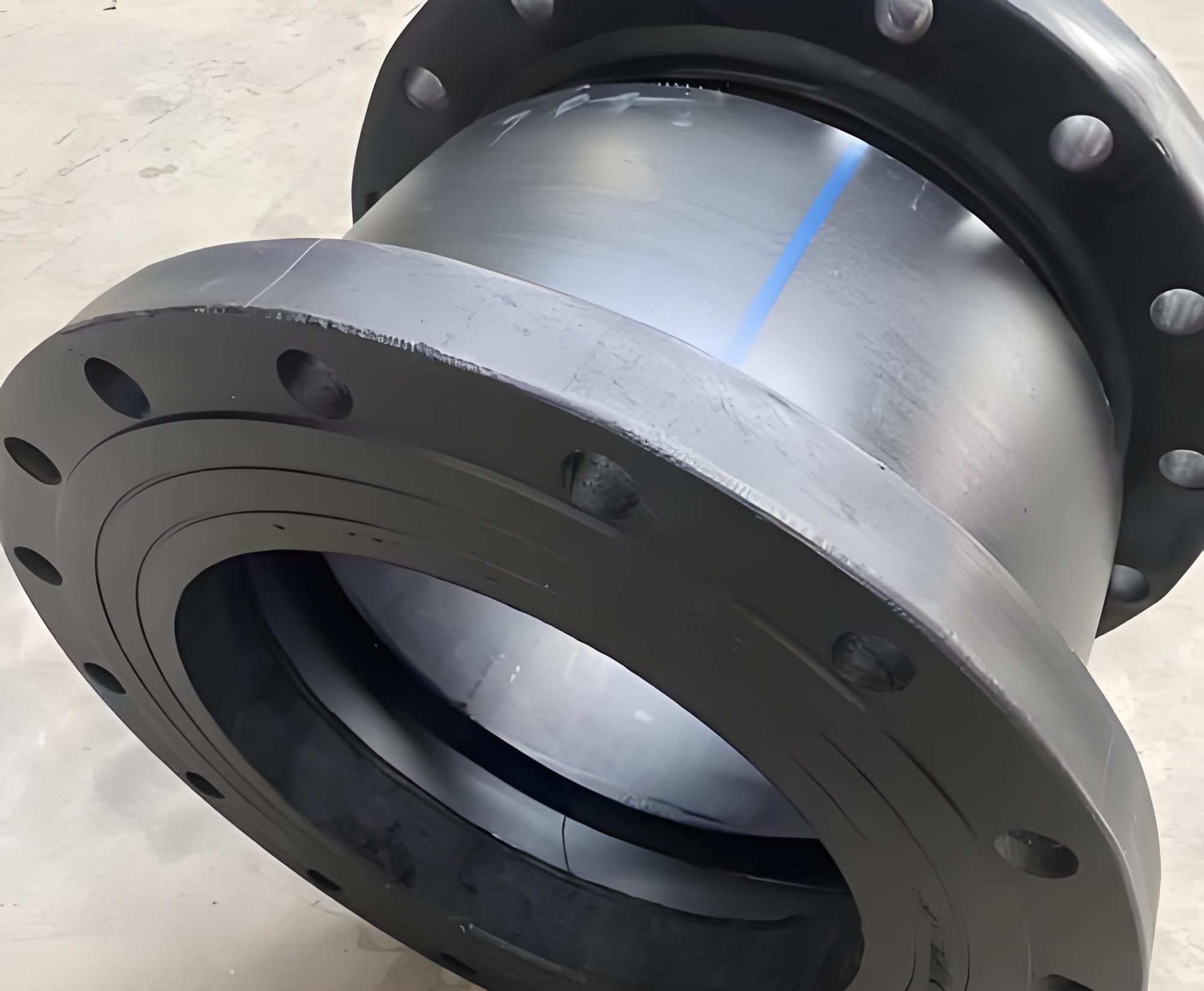
Flanged Reducer
Flanged reducers are mainly used in industrial piping systems for fixed, detachable, high-sealing-requirement pipe diameter transition and reduction. They are connected by tightening bolts at the flanges on both ends, achieving smooth conve
Inquiry
- The biggest core advantage of flanged reducers is the integrated flange structure, extremely strong sealing, maintainable assembly and disassembly, and serviceable for life.
- Different from welded, threaded, and grooved pipe fittings.
- It is the most stable and most durable reducing solution for industrial fixed main pipeline networks. Both ends of the product have integrally precision-machined flanges.
- The sealing surface is flat and smooth, and the bolt hole positions are precise.
- There is no deviation during connection, and no deformation under pressure.
Detailed Introduction
Flanged reducer, also called flanged size head or flanged connection reducing joint, English Flanged Reducer. Its structure is that the pipe fitting body is a concentric or eccentric conical reducing section, with flanges directly integrated at both ends. During installation, butt connection is completed through bolts and gaskets, without the need for on-site welding of flanges. Product diameters cover DN25 to DN1200, and pressure ratings include national standards PN10, PN16, PN25, PN40, PN64, PN100, as well as American standards Class150, Class300, Class600, Class900. Materials can be selected from carbon steel, stainless steel, alloy steel, and duplex steel. Sealing surfaces include RF raised face, MFM male-female face, TG tongue-and-groove face, and RJ ring joint face. The concentric type is mostly used for vertical risers and gas pipelines, while the eccentric type is used for horizontal pipelines, with the flat top for venting to prevent pump cavitation and the flat bottom to avoid impurity accumulation. We can confirm specific configurations according to project requirements. You are welcome to contact us for selection suggestions and quotations.
- The flanges at both ends are integrally finish-machined, with flat sealing surfaces and precise bolt hole positions, ensuring butt connection without deviation and reducing the process of on-site flange welding.
- The flanged connection is detachable, facilitating regular pipeline maintenance and replacement, and is suitable for main pipeline networks where frequent welding and cutting are not allowed.
- Diameters cover DN25~DN1200, and pressure ratings cover national standards PN10~PN100 and American standards Class150~Class900. Specific specifications can be confirmed according to project requirements.
- Concentric and eccentric structures are provided. The concentric type is used for vertical risers and gas pipelines, while the eccentric type is used for horizontal pipelines to prevent cavitation and accumulation.
- Materials can be selected from carbon steel, stainless steel, alloy steel, and duplex steel. Sealing surfaces can be selected from RF, MFM, TG, and RJ, adapting to different media and working conditions.
- Supports non-standard customization, including non-standard reducing ratios, special overall lengths, unconventional tapers, non-standard flange hole spacing, and special sealing surface structures.
| Product Name | Flanged Reducer |
| Categories | Contact us to confirm |
| Customization | Our factory has comprehensive non-standard customization capabilities for flanged reducers, and can solve the installation problems of standard pipe fittings that cannot adapt to special pipeline networks, imported equipment, and overseas non-standard projects, achieving full-dimensional customization of structure, dimensions, pressure, sealing, and materials. We can customize non-standard reducing ratios, special overall lengths, unconventional tapers, and extra-large or extra-small diameter flanged reducers as needed, adapting to old pipeline network renovation, special equipment connection, and niche industrial pipelines. Supports customization of non-standard flange hole spacing, special bolt hole quantities, non-standard sealing surface structures, and thickened high-pressure flange plates, adapting to imported equipment, foreign-funded projects, and overseas non-standard standards. We can customize special materials such as carbon steel, stainless steel, heat-resistant alloy steel, and duplex steel, meeting harsh working conditions of high temperature, high pressure, strong corrosion, and marine salt spray. Surface processes can |
| MOQ | Our factory's flanged reducers adopt a flexible, loose minimum order model compatible with both large and small orders, suitable for procurement across all scenarios including sample submission for inspection, sporadic replenishment, equipment matching, batch engineering projects, and full export orders. Conventional national standard and American standard general-caliber, conventional pressure in-stock specifications support a minimum order of 1 piece, with no procurement threshold, suitable for pipeline network emergency repairs, equipment matching small samples, engineering replenishment, and technical renovation maintenance. |
| Lead Time | Our factory possesses professional flanged pipe fitting production lines and a large warehousing base. Flanged reducers have ample production capacity, sufficient inventory, and stable, controllable delivery times, precisely matching domestic engineering schedules and export shipping schedules. For conventional in-stock standard specification orders, ultra-fast shipment within 24 hours after confirmation, quickly resolving urgent order replenishment, pipeline network emergency repair, and expedited sample delivery needs. Market general mainstream specifications batch |
| Packaging | Flanged reducers adopt industrial heavy-duty export-grade protective packaging, with key protection for flange sealing surfaces, bolt holes, and pipe end faces, preventing collisions, scratches, deformation, and paint loss, suitable for domestic long-distance logistics, full-vehicle transportation, and container ocean shipping. Before leaving the factory, products are cleaned and polished, removing burrs and iron filings, with surfaces sprayed with anti-rust oil or anti-corrosion primer, isolating air and moisture, preventing oxidation and rust. All flange sealing surfaces are covered with dedicated dust-proof protective plates and protective pads, strictly preventing precision sealing surface wear, collisions, and scratches, ensuring installation sealing performance. Small-diameter products are individually wrapped in bubble film and packed separately in cartons; medium and large-diameter, heavy-weight products are wrapped in protective film and reinforced with corner protectors, preventing port deformation. Batch full orders are all reinforced and packed on solid wood pallets, fully enclosed with stretch film wrapping, steel straps |
| Reference Price | Inquiry |
| Standards | GB/T12459, GB/T9113, HG/T20592, ASME B16.5, ASME B16.9 |
Applications
- Variable-diameter connections of different caliber pipelines in petroleum refining process pipelines, requiring high sealing and regular maintenance of fixed pipeline networks.
- Steam pipeline networks of thermal power plants and main pipelines of central heating, concentric type used for vertical risers, eccentric type used for horizontal pipelines.
- Fixed pipelines at pump station inlet and outlet, eccentric reducers installed with flat-top orientation can discharge accumulated air, preventing pump cavitation.
- Chemical acid-base medium pipeline networks and high-pressure fluid systems of new energy factories, requiring corrosion-resistant materials and specific sealing surfaces.
- Foreign trade engineering and overseas industrial projects, requiring pipe fitting accessories that comply with national or American standards and can be shipped by container.
Overview
Flanged reducers are one-piece reducing pipe fittings with flanges at both ends. The fitting body is a concentric or eccentric tapered reducing section. During installation, they are directly connected to the pipeline with bolts and gaskets, without the need for on-site welding of flanges. They comply with standards such as GB/T12459, GB/T9113, HG/T20592, ASME B16.5, ASME B16.9, etc. Diameters range from DN25 to DN1200, and pressure ratings cover national standard PN10~PN100 and American standard Class150~Class900. Materials can be selected from carbon steel, stainless steel, alloy steel, and duplex steel, and there are four types of sealing surfaces: RF, MFM, TG, and RJ. The concentric type is suitable for vertical risers and gas pipelines, while the eccentric type is suitable for horizontal pipelines, with the flat-top orientation for venting to prevent cavitation and the flat-bottom orientation to prevent sedimentation.
Key Features
The integrated flange structure eliminates the step of on-site welding of flanges, making installation faster. The sealing surface is precision-machined, the bolt holes are accurately positioned, and the alignment deviation is small. The flange connection is detachable, so later inspection and replacement of pipe fittings do not require cutting the pipeline, making it suitable for main pipeline networks that require regular maintenance. The overall structure has strong rigidity and can withstand pressure fluctuations and medium erosion. We provide both concentric and eccentric structures, as well as combinations of multiple materials and sealing surfaces, and the configuration can be confirmed according to the medium, temperature, and pressure conditions. For non-standard customization, we can process non-standard reduction ratios, special overall lengths, unconventional tapers, and non-standard flange hole spacing according to drawings or samples.
Applications
Flanged reducers are mainly used in industrial pipelines with fixed installation, long-term operation, and the need for regular maintenance. They are used in petroleum refining process pipelines, steam networks of thermal power plants, main pipelines of centralized heating, main natural gas transmission pipelines, chemical acid and alkali medium pipeline networks, and high-pressure fluid systems of new energy plants. In terms of equipment matching, they are used in fixed pipelines at the inlet and outlet of pump stations, pressure vessel connection pipelines, and heat exchange unit systems. In municipal engineering, they are used in urban main heating pipelines, large-scale industrial water supply and drainage, and fixed installation pipeline networks in plant areas. The concentric type is suitable for vertical risers and steam and gas pipelines, while the eccentric type is suitable for horizontal pipelines and pump inlet pipelines. Flat-top installation can discharge accumulated gas, and flat-bottom installation can avoid impurity sedimentation.
Specifications
The diameter range covers DN25~DN1200, and pressure ratings include national standard PN10, PN16, PN25, PN40, PN64, PN100, as well as American standard Class150, Class300, Class600, Class900. Materials include carbon steel, stainless steel, alloy steel, and duplex steel, and the specific grades can be confirmed according to the medium and working conditions. Sealing surfaces can be selected as RF raised face, MFM male-female face, TG tongue-and-groove face, and RJ ring joint face. They comply with standards such as GB/T12459, GB/T9113, HG/T20592, ASME B16.5, ASME B16.9, etc. Non-standard customization includes non-standard reduction ratios, special overall lengths, unconventional tapers, non-standard flange hole spacing, and special sealing surface structures. If you need to confirm specific specifications, please contact us and provide the diameter, pressure rating, material, and quantity.
Purchasing & Delivery
Regular national standard and American standard general diameters and conventional pressure stock specifications support a minimum order of 1 piece, suitable for pipeline network emergency repairs, equipment matching samples, and engineering replenishment. Regular in-stock standard specification orders are shipped within 24 hours after order confirmation, and delivery times for bulk orders are confirmed according to project requirements. Packaging uses industrial heavy-duty export-grade protection. Flange sealing surfaces are covered with dust-proof protective plates and protective pads. Small-diameter products are wrapped in bubble film and packed separately in cartons. Medium and large-diameter products are wrapped in protective film and reinforced with corner protectors. Bulk full orders are reinforced with solid wood pallets, fully enclosed with stretch film, and secured with steel straps. Chinese-English foreign trade shipping marks, specification labels, pressure ratings, material markings, and batch numbers can be printed as needed.
Service & Support
Before sales, we provide working condition analysis, pressure rating selection, sealing surface matching, concentric/eccentric structure recommendations, and installation matching plan guidance. During sales, dedicated personnel follow up on the order, synchronizing production, end-face precision machining, quality inspection, and shipping progress, and promptly responding to order changes and expedited shipment needs. Products undergo multiple non-destructive tests, pressure tests, and dimensional screening before leaving the factory. After sales, original quality problems are unconditionally returned or exchanged. For quality problems such as material mismatch, leakage, deformation, and hole position deviation, we bear the round-trip freight and provide free replacement. We provide lifelong technical consultation for flanged pipeline installation, sealing adaptation, and operation and maintenance. Long-term cooperative customers enjoy priority production scheduling, priority shipping, and priority after-sales service.
FAQ
What is the difference between flanged reducers and ordinary reducers?
The two ends of ordinary reducers are beveled or threaded, and during installation, flanges need to be welded on site or the pipeline is directly welded. Flanged reducers have their own flanges at both ends and are connected with bolts and gaskets, without the need for on-site welding of flanges. Installation is faster, the sealing surface is precision-machined, and they can be disassembled for maintenance later, making them suitable for fixed main pipeline networks and industrial pipelines that require regular maintenance.
How to choose between concentric and eccentric reducers?
Vertical main pipes, steam pipes, and gas pipes generally use the concentric type, with the flow passage centered, resulting in low pressure loss. Horizontal pipelines and pump inlet/outlet piping use the eccentric type; flat-top installation can drain accumulated gas inside the pipe and prevent pump cavitation; flat-bottom installation can keep the bottom of the pipe straight and avoid accumulation of sewage and particle-containing media. For specific selection, you can contact us to confirm according to the pipeline layout and media conditions.
What pressure ratings and diameters are available for flanged reducers?
Diameters cover DN25 to DN1200. Pressure ratings include national standard PN10, PN16, PN25, PN40, PN64, PN100, as well as American standard Class150, Class300, Class600, Class900. Sealing faces can be RF raised face, MFM male-female face, TG tongue-and-groove face, and RJ ring joint face. If you need to confirm whether specific specifications are in stock, please contact us and provide the diameter, pressure rating, and quantity.
Can non-standard sizes or special materials be customized?
Yes. We support non-standard reduction ratios, special overall lengths, non-standard tapers, non-standard flange hole spacing, special bolt hole quantities, and thickened high-pressure flange plates. Materials can be customized in carbon steel, stainless steel, heat-resistant alloy steel, and duplex steel. Surface processes can be selected from sandblasting and rust removal, hot-dip galvanizing, anti-corrosion paint, epoxy coal tar pitch, and high-temperature anti-corrosion treatment. Please provide drawings, samples, or technical parameters, and we will assist in confirming the processing plan.
What are the minimum order quantity and delivery time?
For conventional national standard and American standard general diameters and conventional pressure stock specifications, orders can start from 1 piece, suitable for pipeline network emergency repairs, equipment supporting small samples, and engineering replenishment. For conventional stock standard specification orders, shipment is made within 24 hours after order confirmation. For the delivery time of bulk orders and non-standard customized orders, please contact us to confirm, and we will arrange production scheduling according to the specifications and quantity.
Submit Inquiry
Please fill in the following information, and we will contact you as soon as possible to provide product solutions or quotes based on your needs.