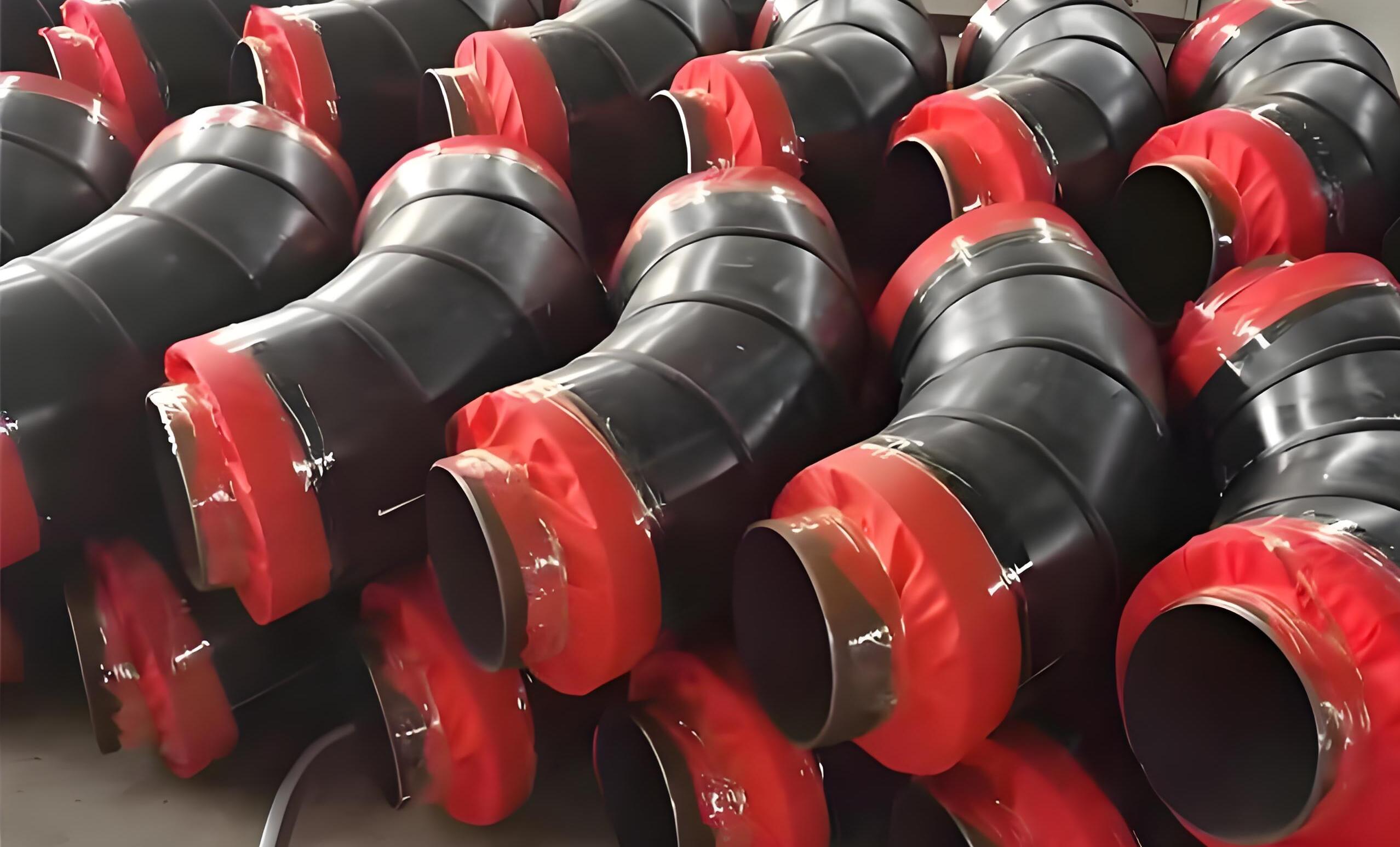
Insulated elbows are prefabricated insulated turning fittings specifically designed for heating pipe networks, low-temperature cold insulation, and anti-freezing energy-saving pipeline systems. They are integrally formed by three layers: the inner working steel pipe, the middle thermal insulation layer, and the outer protective jacket. They work in conjunction with insulated straight pipes to achieve simultaneous turning, simultaneous insulation, and simultaneous waterproof sealing, completely resolving engineering pain points such as high heat loss, condensation and dripping, freezing and blockage cracking, pipe corrosion, and excessive energy consumption in pipe networks associated with ordinary bare elbows. The products are divided into four major systems: polyurethane direct-burial insulated elbows, steel-jacketed steel high-temperature steam insulated elbows, detachable outer-jacket insulated elbows, and PPR integral insulated elbows, suitable for all temperature range working conditions including low-temperature water heating, medium-temperature hot water, high-temperature steam, deep cryogenic cold insulation, outdoor anti-freezing, and underground buried humid environments. The entire unit is factory prefabricated, with a dense cavity-free insulation layer, tight waterproof sealing, and an aging-resistant and pressure-resistant outer jacket, requiring no on-site secondary spraying or wrapping—installation is complete upon placement. The nominal diameter covers DN15–DN2000, with standard angles of 45°, 90°, and 180°, and supports customization of non-standard angles, extended straight sections, drainage and venting, and integrated fixed sections. Strictly implemented in accordance with GB/T39246, GB/T29047, CJ/T114, ASME B16.9 and other standards, it is widely used in municipal district heating, residential heating, industrial steam, chemical cold insulation,
Overview
Insulated elbow is a prefabricated insulated turning pipe fitting specially used in heating pipe networks, low-temperature cold insulation, and antifreeze energy-saving pipeline systems. It is formed by integrally compounding three layers: the inner working steel pipe, the middle thermal insulation layer, and the outer protective shell. It works in conjunction with insulated straight pipes to achieve simultaneous turning, simultaneous insulation, and simultaneous waterproof sealing, completely solving engineering pain points such as large heat loss, condensation and dripping, freezing blockage and cracking, pipeline corrosion, and excessive energy consumption in pipe networks caused by ordinary bare elbows. The products are divided into four mainstream systems: polyurethane directly buried insulated elbows, steel-jacket-steel high-temperature steam insulated elbows, detachable outer-jacket insulated elbows, and PPR integrated insulated elbows, adapting to all temperature zone working conditions including low-temperature water heating, medium-temperature hot water, high-temperature steam, cryogenic cold insulation, outdoor antifreeze, and underground buried humid environments. The entire product is prefabricated and formed in the factory, with a dense insulation layer without cavities, tight waterproof sealing, and an aging-resistant and pressure-resistant outer protective layer. No on-site secondary spraying or wrapping is required; installation is completed upon installation.
Key Features
Prefabricated integrated molding, dense insulation layer without cavities, tight waterproof sealing, aging-resistant and pressure-resistant outer protective layer, no on-site secondary wrapping required, installation is completed upon installation. Full coverage of nominal diameters DN15–DN2000, conventional angles 45°, 90°, 180°, supporting non-standard angles, extended straight sections, drainage and venting, and integrated fixed-section customization. Four systems adapt to all temperature zones: polyurethane directly buried insulated elbows are suitable for low-temperature water heating, steel-jacket-steel steam insulated elbows are suitable for high-temperature steam, detachable outer-jacket insulated elbows are convenient for maintenance, and PPR integrated insulated elbows are suitable for occasions with high corrosion resistance requirements. Strictly implement standards such as GB/T39246, GB/T29047, CJ/T114, and ASME B16.9 to ensure product quality.
Applications
Insulated elbows are widely used in municipal heating, residential district heating, industrial steam, chemical cold insulation, oilfield heat transmission, and HVAC energy-saving renovation projects. In municipal heating pipe networks, they are used in primary/secondary pipe networks for urban central heating, solving the problems of fast heat dissipation and high energy consumption at elbows; in residential district heating systems, they are used at building heating entrances or buried pipelines to prevent freezing blockage and corrosion; in industrial steam pipelines, they are used for high-temperature steam transmission in power plants, chemical plants, etc., reducing heat loss; in chemical cold insulation systems, they are used for low-temperature medium pipelines to prevent condensation and cold loss; in outdoor antifreeze engineering, they are used for exposed pipelines or areas prone to freezing to prevent winter freezing and blockage.
Specifications
Nominal diameter range DN15–DN2000, conventional angles 45°, 90°, 180°, supporting non-standard angles, extended straight sections, drainage and venting, and integrated fixed-section customization. The products are divided into four systems: polyurethane directly buried insulated elbows, steel-jacket-steel steam insulated elbows, detachable outer-jacket insulated elbows, and PPR integrated insulated elbows. Implementation standards include GB/T39246, GB/T29047, CJ/T114, and ASME B16.9. Specific parameters such as temperature resistance grade, insulation thickness, and outer protective material can be customized according to project requirements. Welcome to contact us to confirm the configuration.
Procurement & Delivery
Conventional insulation parts can be shipped individually; high-temperature, cold-insulation, and non-standard special-shaped items can be customized separately, suitable for engineering restocking, pipe network renovation, and foreign trade project supporting. Conventional products are delivered quickly; high-temperature heavy-duty and non-standard precision items are produced on demand, supporting urgent heating construction schedules, winter antifreeze emergency repairs, and on-time foreign trade container delivery. In terms of packaging, targeted protection is provided for the insulation layer, outer protective shell, and sealing end faces, preventing scratching, damage, water ingress, and moisture, ensuring finished product integrity throughout the entire process, and ready for direct installation upon arrival. Please contact us to confirm specific delivery times and minimum order quantities.
Service & Support
We provide long-term quality assurance, free working condition selection, and full-process technical support, thoroughly solving engineering hidden dangers such as non-durable insulation layers, water ingress failure, and incorrect model selection. We support customization options such as temperature resistance grade, insulation thickness, structural function, outer protective material, special-shaped dimensions, and acceptance documentation. If you have special requirements, please provide dimensions, quantities, and working condition parameters, and we will assist you in confirming the optimal configuration.
FAQ
What are the advantages of insulated elbows compared to on-site wrapping?
The insulated elbow is factory-prefabricated and integrally formed, with a dense insulation layer without voids, tight waterproof sealing, and an outer protective layer that is aging-resistant and pressure-resistant. No on-site secondary spraying or wrapping is needed; installation is complete upon assembly. Compared with on-site wrapping, it is denser and more waterproof, energy-saving, long-lasting, and non-shedding, effectively solving problems in traditional wrapping processes such as non-durable insulation layers and failure due to water ingress.
How to choose the right type of insulated elbow?
For low-temperature water heating conditions, it is recommended to use polyurethane directly buried insulated elbows; for high-temperature steam conditions, it is recommended to use steel-jacket-steel steam insulated elbows; for cold water processes, it is recommended to use integrated cold-insulation insulated elbows. The specific selection should also be determined based on factors such as medium temperature, pipeline pressure, and burial environment. Please feel free to contact us for a free condition-based selection.
What customization options are supported for insulated elbows?
We support customization of temperature resistance grade, insulation thickness, structural function, outer protective material, special-shaped dimensions, and acceptance documentation. The nominal diameter range is DN15–DN2000, with standard angles of 45°, 90°, and 180°. Non-standard angles, extended straight sections, drainage and venting, and integrated fixed-node designs are also supported.
What are the specifications for the nominal diameter and angle of insulated elbows?
The nominal diameter range fully covers DN15–DN2000, with standard angles of 45°, 90°, and 180°. Non-standard angles such as 30° and 60° are also supported, as well as different bending radii including 1.5D long radius, 1.0D short radius, and 3D large-radius gradual bends. Specific specifications can be customized according to project requirements.
What are the packaging and delivery methods for insulated elbows?
We will provide targeted protection for the insulation layer, outer protective shell, and sealing end faces, preventing scratches, damage, and water ingress or moisture, ensuring that the goods can be installed directly upon arrival. Regular items can be shipped individually; high-temperature, cold-insulation, and non-standard special-shaped products can be customized, supporting project replenishment and foreign trade matching. Regular products are delivered quickly, while high-temperature heavy-duty and non-standard precision products are produced on demand.