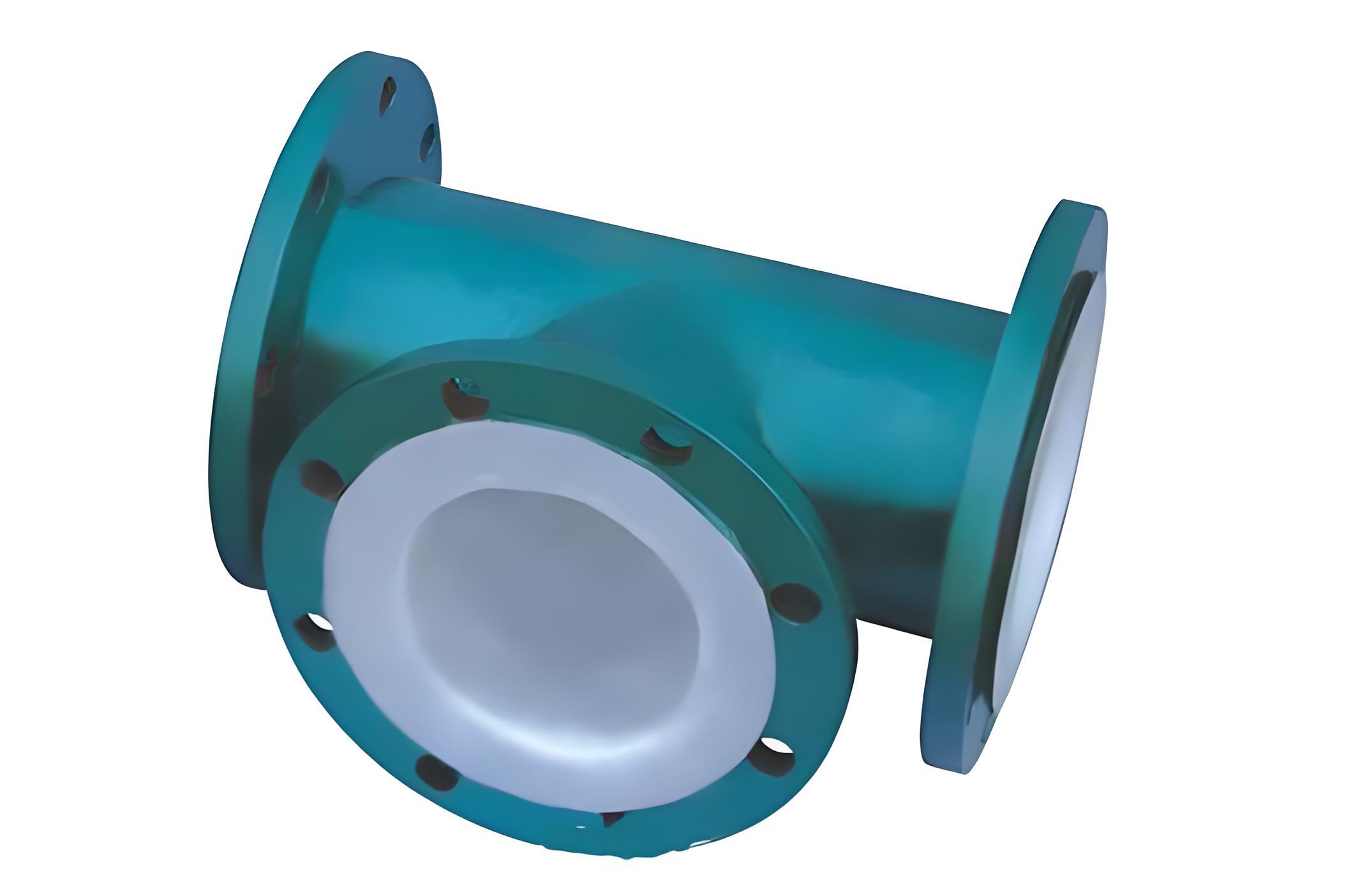
Anti-corrosion tees are used for diversion, merging, and branch direction-changing conveyance in corrosive fluid piping systems, and are commonly found in chemical process pipelines, industrial wastewater and sludge slurry networks, power plant desulfurization slurry, pharmaceutical liquids, printing and dyeing and electroplating waste liquids, seawater conveyance, and coastal salt-fog environments. We organize our products along three routes: material anti-corrosion, lining anti-corrosion, and surface anti-corrosion: plastic models are corrosion-resistant throughout with zero rust; fluorine-lined and rubber-lined models use a carbon steel body to bear pressure and an anti-corrosion lining to resist strong acids and alkalis; stainless steel models rely on their alloy structure for corrosion resistance; coated models suit conventional corrosive working conditions. Structurally, there are equal-diameter, reducing, and 45° lateral tees, and connection methods support butt welding, flanges, and threads. Specifications cover DN15–DN1200; for specific diameters, pressure ratings, connection standards, and anti-corrosion layer thickness, please contact us for project-specific confirmation.
Overview
Anti-corrosion tees are diversion, confluence, and branch direction-changing pipe fittings we have launched for corrosive fluid pipeline systems. Ordinary carbon steel and cast iron tees are prone to rusting, perforation, leakage, and aging failure under acid-base, salt spray, sewage, and chemical solvent working conditions. Anti-corrosion tees solve this problem through three routes: material anti-corrosion, lining anti-corrosion, and surface anti-corrosion. Products cover DN15–DN1200, including five categories: plastic anti-corrosion, fluorine-lined anti-corrosion, rubber-lined anti-corrosion, stainless steel anti-corrosion, and coating anti-corrosion. Structurally, there are equal-diameter, reducing, and 45° oblique tees. Connection methods support butt welding, flange, and thread.
Key Features
First, select models by corrosion grade. Plastic models are fully corrosion-resistant and zero-rust, suitable for conventional sewage and weak acids and weak bases; rubber-lined models are suitable for wet corrosion and wear conditions such as desulfurization slurry and mineral slurry; fluorine-lined models are suitable for strong acids and strong bases, organic solvents, and high-temperature chemical media; stainless steel models are suitable for seawater salt spray and clean corrosive pipelines; coating models are suitable for buried soil corrosion and ordinary industrial corrosive pipeline networks. Second, fluorine-lined models can stably withstand high-temperature corrosive media at 180°C, rubber-lined models withstand temperatures ≤95°C, and stainless steel models cover -40°C to 425°C. Third, the inner wall is smooth, does not scale, and does not breed rust, with low medium resistance, suitable for pipelines with cleanliness requirements such as pharmaceuticals and fine chemicals. Fourth, non-standard customization is supported, and processing can be done according to drawings, samples, or overseas technical agreements. Connection standards can be produced according to national standards, American standards, and German standards.
Applications
Chemical process scenarios: diversion and confluence of fine chemicals, petrochemical acids and bases, and organic solvent transportation pipelines, requiring resistance to strong chemical corrosion and no precipitation of impurities. Environmental sewage scenarios: urban sewage, industrial wastewater, and sludge slurry pipeline networks, requiring anti-scaling, leakage prevention, and resistance to microbial corrosion. Desulfurization and dust removal scenarios: power plant desulfurization slurry and dust wastewater circulation pipelines, requiring resistance to slurry erosion and acid-base corrosion. Pharmaceutical and printing and dyeing scenarios: transportation of chemical liquids, dye wastewater, and electroplating corrosive liquids, requiring cleanliness, no rust, and ensuring medium purity. Marine and coastal scenarios: seawater transportation, offshore platforms, and seaside pipeline networks, requiring resistance to chloride ions and salt spray aging. Buried anti-corrosion scenarios: acidic and alkaline soil and humid underground pipeline networks, requiring resistance to soil corrosion and long-term non-damage.
Specifications
Nominal diameter covers DN15–DN1200. Anti-corrosion types include plastic anti-corrosion, fluorine-lined anti-corrosion, rubber-lined anti-corrosion, stainless steel anti-corrosion, and coating anti-corrosion. Structural forms are divided into equal-diameter tees, reducing tees, and 45° oblique tees. Connection methods support butt welding, flange, and thread. In terms of applicable temperature, plastic models are -10°C to 90°C, rubber-lined models ≤95°C, fluorine-lined models -20°C to 180°C, and stainless steel models -40°C to 425°C. Executive standards include GB/T12459, HG/T21635, ASTM, and DIN. For specific diameters, pressure ratings, anti-corrosion layer thickness, and connection standards, please contact us to confirm according to project requirements.
Procurement & Delivery
For conventional plastic and ordinary coating anti-corrosion standard in-stock specifications, MOQ is as low as 5 pieces, supporting engineering replenishment, technical transformation small samples, and bulk centralized procurement. For DN15–DN300 conventional plastic and coating anti-corrosion standard in-stock styles, after order confirmation, anti-corrosion re-inspection, protective packaging, and reinforced packaging are completed within 24–48 hours. Packaging adopts foreign trade-grade protection solutions: flange sealing surfaces, welding bevels, and threaded ports are affixed with thickened protective film and equipped with anti-collision protective rings; the inner walls of fluorine-lined and rubber-lined products are fully sealed and protected; plastic pipe fittings are individually wrapped in shock-absorbing pearl cotton; small and medium specifications are packed into thickened moisture-proof cartons with built-in desiccant; medium and large diameters are wrapped with waterproof stretch film and rainproof woven fabric; extra-large diameters are equipped with solid wood load-bearing bases; full-container shipments are stacked on fumigation-free pallets and reinforced with steel straps. English shipping marks, specification batches, and customer LOGOs can be customized. For specific delivery times and logistics solutions, please contact us to confirm.
Service & Support
In the pre-sales stage, our technical team can assist in matching anti-corrosion models according to medium acidity and alkalinity, temperature, corrosion type, and installation environment, reducing selection deviations. Before leaving the factory, products undergo fine appearance inspection, dimension re-measurement, base pressure resistance testing, anti-corrosion layer thickness sampling inspection, and adhesion and corrosion resistance performance verification. For quality defects in factory processing, lining vulcanization, or coating processes, free returns and exchanges and free replacements are supported. After-sales service provides answers to questions on anti-corrosion pipeline installation, operation and maintenance, and anti-corrosion layer protection, and tracks logistics throughout the process, assisting overseas customers with customs clearance. The product warranty period is 18 months, with 7×24-hour response.
FAQ
How to choose anti-corrosion tees for different working conditions?
For ordinary wastewater and weak acids and weak bases, plastic models or coated models can be selected; for wet corrosion and wear conditions such as desulfurization slurry and ore slurry, rubber-lined models are selected; for strong acids and strong bases, organic solvents, and high-temperature chemical media, fluorine-lined models are selected; for seawater salt spray and clean corrosive pipelines, stainless steel models are selected. If the medium composition is complex or the temperature and pressure are special, please contact us to provide the working condition parameters, and we will assist in confirming the model selection.
Will the anti-corrosion layer fall off?
We use high-temperature vulcanization, high-temperature spraying, and negative-pressure bonding processes, and the anti-corrosion layer is tightly bonded to the substrate. Under normal working conditions, it will not crack, fall off, or leak. For specific process parameters and inspection reports, please contact us to confirm.
What is the maximum temperature resistance of anti-corrosion tees?
Fluorine-lined models can stably withstand high-temperature corrosive media up to 180°C, rubber-lined models withstand temperatures ≤95°C, stainless steel models cover -40°C to 425°C, and plastic models are suitable for -10°C to 90°C. For high-temperature working conditions beyond these ranges, please contact us to confirm whether there is a suitable solution.
Can it be clean with no precipitation?
Fluorine-lined models, food-grade plastic models, and 316L stainless steel models have no impurity precipitation, making them suitable for clean working conditions with requirements for medium purity, such as pharmaceuticals and fine chemicals. For specific cleanliness levels and inspection requirements, please contact us to confirm.
Can you provide a full set of certificates for export?
We can provide material reports, anti-corrosion coating inspection, corrosion resistance testing, hydrostatic pressure testing, and dimensional verification documents for engineering submission and foreign trade customs clearance. For specific certification requirements such as CE and RoHS, please contact us to confirm.