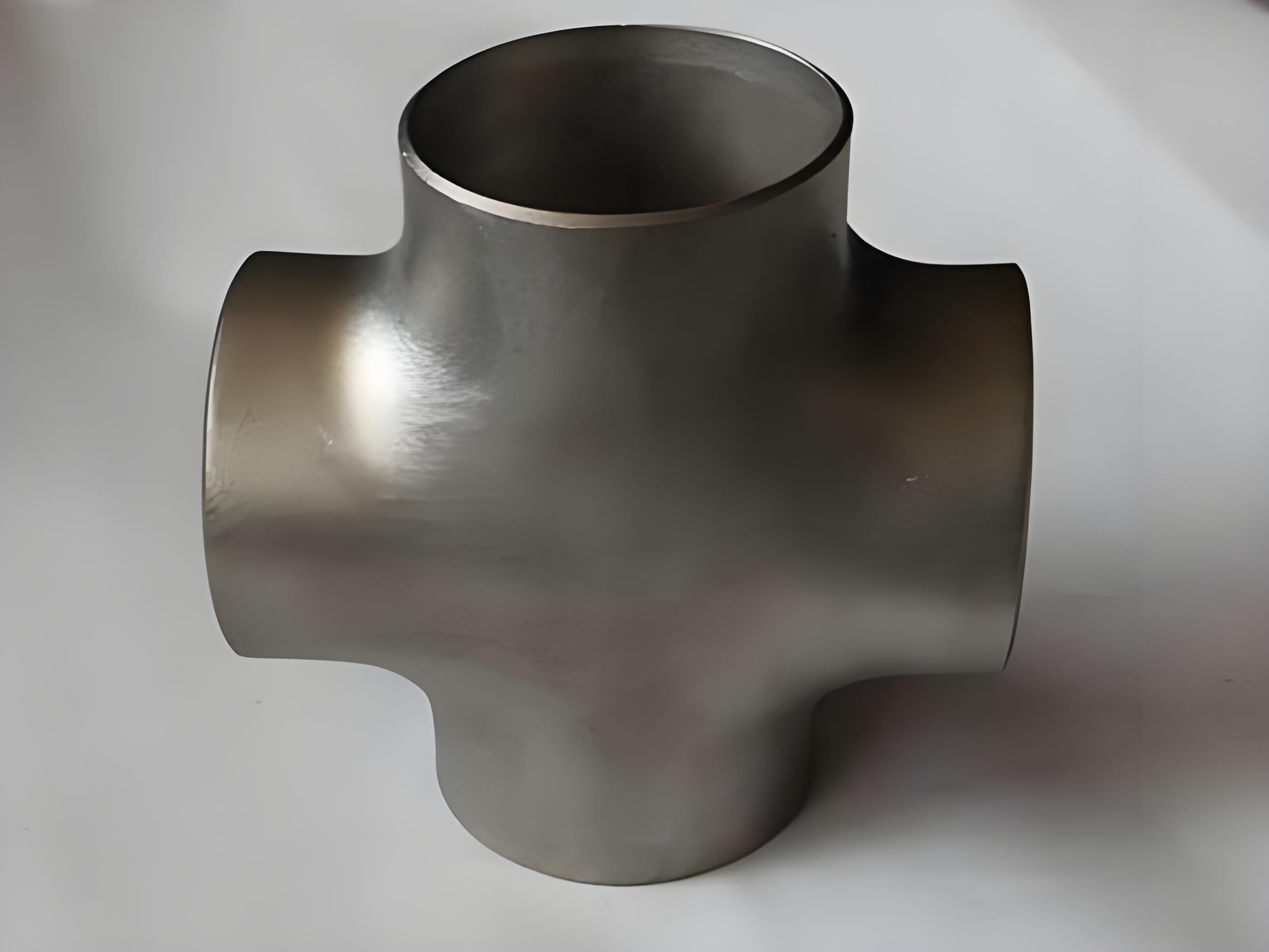
Carbon Steel Cross

Carbon steel four-way fittings are widely used in industrial and civil carbon steel pipeline systems under all working conditions, with the core functions of achieving four-way medium diversion, merging, pressure stabilization and reversing

Carbon Steel Cross - Carbon steel four-way fittings cover four full-dimensional pipeline scenarios: industrial high p...

Carbon Steel Cross

Carbon steel four-way fittings are widely used in industrial and civil carbon steel pipeline systems under all working conditions, with the core functions of achieving four-way medium diversion, merging, pressure stabilization and reversing

Reference Price

Inquiry

  • Carbon steel four-way fittings possess eight core advantages: stable material performance, full process coverage, full specification compatibility, high strength and good toughness, temperature and pressure resistance, ultimate cost-effecti
  • It is the universal benchmark product in the pipeline four-way fitting category. First
  • Excellent mechanical properties of carbon steel substrate
  • high tensile strength, good plasticity, not prone to cracking or deformation
  • impact resistance, fatigue resistance, and high-temperature resistance far exceed plastic and cast iron pipe fittings

Detailed Introduction

Carbon steel cross fittings are used in piping systems to achieve four-way media diversion, merging, direction change, and node distribution. The materials are mainly 20# seamless carbon steel, A105 forged carbon steel, Q235B plain carbon steel, Q345B low alloy steel, WCB cast steel, and 20G high-pressure boiler steel, and they can transport water, steam, gas, oil products, circulating cooling water, flue gas, and other media without strong corrosion. The products comply with GB/T12459, GB/T13401, ASME B16.9, ASME B16.11, SH/T3408, and GD electric power standards. Nominal diameters cover DN6 to DN4000, pressure ratings cover PN10 to PN160 and 150LB to 9000LB, and wall thicknesses include STD, Sch40, Sch80, Sch160, and XXS. Connection methods support butt welding, socket welding, and NPT threads. We can arrange production according to project drawings, samples, or technical agreements, and support non-standard sizes, special wall thicknesses, reducing ratios, and surface anti-corrosion customization.

  • Material coverage includes 20#, A105, Q235B, Q345B, WCB, and 20G. Mechanical properties meet tensile strength ≥485MPa and yield strength ≥250MPa, with an applicable temperature range of -20℃ to 650℃.
  • Five forming processes run in parallel: hot pushing integrated forming, hydraulic expansion forming, integral forging, steel plate roll welding, and sand casting. The corresponding process can be selected according to pressure rating and diameter.
  • Diameters range from DN6 to DN4000, pressure ranges from PN10 to PN160 and 150LB to 9000LB, and wall thicknesses cover STD, Sch40, Sch80, Sch160, and XXS.
  • Connection methods support butt welding, socket welding, and NPT threads, making it easy to match different piping designs and installation conditions.
  • Conventional DN15 to DN200 hot-pushed, hydraulic, and cast carbon steel crosses are in stock, support ordering from 1 piece, and are suitable for emergency repairs and sporadic replacement parts.
  • Non-standard oblique crosses, extended straight pipe sections, eccentric reducers, special threads, and special flange hole spacing can be customized according to drawings, samples, or technical agreements.
  • Before leaving the factory, rust removal, deburring, and degreasing cleaning are completed. Threads, socket openings, and bevels are equipped with protective caps or plugs. Large-diameter heavy-duty parts are packed with solid wood pallets and steel strip reinforcement.
Product NameCarbon Steel Cross
CategoryCross
The full range of parameters for carbon steel crosses strictly benchmarks against the authoritative standards GB/T12459, GB/T13401, ASME B16.9, and ASME B16.11, with a complete parameter system, clear classification of working conditions, and compliant and stable precision. Commonly used carbon steel materials include 20#, A105, Q235B, Q345B, and WCB cast steel, with mechanical properties reachingtensile strength ≥485MPa, yield strength ≥250MPa, and stable structural strength. Nominal diameter covers the full range of DN6–DN4000 (1/8″–160″); pressure ratings are divided into low pressure PN10–PN16, medium pressure PN25–PN64, high pressure PN100–PN160, and American standard 150LB–9000LB. Wall thickness grades include STD standard wall thickness, Sch40, Sch80, Sch160, and XXS extra-heavy wall. Applicable working temperature is -20℃~650℃, and it can withstand alternating low-temperature, normal-temperature, and high-temperature working conditions. Forming processes include hot push integrated forming, hydraulic bulging, integral forging, steel plate roll welding, and sand casting. Connection methods support butt welding, socket welding, and NPT
CustomizationThe factory has one-stop deep customization capability for carbon steel crosses across all processes, all specifications, and all working conditions, and can undertake customization needs for all conventional and non-standard special-shaped carbon steel pipe fittings, covering the full line of products from the five major forming processes. It supports customization of non-standard sizes across the full DN6–DN4000 range, special wall thicknesses, unconventional reducing ratios, extra-heavy walls, and special pressure ratings, suitable for old pipeline network renovation, non-standard connection to imported equipment, and pipeline design under special working conditions. Materials can be customized from multiple carbon steel base materials including 20# plain carbon, A105 forged carbon, Q235B, Q345B low alloy, and WCB cast steel, suitable for high-temperature, high-pressure, wear-resistant, impact-resistant, and low-temperature working conditions. It can customize non-standard lateral crosses, extended straight pipe sections, eccentric reducing, special thread profiles, special flange hole spacing, and special-shaped flow-dividing structures.
MOQCarbon steel crosses adopt a full-category flexible minimum order mechanism, suitable for diverse procurement scenarios such as sample orders, emergency repair orders, sporadic replacement parts, batch projects, and large foreign trade orders, minimizing the customer's procurement threshold. Conventional DN15–DN200 hot-pushed, hydraulic, and cast standard carbon steel crosses in the market have sufficient stock, support ordering from 1 piece, and fully meet the needs of on-site emergency repairs, project completion, local renovation, and work
Lead TimeCarbon steel crosses have established a four-level delivery system of in-stock express, conventional mass production, high-pressure non-standard, and super-large customization, fully adapting to the needs of rushed projects, foreign trade shipping schedules, non-standard renovation, and batch stocking. The warehouse regularly stocks massive inventories of conventional DN15–DN300 hot-pushed, hydraulic, and cast carbon steel crosses, with rapid outbound shipment in 24–48 hours, meeting on-site emergency repairs, urgent order matching, and urgent
PackagingCarbon steel crosses implement heavy-industry-grade standardized packaging according to the classification of high-pressure precision parts, conventional standard parts, and super-large heavy parts, preventing transportation bumps, rust, bevel damage, and thread damage. All carbon steel crosses are derusted, deburred, and degreased and cleaned before leaving the factory; ordinary carbon steel parts are sprayed with industrial anti-rust oil and sealed for rust prevention; high-pressure precision forgings and hydraulic parts receive separate refined protection to avoid scratches and oxidation. Threads, socket openings, sealing surfaces, and bevel positions are all fitted with special plastic protective caps, anti-collision plugs, and protective films to prevent thread stripping, deformation, and corner chipping from bumps. Small and medium-diameter standard carbon steel crosses are wrapped in multiple layers of bubble film and packed separately in categorized cartons, with clear specification labels and no mixed or disordered packing. Large-diameter and heavy-duty carbon steel plate-welded crosses use solid wood fumigated pallets and multi-point steel strapping
Reference PriceInquiry

Applications

  • Process pipelines in petrochemical and oil and gas field engineering, used for high-pressure medium diversion and merging nodes, often use forged or thick-wall hot-pushed carbon steel crosses
  • Steam pipelines in electric power thermal power and heating pipeline networks require high-temperature-resistant and impact-resistant carbon steel crosses, and the material can be selected as 20G or A105
  • Municipal water supply and drainage, rainwater and sewage diversion, and reservoir water transfer projects: large-diameter welded carbon steel crosses are used for branching and merging in main pipeline networks.
  • Industrial plant process water pipes, heating, industrial gas, and circulating cooling water pipelines: conventional integrally formed carbon steel crosses are used.
  • Building water supply and drainage, fire sprinkler, and HVAC mechanical and electrical pipelines: cast, threaded, or grooved carbon steel crosses can be selected.
  • High-pressure pipeline supporting for hydraulic equipment, pressure vessels, and automation equipment manufacturers: forged high-pressure carbon steel crosses are required.
  • Foreign trade export projects: English custom shipping marks, bilingual packing lists, and fumigation certificates can be provided, suitable for sea and land transport.

Purchasing & Delivery

We adopt a flexible minimum order mechanism. Conventional DN15–DN200 hot-pushed, hydraulic, and cast standard carbon steel crosses support a minimum order of 1 piece, suitable for construction site emergency repairs, project completion, and local renovations. The warehouse keeps DN15–DN300 conventional hot-pushed, hydraulic, and cast carbon steel crosses in stock, which can be shipped out of the warehouse within 24–48 hours. High-pressure non-standard parts and oversized custom parts are scheduled for production according to process and quantity; please contact us to confirm the specific delivery time. Packaging is carried out in grades for high-pressure precision parts, conventional standard parts, and oversized heavy parts. Before leaving the factory, rust removal, burr removal, and degreasing cleaning are completed, and protective caps or plugs are installed on threaded, socket, and beveled ends. For foreign trade orders, English custom shipping marks, fumigation certificates, and bilingual packing lists can be provided.

Service & Support

We provide a 12-month warranty for carbon steel crosses. During the warranty period, for product quality defects, welding hazards, leakage failures, dimensional deviations, or anti-corrosion coating peeling caused by non-human overpressure, violent installation, or improper use, we are responsible for free rework or replacement, and bear the round-trip logistics and reasonable engineering losses. Before sales, we can provide working condition selection, pressure rating matching, material verification, and anti-corrosion solution recommendations; during sales, we follow up on production and quality inspection progress; after sales, we provide welding and installation guidance, pipeline pressure testing and commissioning, and troubleshooting support. Unused standard products support seven-day no-reason return and exchange, respond to inquiries within 2 hours, and provide lifetime technical consultation and selection services for carbon steel pipe fittings.

FAQ

What forming processes are included in carbon steel crosses? What is the difference from crosses made by a single process?

Carbon steel crosses cover five processes: hot-pushing integrated forming, hydraulic bulging, integral forging, steel plate roll welding, and sand casting. Compared with crosses that only use a single process, we can select the corresponding process according to pressure rating, diameter, and working conditions, matching everything from DN6 instrument high-pressure tubing to DN4000 municipal main pipes, so procurement does not require finding different process sources for different working conditions.

What are the commonly used materials for carbon steel crosses? What working conditions are they each suitable for?

Commonly used materials include 20# seamless carbon steel, A105 forged carbon steel, Q235B plain carbon steel, Q345B low-alloy steel, WCB cast steel, and 20G high-pressure boiler steel. 20# and A105 are mostly used for petrochemical and power high-pressure pipelines, Q235B and Q345B are used for municipal and general industrial pipelines, WCB cast steel is used for cast crosses, and 20G is suitable for high-pressure boiler steam pipelines. For specific material selection, you can contact us to confirm according to the medium and temperature.

Are conventional carbon steel crosses in stock? How are the minimum order quantity and delivery time calculated?

DN15–DN200 hot-pushed, hydraulic, and cast standard carbon steel crosses are in stock, with support for a minimum order of 1 piece. DN15–DN300 conventional stock items can be shipped from the warehouse in 24–48 hours. High-pressure non-standard parts and oversized custom parts need to be scheduled for production according to process and quantity; please contact us to confirm the delivery time.

Can non-standard carbon steel crosses be customized? What information needs to be provided?

Yes. We support customization of DN6–DN4000 full-diameter non-standard sizes, special wall thicknesses, non-conventional reducing ratios, ultra-thick walls, and special pressure ratings, and can also make non-standard lateral crosses, extended straight pipe sections, eccentric reducers, special threads, and special flange hole spacing. Please provide drawings, samples, or technical agreements, and we will arrange production according to the information. Surface treatment options include ordinary anti-rust, sandblasted finishing, hot-dip galvanizing, cold galvanizing, epoxy anti-corrosion, or heavy-duty anti-corrosion.

How are export packaging and documents for carbon steel crosses handled?

For foreign trade orders, we can provide English customized shipping marks, fumigation certificates, bilingual packing lists, and separate commodity inspection lists. Large-diameter heavy-duty parts are fully wrapped using solid wood fumigation pallets, steel strap reinforcement, and waterproof stretch film plus rainproof tarpaulin. Threads, socket ends, and beveled ends are fitted with protective caps or plugs, and the outer packaging is printed with specifications, material, standard, pressure, heat number, and batch number for easy traceability.

How long is the warranty period? How are quality issues handled?

The warranty period for carbon steel crosses is 12 months. During the warranty period, for product quality defects, welding hazards, leakage failures, dimensional deviations, or anti-corrosion coating detachment caused by non-human factors such as overpressure, violent installation, or improper use, we will provide free rework or replacement, and bear the round-trip logistics costs and reasonable engineering losses. Unused standard products support seven-day no-reason return and exchange.

Submit Inquiry

Please fill in the following information, and we will contact you as soon as possible to provide product solutions or quotes based on your needs.