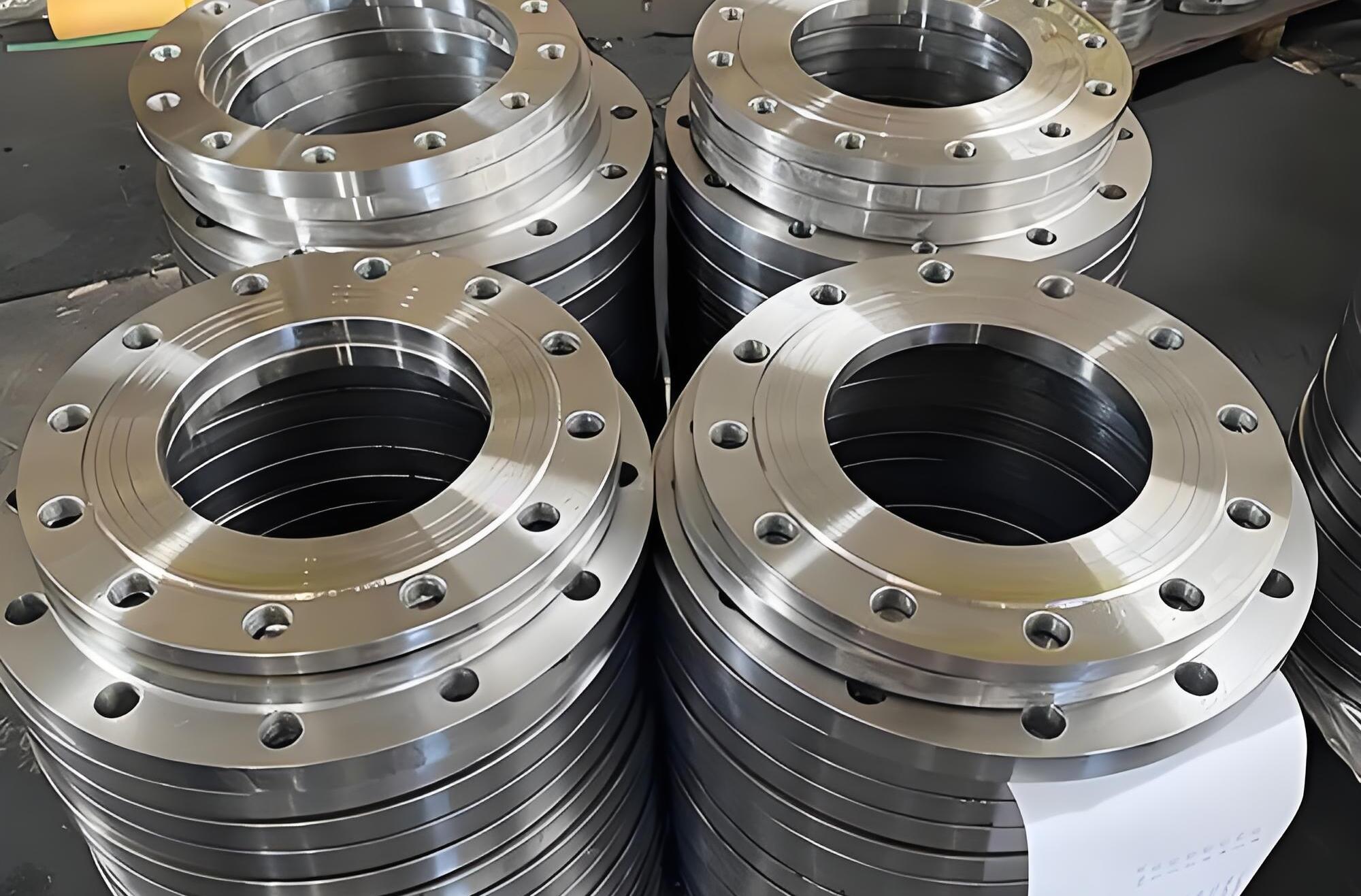
Stainless steel flanged pipe fittings are used for connection, direction change, flow diversion, size reduction, and detachable joining in industrial pipelines. Compared with carbon steel pipe fittings, they are not prone to rusting in acid-base media, chloride ion environments, humid salt spray, and clean aseptic working conditions, and they do not precipitate metal impurities into the fluid. We provide full bore coverage from DN15 to DN2000, pressure ratings covering national standard PN10-PN100 and American standard Class150-Class1500, and materials including 304, 304L, 316, 316L, 321, as well as 2205 and 2507 duplex stainless steel. The flanged connection method facilitates later maintenance and system expansion, making it suitable for engineering procurement with specific requirements for corrosion resistance, hygiene grade, and temperature adaptability. For specific material selection, surface treatment, and customized dimensions, welcome to contact us to confirm according to the project medium and working conditions.
Overview
Stainless steel flanged pipe fittings are the connecting accessories we provide for industrial piping systems, covering categories such as flanges, elbows, tees, reducers, and pipe caps. The products are manufactured from austenitic stainless steel and duplex stainless steel, formed through integral forging, seamless stamping, CNC precision turning, and pickling passivation or mirror polishing. Compared with carbon steel pipe fittings, they are not prone to rusting under acid-base corrosion, seawater salt spray, clean and sterile, and alternating high-low temperature working conditions, and they will not contaminate the conveyed medium. The detachable bolted connection structure of the flange facilitates later maintenance, modification, and capacity expansion of the pipeline network. We provide diameter coverage from DN15 to DN2000, pressure ratings covering national standard PN10-PN100 and American standard Class150-Class1500, and can produce according to standards such as GB/T12459 and ASME B16.5.
Key Features
First, the material selection is clear. We routinely stock 304, 304L, 316, 316L, 321 austenitic stainless steel, as well as 2205, 2507 duplex stainless steel, and during procurement you can choose according to the corrosiveness of the medium and temperature conditions. Second, the specification coverage is wide. The diameter ranges from DN15 to DN2000, the pressure rating ranges from PN10 to PN100 and Class150 to Class1500, conventional models are kept in stock, and non-standard sizes can be customized according to drawings. Third, the surface process is optional. For ordinary anti-corrosion working conditions, pickling passivation can be selected, and for clean working conditions in food and pharmaceuticals, mirror polishing can be selected to reduce medium residue and scaling. Fourth, the flange connection facilitates operation and maintenance. The bolted detachable structure makes pipeline maintenance and system expansion more flexible, reducing downtime caused by welding and cutting. Fifth, the factory inspection steps include spectral material verification, dimensional calibration, surface cleanliness inspection, and hydrostatic pressure testing.
Applications
Stainless steel flanged pipe fittings are mainly used in corrosive, clean, and high-low temperature working conditions where carbon steel pipe fittings are difficult to handle. In chemical anti-corrosion applications, they are used for acid-base process pipelines, reactor connections, desulfurization and denitrification systems, and corrosive exhaust gas and wastewater pipeline networks. In clean and hygienic applications, they are used for pharmaceutical purified water, food and beverage conveying, and sterile workshop pipelines, requiring no metal precipitation and no scaling. In marine engineering applications, they are used for ship pipelines, offshore platforms, and seawater desalination systems, requiring resistance to chloride ion corrosion. In low-temperature and high-temperature applications, they are used for liquid nitrogen pipelines, cold chain equipment, high-temperature flue gas circulation, and other temperature-alternating systems. In new energy and municipal water purification applications, they are used for lithium battery clean pipelines, hydrogen energy conveying, pure water engineering, and direct drinking water pipeline networks.
Specifications
In terms of material, we provide 304, 304L, 316, 316L, 321 general-purpose austenitic stainless steel, as well as 2205, 2507 high-strength duplex stainless steel. Pressure ratings cover national standard PN10-PN100 and American standard Class150-Class1500. The diameter range is DN15-DN2000. Manufacturing standards include GB/T12459, HG/T20592, ASME B16.5, ASME B16.9, ASTM A403, EN, DIN, and others. Surface treatment can be pickling passivation or mirror polishing. The applicable temperature range based on material properties is -196℃ to 450℃. Customization options include non-standard sizes, special wall thicknesses, special flange hole spacing, special reducer ratios, and others. For specific parameters, please contact us to confirm according to project requirements.
Procurement & Delivery
We set flexible tiered minimum order quantities, which can adapt to different procurement scales such as sporadic replacement parts for clean engineering, local pipeline network modification, foreign trade sample submission for inspection, and bulk centralized purchasing. Conventional standard models are kept in stock, and for mainstream 304 and 316L styles from DN15 to DN200, re-inspection, clean protective packaging, and shipment are completed within 24 hours after order confirmation. Packaging adopts a clean packaging system that is scratch-resistant, fingerprint-resistant, dust-proof, and moisture-proof. Protective film is applied to flange sealing surfaces and precision-machined end faces, protective plugs are installed in bolt holes, small and medium-diameter pipe fittings are individually wrapped in pearl cotton and then packed in hard cardboard boxes, and medium and large-diameter pipe fittings are externally wrapped with anti-rust oil paper and waterproof stretch film. Full-container shipments are stacked on fumigation-free solid wood pallets, secured with steel straps, and fully wrapped in film. English shipping marks, material grades, clean level markings, and packing lists can be customized. For specific delivery times and packaging requirements, please contact us to confirm.
Service & Support
In the pre-sales stage, our technical team can assist in matching stainless steel materials and surface processes according to medium corrosiveness, hygiene grade, temperature and pressure, and installation environment. In the after-sales stage, we provide technical guidance on pipeline installation, connection specifications, pressure testing, and anti-corrosion operation and maintenance, and track logistics throughout the process and assist overseas customers with customs clearance. The product warranty is 18 months, with 7×24-hour response. For any quality issues caused by factory processing, passivation, or craftsmanship, we support free returns and exchanges, free re-inspection, and free replacement shipment. If you need to confirm specific service terms, please contact us.
FAQ
What is the difference between 304 and 316L stainless steel flanged pipe fittings?
304 stainless steel is suitable for conventional purified water and mildly acidic or alkaline corrosive working conditions, and its rust resistance meets general industrial environments. 316L contains molybdenum, has stronger resistance to chloride ion corrosion, and is suitable for seawater, salt spray, strong acids and bases, and marine environments. If the project medium contains chloride ions or is in a coastal high-humidity environment, it is recommended to prioritize 316L or duplex stainless steel. For specific selection, you can contact us to confirm according to the medium composition.
What are the characteristics of sanitary stainless steel flanged pipe fittings?
Sanitary pipe fittings undergo polished treatment on both inner and outer surfaces, with no burrs, no scale accumulation, and no medium residue, and they will not precipitate metal impurities into the fluid, making them suitable for food, beverage, pharmaceutical, and purified water systems. For the surface process, mirror polishing is optional, meeting the acceptance requirements of aseptic clean pipelines. If you need to confirm the specific sanitary grade and surface roughness, please contact us.
In what scenarios are 2205 and 2507 duplex stainless steel flanged pipe fittings used?
2205 and 2507 duplex stainless steel have high strength and strong corrosion resistance, especially suitable for high chloride ion environments, such as seawater desalination, desulfurization and denitrification, and marine engineering pipelines. Compared with conventional austenitic stainless steel, duplex steel has more outstanding resistance to stress corrosion in chloride-containing media. Which specific grade to choose needs to be confirmed based on medium concentration, temperature, and pressure parameters. You are welcome to contact us to provide operating condition information.
Can stainless steel flanged pipe fittings withstand low-temperature operating conditions?
Austenitic stainless steel has good low-temperature toughness and is not prone to brittle fracture in low-temperature environments, so it can be used in liquid nitrogen pipelines, cold chain equipment, and cryogenic industrial pipeline systems. The applicable temperature range of the products we provide, based on material characteristics, is -196℃ to 450℃. If your operating temperature is close to the boundary value or there is temperature cycling, it is recommended that you contact us to confirm the specific material and process.
For surface treatment, should pickling and passivation or mirror polishing be chosen?
For ordinary anti-corrosion operating conditions, pickling and passivation are sufficient, as they can form a dense anti-rust protective film and resist acid, alkali, and salt spray corrosion. For food, pharmaceutical, and clean aseptic operating conditions, mirror polishing is recommended to reduce medium residue and scale accumulation. If the project has special cleanliness grade or roughness requirements, please contact us to confirm the process plan.