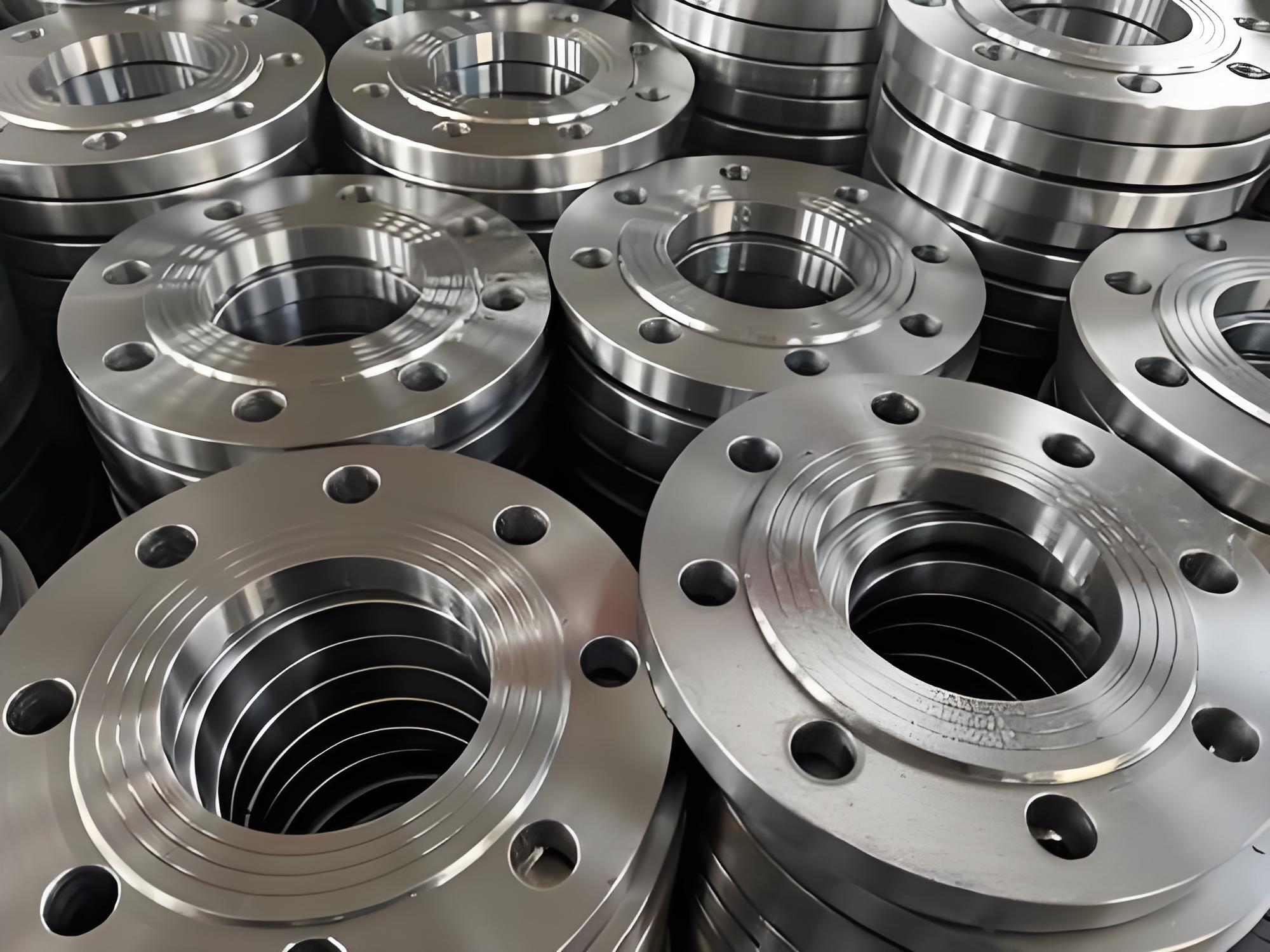
The carbon steel flange pipe fittings we produce cover general standards such as GB/T12459, HG/T20592, ASME B16.9, ASME B16.5, DIN, EN, JIS, etc. Materials include Q235B, 20#, A105, A234WPB, 16Mn. Pressure ratings cover PN10–PN40 and Class150–Class300, with nominal diameters from DN15–DN2000. The products are formed by stamping, forging, and CNC precision turning, with flat sealing surfaces and precise bolt hole positions, suitable for conventional on-site welding construction. Compared with stainless steel or alloy pipe fittings, the carbon steel solution has more controllable costs and more ample stock reserves, suitable for standardized pipeline network projects with clear budgets and tight schedules.
Overview
Carbon steel flanged pipe fittings are composed of carbon steel flanges and carbon steel pipe fittings, integrating the functions of pipeline turning, diversion, confluence, reducing and plugging, and detachable sealed connection. We produce according to standards such as GB/T12459, HG/T20592, ASME B16.9, ASME B16.5, DIN, EN, JIS, etc. Materials cover Q235B, 20#, A105, A234WPB, 16Mn, pressure covers PN10–PN40 and Class150–Class300, nominal diameter DN15–DN2000. The products are suitable for pipeline systems with normal temperature, medium and low pressure, no strong corrosion, and stable working conditions, and are used in large quantities with strong versatility in municipal, heating, fire protection, sewage, and general chemical engineering.
Key Features
Carbon steel material has high strength and good toughness. After stamping, forging, and CNC precision turning, the metallographic structure is stable, with no sand holes, air holes, or lamination cracks. The flange sealing surface is flat, and the bolt hole positions are precise, so on-site docking is tight, and the long-term operation leakage rate is low. Welding performance is good, and the requirements for construction equipment and technical threshold are low, which helps shorten the construction period and save labor. Compared with stainless steel or alloy pipe fittings, the carbon steel solution has more controllable costs, and conventional specifications have sufficient spot inventory, making it suitable for standardized projects with clear budgets and tight schedules.
Applications
The products are mainly used for industrial and civil pipe networks with normal temperature, medium and low pressure, no strong corrosion, and stable working conditions. Municipal scenarios include urban tap water transmission, rainwater and sewage diversion, old pipe network renovation, and fire protection main and branch pipes; heating scenarios include central heating pipe networks, low-temperature heating circulation in factory areas, and HVAC heat exchange systems; environmental protection scenarios include sewage treatment pipelines, exhaust gas ventilation, and conventional process pipelines for water treatment; general chemical scenarios include weak acid and weak alkali, atmospheric pressure neutral media, and auxiliary tank connections; mechanical and electrical industrial and mining scenarios include equipment circulation pipelines, factory water, gas, and oil supply, fire sprinkler systems, and ventilation ducts. Not suitable for extreme working conditions such as high temperature and high pressure, and strong corrosion.
Specifications
We routinely stock carbon steel grades such as Q235B, 20#, A105, A234WPB, 16Mn. Pressure ratings cover PN10–PN40 and Class150–Class300, nominal diameter DN15–DN2000. Surface treatment options include hot-dip galvanizing, cold galvanizing, sandblasting and rust removal, anti-corrosion black paint, epoxy anti-rust, and mirror precision turning. We support non-standard sizes, special wall thicknesses, special-shaped flange hole spacing, customized packaging, English shipping marks, and customer LOGO. For specific specifications, pressure ratings, and surface processes, please contact us to confirm based on project drawings.
Purchasing & Delivery
DN15–DN200 small and medium diameter national standard and American standard conventional spot styles have a low minimum order threshold, suitable for engineering sporadic replacement parts, local renovation, and foreign trade sample trial orders. Conventional spot orders are re-inspected, packed, and shipped within 24 hours after confirmation. Packaging uses a foreign trade-grade anti-rust, moisture-proof, scratch-proof, and collision-proof system: sealing surfaces and precision-machined end faces are covered with dust-proof protective film, bolt holes are fitted with plastic protective plugs, small and medium diameter single items are individually wrapped in pearl cotton and then packed into thickened hard cartons, medium and large diameters are wrapped on the outer layer with anti-rust oil paper, waterproof stretch film, and moisture-proof woven cloth, and full-container shipments are stacked on fumigation-free solid wood pallets and secured with steel straps. English shipping marks, specifications and models, batch numbers, and packing lists can be customized as needed.
Service & Support
Before leaving the factory, products undergo batch-by-batch material sampling inspection, dimensional calibration, end face precision inspection, and pressure testing. The pre-sales technical team can assist in recommending suitable models, pressure ratings, and surface processes according to the medium, pressure, temperature, and installation environment. After-sales provides technical guidance for pipeline installation and docking, welding specifications, bolt tightening, and daily maintenance, and tracks logistics throughout the process. The product warranty is 18 months, with 7×24 hour response. Welcome to contact us to confirm specific configurations and quotations.
FAQ
What working conditions are carbon steel flanged pipe fittings suitable for?
They are mainly suitable for municipal, heating, fire protection, sewage, and general chemical pipe networks with normal temperature, medium and low pressure, no strong corrosion, and stable working conditions. Not suitable for extreme working conditions such as high temperature and high pressure, and strong corrosion. Whether the specific working conditions match, welcome to contact us to confirm.
What are the commonly used carbon steel materials?
For general engineering, Q235B and 20# can be selected; for foreign trade American standard projects, A105 and A234WPB can be selected; when higher strength is required, 16Mn can be selected. The applicable scenarios and prices of different materials vary. Please contact us to confirm according to project requirements.
How can the rust prevention capability of carbon steel flange pipe fittings be improved?
Surface treatments such as hot-dip galvanizing, cold galvanizing, sandblasting and rust removal, anti-corrosion black paint, or epoxy anti-rust can be selected, for outdoor, buried, or humid environments. For specific process selection, please contact us to confirm based on the installation environment.
How can national standard and American standard products be distinguished?
National standards use PN pressure ratings and metric dimensions, while American standards use Class pressure ratings and imperial dimensions. We can match production according to project standards. You are welcome to provide drawings or technical agreements, and we will assist in confirming the corresponding specifications.
Do you support batch customization and export packaging for foreign trade?
We support non-standard dimensions, special wall thickness, irregular flange hole spacing, customized packaging, English shipping marks, and customer LOGO. For foreign trade export, rust-proof, moisture-proof, scratch-proof, and impact-proof packaging is used, and fully containerized shipments can be equipped with fumigation-free solid wood pallets. For specific customization solutions and minimum order quantities, please contact us to confirm.