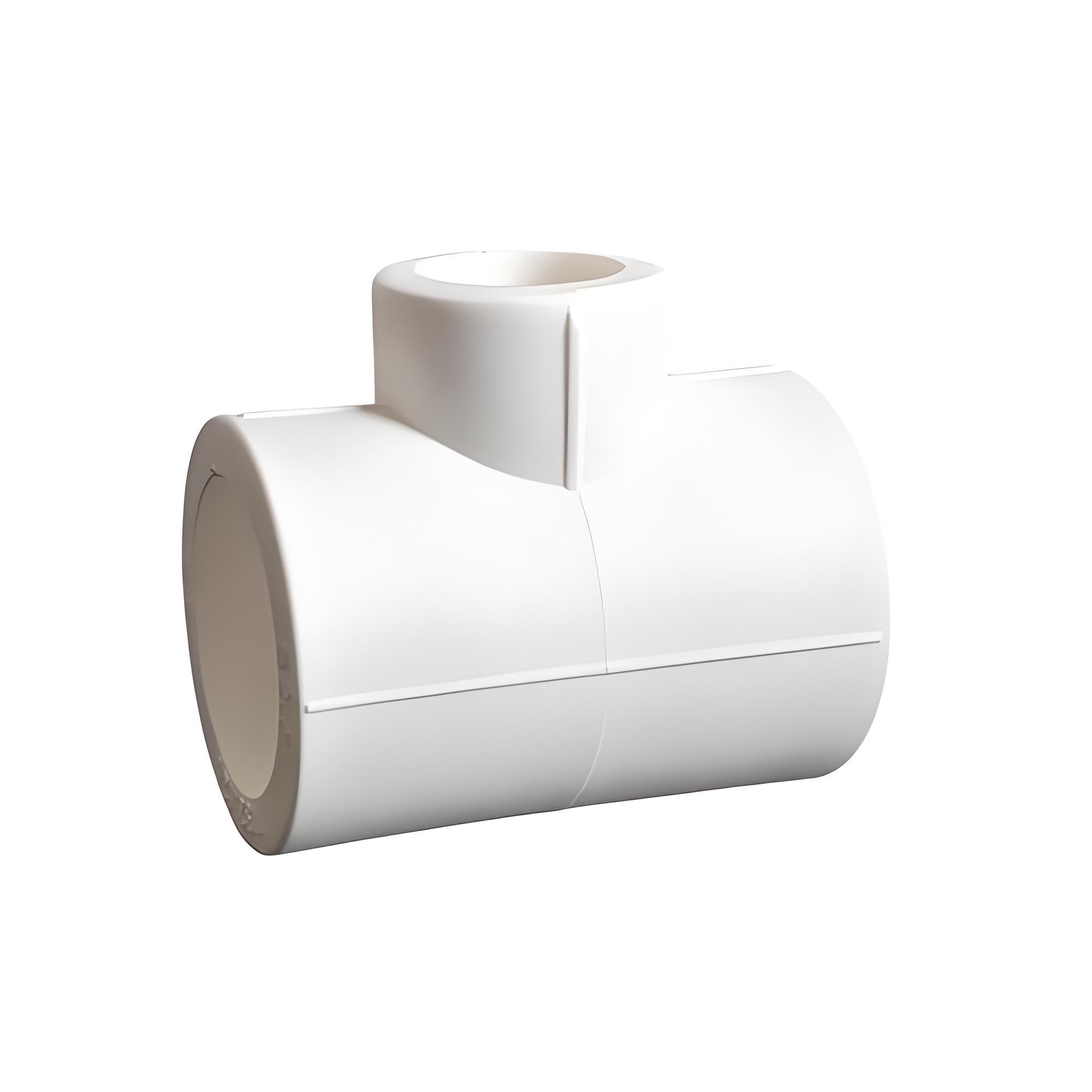
Non-metallic tee
The non-metallic tees we produce replace metal pipe fittings such as carbon steel and stainless steel with inert polymer materials, solving from the source the problems of metal tees being prone to corrosion, scaling, and rusting, as well as secondary contamination of the medium. The products are strictly manufactured according to standards such as GB/T13663, GB/T5836, ASTM D1785, and ISO4427. The nominal diameters cover DN15–DN1200, suitable for PN6, PN10, and PN16 medium- and low-pressure normal-temperature working conditions. The structures include equal-diameter, reducing, 45° diagonal tees, and sweep tees. The connection methods support adhesive bonding, hot-melt socket welding, flange connection, and threaded connection. The inner wall is smooth, and it does not scale or reduce flow during long-term operation. The material system includes six major categories: PVC-U, PPH, HDPE, PVDF, FRP fiberglass, and ceramic composite, and models can be selected for differentiated working conditions such as ordinary sewage, weak acids and weak bases, strongly corrosive chemical liquids, high-purity water, and high-flow abrasive media.
Learn More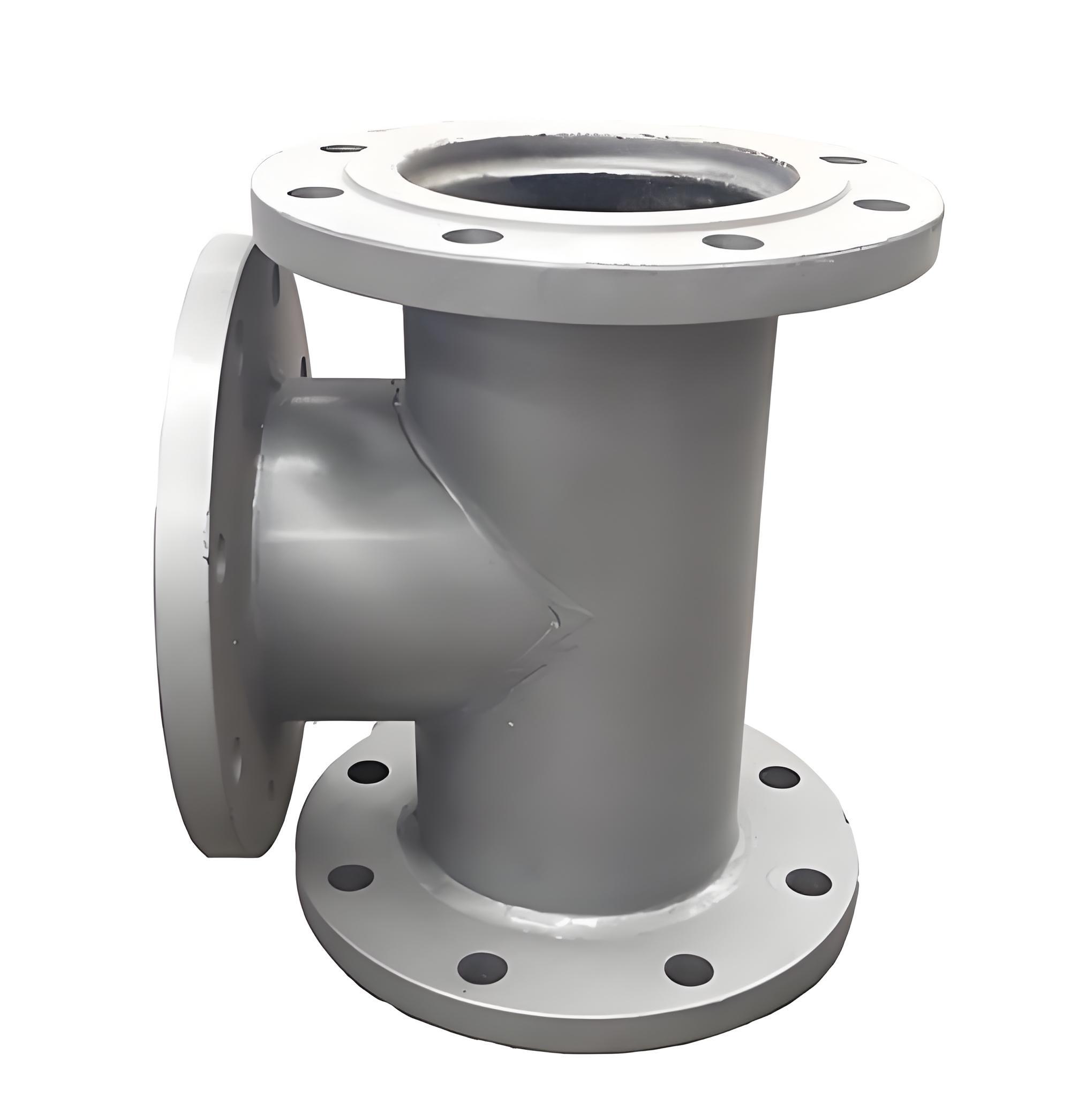
Flange Tee
The biggest difference between a flanged tee and an ordinary welded tee is that all three ends come with their own flange plates, and on-site installation is mainly done by tightening bolts, without the need for large-area welding. This structure allows the pipeline to be disassembled and replaced during later maintenance, capacity expansion, or modification, reducing the operation and maintenance pressure caused by weld corrosion and leakage. The product is forged and precision-machined according to standards such as GB/T12459, HG/T20592, ASME B16.9, ASME B16.5, EN, DIN, JIS, etc. The cavity has a smooth flow path, which helps reduce medium turbulence and fouling. We provide two types of structures: equal-diameter branching and reducing diameter change. Materials cover carbon steel, stainless steel, alloy steel, and anti-corrosion non-metal. Nominal diameters range from DN15 to DN2000, and pressure ratings cover national standard PN10 to PN40 and American standard Class150 to Class600. For specific diameters, pressures, materials, and flange standards, please contact us for confirmation.
Learn More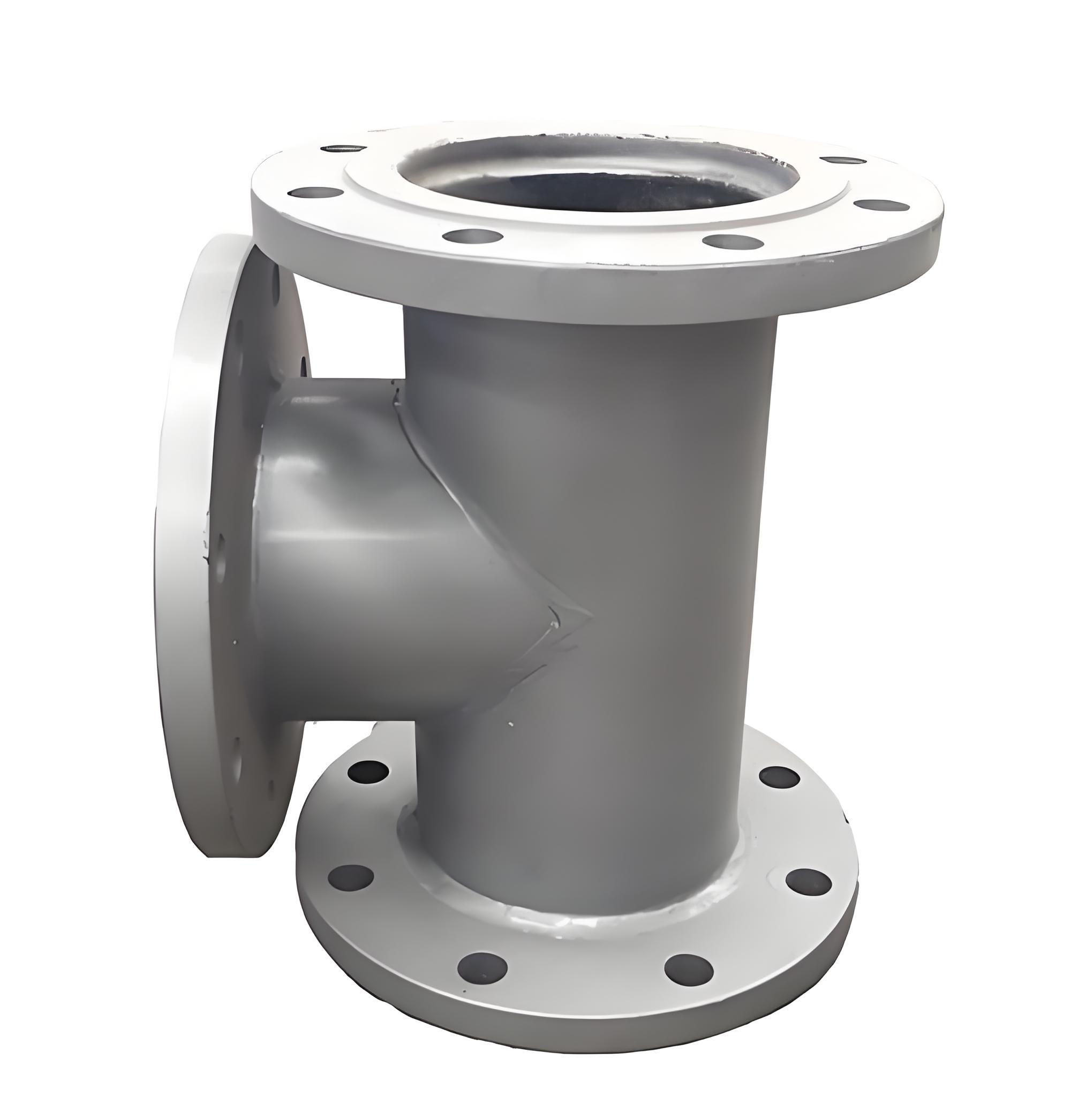
Flange Equal Tee
Flanged equal-diameter tees are used for medium diversion in main pipelines, merging of branch pipelines, and multi-line connection of equipment. The three ports have the same diameter, the flow channel is smooth without diameter reduction, and when the medium passes through, the pressure loss is small and the flow distribution is uniform. The product can be produced by hot-pressing, forging, casting, and other processes, and complies with standards such as GB/T12459, GB/T9113, HG/T21635, ASME B16.9, and ANSI B16.5. Materials cover carbon steel, stainless steel, alloy steel, ductile iron, and plastic, and pressure coverage includes PN6 to PN100 and Class150 to Class1500. The flanged connection eliminates on-site welding, making disassembly, assembly, and maintenance convenient, and it is suitable for media such as clean water, steam, gas, oil products, sewage, and chemical fluids.
Learn More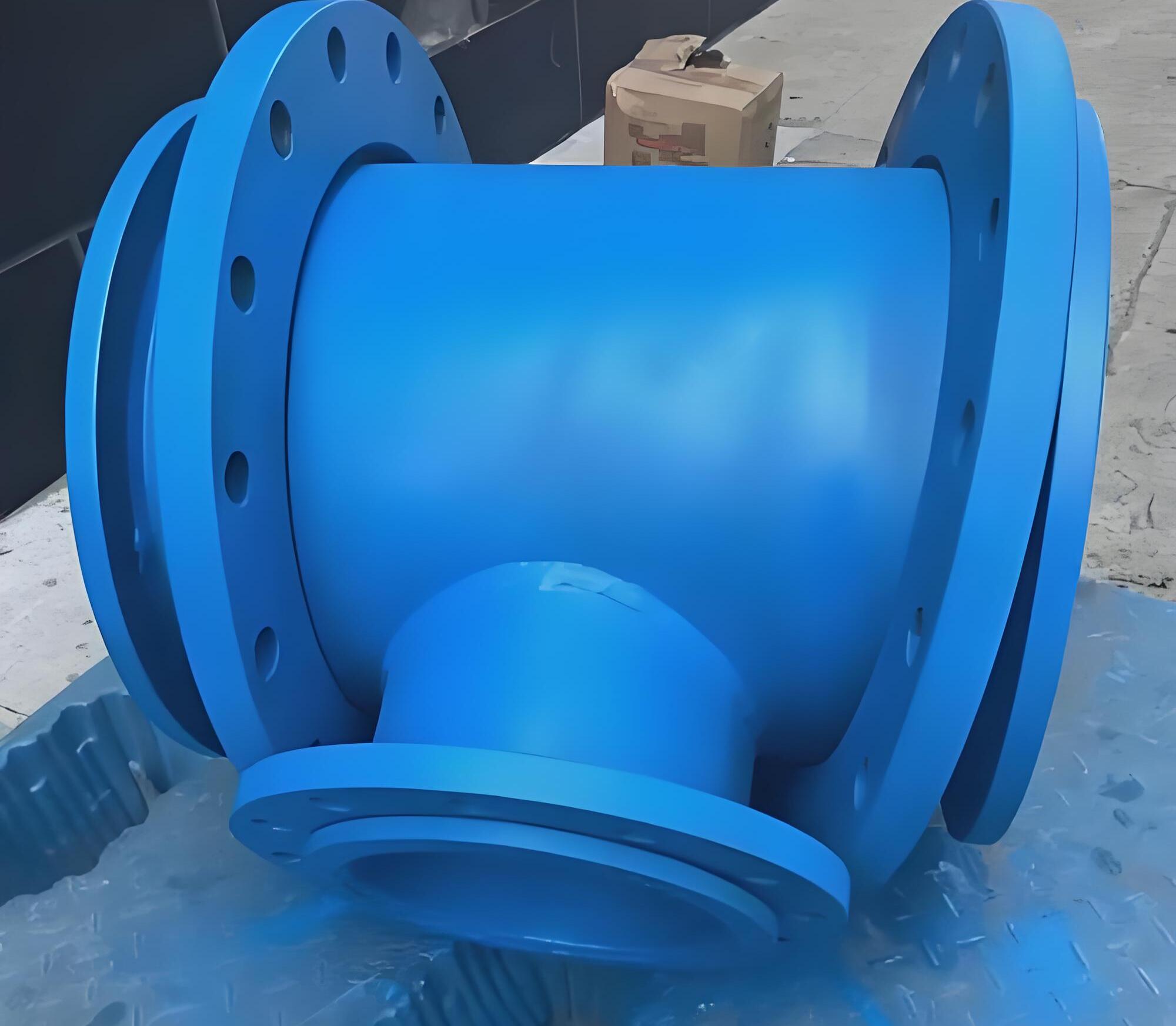
Flanged Reducing Tee
A flanged reducing tee is also called a flanged reducing tee; all three ports are equipped with flanges and connect to the pipeline through bolts and sealing gaskets, so no welding is required on site. It combines the two functions of branching and reducing into a single pipe fitting, making it suitable for pipeline systems where the main pipe diameter is large and the branch pipe diameter is small. The internal flow passage transitions smoothly, which helps reduce medium turbulence and pressure loss. The product can be manufactured by hot pressing, forging, or integral casting, and complies with standards such as GB/T12459, GB/T9113, HG/T21635, ASME B16.9, and ANSI B16.5. Materials cover carbon steel, stainless steel, alloy steel, and ductile iron, and pressure coverage includes PN6 to PN100 and Class150 to Class1500. For specific specifications, materials, and flange sealing face forms, please contact us for confirmation.
Learn More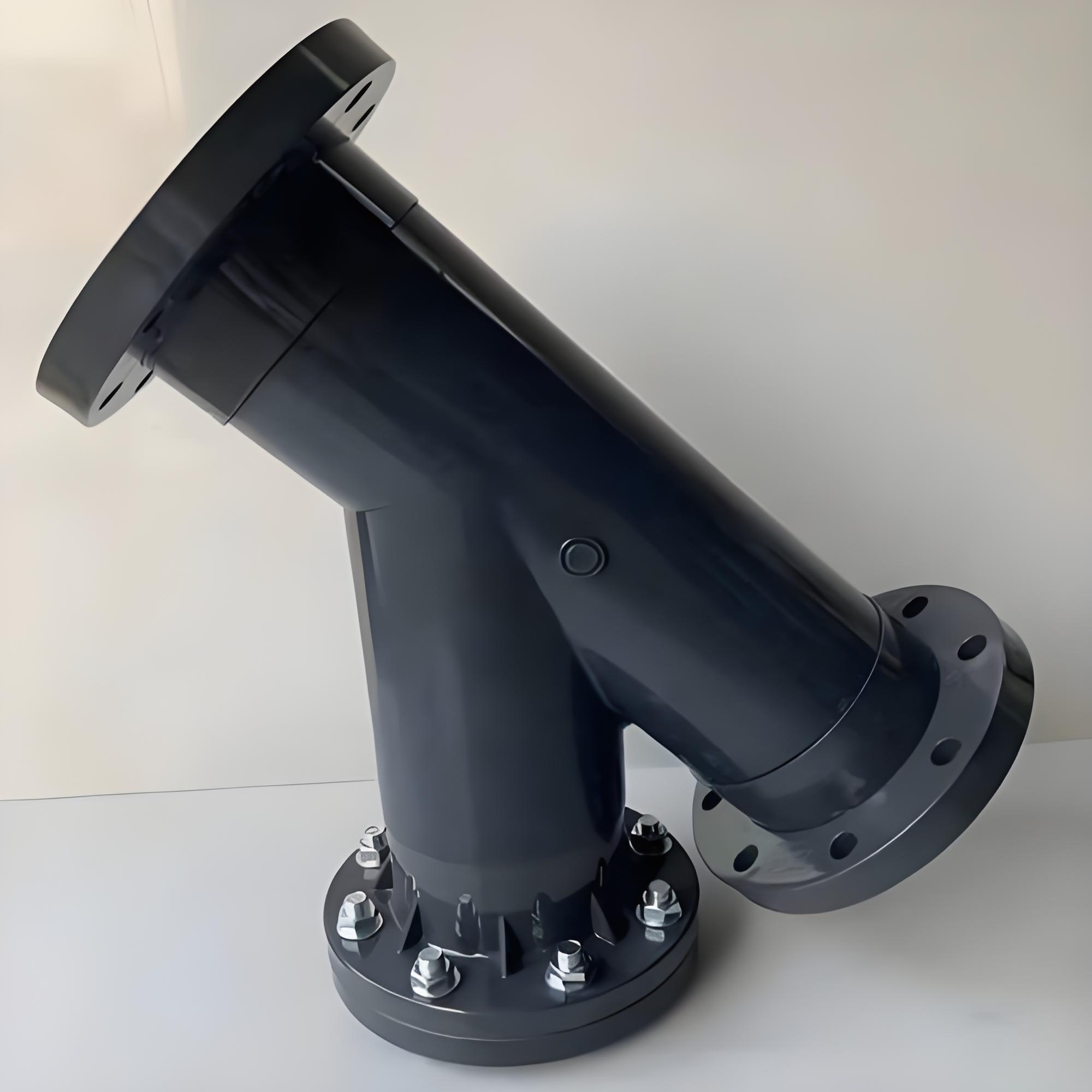
Flanged Y-type tee
The biggest difference between a flanged Y-type tee and an ordinary right-angle tee lies in the flow passage angle. The medium transitions more smoothly in the Y-shaped inclined flow passage, resulting in less turbulence and smaller local pressure drop, and the pipe wall erosion and pipeline vibration noise are also reduced accordingly. All three ports adopt an integrated flanged structure, and on site they can be connected with bolts and sealing gaskets without welding, making disassembly, assembly, and maintenance convenient, and there is no hidden risk of weld seam leakage. The flanged Y-type tees we produce comply with standards such as GB/T12459, GB/T9113, HG/T21635, ASME B16.9, ANSI B16.5, etc., with pressure coverage from PN6 to PN100 and Class150 to Class1500, and materials covering carbon steel, stainless steel, alloy steel, and ductile iron. If you need non-standard angles, reducing ratios, or special sealing surfaces, you are welcome to contact us to confirm a customized solution.
Learn More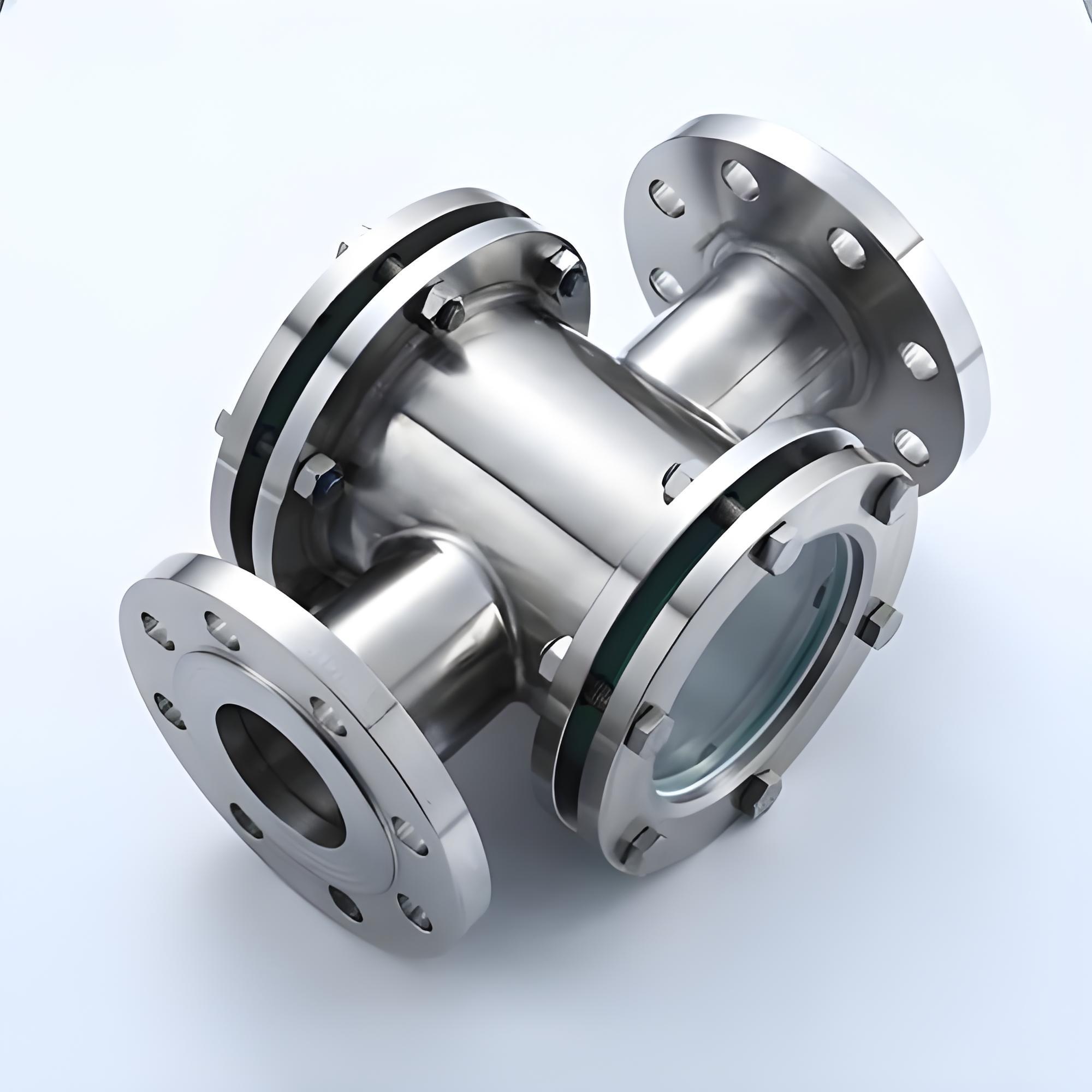
Flanged Cross
A flanged cross, also known as a cross four-way, belongs to the cross-shaped four-way pipe fittings of piping systems. All four ports come with flanges, and it connects to pipes, valves, and equipment via bolts together with sealing gaskets, without the need for on-site welding. The medium can achieve simultaneous four-way diversion, multi-way merging, and bidirectional cross-distribution of pipelines, and the four interfaces can be designed as equal-diameter or reducing structures. The internal flow passage of the product transitions smoothly, which helps reduce fluid turbulence, pressure drop, and local erosion. It complies with standards such as GB/T12459, GB/T9113, HG/T21635, ASME B16.9, and ANSI B16.5. Materials cover 20# carbon steel, Q235B, Q345B, 304/316L stainless steel, alloy steel, and ductile iron. Pressure coverage ranges from PN6 to PN100 and Class150 to Class1500, with diameters from DN15 to DN1200. It can transport media such as clean water, steam, gas, oil products, sewage, and chemical fluids, and is suitable for centralized distribution scenarios in multi-branch pipe networks.
Learn More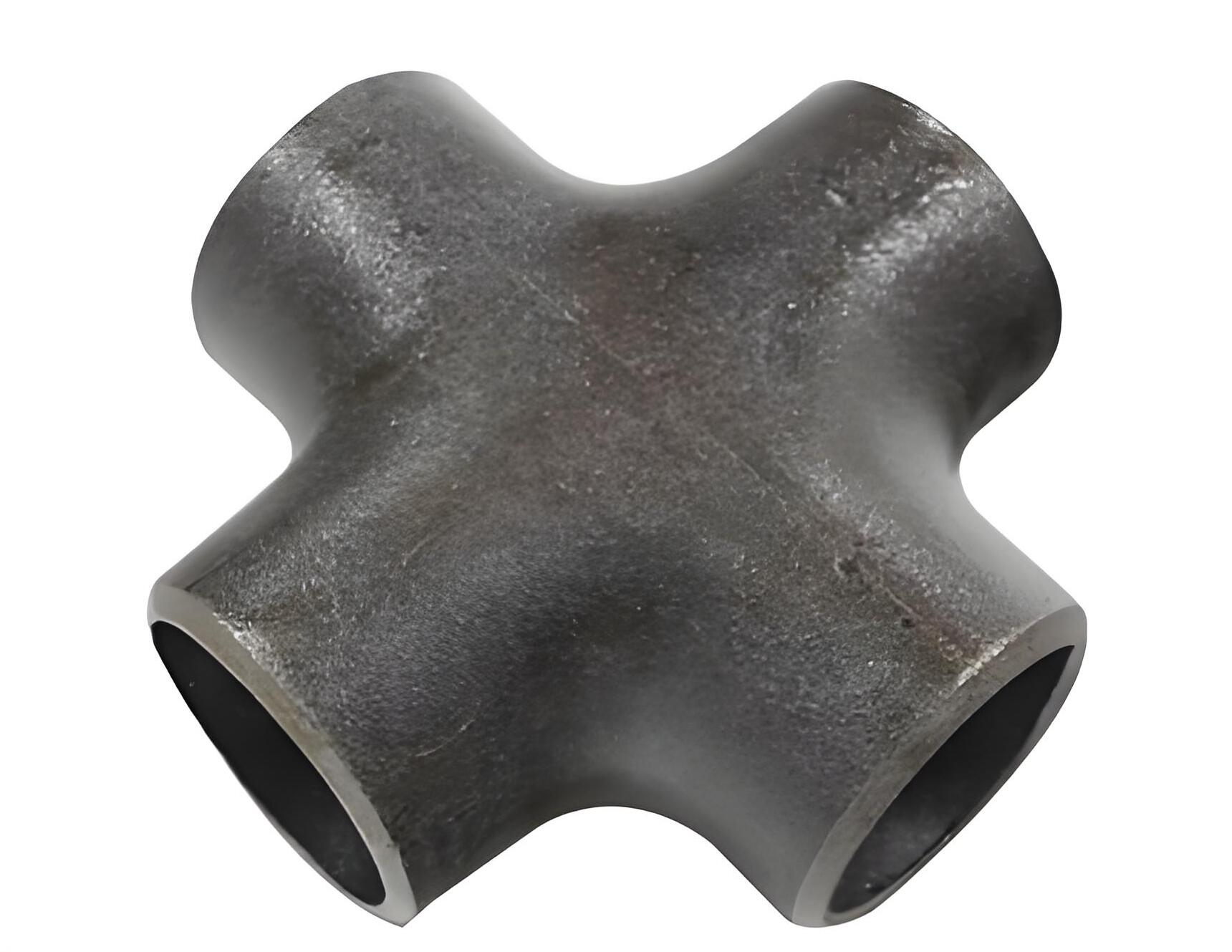
Hot-pressed four-way fitting
Hot-pushed (hot-pressed) cross tees are also called hot-pressed formed cross tees or hot-pushed cross four-way fittings, and belong to steel butt-welding pipe fittings. During production, a seamless pipe blank is heated and then placed into a mold, and through radial extrusion the metal material is made to flow toward the branch pipe position, integrally forming a cross four-way structure, which is different from hydraulically bulged cross four-way fittings and welded cross four-way fittings. The products implement standards such as GB/T12459, GB/T13401, ASME B16.9, and SH/T3408, the connection method is butt welding, and the materials can be selected from 20# carbon steel, A105, 304/316L stainless steel, chrome-molybdenum alloy steel, etc. The specifications cover DN15-DN2000, with wall thicknesses of Sch10 to Sch160 and XXS thickened grades, and they are divided into two categories: equal-diameter cross four-way fittings and reducing cross four-way fittings. At delivery, MTR material certificates, hydrostatic tests, and UT nondestructive flaw detection reports can be provided, and production is supported according to multiple standards including national standards, American standards, European standards, and Japanese standards.
Learn More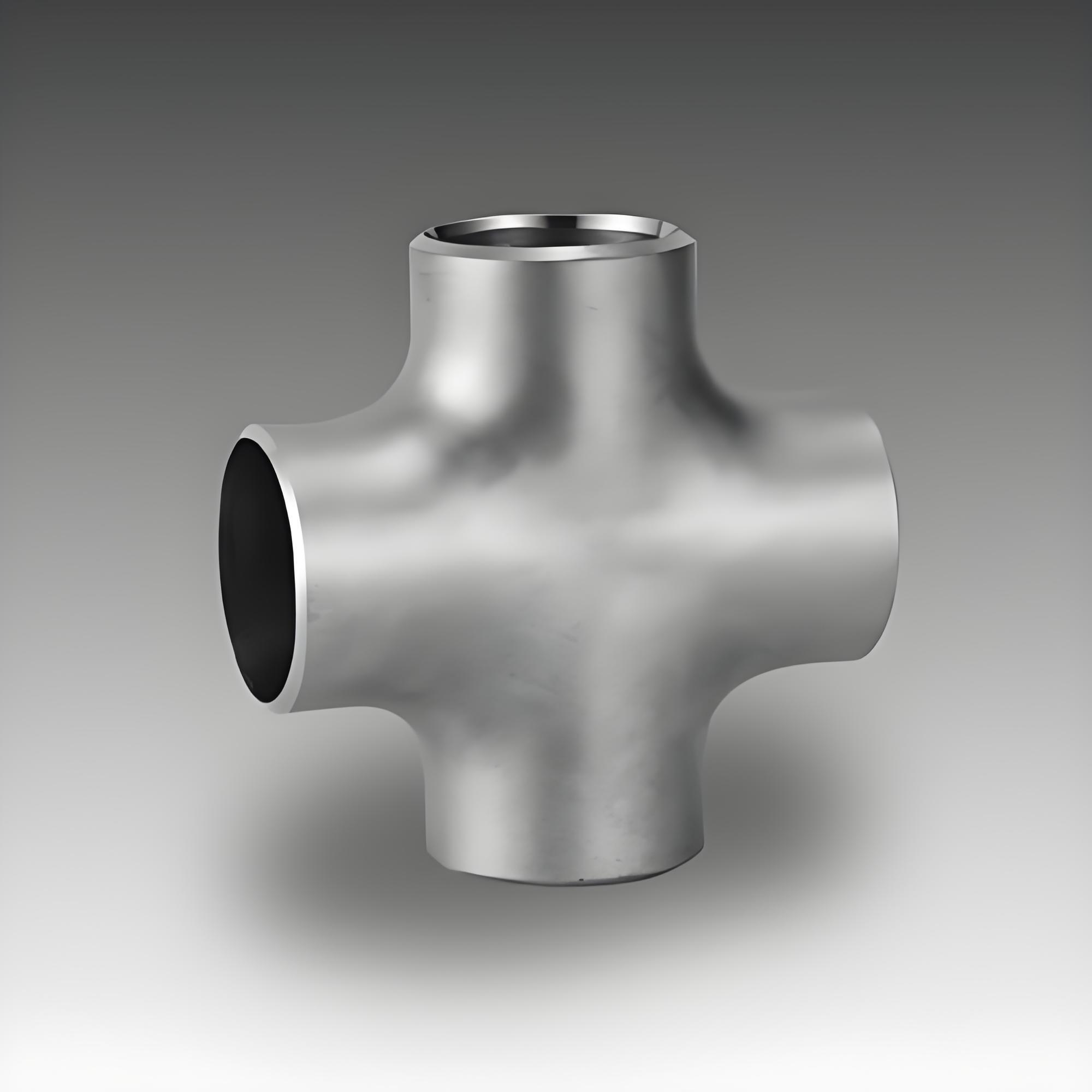
Hydraulic bulging cross
The hydraulic bulged cross is processed using a room-temperature hydraulic axial compensation bulging process, requiring no medium-frequency heating throughout the entire process, with no oxide scale, grain deformation, or welded splicing; the pipe fitting has continuous overall material, and its inner and outer walls are smooth and flat. The product complies with standards such as GB/T12459, ASME B16.9, GB/T13401, and SH/T3408, with a diameter range covering DN15–DN600 (NPS1/2”–NPS24), commonly used wall thicknesses of STD, Sch40, and Sch80, and materials including 20# carbon steel, 304 stainless steel, 316L stainless steel, and duplex steel. It is mainly used for four-way diversion, merging, and pressure-stabilized transportation in clean pipelines, sanitary-grade pipelines, and precision fluid systems, and can transport pure water, purified water, medicinal liquids, food fluids, compressed air, room-temperature oils, and weakly acidic and weakly alkaline clean media. If the project involves ultra-high temperature, ultra-high wall thickness, or ultra-high pressure heavy-duty working conditions, it is recommended to contact us before selection to confirm whether it is applicable.
Learn More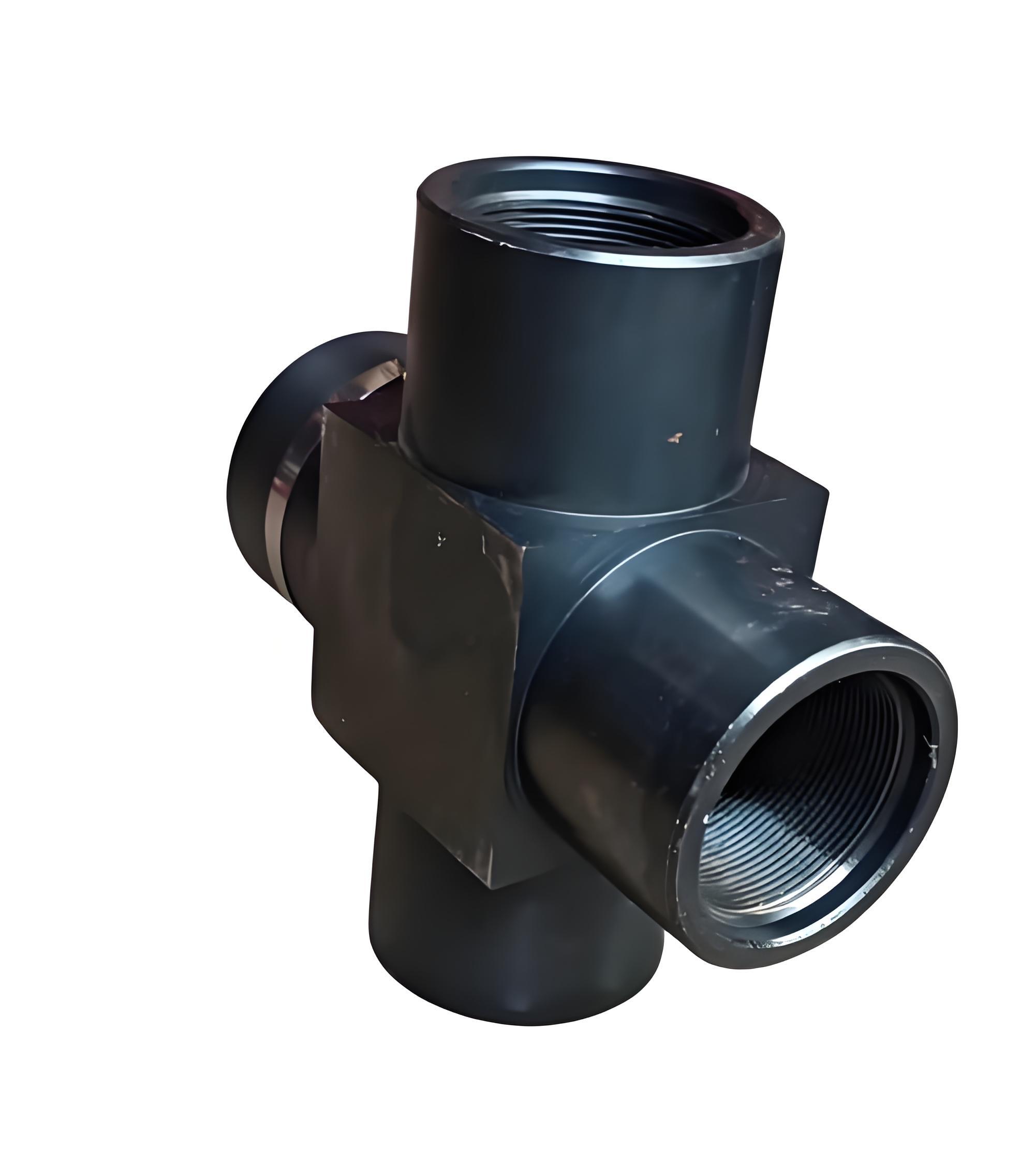
Integrally forged cross
Integrally forged cross fittings start from solid round steel bar stock, are formed through integral die forging and multiple forging blows, with continuous metal fibers and no weld seams or weak points from hot working. The products comply with high-pressure forging standards such as GB/T 14383, ASME B16.11, and SH/T 3410. Standard sizes cover DN6–DN100 (1/8″–4″), pressure ratings include 3000LB, 6000LB, and 9000LB, and connection types are divided into socket welding and threaded connections. Commonly used materials include 20# carbon steel, A105, 304, 316L, 15CrMo, 12Cr1MoV, duplex steel, Monel alloy, and others. It is suitable for pipeline cross nodes under high-temperature, ultra-high-pressure, flammable and explosive, strongly corrosive, high-impact, and high-fatigue working conditions, and is not suitable for ordinary low-pressure water supply and drainage or room-temperature civil pipeline networks. Before purchasing, it is recommended to confirm the diameter, pressure rating, material, connection standard, and thread specifications. We can assist with selection and quotation according to project requirements.
Learn More