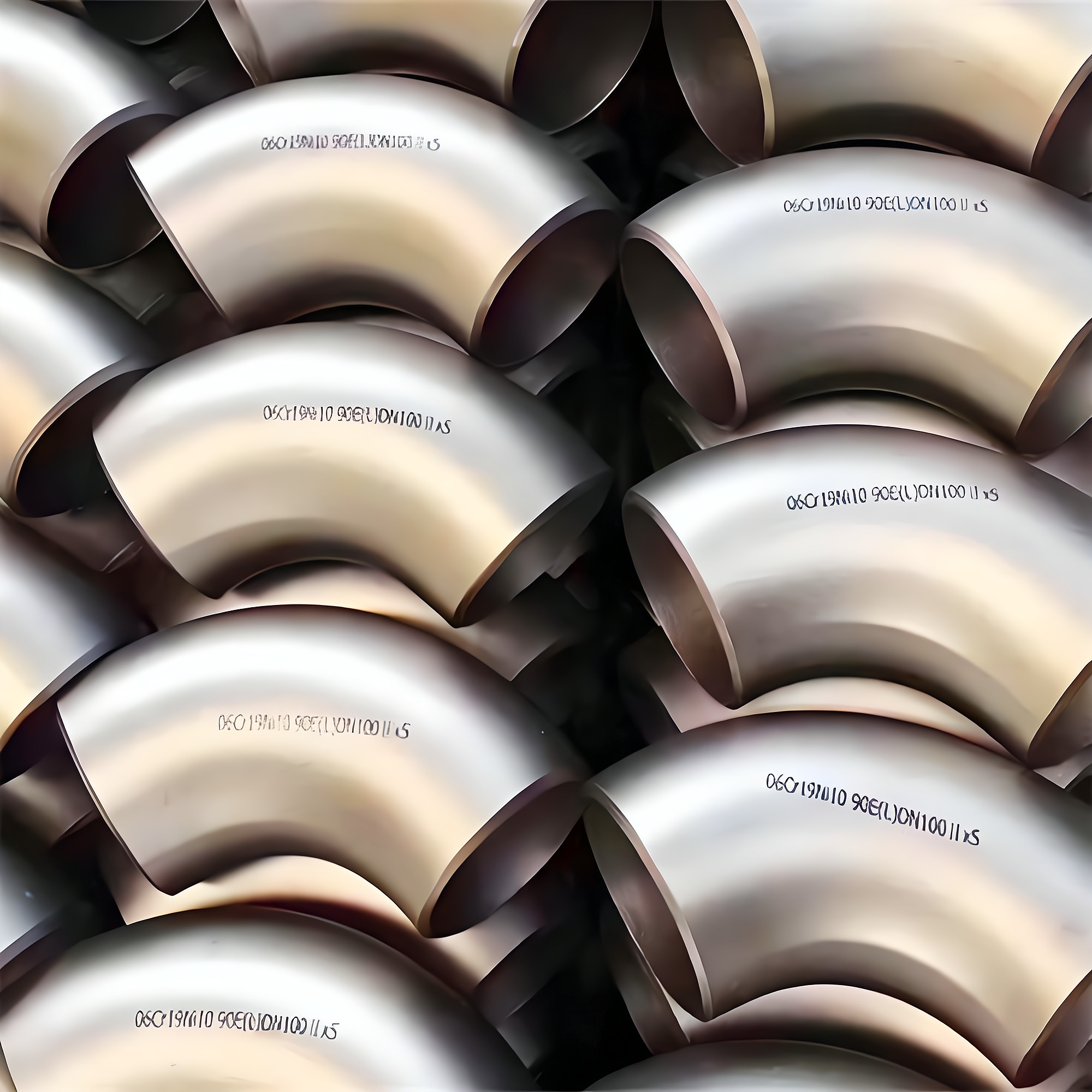
European standard tee
The European-standard tees we produce are manufactured according to the EN 10253 series of standards, and are divided into two categories: EN 10253-2 carbon steel and EN 10253-4 stainless steel. The ends are machined with European-standard butt-weld bevels, allowing direct butt welding with EN seamless steel pipes. Small and medium diameters are formed by hot-pressed seamless one-piece molding, while large diameters are made by rolling and welding steel plates. Before leaving the factory, they undergo spectral material inspection, hydrostatic testing, and non-destructive testing. Nominal diameters range from DN15 to DN1000, pressure ratings range from PN10 to PN160, and materials cover P235GH and P265GH carbon steel, 16Mn low-alloy steel, 304, 316L, 321, and duplex stainless steel. The products are aimed at industrial and municipal pipeline projects in European Union countries as well as the Middle East, Southeast Asia, Africa, and other regions that use European-standard designs, and are used for pipeline flow splitting, converging, and branch connections. We can provide English-version inspection reports and material certificates to facilitate project completion acceptance, third-party supervision review, and import and export customs clearance. For specific specifications, materials, and quantity requirements, please contact us to confirm.
Learn More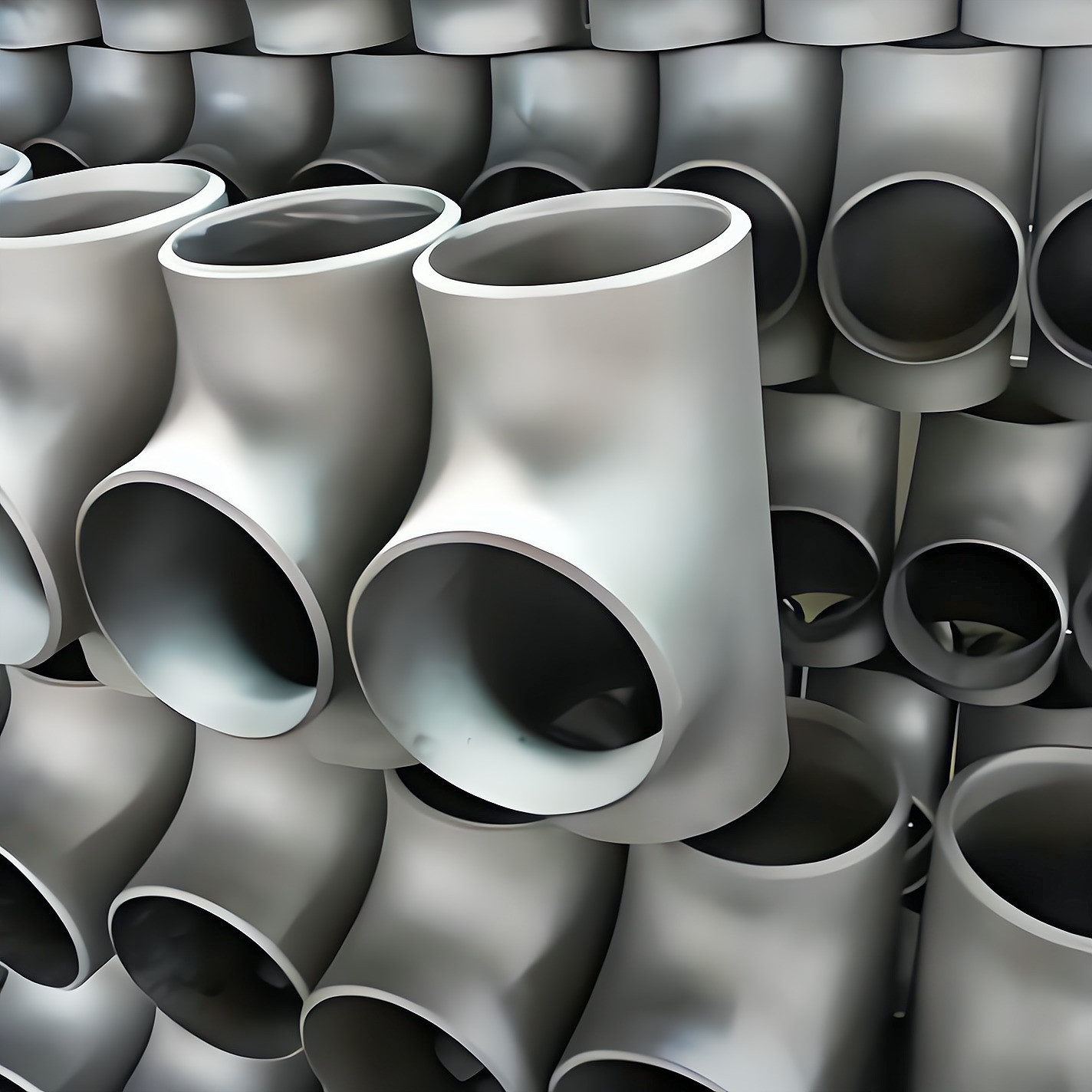
DIN standard tee
German standard tees belong to the butt-welded pressure fittings under the German standard system, implemented according to the DIN 2615 dimensional standard and DIN EN 10253-2 (carbon steel), DIN EN 10253-4 (stainless steel), and are divided into two industrial grades: Type A reducing type and Type B full-pressure type. Compared with ordinary European standard fittings, German standard tees have stricter requirements in dimensional tolerances, wall thickness uniformity, and bevel matching precision, making them suitable for piping systems with clear requirements for welding assembly precision and pressure-bearing safety factors. Specifications cover DN15–DN1200, wall thicknesses are compatible with SCH10, SCH40, SCH80, SCH160, and pressure ratings cover PN10–PN160. Mainstream materials include German standard St37, P265GH carbon steel, 1.4301/1.4404/1.4571 stainless steel, and 13CrMo45 heat-resistant alloy steel. The forming process is seamless hot-pressing integrated forming or large-diameter precision roll welding, and the end faces are beveled according to the German standard, allowing butt connection with DIN standard seamless steel pipes. Factory inspection includes UT/RT non-destructive testing, hydrostatic pressure testing, and spectral re-inspection, and EN10204 3.1B quality inspection certificates can be issued.
Learn More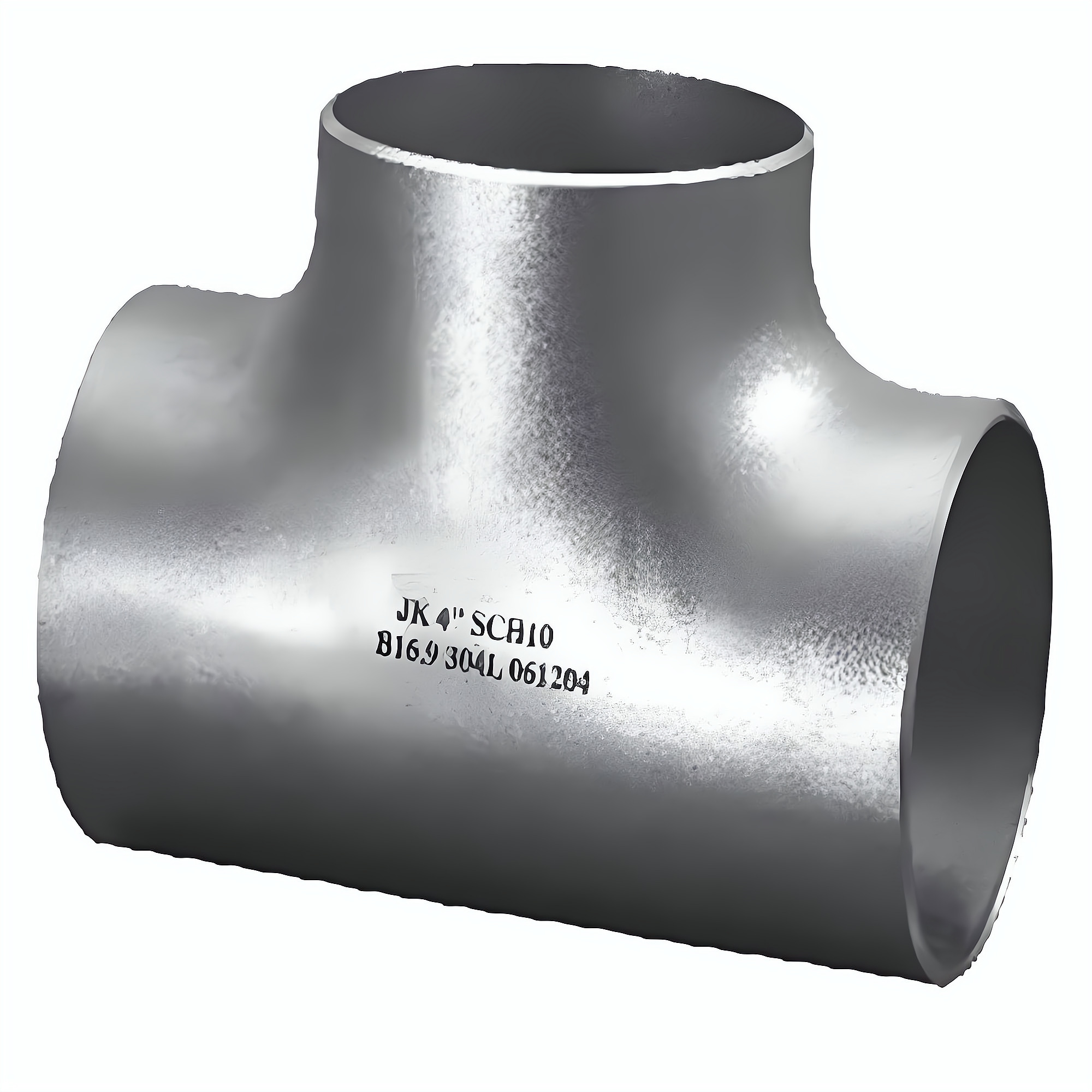
British Standard Tee
The British standard tee is used for the diversion, convergence, and branch connection of media in British pipeline systems, and is compatible with the traditional British imperial inch size system and the BSP British pipe thread system. The products are divided into two official grades, Type A pressure-reducing type and Type B full-pressure type, corresponding respectively to low-pressure civil and high-pressure industrial working conditions. Specifications range from DN15 to DN1200 (1/2 inch to 48 inch), wall thicknesses cover BS SCH standard wall thickness, STD, XS, and XXS thickened high-pressure specifications, and pressure ratings cover PN10 to PN160. Commonly used materials include Q235B, S275JR, S355JR carbon steel, 304, 316L stainless steel, and low-temperature alloy steel. The production process adopts seamless hot-pressed one-piece forming and large-diameter rolled and welded processes, and the dimensions follow the imperial tolerance system, suitable for butt welding with British seamless steel pipes and galvanized steel pipes. Before leaving the factory, they undergo hydrostatic testing, non-destructive testing, and spectral testing, and a full set of English qualification documents can be issued for engineering acceptance, customs clearance, and foreign trade bidding in Commonwealth countries.
Learn More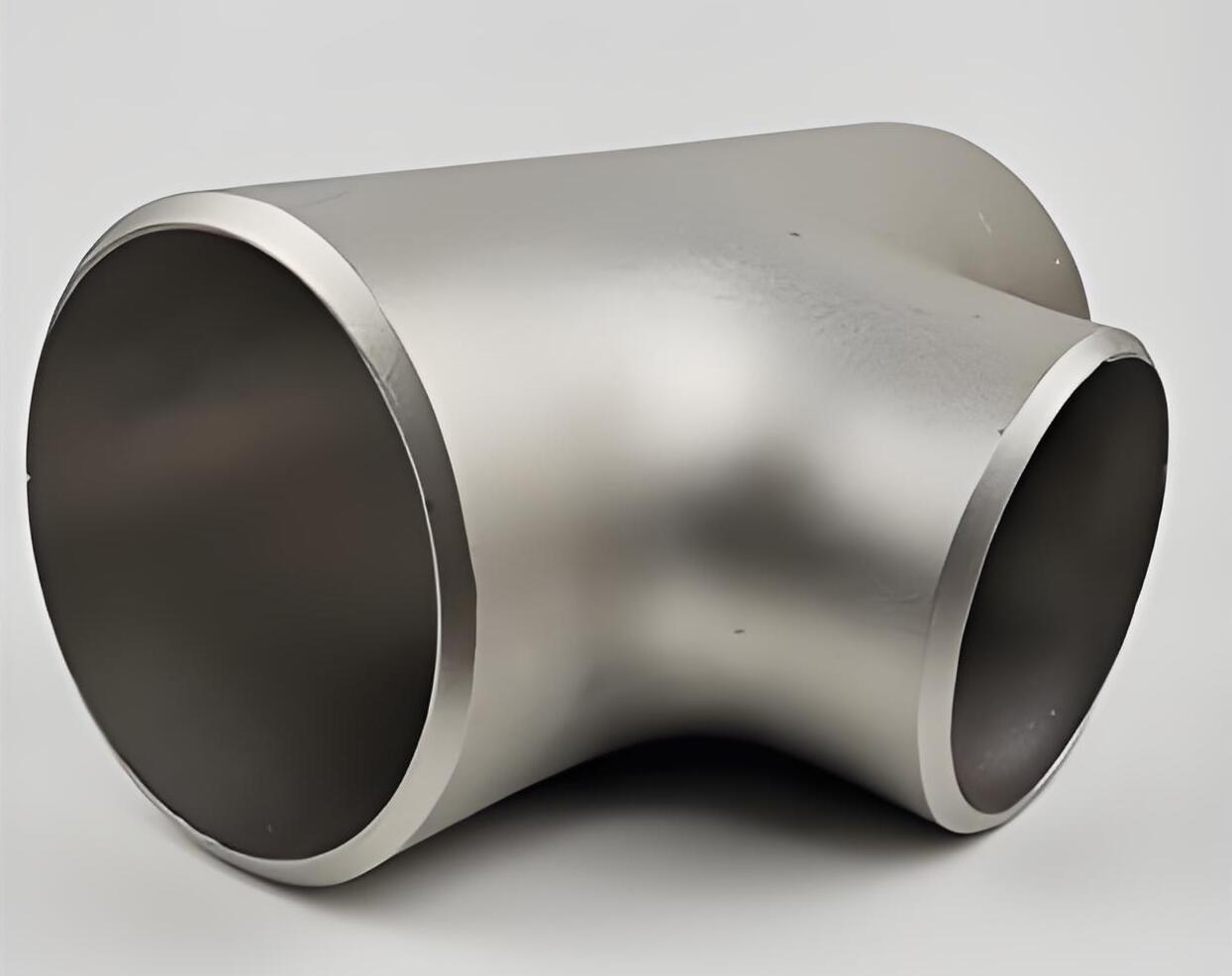
Japanese Standard Tee
Japanese standard tees are produced in accordance with the JIS B2313 carbon steel pipe fittings and JIS B2309 stainless steel butt-welding pipe fittings standards, with specifications covering 15A–1000A, and wall thicknesses implemented as SCH10, SCH20, SCH40, SCH80, STD, XS, and XXS. The pressure ratings are the Japanese K grades: 5K, 10K, 16K, 20K, 30K, and 40K, which are not interchangeable with the PN and Class systems. Materials include carbon steel SS400, STPG370, and STPG410, stainless steel SUS304, SUS316L, and SUS321, and alloy steel STPA24, among others. The manufacturing processes are divided into seamless hot-press forming and large-diameter rolled-and-welded forming, and the ends are JIS standard welding bevels. Before leaving the factory, they undergo hydrostatic testing, UT nondestructive testing, and spectral re-inspection, and Japanese-language or English-language material certificates can be issued. When selecting models, it is essential to distinguish between the A series (large outer diameter) and the B series (small outer diameter), and they cannot be directly interchanged or connected with American standard or Chinese national standard pipe fittings.
Learn More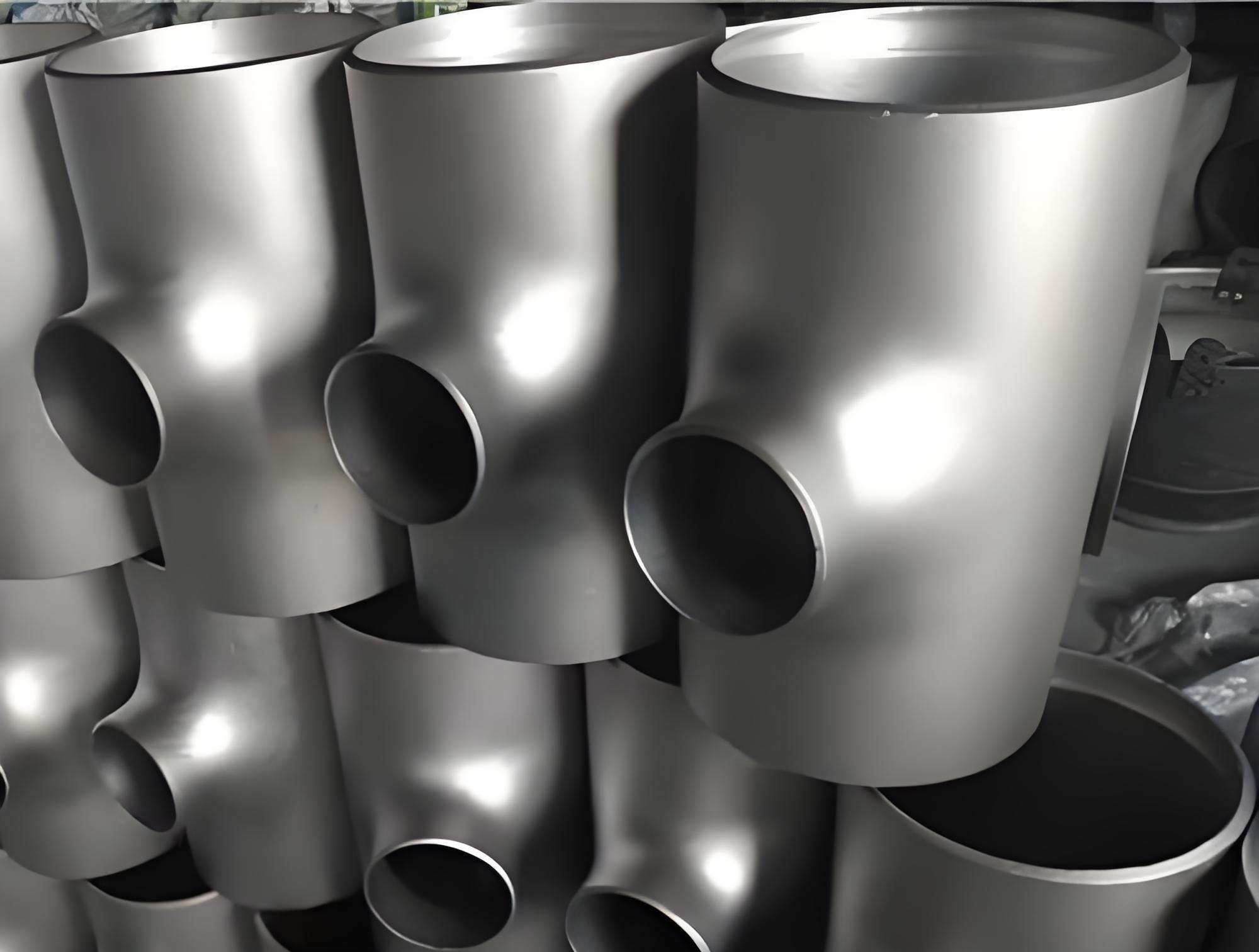
Non-standard tee
Non-standard tees are also called irregular-shaped tees or custom tees, and are mainly used where standard pipe fittings do not match in angle, reducing size, length, or connection interface. We produce according to customer drawings, old part samples, or on-site measurement data, and can make special reducing ratios, special oblique angles, eccentric irregular shapes, multi-port configurations, extended length sections, integrated flanges, plastic-lined and corrosion-resistant linings, as well as large-diameter rolled structures. Material coverage includes carbon steel, stainless steel, alloy steel, duplex steel, titanium material, fluorine lining, galvanizing, etc., and forming processes include hot-pressed seamless, steel plate rolled and welded, forged, precision cast, and machined. Before purchasing, it is recommended to provide drawings or samples, the medium, diameter, angle, wall thickness, and quantity, and we will confirm the structural solution and quotation accordingly.
Learn More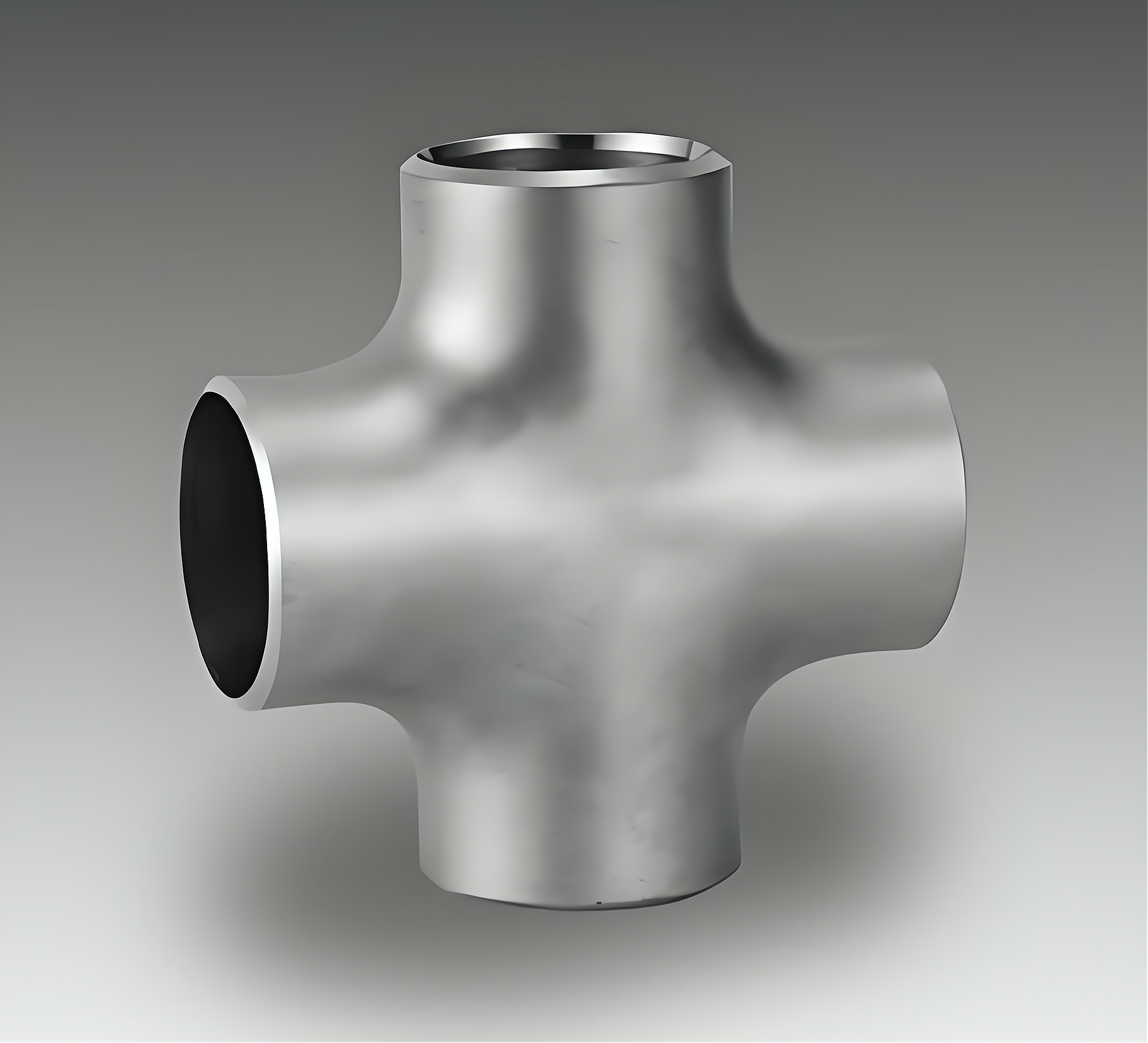
GB standard four-way
National standard cross fittings belong to the butt-welded pipe fittings in national standard pressure piping systems. The fitting body has a cross-shaped structure, used for four pipelines to converge at the same node, completing four-way diversion or confluence distribution of the medium. According to structure, they are divided into equal-diameter crosses and reducing crosses: equal-diameter crosses are used for cross connection of pipelines with the same diameter, and reducing crosses are used for four-way connection of pipelines with different diameters. The nominal diameter covers DN15–DN2000. Small diameters mostly adopt hot-pressed seamless integrated forming, while large diameters adopt steel plate rolled and welded processes. The groove, outer diameter, wall thickness reduction, and dimensional tolerances are implemented according to national standards. Commonly used materials include 20# carbon steel, Q235B, Q345B low-alloy steel, 304, 316L stainless steel, and 15CrMo alloy steel. Pressure ratings cover PN10–PN160. Before leaving the factory, hydrostatic tests, UT non-destructive testing, and spectral re-inspection are carried out, and material certificates and inspection reports can be issued. They are suitable for pipeline engineering such as water supply and drainage, heating, gas, steam, and chemical fluid transportation.
Learn More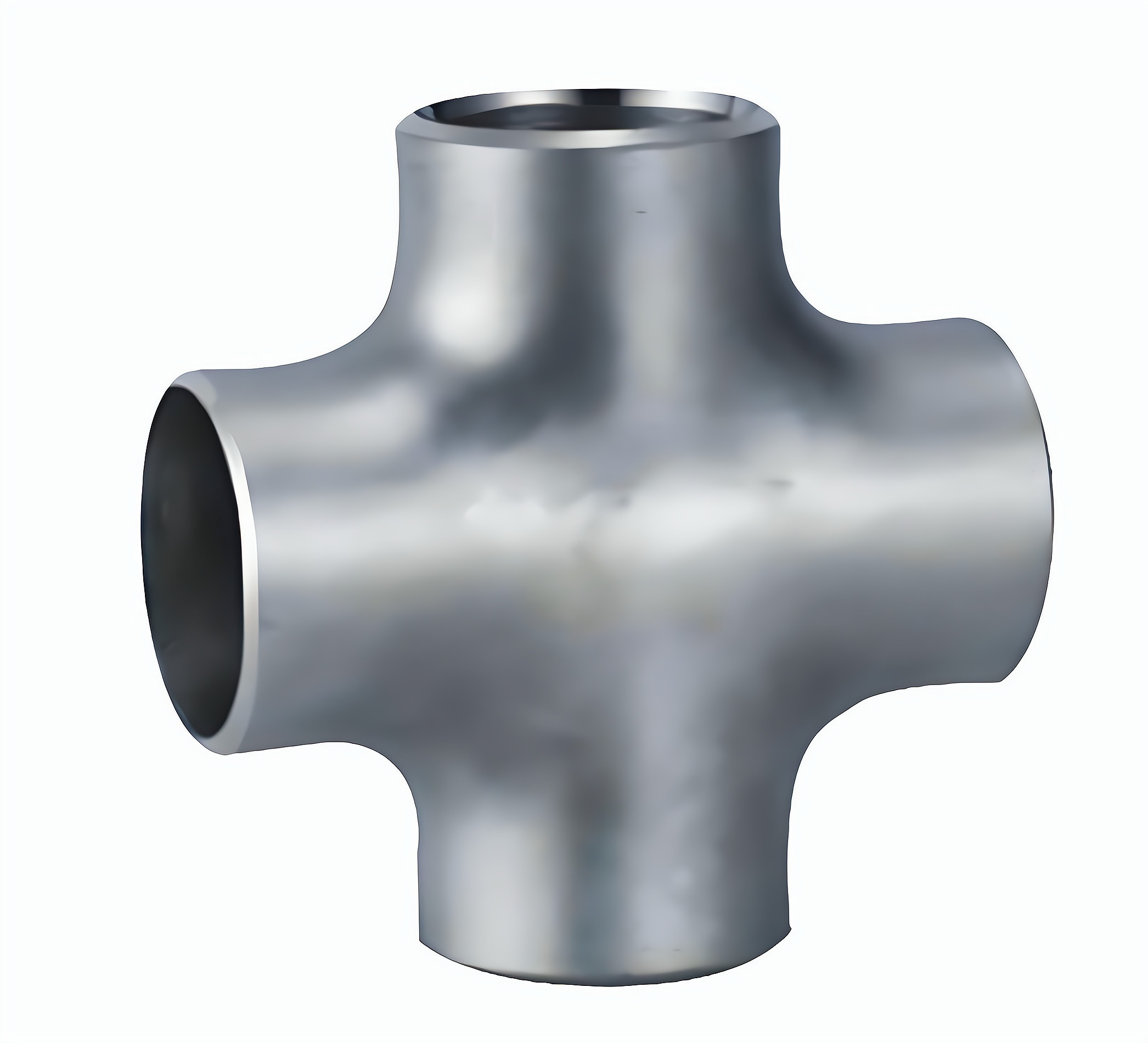
American Standard four-way
American standard cross fittings are manufactured in accordance with the ASME B16.9 forged butt-welding pipe fittings standard; for stainless steel material, MSS SP-43 is also referenced, and small-diameter high-pressure forged cross fittings follow ASME B16.11. The fitting has a four-port cross structure and performs the functions of four-way medium diversion, convergence, and cross-node connection in a pressure piping system. Nominal specifications cover NPS 1/2″ to NPS 48″ (DN15 to DN1200); small diameters use seamless hot-press forming, while large diameters use steel plate roll-welding process. Wall thickness follows the American standard wall thickness series SCH5, SCH10, SCH40, SCH80, SCH120, SCH160, STD, XS, and XXS. Commonly used materials include carbon steel ASTM A234 WPB/WPC, stainless steel ASTM A403 WP304/WP316L, alloy steel ASTM A234 WP11/WP22, and low-temperature steel A420 WPL6; duplex steel and nickel-based alloys can be produced according to project requirements. Product bevel, outer diameter, center-to-center distance, and dimensional tolerances are implemented according to American standard specifications; hydrostatic testing and UT/RT non-destructive testing can be performed before delivery, and EN10204-3.1B material certificates are supported.
Learn More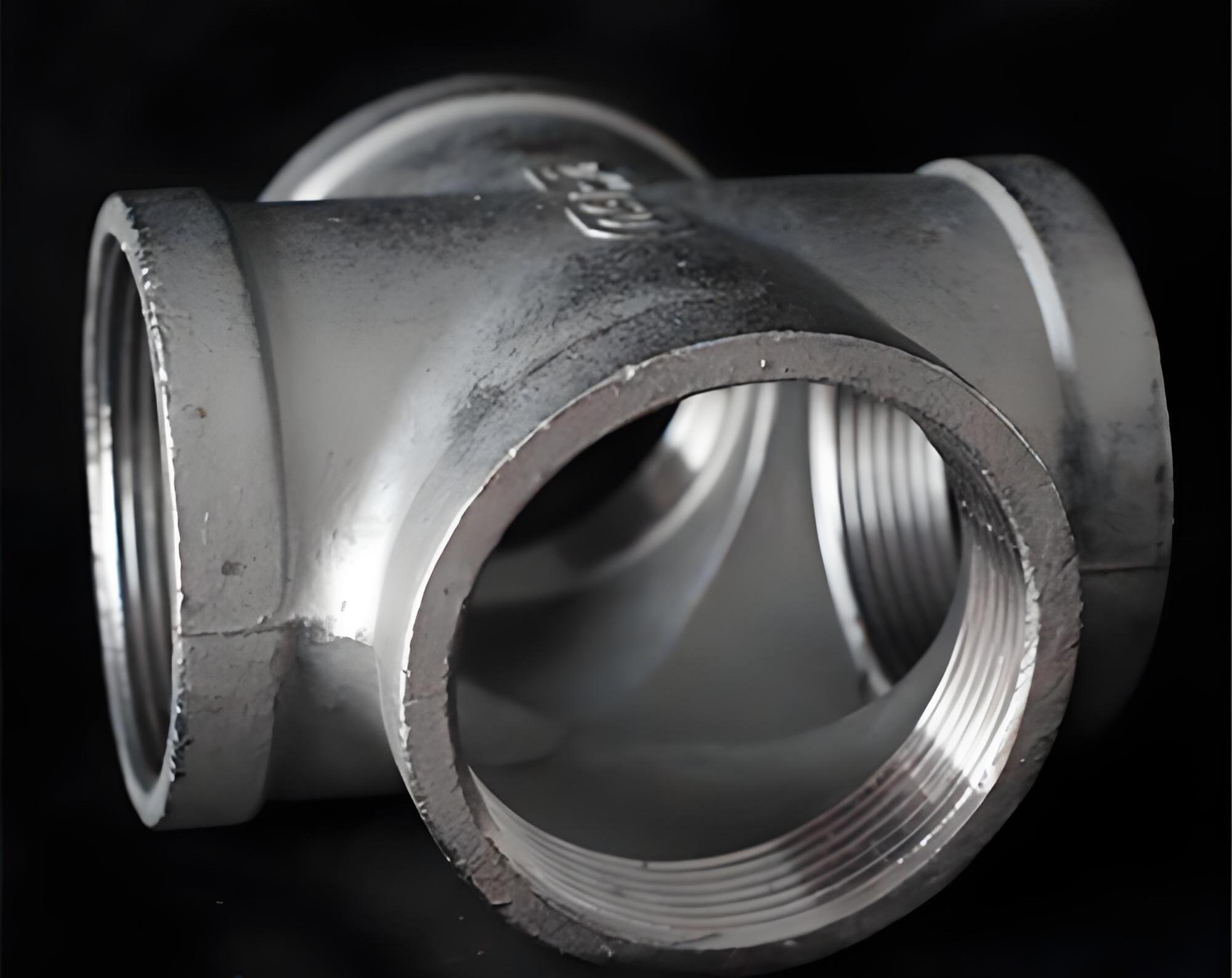
Russian standard cross fitting
The Russian-standard cross is a cross-node pipe fitting in GOST-standard pressure piping systems, undertaking the functions of four-way medium diversion, convergence, and cross transfer. The product follows GOST 17380-2001 general technical conditions, and its size system matches Russian-standard steel pipes, with outer diameter, bevel, wall thickness reduction, and dimensional tolerances controlled according to Russian-standard specifications. The nominal diameter covers DN15-DN1400; small diameters adopt seamless hot-pressed forming, while large diameters adopt steel plate rolled and welded processes. The pressure rating covers PN10-PN160, and materials include 20# carbon steel, 09G2S low-temperature steel, 12Х18Н10Т stainless steel, and 15CrMo alloy steel, among which the 09G2S material can adapt to -40°C or even lower temperature environments, suitable for projects in the permafrost regions of Siberia and Central Asia. Before delivery, hydrostatic testing and UT/RT non-destructive testing can be performed, and Russian-English bilingual material certificates can be provided. The product is used in oil and gas fields in the Commonwealth of Independent States, central heating, municipal gas and water supply and drainage, power stations, and chemical plants for new construction and renovation of old pipeline networks, meeting local supervision acceptance and customs clearance requirements.
Learn More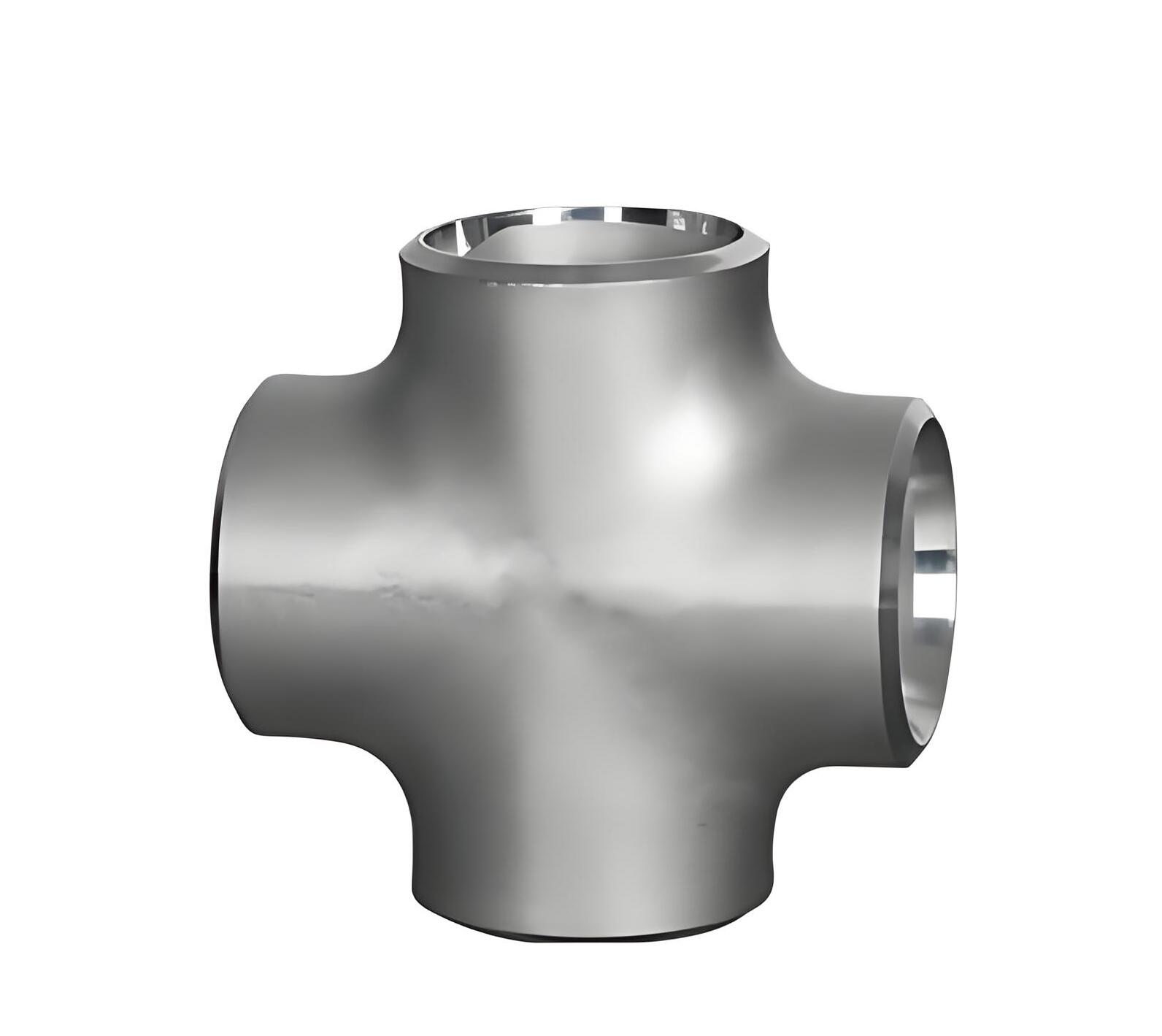
European standard four-way
European standard cross fittings (tees) are produced in accordance with EN 10253-2 (carbon steel and alloy steel) and EN 10253-4 (stainless steel), and are compliant with the EU PED Pressure Equipment Directive. Structurally, they are divided into two categories: equal-diameter and reducing. Equal-diameter crosses are used for cross-symmetrical branching of main pipelines, while reducing crosses are used for reducing branching between a main pipe and branch pipes of multiple specifications. Pressure ratings cover PN10–PN160, among which the Type B full-pressure type has a pressure-bearing capacity consistent with straight pipes of the same specification, and the Type A reduced-pressure type is suitable for conventional working conditions with sufficient pressure margin. In terms of manufacturing processes, small diameters adopt seamless hot-press forming, while large diameters adopt rolled and welded steel plate. Outer diameter, bevel, wall thickness reduction, and dimensional tolerances are implemented in accordance with European standards. Hydrostatic testing and UT/RT non-destructive testing can be performed, and EN 10204-3.1B/3.2 inspection certificates are supported. Before purchasing, it is recommended to confirm the diameter, pressure rating, material, Type A or Type B, and whether a third-party inspection certificate is required. You are welcome to contact us for assistance with selection and quotation.
Learn More