Blog

Explore industry insights, practical guides, and curated perspectives here—keep getting valuable content.

Home 博客中心

Blog

Blog

Interpretation of American Standard Carbon Steel Materials for Pipeline Fittings in Foreign Trade
Popular

Interpretation of American Standard Carbon Steel Materials for Pipeline Fittings in Foreign Trade

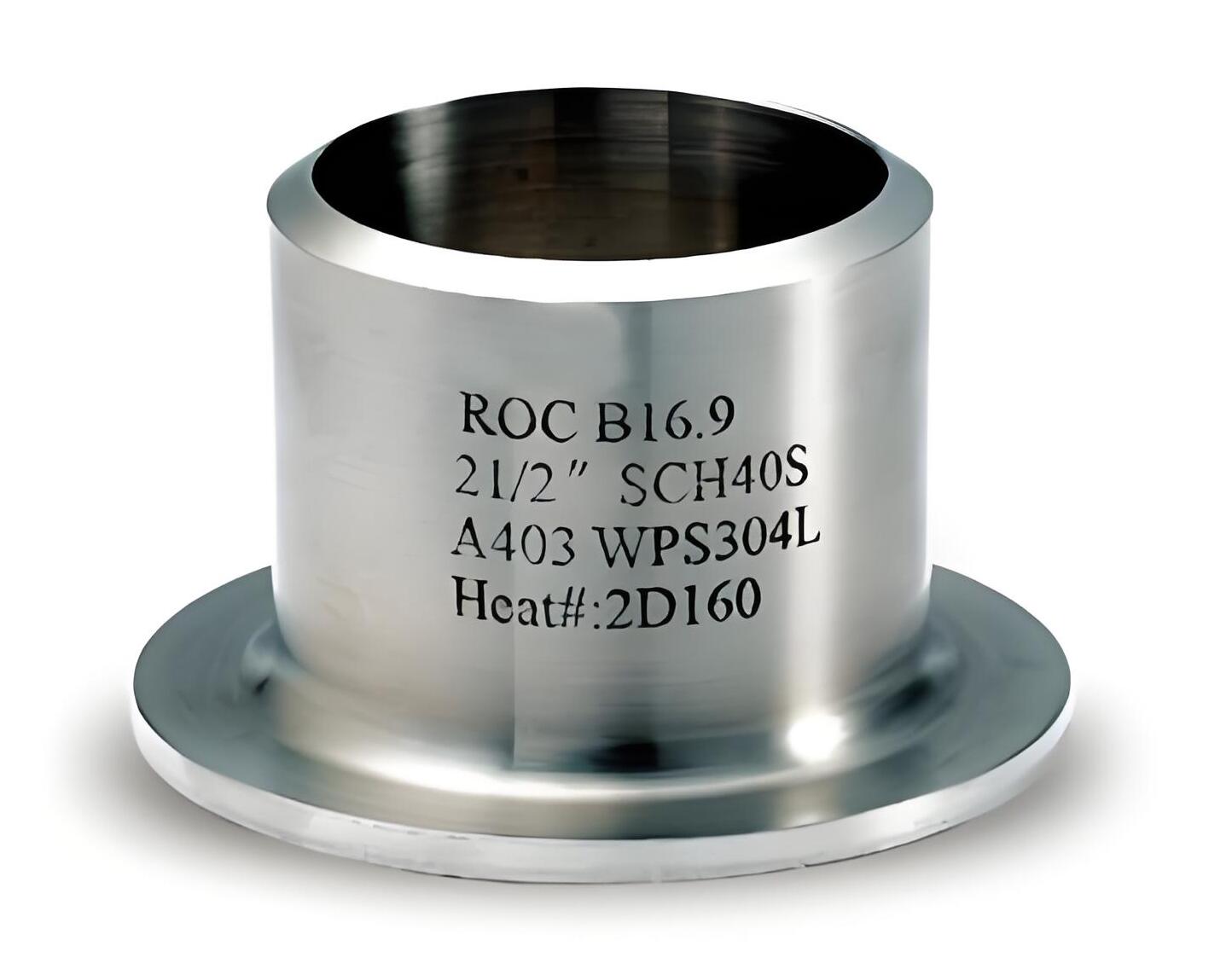
American standard carbon steel is the most mainstream material selection for pipes and fittings in oil and gas, chemical, and EPC overseas engineering projects, and A234 WPB and A105 are high-frequency material grades in foreign trade orders. Different grades correspond to different product forms, heat treatment requirements, and applicable working conditions; incorrect material selection will directly cause problems such as welding mismatch, pressure-bearing failure, and rejection by the owner. This article systematically interprets the ASTM material system for American standard carbon steel pipe fittings, sorts out core foreign trade requirements such as chemical composition, mechanical properties, heat treatment, non-destructive testing, material certificates, and marking traceability, and analyzes procurement selection misconceptions, material substitution boundaries, and ocean shipping protection points, so as to provide a complete technical basis for foreign trade inquiries and quotations, order review, third-party supervision and acceptance, and overseas project delivery, and to avoid risks of material misuse, certificate non-compliance, customs clearance, and project claims.

Read More →
Key Points for Avoiding Quality Disputes in Technical Agreements for Pipes and Fittings
2026-10-24

Key Points for Avoiding Quality Disputes in Technical Agreements for Pipes and Fittings

Quality disputes over pressure piping fittings frequently arise from ambiguous agreements regarding material traceability, inspection standards, dimensional tolerances, document delivery, and nonconforming product disposition. Once a dispute occurs, the technical agreement is the core basis for determining liability. This article, in conjunction with TSG 31-2025 and GB/T 20801 specifications, sorts out the common causes of quality disputes and, from dimensions such as standard version locking, material traceability, manufacturing processes, acceptance determination, objection re-inspection, nonconforming product disposition, warranty boundaries, change control, and evidence retention, proposes key points for the design of technical agreement clauses, clarifies the division of rights and responsibilities, inspection determination rules, and dispute arbitration paths, and helps purchasers and suppliers lock down quality boundaries in advance, reduce commercial disputes such as pressure test leakage, supervision inspection rejection, and return claims, and ensure the smooth implementation of chemical, oil and gas, new energy, and overseas EPC projects.

Interpretation of Core Clauses of the Technical Agreement for Pipeline and Fittings Procurement
2026-10-24

Interpretation of Core Clauses of the Technical Agreement for Pipeline and Fittings Procurement

The technical agreement for pipeline and pipe fitting procurement is a legally binding technical annex that connects design drawings, manufacturing and processing, supervision and inspection acceptance, and special equipment filing; the rigor of its clauses directly determines supply matching and project compliance. The root causes of numerous engineering disputes, pressure test failures, supervision and inspection rejections, and obstacles to completion filing lie in vague clauses in technical agreements, missing standard versions, and incomplete stipulations on inspection and documentation requirements. Based on specifications such as TSG 31-2025 and GB/T20801, this paper sorts out nine core clauses—document priority, materials, manufacturing process, non-destructive testing, non-standard control, marking and traceability, documentation delivery, supervision and acceptance, and objections and warranty—and analyzes key points for drafting clauses, common loopholes, and risk control methods, providing a reference for the preparation of technical agreements for pipeline procurement in chemical, oil and gas, new energy, and overseas EPC projects.

Pipeline Fittings Project: Key Procurement Points from Preliminary Technical Q&A
2026-10-24

Pipeline Fittings Project: Key Procurement Points from Preliminary Technical Q&A

Pre-project technical clarification for pipeline and pipe fitting projects is a key link in breaking down information barriers among design, procurement, manufacturing, and supervision and inspection; the quality of clarification directly affects bill-of-material material requisitioning, quotation accuracy, supply matching, and later special equipment acceptance. At present, many procurement teams simplify clarification into confirmation of quantities and delivery dates, ignoring core technical clarifications such as operating condition boundaries, standards systems, material acceptance, non-standard definition, and document delivery, which easily leads to risks such as wrong and missing items, parameter mismatches, and documents failing to meet supervision and inspection requirements. This article sorts out the framework of pre-project technical clarification, core question items, and the closed-loop control mechanism for clarification, clarifies the key points of clarification on the procurement side, standardizes the archiving process for clarification minutes, reduces procurement changes, rework, and compliance risks from the source, and ensures the orderly advancement of chemical, oil and gas, new energy, and overseas EPC pipeline projects.

Techniques for Converting Non-standard Pipeline Fitting Drawings to National Standards
2026-10-24

Techniques for Converting Non-standard Pipeline Fitting Drawings to National Standards

Overseas drawings, reproduction drawings of old equipment, and mixed-standard interfacing drawings contain a large number of non-standard structures and non-national-standard annotations; direct manufacturing is prone to problems such as supervisory inspection rejection, filing failure, and assembly mismatch. Based on GB/T 20801 and TSG 31-2025 specifications, this paper sorts out a complete set of practical techniques for converting non-standard drawings to the national standard system, including judgment logic, parameter replacement, annotation modification, strength verification, and document conversion, distinguishes between the two scenarios of "can be equivalently converted into national standard standard parts" and "can only retain compliant non-standard parts," standardizes the conversion methods for dimensions, pressure ratings, materials, groove preparation, and inspection clauses, reduces the acceptance and special equipment filing risks after conversion, and provides an implementable conversion process for procurement, drafting, manufacturing, and supervision.

Procurement Cost Differences Between Standard and Non-Standard Pipe Fittings
2026-10-24

Procurement Cost Differences Between Standard and Non-Standard Pipe Fittings

Pipeline pipe fitting standard parts rely on mature national standards, American standards, and European standards systems for large-scale production, with controllable unit procurement costs and stable delivery times; non-standard pipe fittings incur additional costs due to separate design, small-batch production, custom tooling, special verification, and other processes, and the price difference between the two is often simply understood by procurement personnel as a raw material price difference, ignoring hidden costs such as design, review, inspection, construction period, and acceptance. This article breaks down the full cost composition of standard parts and compliant custom non-standard parts, compares explicit procurement prices with project full life cycle costs, analyzes the formation mechanism of the price difference, establishes a cost evaluation model for procurement selection, and guides procurement parties to reasonably balance standard part and non-standard part selection schemes under the premise of technical compliance, avoiding subsequent engineering losses caused by low-price non-standard products.

Method for Defining Customization Standards for Non-standard Pipeline Fittings
2026-10-24

Method for Defining Customization Standards for Non-standard Pipeline Fittings

Non-standard pipeline fittings differ from standard fittings under GB, ASME, EN, JIS and other standards. The industry has long faced the problem of vague definition and arbitrary classification, which easily equates non-standard with unregulated manufacturing and brings risks in acceptance, supervision inspection, and documentation filing for special equipment. Based on the regulatory system for pressure piping, this paper clarifies the boundaries among standard fittings, custom non-standard fittings, and downgraded non-standard parts, establishes a definition process centered on benchmark standard comparison, design verification, documentation determination, and supervision inspection classification, distinguishes compliant custom non-standard products from nonconforming non-standard products, and puts forward requirements for design calculation, drawings, type testing, and supplier control of non-standard fittings, so as to provide a unified basis for determination in procurement, design, supervision of manufacture, and acceptance.

Cross-border Order Standard Confirmation and Risk Control Process for Pipes and Fittings
2026-10-23

Cross-border Order Standard Confirmation and Risk Control Process for Pipes and Fittings

Cross-border pipeline fitting orders involve multiple sets of international standards, local access regulations, and owner-specific technical specifications. Standard mismatches, missing certifications, and non-conforming documentation are the main causes of assembly failures, customs clearance delays, and rejection claims. Taking the full order lifecycle as the main line, this paper constructs a closed-loop risk control process covering preliminary inquiry review, technical standard locking, drawing parameter re-checking, certification qualification verification, sample confirmation, production supervision, pre-shipment factory review, and shipping and arrival re-checking, clarifies the review points, judgment criteria, and non-conformity handling mechanisms at each node, standardizes the standard confirmation work for cross-border fitting orders, and reduces export technical and commercial risks.

Fundamentals of Standard Selection for Foreign Trade Export Pipeline Fittings
2026-10-23

Fundamentals of Standard Selection for Foreign Trade Export Pipeline Fittings

Foreign trade pipeline pipe fittings face different regional markets around the world, and there are multiple independent standard systems such as ASME, EN, JIS, GOST, etc. Their dimensional bases, pressure classifications, tolerance systems, and flange connection parameters are not interchangeable, and cannot be simply converted or substituted. In addition to matching operating condition parameters, export selection also needs to simultaneously satisfy the target market's access regulations, certification requirements, owner technical specifications, customs clearance, and on-site supervision and inspection rules. This article sorts out the lineage of mainstream international standards, regional market selection patterns, material and flange matching logic, and key points of certification document control, identifies high-frequency risks such as selection mismatches, certificate nonconformity, and documents failing to meet overseas acceptance requirements, and establishes a standardized selection process for foreign trade pipe fittings to ensure supply suitability, smooth customs clearance, and on-site assembly acceptance.

Special Procurement Requirements for New Energy Pipeline and Fittings Project
2026-10-23

Special Procurement Requirements for New Energy Pipeline and Fittings Project

New energy projects cover multiple scenarios such as hydrogen energy, electrochemical energy storage, high-purity media for photovoltaics, and onshore wind power cooling, where media characteristics, safety risks, and cleanliness requirements are significantly different from those of traditional chemical and thermal power pipelines. Direct substitution with general-purpose pressure pipeline fittings can easily lead to hidden hazards such as hydrogen embrittlement leakage, electrolyte corrosion, high-purity media contamination, and low-temperature brittle fracture. This paper reviews the regulatory lineage for new energy pipelines, classifies specialized procurement requirements by scenario, including material compatibility, cleanliness control, explosion-proof and anti-static measures, low-temperature and high-pressure conditions, and prefabricated supporting components, clarifies key control points for supplier admission, technical agreements, inspection and testing, and documentation traceability, and establishes a fitting procurement control system suited to the new energy industry.