Blog

Explore industry insights, practical guides, and curated perspectives here—keep getting valuable content.

Home 博客中心

Blog

Blog

Interpretation of American Standard Carbon Steel Materials for Pipeline Fittings in Foreign Trade
Popular

Interpretation of American Standard Carbon Steel Materials for Pipeline Fittings in Foreign Trade

American standard carbon steel is the most mainstream material selection for pipes and fittings in oil and gas, chemical, and EPC overseas engineering projects, and A234 WPB and A105 are high-frequency material grades in foreign trade orders. Different grades correspond to different product forms, heat treatment requirements, and applicable working conditions; incorrect material selection will directly cause problems such as welding mismatch, pressure-bearing failure, and rejection by the owner. This article systematically interprets the ASTM material system for American standard carbon steel pipe fittings, sorts out core foreign trade requirements such as chemical composition, mechanical properties, heat treatment, non-destructive testing, material certificates, and marking traceability, and analyzes procurement selection misconceptions, material substitution boundaries, and ocean shipping protection points, so as to provide a complete technical basis for foreign trade inquiries and quotations, order review, third-party supervision and acceptance, and overseas project delivery, and to avoid risks of material misuse, certificate non-compliance, customs clearance, and project claims.

Read More →
Matching principles for pipe and fitting procurement
2026-10-21

Matching principles for pipe and fitting procurement

The quality and operational safety of industrial pipeline engineering fundamentally depend on the matching precision between pipes and fittings. At present, projects commonly suffer from procurement issues such as mixed use of standards, mismatched pressure ratings, inconsistent wall thickness, incompatible connection forms, and mismatched materials, which can easily lead to engineering hazards including welding misalignment, sealing leakage, failed pressure testing, and pipeline stress damage. Combining the national standard, American standard, and European standard industrial pipeline systems, this paper systematically elaborates six core principles of pipe and fitting matching—dimensional matching, pressure matching, material matching, standard matching, connection matching, and operating condition matching—sorts out common misconceptions in procurement matching, and establishes a complete-set, standardized procurement matching system, providing practical basis for precise procurement, zero-defect installation, and long-term safe operation of pipeline engineering.

Prevention System for Omissions and Errors in the Pipeline and Pipe Fittings Procurement List
2026-10-21

Prevention System for Omissions and Errors in the Pipeline and Pipe Fittings Procurement List

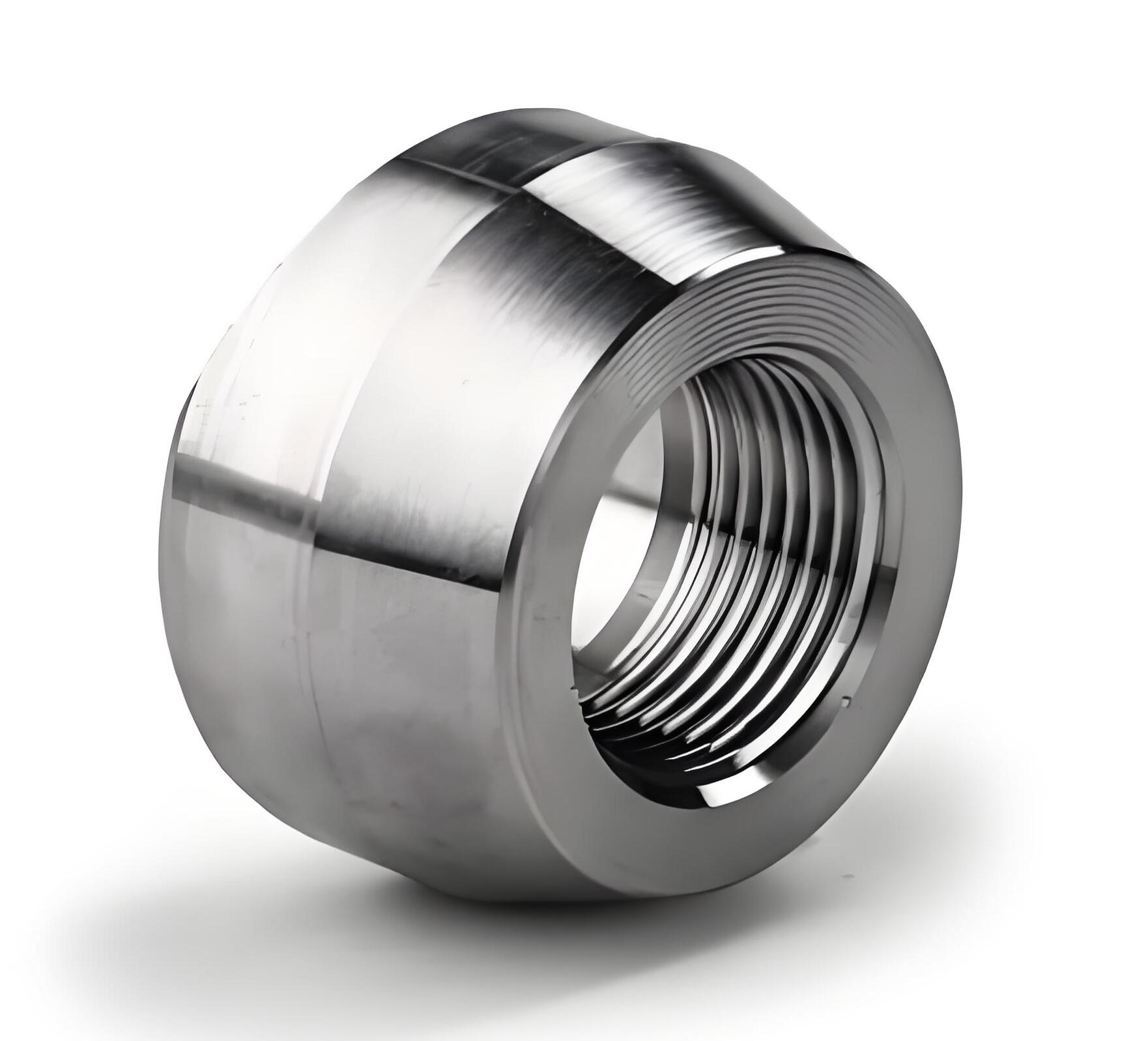
Omissions and errors in pipeline and pipe fitting procurement lists are a common pain point in engineering procurement, and can easily cause schedule delays, cost overruns, and on-site work stoppages due to material shortages. This article builds a full-process prevention system from six major dimensions: the source of list preparation, drawing verification, standardization systems, multi-level review, information-based control, and on-site dynamic control. Targeting common omission and error problems in pipe fittings such as flanges, elbows, tees, reducers, and branch outlets, it sorts out methods for verifying drawings against BOM lists, establishes standardized material coding and multi-round cross-review mechanisms, and supports change control and database management, so as to eliminate omissions and errors in procurement lists from the institutional, process, and technical levels, improve the accuracy of material procurement for pipeline engineering, and reduce the cost of supplementary material procurement for projects.

Logic for Preparing Budget Estimates and Procurement Lists for Pipeline Fitting Projects
2026-10-21

Logic for Preparing Budget Estimates and Procurement Lists for Pipeline Fitting Projects

The budget estimate and procurement list for pipeline fittings are core documents for cost control, material procurement, and tender settlement in industrial pipeline projects. Currently, a large number of projects experience budget overruns, missing items in lists, and material mismatches, the root causes of which lie in the disconnection between budget estimate pricing and list quantities, non-standard drawing quantity takeoff, unreasonable loss coefficients, and incomplete technical parameter descriptions. Relying on national standards and American standard engineering pricing rules, this paper sorts out the complete logic of budget estimate cost calculation, engineering quantity extraction, material loss calculation, and non-standard fitting pricing, connecting the entire process of drawing quantity calculation—budget estimate pricing composition—list preparation—procurement implementation, so as to achieve precise and controllable budget estimates and zero missing items in procurement lists, effectively control project investment, and avoid the risks of supply deviations and cost overruns.

Technical Disclosure and Procurement Coordination Specification for Pipeline Fittings Engineering
2026-10-21

Technical Disclosure and Procurement Coordination Specification for Pipeline Fittings Engineering

Technical disclosure and procurement coordination for pipeline fittings engineering are the core key links connecting design standards, production and supply, and on-site construction, directly determining the installation precision, operational safety, and acceptance compliance of pipeline engineering. At the current stage, most pipeline wrong-part, rework, sealing failure, and working-condition mismatch problems all stem from incomplete technical disclosure, broken parameter transmission, vague procurement coordination standards, and missing detailed disclosure. This paper, combining national standards, American standards, and chemical industry engineering practical standards, sorts out the core content of pipeline fitting technical disclosure, coordination processes, parameter transmission specifications, division of responsibilities and risk control key points, establishes a standardized disclosure and procurement coordination system, avoids parameter deviations and construction hidden dangers, and provides practical guidance for precise supply, efficient construction, and compliant acceptance of various industrial pipeline engineering projects.

Risk control for deviations between drawing parameters and actual supply
2026-10-21

Risk control for deviations between drawing parameters and actual supply

In industrial pipeline engineering, drawing parameters are the sole legal basis for procurement, prefabrication, construction, and acceptance, while parameter deviations between drawing standards and actual supplied goods are the core hidden hazards that cause installation misalignment, insufficient pressure-bearing capacity, sealing failure, engineering rework, and acceptance failure. Most deviation problems are not product quality defects, but rather result from misunderstanding of standards, lack of tolerance control, missed parameter verification, and cross-standard mixing. Based on the pipeline tolerance systems of national standards, American standards, and European standards, this paper systematically sorts out the common deviation types of pipe diameter, wall thickness, pressure rating, connection dimensions, and material parameters, analyzes the root causes of deviations and their engineering hazards, and establishes a full-process deviation risk control system from drawing interpretation and material requisition, contract locking, and production quality control to incoming inspection, providing a practical technical solution for precise supply, zero-deviation delivery, and engineering compliance implementation of industrial pipelines.

How to Interpret P&ID Drawings for Process Piping Procurement
2026-10-20

How to Interpret P&ID Drawings for Process Piping Procurement

Process piping P&ID (Piping and Instrumentation Diagram) is the core design guideline for chemical, oil and gas, and new energy EPC projects, and it is also the underlying basis for piping material procurement, equipment matching, and pipe fitting selection. Compared with single-line diagrams, P&ID drawings focus on process logic, system architecture, and equipment interlocking relationships, and determine the overall pipeline configuration standards. Most project procurement omissions, specification mismatches, system adaptation failures, and material redundancy problems all stem from insufficiently thorough interpretation of P&ID drawings, unclear division of system boundaries, and missing identification of instrument valves and components. This article, combined with national standards and American standard engineering specifications, systematically sorts out the standard interpretation logic of P&ID drawings, key points for procurement material requisitioning, system matching rules, and high-frequency misunderstandings, forming an actionable procurement interpretation process, and providing practical technical support for precise procurement of industrial piping and compliant system matching.

Key Points for Reading Piping Single-Line Diagrams in Procurement
2026-10-20

Key Points for Reading Piping Single-Line Diagrams in Procurement

The piping single-line diagram is the most core procurement and construction basis for chemical, oil and gas, and new energy EPC projects. Compared with plan construction drawings, the single-line diagram is three-dimensional and intuitive with complete parameters, and is the authoritative standard for pipe fitting material requisition, bill of materials summary, and material procurement. At the present stage, most procurement errors, material waste, missing and wrong parts, and on-site rework problems all stem from non-standard single-line diagram reading, omitted parameter extraction, pipe fitting identification deviations, and chaotic standard determination. Combining national standards and American standard drafting specifications, this paper systematically explains the reading logic of piping single-line diagrams, sorts out the core points of procurement material requisition, parameter verification, pipe fitting statistics, and standard matching, and summarizes high-frequency reading misunderstandings and avoidance solutions, providing practical guidance for precise procurement, efficient material requisition, and compliant supporting of industrial piping.

Quick Tips for Identifying Engineering Drawing Symbols
2026-10-20

Quick Tips for Identifying Engineering Drawing Symbols

Engineering drawing symbols are the common technical language for the design and construction of piping, mechanical and electrical, and chemical engineering; the efficiency of drawing reading and the accuracy of symbol recognition directly determine the accuracy of procurement selection, on-site construction, and engineering acceptance, and are the core foundation for avoiding dimensional deviations, material mismatches, missing pipe fittings, and construction rework. In response to common problems in the industry such as slow drawing reading among beginners, confusion of symbols, and misreading of annotations, this article systematically sorts out the classification standards for mainstream drawing symbols in piping engineering, summarizes quick identification techniques for pipe fittings, valves, pipelines, process parameters, and elevations and slopes, breaks down methods for distinguishing high-frequency error-prone symbols, and provides a standardized drawing reading process and practical implementation points, helping engineering technical, procurement, and construction personnel quickly improve drawing reading efficiency and reading accuracy.

Principles of Fluid Medium and Pipe Fitting Material Compatibility
2026-10-20

Principles of Fluid Medium and Pipe Fitting Material Compatibility

The operational stability, safety, and service life of industrial piping systems depend fundamentally on the precise matching of fluid media with pipe fitting materials; material mismatch is the primary cause of media corrosion, inner-wall spalling, weld seam leakage, pipeline bursting, and process shutdowns. Most piping engineering failures are not product quality defects, but rather result from selection that references only pressure and diameter parameters while ignoring media properties, temperature conditions, flow velocity characteristics, and material tolerance thresholds. Relying on the authoritative industrial piping standards GB, ASME, EN, and HG, this paper provides an in-depth analysis of the core principles for matching fluid media with pipe fitting materials, categorizes and explains the material matching rules for different media, sorts out high-frequency selection errors in engineering, and provides a standardized matching process and implementation plan, offering compliant technical support for industrial piping design, procurement and selection, construction and operation and maintenance, and EPC engineering supporting services.